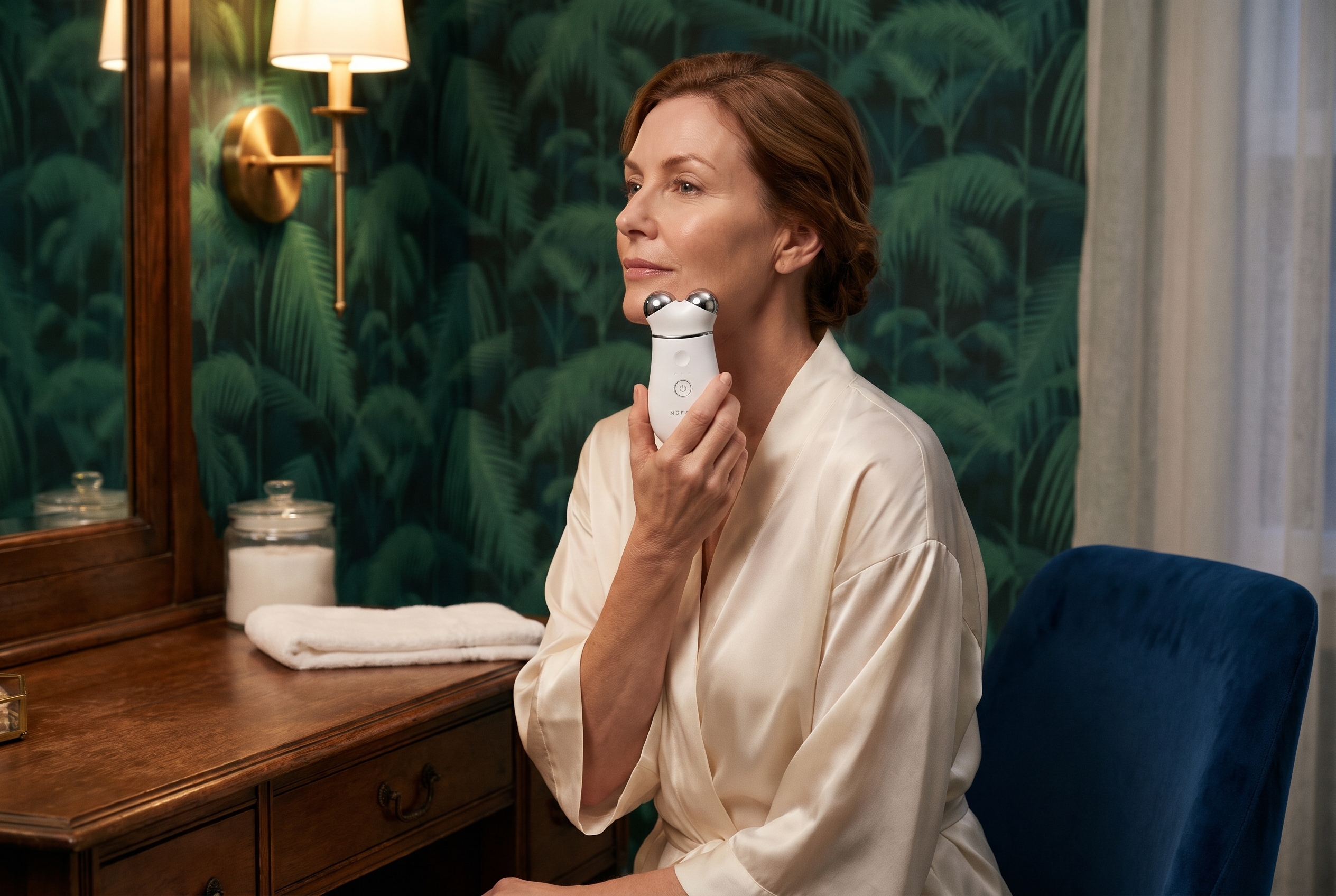
Quick answer: In the ZIIP HALO vs NuFACE TRINITY+ choice, the NuFACE TRINITY+ is the better buy for lifting and contour work along the jaw and cheeks, thanks to three intensity modes, a Boost Button and add-on attachments. The ZIIP HALO is the better buy for someone who wants app-guided treatments for several concerns, with microcurrent and nanocurrent and four gels in the box. See the NuFACE TRINITY+ Starter Kit or see the ZIIP HALO.
Last updated: October 27, 2026
ZIIP HALO vs NuFACE TRINITY+: the short answer
Best for lift and contour
NuFACE TRINITY+
Three modes: Instant Lift, Pro Toning, Skin Tightening
Boost Button adds 25% more power, per NuFACE
Add-on attachments for lips, eyes and LED red light
Both are handheld microcurrent devices you glide over a layer of conductive gel, a few times a week, to tone the look of the face. The ZIIP HALO vs NuFACE decision comes down to control style: NuFACE hands you the dials, while ZIIP hands the routine to its app. Here is how the two compare on what matters before you buy. If you are weighing microcurrent against other device types, the Medicube Booster Pro vs NuFACE comparison covers a multi-mode alternative.
Key facts at a glance
3 modes
NuFACE TRINITY+ frequencies you choose yourself
+25%
NuFACE Boost Button power, per NuFACE
4 gels
Included with the ZIIP HALO
42 days
Length of ZIIP’s SGS skin study
ZIIP HALO vs NuFACE TRINITY+ at a glance
Feature
NuFACE TRINITY+
ZIIP HALO
Current type
Microcurrent
Microcurrent and nanocurrent
How you control it
3 frequencies and intensities on the device, plus Boost Button
Treatments chosen in the ZIIP app; 4 Minute Facial built in
Works without a phone
Yes
Yes, the 4 Minute Facial only
Attachments
Optional Wrinkle Reducer (LED red light) and Effective Lip & Eye
None listed
Gel in the box
Aqua Gel Activator 1.69 oz, Silk Creme Activator 0.5 oz
Firm, Refresh, Glow and Clear gels, 1 oz each
Brand routine
5 min a day, 5x a week for 60 days, then 2 to 3x a week
3 to 5x a week, up to 6 on a short plan
Charging
USB-C
USB-C, up to 4 hours to charge
FDA status
NuFACE describes it as FDA-cleared
Not stated on ZIIP’s product page
Brand study
Consumer questionnaire, 15 minutes and 60 days
SGS instrument study, 31 adults aged 35 to 55, 42 days
Warranty and returns (US)
2-year warranty, 60-day returns
Return policy listed in ZIIP’s product FAQ
Specs from the NuFACE TRINITY+ Starter Kit and ZIIP HALO product pages, checked October 27, 2026.
ZIIP HALO vs NuFACE: how the two actually differ
Control: dials vs app
The first ZIIP HALO vs NuFACE difference is control. NuFACE builds the TRINITY+ around three frequencies you pick on the device: Instant Lift Mode, Pro Toning Mode and Skin Tightening Mode, plus a Boost Button that NuFACE says adds 25% more microcurrent power. You decide where to glide and hold, mainly across the cheeks, jawline and forehead.
ZIIP takes the opposite approach. Its app sends a unique waveform to the HALO for each treatment, with a different program for each visible concern, from firmness to a more even-looking tone. Without the app, the device runs one built-in routine, the 4 Minute Facial, which ZIIP says uses both microcurrent and nanocurrent.
Range: one device vs a system
The TRINITY+ is modular. NuFACE sells a Wrinkle Reducer attachment that uses LED red light and an Effective Lip & Eye attachment for the small areas around the eyes and mouth. NuFACE notes the Boost Button works with the facial trainer and Lip & Eye heads, not with the Wrinkle Reducer. If red light is the bigger draw, the best LED face masks guide compares full-face options.
The ZIIP HALO has no attachments listed. Its range comes from the app treatments and the four gels in the box, each made for a different goal.
What the brands report
On results, the ZIIP HALO vs NuFACE comparison is not apples to apples. ZIIP points to a 2023 SGS study: 31 adults aged 35 to 55 used the HALO for 42 days at 8 minutes a session. ZIIP reports a 28% reduction in the appearance of forehead wrinkles measured with Primos 3D, a 24% increase in the appearance of firmness measured with a Cutometer, and 97% saying they saw immediate visible lifting.
NuFACE reports consumer questionnaire results for the TRINITY+: 91% saw improved cheek contour and 90% a lifted appearance 15 minutes after a treatment, and 93% saw a reduction in deep forehead lines after 60 days. These are each brand’s own claims, measured in different ways, so they are not a head-to-head result.
Brand-recommended starting routine (sessions per week)
NuFACE TRINITY+: 5 sessions a week for the first 60 days, at least 5 minutes each
ZIIP HALO: 3 to 5 sessions a week, up to 6 on a short-term plan
Sources: NuFACE TRINITY+ and ZIIP HALO product page FAQs. NuFACE drops to 2 to 3 sessions a week for maintenance.
How a microcurrent session works
1
Start with clean, dry skin
2
Apply a generous layer of conductive gel to one section
3
Glide the device slowly upward and hold at the end points
4
Repeat section by section, then massage in leftover gel
ZIIP HALO vs NuFACE: who should buy which
Pick this if
NuFACE TRINITY+
✓ Your main goal is the look of lift along the jaw, cheeks and brows
✓ You like choosing the intensity yourself
✓ You may want lip, eye or red light attachments later
✓ You can commit to daily sessions for the first two months
For most readers focused on the jawline and cheeks, the NuFACE TRINITY+ is the one to buy: you control three modes and the Boost Button, and you can add attachments as your routine grows. The ZIIP HALO wins for anyone who would rather follow an app than learn technique, and who wants tone and glow treatments in the same device. Shopping for someone else? The beauty device gift guide has more ideas.
FAQ
Is the ZIIP HALO better than NuFACE?
Neither is better for everyone. The NuFACE TRINITY+ is the stronger pick for lifting and contour work, with three modes, a Boost Button NuFACE says adds 25% more microcurrent power, and add-on attachments. The ZIIP HALO is the easier pick for app-guided treatments, since the app sends a different waveform for each concern and four ZIIP gels come in the box. Choose by goal, not by brand.
Is ZIIP HALO good for jowls?
ZIIP says its HALO improves the look of lifted, firmer skin, and 97% of people in its 42 day study reported an immediate visible lift. For jowls specifically, the NuFACE TRINITY+ is built around glides along the jawline with three intensity modes and a Boost Button, which makes it the more targeted tool. Neither device replaces an in-office procedure, and results are the brands’ own claims.
Which microcurrent device is considered the best?
There is no single best microcurrent device. Among at-home picks, the NuFACE TRINITY+ is the one NuFACE calls its most comprehensive FDA-cleared device, and the ZIIP HALO is the app-led option that pairs microcurrent with nanocurrent. The right one depends on whether you want manual control and attachments (NuFACE) or guided treatments for several skin concerns (ZIIP). Consistency matters more than the brand.
Do you need the app to use the ZIIP HALO?
No. ZIIP says the HALO comes programmed with the 4 Minute Facial, a freeform treatment that uses both microcurrent and nanocurrent, so it works without a phone. Every other treatment and treatment plan runs through the free ZIIP app for iPhone, iPad and Android, and ZIIP recommends the app for the best results because it tailors the waveform to each skin concern.
How often should you use the NuFACE TRINITY+?
NuFACE recommends at least 5 minutes a day, 5 times a week for the first 60 days, then 2 to 3 times a week to maintain results. ZIIP recommends its HALO 3 to 5 times a week, up to 6 times on a short-term plan. Both brands frame microcurrent as a habit, so pick the device whose routine you will actually keep.
What gel do you need for ZIIP HALO and NuFACE TRINITY+?
Both need a conductive gel on clean skin. The ZIIP HALO box includes four 1 oz ZIIP gels: Firm, Refresh, Glow and Clear. The NuFACE TRINITY+ Starter Kit includes a 1.69 oz Aqua Gel Activator, a 0.5 oz Silk Creme Activator and an application brush. Each brand sells refills, so plan for gel as an ongoing cost on top of the device.
Sources
Sources checked on October 27, 2026. Figures from brands are reported as the brand’s own claims.
Quick answer: The Shark CryoGlow is the best LED face mask for most people because it covers aging and breakouts with red, blue and infrared light, adds under-eye cooling and carries FDA clearance. For wrinkles alone, the CurrentBody LED Face Mask Series 3 has the most LEDs and wavelengths. The Omnilux Contour Face is the flexible pick, the Dr. Dennis Gross DRx SpectraLite FaceWare Pro is the fastest at three minutes, and the INIA Glow is the budget pick. See the Shark CryoGlow at Best Buy.
Last updated: October 25, 2026
The best LED face masks compared
Mask
Light colors
LEDs
Session
Best for
Shark CryoGlow
Red, blue, infrared plus under-eye cooling
Not listed by Shark
4 to 8 minutes by mode
Most people: aging and breakouts
CurrentBody LED Face Mask Series 3
6 wavelengths: 415, 532, 590, 633, 830 and 1072 nm
750
10 minutes, 3 to 5 times a week
Wrinkles and custom routines
Omnilux Contour Face
Red 633 nm and near-infrared 830 nm
132
10 minutes
Flexible fit, simple anti-aging
Dr. Dennis Gross DRx SpectraLite FaceWare Pro
Red and blue
162 (60 blue)
3 minutes daily
Acne and aging, fastest routine
INIA Glow
Red about 630 nm, near-infrared 850 nm, blue mode
68 quad-chip LEDs
About 6 to 10 minutes
Budget
Best overall: Shark CryoGlow
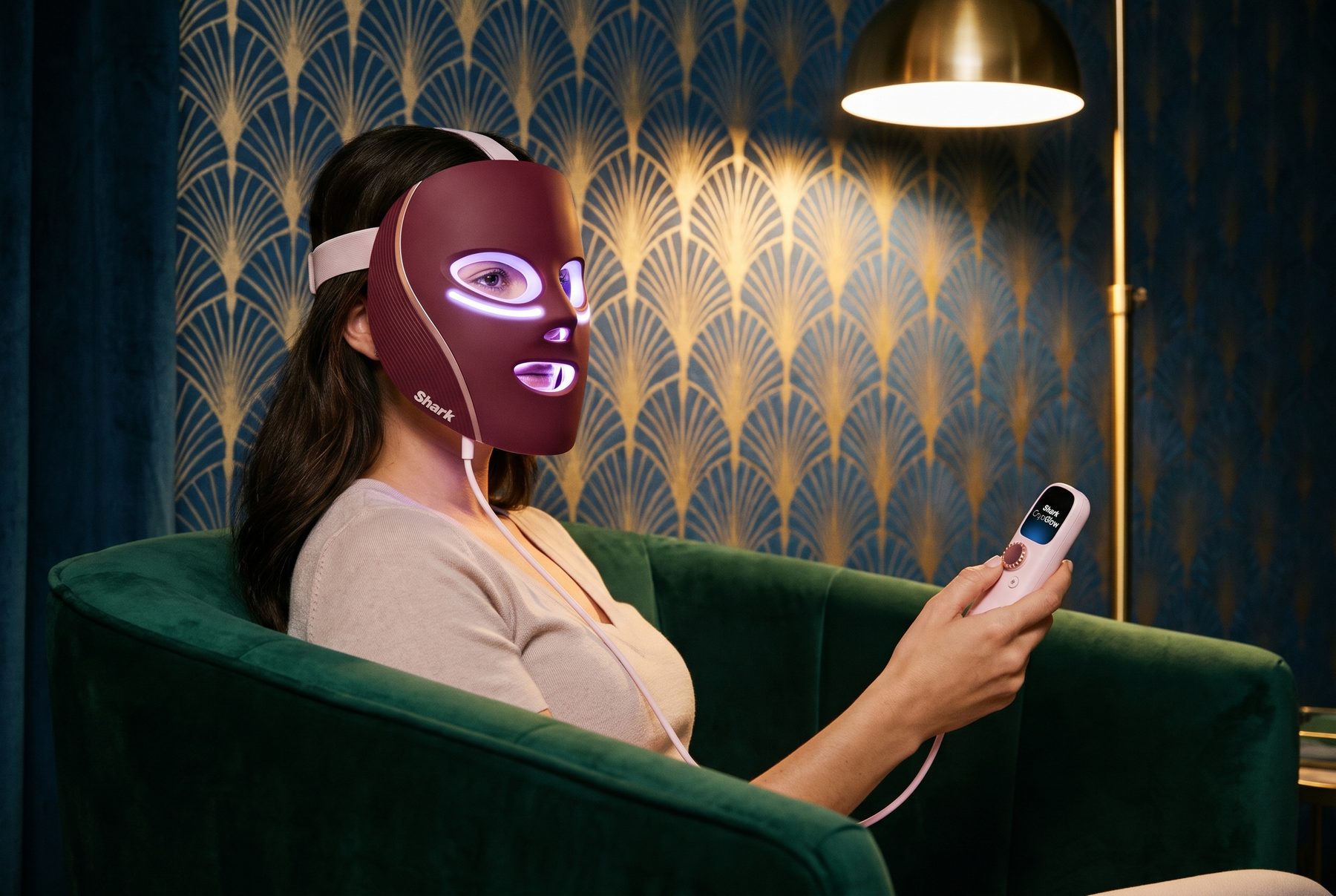
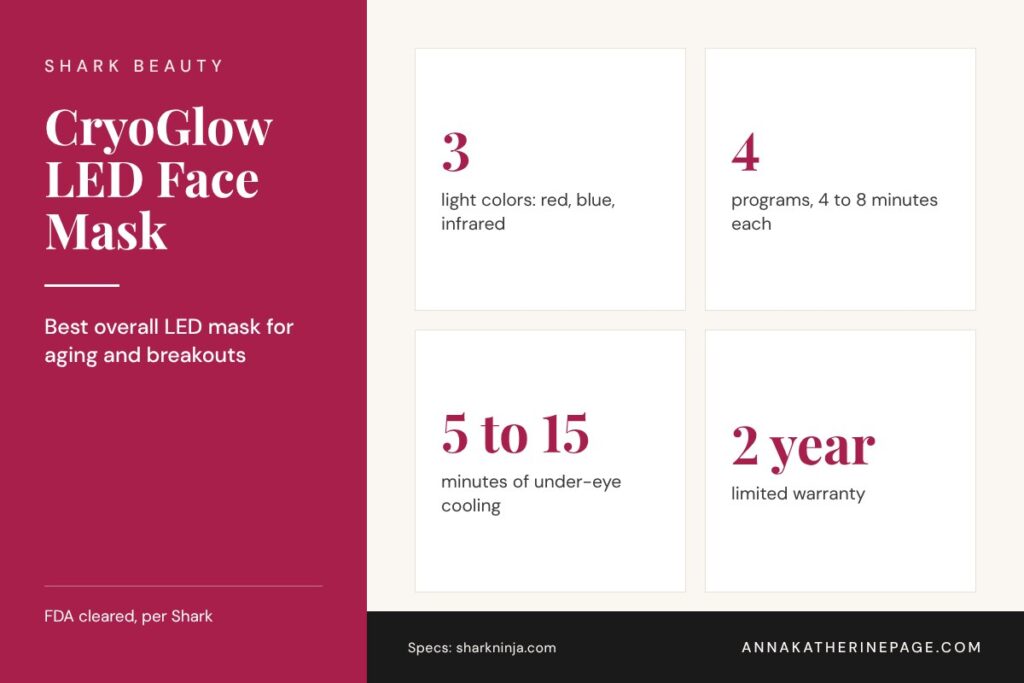
Shark’s mask runs four programs: Better Aging (6 minutes, red and infrared), Skin Clearing (8 minutes, blue and infrared finishing with red), Skin Sustain (4 minutes) and Under-Eye Revive, which uses adjustable cooling for 5 to 15 minutes. Shark says the mask is FDA cleared, carries a two-year limited warranty, and reports a 24% drop in fine line visibility in its own 12-week study of 60 people (SharkNinja product page).
The move for most buyers is a mask that handles both aging and the occasional breakout, and this is the one that does both without extra purchases.
Where to buy the Shark CryoGlow:Ulta | SharkNinja | Best Buy. Prices change often, so check today’s price at each.
Best for wrinkles: CurrentBody LED Face Mask Series 3
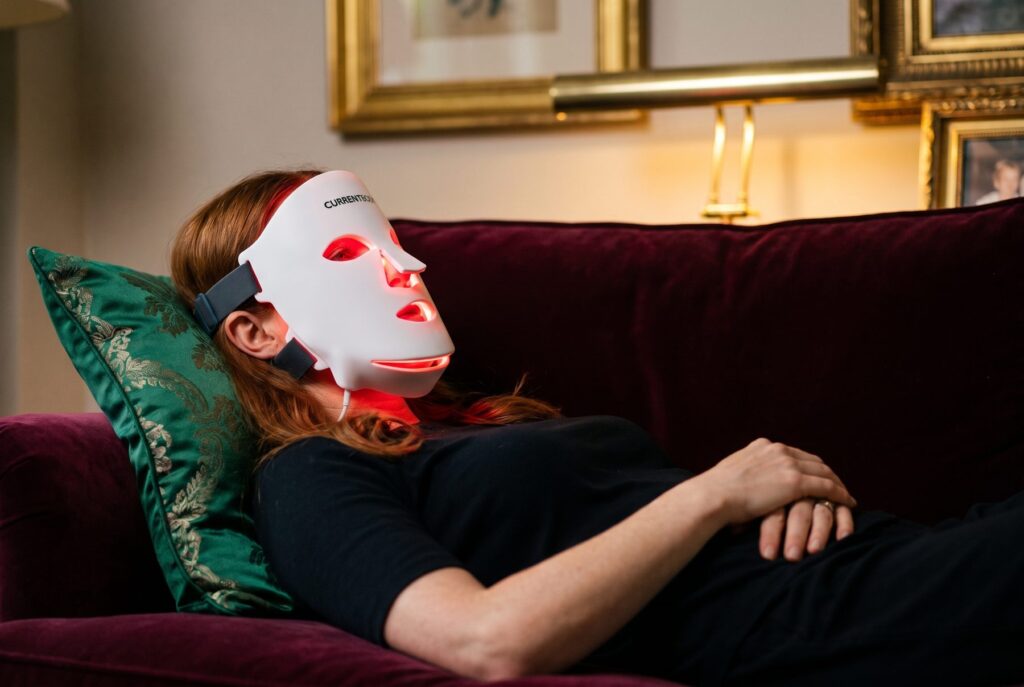
Series 3 is CurrentBody’s newest face mask, with 750 LEDs, six wavelengths and up to 40 mW/cm² of output, plus MyDose, which lets you choose wavelengths and placement in the app (CurrentBody mask comparison). Sessions run 10 minutes, 3 to 5 times a week. Series 2 also has deep near-infrared 1072 nm light, so that wavelength is not a reason to upgrade. What Series 3 adds is blue (415 nm), green (532 nm) and yellow (590 nm) light, 750 LEDs versus 236, and MyDose customization, per CurrentBody’s own specs. The Series 3 vs Series 2 comparison covers whether the older mask is still a smart buy.
Where to buy the CurrentBody LED Face Mask Series 3:CurrentBody. Prices change often, so check today’s price at each.
Best flexible mask: Omnilux Contour Face
The Omnilux Contour Face is soft medical-grade silicone that bends to the face, with 132 LEDs at red 633 nm and near-infrared 830 nm, and a 10-minute auto shutoff. It is FDA cleared for over-the-counter use, and Omnilux reports 98% of users in its trials saw firmer skin (Wareable review). It does not include blue light, so it is not the pick for acne. See how it stacks up in INIA vs Omnilux.
Where to buy the Omnilux Contour Face:Sephora. Prices change often, so check today’s price at each.
Fastest routine: Dr. Dennis Gross DRx SpectraLite FaceWare Pro
Three minutes a day is the whole routine. The FaceWare Pro has 162 LEDs, 60 of them blue, and is FDA cleared. Dermstore lists brand results of more than 97% of subjects improving in fine lines, wrinkles and tone over 10 weeks, and in acne over two weeks (Dermstore product page). It is a rigid shell, so fit is less forgiving than Omnilux.
Where to buy the Dr. Dennis Gross DRx SpectraLite FaceWare Pro:Dermstore | Dermstore limited gold edition. Prices change often, so check today’s price at each.
Best budget pick: INIA Glow
An independent spectrometer test measured roughly 30 mW/cm² peak output at red and near-infrared, which is in the same range as masks that cost several times more (Light Therapy Insiders). The trade-offs are comfort, with nose-bridge pressure and gaps around the jaw, and no FDA clearance mentioned in that review. The reviewer received the mask free. The full breakdown is in the INIA mask review.
Acne? You need blue light (around 415 nm). Omnilux Contour and CurrentBody Series 2 do not have it; CryoGlow, FaceWare Pro and Series 3 do.
Wrinkles? Look for red around 630 nm plus near-infrared around 830 nm, and a fit that sits close to the skin.
Consistency beats power. A mask you wear five times a week does more than a stronger one in a drawer, so session length matters.
FDA clearance is worth checking on the brand page, since many budget masks do not have it.
Frequently asked questions
What is the best LED face mask?
For most people, the Shark CryoGlow is the best all-round LED face mask because it combines red, blue and infrared light for aging and breakouts, adds under-eye cooling, and is FDA cleared per Shark. For wrinkles only, the CurrentBody LED Face Mask Series 3 offers the most LEDs and wavelengths. The INIA Glow is the strongest budget option.
Which LED face masks work for acne?
Look for blue light around 415 nm, which targets acne-causing bacteria. The Shark CryoGlow, Dr. Dennis Gross DRx SpectraLite FaceWare Pro and CurrentBody Series 3 include blue light. The Omnilux Contour Face and CurrentBody Series 2 use only red and near-infrared, so they are aimed at aging rather than breakouts.
How often should you use an LED face mask?
Most brands recommend three to five sessions a week. CurrentBody suggests 10 minutes three to five times weekly for Series 3, Omnilux runs 10-minute sessions, and Dr. Dennis Gross designs the FaceWare Pro for three minutes daily. Results build over weeks, so a regular schedule matters more than the length of any single session.
Are cheap LED face masks worth it?
Some are. An independent test measured the budget INIA Glow at roughly 30 mW per square centimeter, close to masks costing several times more. The trade-offs tend to be fit, comfort, coverage and missing FDA clearance. Check the wavelengths in nanometers, whether output is published, and the return policy before buying a low-cost mask.
Is an LED face mask safe to use every day?
Many masks are designed for daily or near-daily use, such as the three-minute Dr. Dennis Gross FaceWare Pro. Follow the brand’s schedule, protect your eyes as directed, and ask a doctor first if you take light-sensitizing medication or have a light-sensitive condition. Stop and get advice if irritation appears and does not settle quickly.
Sources
Sources checked on October 25, 2026. Figures from brands are reported as the brand’s own claims.
Quick answer: Pick the HigherDOSE Red Light Face Mask if your goal is fine lines and firmness and you want a simple mask you can wear while you move around. It runs the two most studied skin wavelengths (red and near-infrared), offers a 10 or 20 minute session, and costs less. Pick the CurrentBody Series 3 if you also want blue light for breakouts, yellow for redness and green for tone, a third, deeper near-infrared wavelength, and an app that lets you control where each light goes. The HigherDOSE is the focused anti-aging mask; the CurrentBody is the do-everything mask.
6: red 633nm, near-infrared 830nm and 1072nm, plus blue 415nm, green 532nm and yellow 590nm
LEDs
66 dual-core LEDs (132 diodes)
750
Stated output
50 mW/cm2 total (26 red, 24 near-infrared)
Up to 40 mW/cm2
Session
10 or 20 minutes, 3 to 5 times a week
10 minutes, 3 to 5 times a week
App
None
CurrentBody app with MyDose and full-face presets
Fit
Flexible silicone with face and head straps
Flexible silicone with a chin strap
Controller
Rechargeable, USB-C, about 80 to 100 minutes per charge
Rechargeable, USB-C
In the box
Mask, controller, power adapter, head straps, goggles, storage bag
Mask, controller, USB-C cable, eye inserts, storage bag
FDA status
Described by HigherDOSE as FDA cleared
Described by CurrentBody as FDA cleared
Best for
Lines, firmness and glow, kept simple
Aging plus breakouts, redness or uneven tone
Specs come from each brand’s own product page. Output figures are the brands’ numbers, measured their own way, not independent tests, so a higher number on paper is not proof of a stronger mask.
The real difference: two lights or six
Both masks share the core of an anti-aging LED routine: red light around 630nm and near-infrared at 830nm. Those are the wavelengths with the most research behind them for fine lines, texture and firmness.
The CurrentBody Series 3 adds four more. A deeper near-infrared at 1072nm sits alongside the other two, and blue, green and yellow cover other concerns:
Blue (415nm) is the best studied of the extras and is used for breakout-prone skin. If you still get blemishes along with lines, this is the strongest reason to pay for the Series 3.
Yellow (590nm) is used for redness. The research is smaller and more mixed.
Green (532nm) is marketed for uneven tone. It has the thinnest evidence of the six.
If your skin goals are lines and firmness only, the extra colors add little for you, and the HigherDOSE covers the part that matters. The full breakdown of what those extra lights do is in CurrentBody Series 3 vs Series 2.
LED count and output: what the numbers mean
The CurrentBody lists 750 LEDs against the HigherDOSE’s 66 dual-core LEDs, and HigherDOSE lists a higher total output (50 against up to 40 mW/cm2). Those two facts pull in opposite directions, which is the point: neither number settles which mask delivers more light to your skin. LED count partly reflects how many colors a mask has to fit in, and output figures depend on how and where each brand measures. If tested, published output matters most to you, the INIA vs Omnilux comparison covers what to look for.
Session length and routine
The HigherDOSE gives you a choice of 10 or 20 minutes. HigherDOSE suggests 10 minutes 4 to 5 times a week or 20 minutes 3 to 4 times a week. The CurrentBody runs 10 minute sessions, 3 to 5 times a week. Either way, consistency over weeks is what counts, and more is not better. How often to use red light therapy for wrinkles goes deeper on frequency.
App or no app
The Series 3 pairs with the CurrentBody app. Its MyDose feature lets you run one light on the chin and another across the forehead in the same session, and there are presets for anyone who does not want to build their own. The HigherDOSE has no app: pick a session length on the controller and go. If you like to customize, the app is a real plus. If you want to put a mask on and press one button, the HigherDOSE is simpler.
Fit, comfort and moving around
Both are flexible silicone masks rather than rigid shells. The HigherDOSE uses face and head straps and a rechargeable controller that HigherDOSE designed so you can move around during a session; the brand lists about 80 to 100 minutes of battery per charge. The CurrentBody uses a chin strap and eye inserts, and its controller also charges over USB-C. The HigherDOSE box includes goggles.
Which one to buy
Buy the HigherDOSE if fine lines, firmness and glow are the goal, you want a longer 20 minute option, and you would rather keep the difference in price.
Buy the CurrentBody Series 3 if you are dealing with aging and breakouts or redness at the same time, or you want app control over where each light goes.
Compare a third option if you are also weighing the Solawave mask: Solawave vs CurrentBody covers it.
LED masks are cosmetic devices, not treatments for any medical condition. Check with your doctor before starting either one if you are pregnant or breastfeeding, have a light-sensitive condition such as lupus, take medication that causes light sensitivity, get headaches triggered by light, or have an eye condition. If you have had injectables or an in-office procedure, HigherDOSE suggests waiting 24 to 48 hours before a session.
FAQ
Is the HigherDOSE Red Light Face Mask worth it?
For lines and firmness, it covers the two wavelengths with the most research behind them and costs less than the Series 3. What it lacks is blue, green and yellow light and an app.
What is the difference between HigherDOSE and CurrentBody LED masks?
The HigherDOSE uses red and near-infrared only, with 10 or 20 minute sessions and no app. The CurrentBody Series 3 uses six wavelengths, including a deeper near-infrared and blue light for breakouts, with 10 minute sessions and app control.
Which LED mask is better for acne?
The CurrentBody Series 3, because it includes blue light (415nm), the most studied LED color for breakout-prone skin. The HigherDOSE has no blue light.
Can you use a red light mask every day?
Both brands suggest 3 to 5 sessions a week rather than daily. HigherDOSE notes that going over the recommended use brings diminishing returns.
Should you put skincare on before an LED mask?
Start with clean, dry skin. HigherDOSE advises against sunscreen, heavy moisturizer or mineral makeup under the mask, since they can block light. Apply the rest of your routine after.
How long until you see results?
HigherDOSE says most changes start to show after 3 to 4 weeks of consistent use, and CurrentBody suggests 3 to 5 sessions a week for 8 weeks. Any change builds gradually.
Sources
Sources checked on October 24, 2026. Figures from brands are reported as the brand’s own claims.
Quick answer: Pick the TheraFace Mask Glo if you want Therabody’s full-face red, infrared and blue light in a cordless mask and you can live with a scalp-only massage and a shorter battery. Pick the full TheraFace Mask if you want the most lights Therabody makes (648 vs 504), vibration around the eyes as well as the head, shorter sessions, and double the battery life. Both use the same three wavelengths, so the Glo is the smart buy for most people. See the TheraFace Mask Glo at Cos Bar or see the full TheraFace Mask at Cos Bar.
Specs from Therabody’s US product pages. Check the listing before you buy, since specs can change.
What the Glo leaves out
The two masks share far more than they don’t. Same three light settings, same cordless design, same full-face shape that reaches under the eyes and around the mouth, areas Therabody says many masks leave uncovered. The differences come down to four things.
Fewer lights. The Glo has 504 LEDs to the full mask’s 648. Both are high counts for an LED mask, but the full mask packs in more light sources across the same face.
Simpler massage. The Glo’s vibration sits in the straps and works on the scalp. The full TheraFace Mask adds vibration around the eyes and browline as well as the top and back of the head.
Longer sessions. Therabody lists 4 to 12 minutes for the Glo and 3 to 9 minutes for the full mask. The Glo’s clinical study used a 12 minute routine; the full mask’s used 9 minutes.
Half the battery, and no stand. About 60 minutes of use per charge on the Glo vs about 120 on the full mask, and only the full mask comes with a display stand.
Weight is close enough not to matter. Therabody’s comparison charts list the Glo at 514 grams and the full mask at 576 grams.
Same light, so where does the difference show up?
The wavelengths are the part that matters most for skin, and they match. Red light around 630 nm is the most common LED setting for fine lines and tone, near-infrared at 830 nm reaches a little deeper, and blue light at 415 nm is the setting used for breakout-prone skin. Either mask covers all three, which already puts both ahead of red-only masks if you want help with blemishes too.
Where the full mask earns its premium is the experience: more light sources, a shorter session, a more thorough massage and a battery Therabody rates at about twice the Glo’s. What it does not do is add a fourth light color or a different kind of treatment.
A note on the numbers: the clinical studies are Therabody’s own, each mask was tested separately, and the results are reported for daily use over 12 weeks. That is useful, but it is not a head-to-head test, so neither study proves one mask beats the other. If you want the bigger picture on how often to use LED, the guide to how often to use red light therapy for wrinkles walks through it.
Who should buy the TheraFace Mask Glo
You want red, infrared and blue light in one cordless mask and care most about value.
You are fine with a 12 minute routine and charging a little more often.
The scalp massage is a nice extra for you, not the reason you are buying.
You are new to LED masks and want a full-face option without paying for the flagship.
How the TheraFace masks compare to other LED masks
Both TheraFace masks are rigid shells with three light colors and a built-in massage, which sets them apart from the flexible silicone masks in this space. If you are still choosing between brands, the CurrentBody Series 3 vs Series 2 comparison covers the flexible six-color option, and Solawave vs CurrentBody looks at a lighter, lower-commitment pick. For a hard-shell mask from another brand, see INIA vs Omnilux.
Before you start any LED mask
LED masks are cosmetic devices, not medical treatment. Read Therabody’s precautions and contraindications on the product page before the first session, wear the eye shield, and check with a dermatologist first if you are pregnant, take a medication that makes you sensitive to light, have a history of eye problems or seizures, or are under care for a skin condition.
FAQ
What is the difference between the TheraFace Mask Glo and the TheraFace Mask?
Both use red, infrared and blue light and are cordless. The full TheraFace Mask has more LEDs (648 vs 504), adds vibration around the eyes, runs shorter sessions (3 to 9 minutes vs 4 to 12), has about double the battery life and comes with a display stand.
What is the Therabody TheraFace Mask Glo?
It is Therabody’s lower-priced full-face LED mask. It combines red, red plus infrared and blue light with a scalp massage in the straps, in a cordless design.
Does the TheraFace Mask Glo work?
Therabody reports a 12 week study of 104 people using it daily for 12 minutes, with improvements in the look of fine lines, firmness and tone. It is the brand’s own study and results vary, so expect gradual change with steady use rather than overnight results.
Is the full TheraFace Mask worth it over the Glo?
It is worth it if you want shorter sessions, eye-area massage, a longer battery and the stand. If you mostly want the light itself, the Glo gives you the same three wavelengths.
How long is a session?
Therabody lists 4 to 12 minutes for the Glo and 3 to 9 minutes for the full TheraFace Mask, depending on the setting.
Quick answer: Buy the Solawave Wrinkle Retreat Pro if your goal is fine lines and firmness and you want the shortest routine: three-minute sessions, four red and near-infrared wavelengths, the higher stated output, and a 60-day money-back guarantee. Buy the CurrentBody Series 3 if you want more than anti-aging: it adds blue, green and yellow light for breakouts, uneven tone and redness, plus an app to build your own treatments. One is the fast, focused mask. The other is the do-everything mask.
Output and LED figures are each brand’s own claims. Brands measure output in different ways, so treat the gap as a direction, not a lab result.
The real difference: focus vs range
Both masks are built around red and near-infrared light, the pairing with the most research behind it for the look of fine lines and firmness. Where they split is everything around that core.
Solawave goes deep on anti-aging. Every one of its four wavelengths sits in the red, deep red, amber and near-infrared range. There is no blue light for breakouts and no app. It is a single-purpose mask.
CurrentBody goes wide. The Series 3 keeps the red, near-infrared and deep near-infrared trio from the Series 2 and adds blue, green and yellow. If breakouts, redness or uneven tone sit on your list next to lines, it covers more ground.
Here’s what to look for: write down your top two skin goals. If both are about lines, firmness and glow, the extra colors on the Series 3 are paying for features you will not use.
Session time: 3 minutes vs 10
This is the biggest day-to-day difference. Solawave’s routine is three minutes, three to five times a week. CurrentBody’s is ten. At five sessions a week that is about 15 minutes against about 50.
Shorter is not automatically better, since total light dose depends on output and time together. But with any LED mask, the routine you keep is the one that works. If ten minutes is the reason a mask ends up in a drawer, the Solawave is the safer bet. More on building a schedule that sticks is in how often to use red light therapy for wrinkles.
Light and output
Solawave Wrinkle Retreat Pro: 320 LEDs, amber 605nm, red 630nm, deep red 660nm and near-infrared 830nm, with a stated output of 65 mW/cm2.
CurrentBody Series 3: 750 LEDs across six wavelengths, including deep near-infrared at 1072nm, with a stated output of up to 40 mW/cm2.
More LEDs on the CurrentBody does not mean more anti-aging light, because many of those bulbs are the blue, green and yellow channels. And a higher number on the Solawave spec sheet is a brand claim, not an independent test. The honest read: both deliver red and near-infrared light in a range designed for at-home use, and neither should be bought on a single number.
Fit, controls and convenience
Solawave: soft, flexible silicone held on with adjustable head straps, a handheld remote with a rechargeable battery that Solawave rates at up to 60 minutes of use (about 20 treatments), automatic shut-off, and protective goggles in the box.
CurrentBody Series 3: flexible silicone with a chin strap, a controller, eye inserts, and the CurrentBody app. The app’s MyDose feature lets you choose which lights run, which is the point of the Series 3 if you want to target more than one concern.
If you want to set it and forget it, Solawave is simpler. If you like tweaking a routine, the CurrentBody app gives you control the Solawave does not have.
Returns and risk
LED masks take weeks of consistent use before you can judge them, so the return window matters. Solawave offers a 60-day money-back guarantee that covers opened and used masks, plus a one-year limited warranty. For the CurrentBody, check the return terms on the product page before you buy, since the window and conditions can change by promotion.
Already deciding between CurrentBody models?
If you are drawn to CurrentBody but only care about lines and firmness, the older Series 2 keeps the same red, near-infrared and deep near-infrared trio without the extra colors. The full breakdown is in CurrentBody Series 3 vs Series 2. Comparing more brands? See INIA vs Omnilux.
Who should skip both, or check first
Solawave lists these cautions for its mask, and they are worth applying to any LED mask: pregnancy, planning a pregnancy or breastfeeding; active cancer; a photosensitivity disorder or medication that makes you sensitive to light; light-triggered headaches; epilepsy or seizures; recent facial surgery; a recent sunburn; or an allergy to silicone or plastics. Solawave also notes a small risk of pigment changes for deeper skin tones (Fitzpatrick V and VI) and suggests a dermatologist visit first. If any of these apply, or you are unsure, check with your doctor before starting. LED masks are cosmetic devices, not a treatment for any skin condition.
Which one to buy
Buy the Solawave Wrinkle Retreat Pro if fine lines, firmness and glow are the whole goal, you want the shortest possible routine, and a 60-day money-back guarantee makes the decision easier.
Buy the CurrentBody Series 3 if you also deal with breakouts, redness or uneven tone, or you want an app that lets you choose which lights run.
Look at the CurrentBody Series 2 if you like CurrentBody’s build but only need anti-aging light.
Is Solawave better than CurrentBody? For anti-aging alone on a short routine, the Solawave Wrinkle Retreat Pro is the more focused pick. For mixed concerns like breakouts or redness, the CurrentBody Series 3 covers more.
How long do you wear the Solawave mask? Three minutes per session, three to five times a week, according to Solawave.
How long is a CurrentBody Series 3 session? Ten minutes, three to five times a week.
Does the Solawave mask have blue light for acne? No. Its wavelengths are amber, red, deep red and near-infrared. The CurrentBody Series 3 includes blue light.
Are both masks FDA cleared? Both brands describe their masks as FDA cleared. Check the model on the product page before you buy.
Does either mask cover the neck? Neither is designed for the neck. Solawave sells a separate Neck and Chest mask.
Quick answer: Buy the CurrentBody Series 2 if your goal is fine lines and firmness. It uses the same red, near-infrared and deep near-infrared wavelengths as the Series 3, it costs less, and CurrentBody still sells it new. Buy the Series 3 if you also want blue light for breakouts, yellow for redness and green for uneven tone, plus an app that lets you build your own treatments. The upgrade is about range and control, not a stronger anti-aging mask.
3: red 633nm, near-infrared 830nm, deep near-infrared 1072nm
6: the same three, plus blue 415nm, green 532nm and yellow 590nm
LED count
236
750
Stated output
30 mW/cm2
Up to 40 mW/cm2
App
None listed
CurrentBody app with MyDose and four full-face presets
Session
10 minutes, 3 to 5 times a week
10 minutes, 3 to 5 times a week
Fit
Flexible silicone with a chin strap
Flexible silicone with a chin strap
In the box
Mask, controller, USB-C cable, eye inserts, storage bag
Mask, controller, USB-C cable, eye inserts, storage bag
FDA status
Described by CurrentBody as FDA cleared
Described by CurrentBody as FDA cleared
Best for
Fine lines, firmness, a simple routine
Mixed concerns: aging plus breakouts, redness or uneven tone
Specs come from CurrentBody’s own product and comparison pages. Output figures are the brand’s numbers, not independent measurements.
What actually changed on the Series 3
Three new colors. The Series 2 is an anti-aging mask: red plus two depths of near-infrared. The Series 3 keeps those three and adds blue, green and yellow, so one mask can cover breakouts, redness and dullness as well as lines.
Far more LEDs. 750 bulbs against 236. Launch coverage of the Series 3 says each LED can emit all six wavelengths, which is how it fits six colors into one face.
Higher stated output. CurrentBody lists the Series 3 at up to 40 mW/cm2 and the Series 2 at 30. Treat that as the brand’s claim until independent testing appears.
An app with dose control. The Series 3 pairs with the CurrentBody app. Its MyDose feature lets you choose which wavelength runs where on the face, and the app calculates the dose. There are also four preset full-face treatments if you would rather not build your own.
What stayed the same
The same red (633nm) and near-infrared (830nm and 1072nm) wavelengths, the ones with the most research behind them for skin.
The same flexible silicone shape with a chin strap, eye inserts and a controller that charges over USB-C.
The same routine: 10-minute sessions, 3 to 5 times a week.
Do the extra colors matter to you?
This is the whole decision. Here is what each new light is generally used for, and how strong the evidence is.
Blue (415nm): the best studied of the three, used for breakout-prone skin. If you still get blemishes alongside fine lines, this is the strongest reason to pick the Series 3.
Yellow (590nm): used for redness and a calmer look. The research is smaller and more mixed.
Green (532nm): marketed for brightness and uneven tone. This one has the thinnest evidence of the six.
If your main goals are lines, texture and firmness, those extra lights do not add much for you, and the Series 2 covers what you need. Dark spots are a similar story: light alone is not the strong move there, as Does Red Light Therapy Help Dark Spots? explains.
Is the MyDose app worth it?
It is worth it for someone who likes to customize. You can run blue on the chin and red across the forehead in the same session, for example, instead of one light over the whole face. If you want to put the mask on and press one button, the Series 2’s single program is simpler, and the Series 3’s presets get you close to that too.
Is a Series 2 still the smart buy?
Yes, for most anti-aging buyers. CurrentBody still sells the Series 2 new, in the mask-only version and in kits, and it sits below the Series 3 in price. You give up the extra colors and the app, not the core red and near-infrared treatment. Two things to check before you order:
Buy from CurrentBody or an authorized retailer. A third-party listing for an older model can mean an older stock unit or no warranty support.
Check the box contents. Both masks come in mask-only and kit versions, so compare the same version when you weigh them up.
There is no urgent reason to upgrade if you use it for lines and firmness. The anti-aging wavelengths are the same. Upgrade only if breakouts or redness have become a bigger concern, or you want the app’s control.
Which one to buy
Buy the Series 2 if fine lines, firmness and a simple routine are the goal and you would rather keep the difference in your pocket.
Buy the Series 3 if you are dealing with aging and breakouts or redness at the same time, or you want to customize where each light goes.
Look at other brands if published, independently tested output matters most to you. INIA vs Omnilux Contour compares two masks on exactly that.
CurrentBody’s own guidance says not to use its masks if you are pregnant, planning a pregnancy or breastfeeding; if you have lupus, photosensitive eczema, albinism or another light-sensitive condition; if you take medication that causes light sensitivity, such as certain antibiotics, chemotherapy drugs or diuretics; if light triggers headaches; or if you have an eye condition such as glaucoma or cataracts. If any of that applies, or you are unsure about a medication, check with your doctor before starting.
FAQ
Is the CurrentBody Series 2 worth it? For lines and firmness, yes. It runs the same red and near-infrared wavelengths as the Series 3 and costs less. What it lacks is blue, green and yellow light and the app.
What is the difference between CurrentBody Series 2 and Series 3? The Series 3 adds three wavelengths (blue, green and yellow), triples the LED count to 750, raises the stated output from 30 to up to 40 mW/cm2, and adds an app with dose control. Session length, fit and routine are the same.
Is CurrentBody better than Omnilux? They suit different buyers. Both CurrentBody masks add a deep near-infrared wavelength (1072nm) on top of red and near-infrared, and the Series 3 adds acne and tone lights. The Omnilux Contour pairs red with one near-infrared wavelength. The INIA vs Omnilux comparison covers what to look for in output and proof.
Can you overdo red light therapy on your face? More is not better. Stick to the brand’s schedule of 10 minutes, 3 to 5 times a week. How Often to Use Red Light Therapy for Wrinkles goes deeper on frequency.
Is the Series 2 discontinued? Not as of October 2026. CurrentBody still lists it for sale in the US alongside the Series 3.
How long until you see results? CurrentBody suggests 3 to 5 sessions a week for 8 weeks. Any change builds gradually and depends on sticking to the routine.
A realistic Nood Ageless lens before and after is a change in tone, not a change in lines or face shape. If the lens does its job, it shows up as softer dark spots and calmer redness, and Nood’s own timeline puts the best results at 8 to 12 weeks of consistent use. Wrinkles are the part to expect to look the same. So the verdict is simple: worth running if more even tone is the goal and your skin is in the fair to olive range (Fitzpatrick I to IV), and the wrong tool if fine lines are the goal.
Last updated: November 11, 2026
My pick if you want to try it at home
The Nood Flasher Pro, which ships with the Ageless lens. Nood has it at $299 today, down from $379, in its Black Friday sale (checked November 11). Prices move fast this month, so check both before you buy.
Here’s what to look for when buying: the Ageless lens ships in the box with the Flasher Pro as the second of its two detachable lenses, next to the hair removal lens. Check the Nood Flasher Pro on Amazon.
Nood Ageless lens before and after: the quick verdict
What you are tracking
Realistic change
What that is based on
Dark spots and sun spots
The most likely place to see a difference
The Ageless lens filters light to 560 to 1100nm, and pigment is what clinic IPL has the strongest record on
Redness and blotchiness
May look calmer over time
Nood says changes in pigmentation irregularities or redness can take several weeks
Overall tone and texture
Subtle and gradual
Nood says some users notice subtle improvements after a few sessions
Fine lines and wrinkles
Plan on no visible change
A biopsy study of clinic IPL found no clinically noticeable wrinkle improvement after six sessions
Firmness and pores
Unproven
Brand claim only, with no device-specific data behind it
The timeline: what to expect week by week
The move is to judge this lens on Nood’s own schedule, not on a single week. This is what the brand says, next to what is worth looking for at each point.
When
What Nood says
What to look for
Sessions 1 to 3
Some users notice subtle improvements in tone and texture after a few sessions
Nothing obvious yet is normal. Take the before photo before the first flash.
Around week 4
The product page promises visibly younger skin in as little as one month
The first honest photo comparison. Look at the darkest spot, not the whole face.
Weeks 8 to 12
Most users see the best results after consistent use for 8 to 12 weeks
This is the real after photo. If the spots look the same here, the lens is not doing much for your skin.
After week 12
The product page says to keep going 2 to 3 times per week on an ongoing basis. The getting started guide lists maintenance every 4 to 6 weeks.
Nood frames results as something to maintain with continued sessions, not a one-time fix.
One caution on the numbers. Nood’s anti-aging page lists figures like 91 percent seeing a visible reduction in fine lines, and the attribution under them reads “results based on published IPL studies.” Those are not results from this device, so they should not set the bar for a before and after at home.
Why clinic before and afters look more dramatic
Most of the striking IPL before and after photos online come from in-office machines. A clinic photofacial runs at higher energy with an operator choosing the settings, and the pattern is well documented: treated brown spots often darken first, then fade over roughly 7 to 14 days, across a series of sessions spaced about a month apart, according to Walk-in Dermatology.
The Ageless lens is a lower energy, at-home take on the same idea, so it makes sense to plan for a slower and subtler change: gradual fading over weeks, not a spot that darkens and lifts in days. The full energy comparison is in Nood Ageless Lens vs an In-Office IPL Photofacial.
What the Ageless lens will not change
Wrinkles. Researchers took skin biopsies from six volunteers before and after six clinic IPL sessions and measured collagen and elastin. They reported no clinically noticeable improvement in facial wrinkles and no statistically significant change in the proteins they measured (El-Domyati et al., Journal of Drugs in Dermatology, 2011). That was clinic strength IPL, and there is no reason to expect an at-home lens to do more.
One more thing worth knowing before judging results: the Flasher Pro’s FDA clearance is for hair removal, and the skin lens sits outside it. The Nood Ageless Lens review covers that in detail, along with the full how-to.
How to take a before and after photo you can trust
The reason most at-home before and afters prove nothing is lighting. What works here is a fixed setup that never changes:
Shoot the before photo first. Clean, bare skin, before the first session.
Same place, same light. Stand in the same spot at the same time of day, facing the same window or lamp.
Same distance and angle. A phone tripod or a piece of tape on the floor does the job. Take front, left, and right.
No help from the camera. Rear camera, no filter, no portrait mode, no beauty setting.
Pick a day off from the device. That way any temporary warmth or pinkness from a session does not skew the photo.
Compare the checkpoints. Week 0, week 4, week 8, and week 12, side by side. Pick one or two specific spots and judge those.
Watch: how a session with the Ageless lens runs
This video walks through what the 560nm filter is, how to prep skin, and how a session runs, including keeping the plate flat and working in passes across the cheeks, jaw, and forehead.
How to give the lens its best shot
A before and after is only as good as the routine behind it. Nood’s getting started guide sets the basics:
Start with clean, dry skin. Remove makeup, SPF, and actives like retinoids, acids, and vitamin C first.
Start low. Nood’s guide says level 1 to 2 for the Ageless lens. The walkthrough video above runs level 3 of 5.
Mind the no-go zones. Single flashes on the face and neck, and nothing on the eye area, lips, or dark moles.
Stay consistent. Two to three short sessions a week is what the 8 to 12 week timeline assumes.
Protect the result. Moisturize after, skip actives for 24 hours, and wear SPF 30 or higher every day.
Nood says some users notice subtle changes in tone and texture after a few sessions, with the best results after 8 to 12 weeks of consistent use. Plan on judging the Nood Ageless lens at week 8 at the earliest, using progress photos taken in the same light, at the same angle and with no makeup each time.
Does the Nood Ageless lens really work?
The Nood Ageless lens filters light to 560 to 1100nm, the range IPL uses for pigment and redness, so dark spots and uneven tone are where a change is plausible. Nood’s results figures for skin are attributed to published IPL studies, not to a trial of this device, so treat it as a reasonable bet for tone and not a guarantee.
Does the Nood Ageless lens get rid of wrinkles?
Do not buy the Nood Ageless lens for wrinkles. Nood markets it for the appearance of fine lines, but a biopsy study of clinic strength IPL found no clinically noticeable wrinkle improvement after six sessions. Where a change is plausible is tone: softer dark spots and calmer redness, which is what a realistic before and after shows.
How often should you use the Nood Ageless lens?
Nood’s product page says 2 to 3 times per week on an ongoing basis. Its getting started guide lists two sessions a week for the first eight weeks, then maintenance every 4 to 6 weeks. Consistency matters more than intensity, because Nood’s own timeline puts the best results at 8 to 12 weeks.
Can you use the Nood Ageless lens on dark skin?
No. Nood lists the Ageless lens for Fitzpatrick skin tones I to IV and says IPL is not safe or suitable for brown or dark brown to black skin tones. If you are unsure where your skin falls, check the skin tone chart on Nood’s product page and talk to a dermatologist before the first session.
Walk-in Dermatology, How Long Does It Take for Brown Spots to Fade After IPL: walkindermatology.com
El-Domyati et al., Intense Pulsed Light Photorejuvenation: A Histological and Immunohistochemical Evaluation, Journal of Drugs in Dermatology, 2011: jddonline.com
This post is general information, not medical advice. Talk to a dermatologist about your own skin.
Last updated: June 5, 2026 · By Anna Katherine Page
This post contains affiliate links. If you buy through them I may earn a small commission, at no extra cost to you. I only recommend products I actually use. This is not medical advice; consult a dermatologist for any skin concerns.
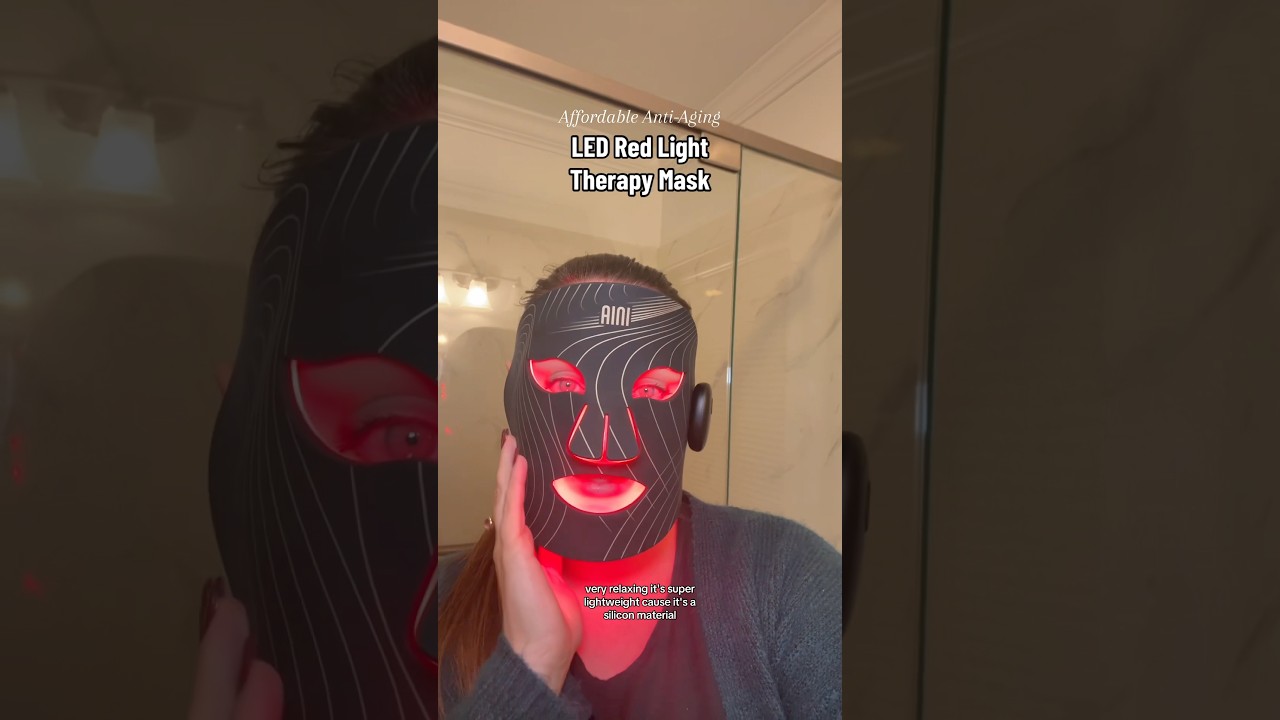
Quick answer: An LED light therapy mask builds collagen at home, which is something Botox does not actually do. I use a wireless silicone mask with red, blue, purple, and yellow light for about 10 minutes before bed. It is peaceful, takes no real effort, and the results show up gradually in the skin.
If you have been looking at every LED light therapy mask on the internet trying to figure out which one is worth the money, here is mine. I picked a wireless silicone option with more LEDs and more color modes than the top-of-the-list competitors, and I use it for ten minutes most nights. This LED light therapy mask review covers why I chose this style, what to look for if you are shopping, and how I actually use it at home.
Why an LED light therapy mask over other anti-aging tools
Here is the thing nobody talks about enough: Botox does not build collagen. It relaxes specific facial muscles to soften wrinkles, but it does nothing to actually strengthen the skin underneath. An LED light therapy mask works in the opposite direction. Red wavelengths of light penetrate the skin and stimulate the cells that produce collagen, the structural protein that keeps skin firm and bouncy. For at-home daily use, that is a real point of difference. You are investing ten minutes a day in something that supports the long game of skin health, not a quarterly appointment that smooths the surface.
What to look for in an LED light therapy mask
If you are shopping right now, these are the features that made me settle on mine instead of the popular ones every dermatologist seems to be paid to mention.
Wireless and rechargeable. No cord to dodge while you are trying to relax.
Silicone construction. It contours to your face comfortably and lets you wear it while lying down without a hard plastic shell pressing in.
Multiple light colors. Different wavelengths target different things. A mask with red, blue, purple, and yellow gives you flexibility from one tool.
More LEDs and better coverage. The number of individual LEDs across the mask matters. More lights means more even exposure, especially around the cheeks and forehead.
Built-in timer. Most quality masks auto-shut off around 10 minutes, which is the standard treatment window.
Adjustable strap. You want it secure enough to wear hands-free.
A good LED light therapy mask gives you several color modes, each one targeting something different. Here is the short version of what each color is generally used for in at-home skincare:
Red light. The collagen builder. The wavelength most associated with anti-aging and firming.
Blue light. Targets the bacteria associated with breakouts, often used by people with acne-prone skin.
Purple light. A blend of red and blue, useful when you want both anti-aging and clearing in one session.
Yellow light. Often used for tone and to soothe the look of redness.
Most nights I run mine on red because building collagen is the main goal for my skin right now. The color flexibility is part of why I wanted a multi-mode mask rather than a single-color version.
How I use my LED light therapy mask
Cleanse first. A clean face lets the light reach the skin without makeup or sunscreen blocking it.
Put the mask on and secure the strap. The silicone shapes to your face.
Choose your color. Mostly red for me.
Set it and lie down. Ten minutes. The mask shuts off automatically when the session is done.
Use the time to wind down. Most evenings I do this right before bed. It is quiet, your eyes are protected, and it doubles as a ritual that signals the day is closing.
Finish with your usual serum and moisturizer. Skincare goes on after, when the skin is warm and receptive.
What to expect from your results
The honest answer: gradual. LED light therapy is not a one-session miracle. Consistency over weeks and months is what produces visible difference. The first thing most people notice is a smoother look to the skin and a gradual brightening. Texture changes follow. None of this replaces a real skincare routine; what it does is amplify the work the rest of your routine is already doing, by giving the cells underneath more of the building blocks they need.
Key takeaways
An LED light therapy mask uses red light to build collagen, which Botox does not do.
Look for wireless, silicone, multi-color, with enough LEDs for even coverage.
Ten minutes a night, often before bed, is the standard session.
Results are gradual; consistency over months is the rule.
Frequently asked questions
Does an LED light therapy mask actually build collagen?
Red wavelengths of LED light are associated with stimulating the cells that produce collagen, the structural protein that keeps skin firm. Effects build over consistent use rather than from a single session.
How often should I use an LED light therapy mask?
Most home users run a session 3 to 5 times a week, with each session around 10 minutes. Some users do it daily. Consistency is the most important variable.
Is an LED light therapy mask safe to use at home?
At-home LED masks are designed to be safe for daily use, with built-in timers and eye coverage. If you have sensitive skin, are pregnant, or are on photosensitizing medications, check with a dermatologist before starting.
Should I use my LED light therapy mask on clean skin or with skincare on?
Clean, dry skin. Makeup, sunscreen, and most serums can block the light from reaching your skin. Apply your products after the session, when skin is warm.
What color of light should I use most?
For most adults focused on anti-aging, red is the default. Blue gets attention from people targeting breakouts. Many masks let you cycle through.
How long until I see results from an LED light therapy mask?
Visible results typically build over weeks to a few months of consistent use. The earliest changes tend to be smoothness and brightness, with texture changes following.
About Anna Katherine
I share the real version of building a home, a small business, and a skincare routine on a budget. Honest reviews, no sponsored hype. Follow on TikTok and YouTube.
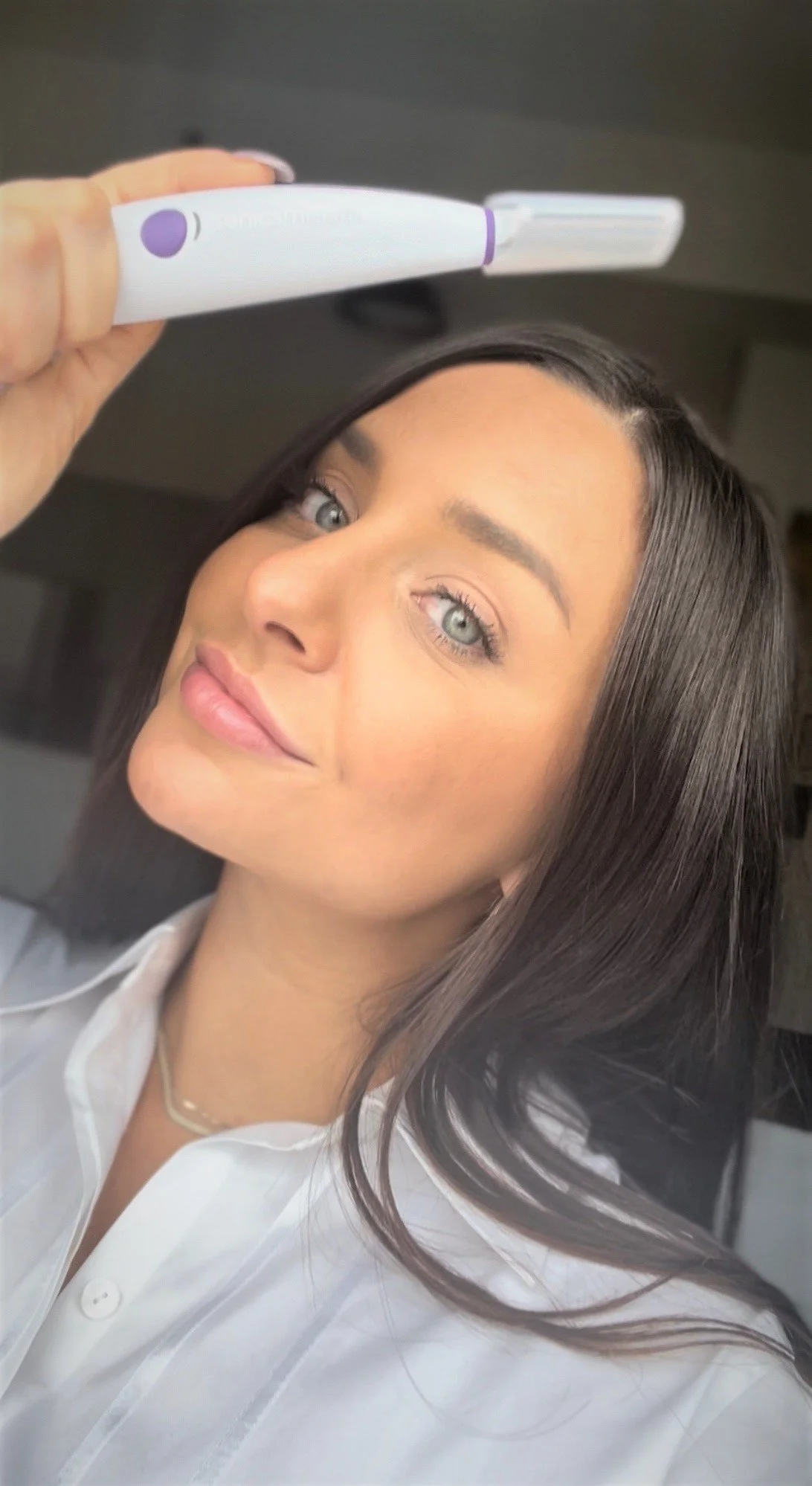
Quick verdict: The Michael Todd Beauty Sonicsmooth Pro+ is the at-home dermaplaning tool to look at for most people. The sonic vibration makes it faster and less nick-prone than a manual dermaplaning razor, it has three speeds, and it comes with a 3-year warranty.
See the full routine start to finish, including technique, speed settings, and results.
What is the Michael Todd Beauty Sonicsmooth?
The Sonicsmooth is a sonic dermaplaning system, a cordless tool that uses a fine, single-use blade vibrating at 15,000 sonic movements per minute (250 plus per second) to exfoliate dead skin and remove peach fuzz. Unlike a plain dermaplaning razor, the sonic motion does the work for you, so you glide instead of scrape. That is what makes it gentler on sensitive skin and easier for beginners.
Dermaplaning at a spa typically runs about $100 per treatment. The Sonicsmooth pays for itself after roughly one visit, and you can do it at home whenever you want smoother skin or a flawless makeup base.
Sonicsmooth specs at a glance
Feature
Detail
Sonic speed
15,000 movements per minute (250 plus per second)
Speed settings
3 adjustable levels
Blades included
16 single-use, medical-grade stainless steel
LED
Built-in light on the safety tip
Power
USB rechargeable, cordless, wireless charging cradle
Warranty
3 years
Also includes
2 microdermabrasion tips
Awards
Allure Readers’ Choice, Best Tool Breakthrough
Sonicsmooth vs Sonicsmooth Pro+: Michael Todd sells two versions. The specs above and the buttons on this page are for the Pro+, the kit with 16 single-use blades and two microdermabrasion tips. The base Sonicsmooth is a separate listing with the same three speeds and 3-year warranty, so check which one is in the cart. For what to do with those two tips, see How to Use the Michael Todd Microdermabrasion Tip.
Genuinely painless. The sonic vibration means no tugging or razor burn, even around the jaw and upper lip.
Smoother makeup, instantly. Foundation sits more smoothly on freshly dermaplaned skin. This is the benefit most people notice first.
Three speed settings. Lower speed on the cheeks, higher for denser peach fuzz. Most competitors have one speed.
Best-in-class warranty. A 3-year warranty on a tool at this price is a sign the brand stands behind it.
Cordless and wireless charging. Charges on the cradle, travels easily, no cords in the bathroom.
Tiny cost per use. One spa dermaplaning visit costs about the same as the whole device.
What to keep in mind
You will rebuy blades. The single-use tips are consumable. Budget for refills a few times a year, still far cheaper than the spa.
Technique matters at first. Your first session has a small learning curve: short, light strokes on clean, dry skin. The step-by-step guide walks you through it.
Not for active acne. Skip dermaplaning over active breakouts or raised blemishes. See the safety guide.
Sonicsmooth vs. Dermaflash Luxe+ (honest comparison)
The Dermaflash Luxe+ is the other big name. Here is the straight comparison so you can choose for yourself:
Sonicsmooth Pro+
Dermaflash Luxe+
Speed settings
3
1
Warranty
3 years
Not stated
Blades in box
16
Fewer
Extras
2 microdermabrasion tips, LED tip
PREFLASH cleanser included
Best for
Control, value, longevity
Simplicity, included cleanser
Bottom line: If you want the included cleanser and the simplest one-button experience, Dermaflash is a fine pick. If you want more control with 3 speeds and a 3-year warranty, the Sonicsmooth Pro+ wins. The full side by side is in Dermaflash vs Michael Todd.
Buy it if you want smoother skin, better makeup application, and painless peach-fuzz removal without paying for repeat spa visits. It is especially good for dermaplaning beginners because the sonic motion is forgiving. Skip it for now if you have active acne or very reactive, broken skin.
How to use it (the short version)
Start with clean, completely dry skin.
Hold skin taut and use short, light, downward strokes at about a 45 degree angle.
Go slow around the jaw and upper lip.
Follow with a hydrating serum and SPF. Freshly dermaplaned skin loves product and needs sun protection.
Also looking at hair removal? Dermaplaning clears peach fuzz for a week or two. For hair that keeps coming back on legs, underarms or the bikini line, at-home IPL is the next step up, and the one to look at is the Nood Flasher Pro, the only at-home IPL device with an energy figure in a public FDA file.
For most people, yes. If you dermaplane even a few times a year it replaces repeat spa visits, and the 3-year warranty makes it low risk.
Does dermaplaning make hair grow back thicker?
No. Dermaplaning cuts fine vellus hair straight across at the surface. It does not change the hair’s thickness or color, and it grows back exactly as before. More in the myths and mistakes post.
How often should I use it?
Most people dermaplane every 1 to 2 weeks to let the skin’s surface renew between sessions.
Does it hurt?
No. The sonic vibration is what keeps it painless, with no razor burn or tugging when you use light strokes on dry skin.
The Sonicsmooth Pro+ comes with a 3-year warranty and 16 blades in the box. It is the at-home dermaplaning tool to look at for salon-smooth skin without repeat salon visits.