Disclosure
This post contains affiliate links, which means I may earn a small commission if you make a purchase through my links, at no extra cost to you.
Quick answer: Here is how to dermaplane at home with the Michael Todd Sonicsmooth Pro+: cleanse, apply a few drops of face oil so the blade glides, pin hair back, then use short downward strokes at a 45 degree angle. Wipe the blade between sections. The whole routine takes 5 to 7 minutes and gives you smoother skin and visibly better makeup application the same day. Repeat once every 3 to 4 weeks.
Last updated: November 10, 2026
Shopping Black Friday? The Michael Todd Sonicsmooth Pro+ is up to 40% off right now at Michael Todd Beauty. Check today’s price before you buy.
If your makeup never looks quite as smooth as it does in product photos, the issue is probably not the makeup. It is the peach fuzz, dead skin, and tiny hairs that catch foundation and break up coverage. Dermaplaning solves this in under 10 minutes, and you do not need to book an esthetician to do it.
The routine below is built around the Michael Todd Beauty Sonicsmooth Pro+, a sonic dermaplaning tool made for at-home use. Expect a surprising amount of dead skin and peach fuzz to come off the first time, and smoother makeup the same day.
What is dermaplaning and how to dermaplane at home?
Dermaplaning is a physical exfoliation technique that uses a fine blade held at a shallow angle to lift away dead skin cells and vellus hair (peach fuzz) from the face. The benefits are immediate: smoother texture, better product absorption, and a noticeably smoother makeup application.
Done professionally at an esthetician’s office, it runs $75 to $150 a session. At-home tools like the Sonicsmooth Pro+ use a sonic-vibration blade that does the same job safely at home, as a one-time purchase.
This is the order to follow. Skipping the oil step is the most common at-home mistake and the reason most people nick themselves the first time.
Step 1: Cleanse and dry your face
Start with a clean, dry face. Any makeup, sunscreen, or sweat on the skin will gum up the blade and reduce how well it lifts hair and dead skin.
Step 2: Apply a few drops of face oil
Warm 3 to 4 drops of a light facial oil like rosehip or jojoba between your fingertips and press it into your face. The oil helps the blade glide instead of drag, which is what prevents nicks. Cover everywhere you plan to dermaplane: forehead, cheeks, jawline, under the nose, chin, and just below the jaw.
Step 3: Pin your hair back
Pull hair completely off your face with sectioning clips or a headband. Loose strands catch in the blade and can get cut.
Step 4: Load the cartridge and turn on the tool
The Sonicsmooth Pro+ kit comes with 16 single-use blades. Slide a fresh one into the head until it clicks. Press the power button. The sonic vibration makes the blade glide more smoothly and lifts dead skin and peach fuzz more effectively than a flat razor.
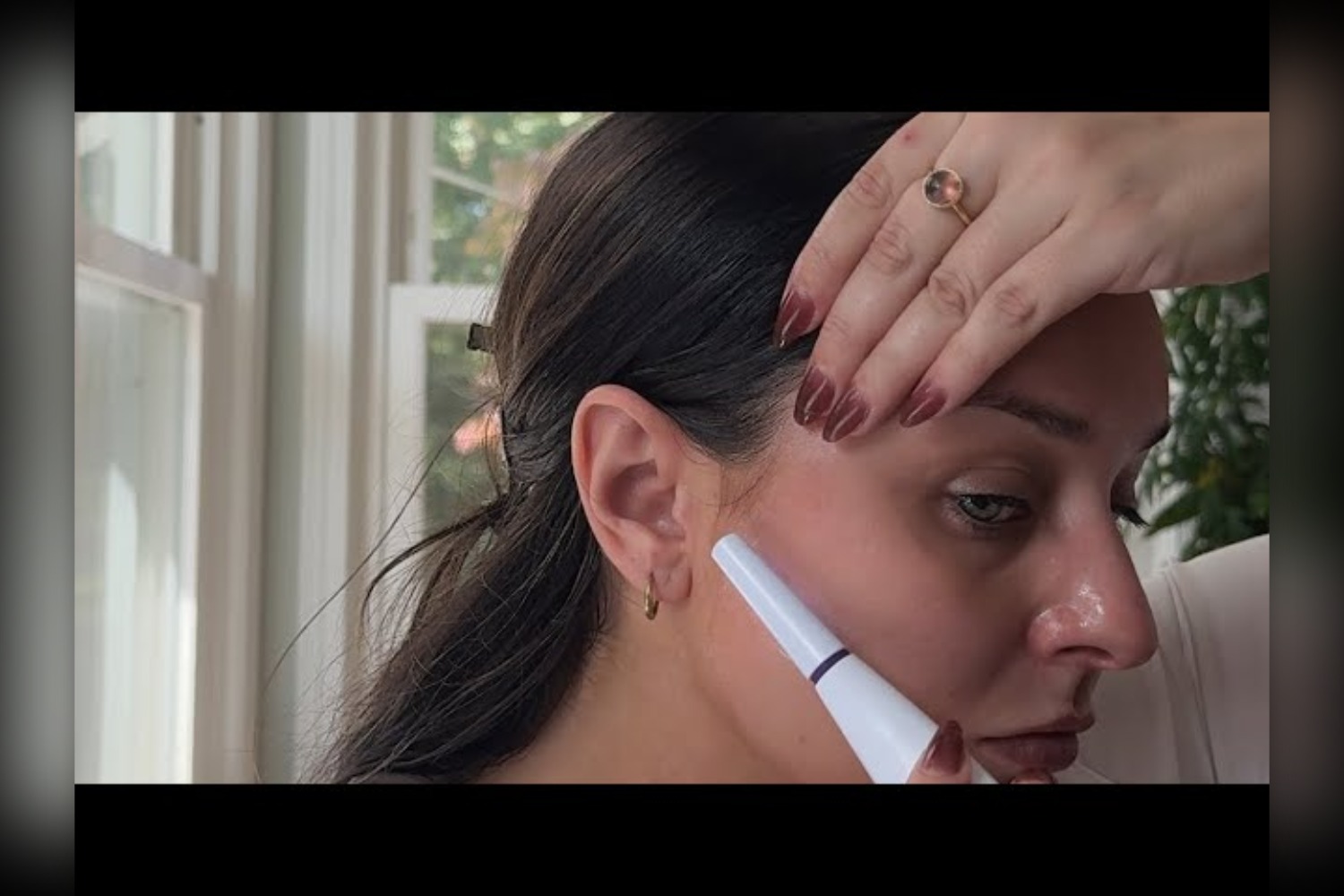
Step 5: Work in short strokes at a 45 degree angle
Hold the tool at a 45 degree angle to the skin. Use short, downward strokes (about an inch long). Gently pull the skin taut with your free hand. Work one section at a time:
Sideburns and outer cheeks
Inner cheeks
Jawline and under the chin (the spot most people miss)
Forehead, including between the brows
Upper lip
The bridge and sides of the nose
Carefully under the eyes
Step 6: Wipe the blade between sections
Have a paper towel ready. Every few strokes, wipe the blade clean. The visible buildup is the proof the tool is working. It is also the reason wiping matters: a clogged blade does not lift well.
Step 7: Apply serum and moisturizer
Right after dermaplaning, your skin absorbs product better than usual. This is the window for a hydrating serum and moisturizer. Avoid retinol or strong acids for at least 24 hours. The full routine is in What to Use After Dermaplaning.
What to know about the Sonicsmooth Pro+
The Sonicsmooth Pro+ is not an intimidating tool. The sonic vibration does most of the work, so there is no need to press hard, and pressing is what causes nicks. That is the main difference from the flat dermaplane razors sold in multi-packs.
The kit comes with 16 blades, and you will need more eventually. Michael Todd designs each blade for one-time use, so start every session with a fresh one. The replacement blades come in an eight-pack.
Bottom line: it is a strong pick for at-home dermaplaning, especially for beginners.
Once every 3 to 4 weeks. Doing it more often does not give better results and can irritate the skin barrier. The reason: vellus hair grows back at roughly the same rate as the skin renewal cycle, so once a month is the sweet spot. Adjust for your skin type: oily every three to four weeks, dry every four to six, sensitive every six to eight, and never more than once a week. Keep blade refills on hand.
Cleveland Clinic says some people with existing skin concerns should not have dermaplaning, and advises talking to a healthcare provider first if you have an active case of acne, cold sore outbreaks, eczema, psoriasis, moles, freckles, skin tags or other skin growths, skin burns such as those from radiation therapy, or a skin rash such as contact dermatitis. Also skip it if any of these apply:
Anyone with active acne, pustules, or open lesions. The blade can spread bacteria.
Anyone with rosacea or active eczema flares.
Anyone using prescription retinoids (consult your dermatologist).
Anyone with very sensitive skin that reacts to physical exfoliation.
Key takeaways
Always apply oil first so the blade glides instead of drags.
Hold the tool at 45 degrees with short downward strokes.
The Sonicsmooth Pro+ uses sonic vibration for better lift than a flat razor.
Wipe the blade between sections so it keeps working.
Dermaplane once every 3 to 4 weeks. More is not better.
Do not dermaplane over active acne, rosacea, or eczema flares.
Also looking at hair removal? Dermaplaning clears peach fuzz for a week or two. For hair that keeps coming back on legs, underarms or the bikini line, at-home IPL is the next step up, and the one to look at is the Nood Flasher Pro, the only at-home IPL device with an energy figure in a public FDA file.
Hold a dermaplaning blade at about a 45 degree angle and use short, light strokes. Any steeper and the blade scrapes the skin instead of gliding; any flatter and it will not catch the vellus hair, the soft peach fuzz on your face. If you find yourself pressing, the angle is wrong. Hold the skin taut with your free hand and wipe the blade between sections.
Does the hair grow back thicker after dermaplaning?
No. Hair growing back thicker after dermaplaning is a common myth. Vellus hair, the soft peach fuzz on the face, grows back at the same fineness and density it had before, because cutting a hair at the surface does not change the follicle under the skin. More myths and side effects are covered in Dermaplaning Mistakes and Side Effects.
Is dermaplaning at home safe?
Dermaplaning at home is generally safe for healthy skin when you use a tool made for home use and the right technique. Sonic-vibration tools like the Michael Todd Sonicsmooth Pro+ are designed for at-home use. Apply face oil first and use short strokes at a 45 degree angle. Cleveland Clinic advises talking to a healthcare provider first if you have active acne, cold sores, eczema or psoriasis.
How long does an at-home dermaplane take?
An at-home dermaplane takes about 5 to 7 minutes once you have the routine down. The first time can take 10 to 15 minutes while you learn how the tool feels and where to hold the skin taut. Work in sections, wipe the blade between each one, and do not skip the face oil step, which is the most common at-home mistake.
Does dermaplaning help with makeup application?
Yes. With peach fuzz and dead skin removed, foundation and concealer sit on the skin instead of catching on fine hair, so coverage tends to look smoother and last longer through the day. For the smoothest base, finish the routine with serum and moisturizer before you start your makeup, as in step 7 of the routine above.
How much does the Michael Todd Sonicsmooth Pro+ cost?
Prices for the Michael Todd Sonicsmooth Pro+ change often with sales, especially around Black Friday, so this guide does not list one. Check today’s price at check today’s price at Michael Todd Beauty before you buy. The section above on what to know about the Sonicsmooth Pro+ covers how the tool works and what to look for when you compare it with other options.
Can you dermaplane wet skin?
No. Always dermaplane on clean, dry skin with a light layer of face oil. Wet skin drags against the blade and raises the risk of nicks, while the oil helps the blade glide. Pat your face completely dry after cleansing, apply a few drops of oil, and then start with short strokes at a 45 degree angle.
Final notes on how to dermaplane at home
Once you know how to dermaplane at home, the routine becomes a 5-to-7-minute habit you do once every 3 to 4 weeks. The biggest payoff is how much smoother foundation looks after, but the secondary benefits (better serum absorption, brighter skin, less product clinging to peach fuzz) compound over time. The Michael Todd Sonicsmooth Pro+ is the at-home tool that makes how to dermaplane at home actually safe and effective for non-estheticians.
Sources
Sources checked on November 10, 2026. Figures from brands are reported as the brand’s own claims.
I am Anna Katherine Page. I share beauty, home care, and resale tips from Seneca, South Carolina. Follow along on YouTube for more honest beauty reviews.
(function(){
if (!window.matchMedia || !window.matchMedia('(max-width: 781px)').matches) return;
var aff = /go\.shopmy\.us|amzn\.to|amazon\.com\/.*tag=|walmrt\.us|pxf\.io|shareasale|awin1|anrdoezrs|dpbolvw|jdoqocy|tkqlhce|kqzyfj|sjv\.io|linksynergy/i;
var root = document.querySelector('.wp-block-post-content') || document.querySelector('.entry-content');
if (!root) return;
var btns = root.querySelectorAll('a.wp-block-button__link');
var first = null;
for (var i = 0; i < btns.length; i++) { if (aff.test(btns[i].href)) { first = btns[i]; break; } }
if (!first) return;
var name = '';
var p = root.querySelector('p');
if (p) { var l = p.querySelector('a'); if (l && l.href === first.href) name = l.textContent; }
if (!name) name = first.textContent;
var bar = document.createElement('div');
bar.className = 'ak-sticky-buy';
bar.setAttribute('role', 'region');
bar.setAttribute('aria-label', 'Top pick');
var span = document.createElement('span'); span.className = 'ak-sb-name'; span.textContent = 'Top pick: ' + name.trim();
var a = document.createElement('a'); a.href = first.href; a.target = '_blank'; a.rel = 'nofollow sponsored noopener'; a.textContent = 'Shop now';
var x = document.createElement('button'); x.type = 'button'; x.setAttribute('aria-label', 'Close'); x.textContent = '×';
bar.appendChild(span); bar.appendChild(a); bar.appendChild(x);
document.body.appendChild(bar);
var closed = false;
x.addEventListener('click', function(){ closed = true; bar.classList.remove('is-on'); });
function check(){
if (closed) return;
var r = first.getBoundingClientRect();
var footer = document.querySelector('footer');
var nearEnd = footer && footer.getBoundingClientRect().top < window.innerHeight;
if (r.bottom < 0 && !nearEnd) bar.classList.add('is-on'); else bar.classList.remove('is-on');
}
window.addEventListener('scroll', check, { passive: true });
check();
})();
(function () {
var c = document.body.className;
c = c.replace(/woocommerce-no-js/, 'woocommerce-js');
document.body.className = c;
})();
Leave a Reply