Quick answer: For wedding lawn games, I set up five for a garden wedding at the South Carolina Botanical Garden in Clemson: glow in the dark pong, ladder toss, bocce ball, giant jenga and cornhole. This wedding was a small one, under 50 guests, so that set was plenty. I run Keowee Event Co., my game rental business, by myself, and every game I used is on my Amazon event rental list below, plus the square card table and white tablecloth I put the giant jenga on.
Last updated: November 14, 2026
My verdict: Five simple, durable, outdoor-grade games were plenty for this wedding, which was a small one with under 50 guests. They are easy to set up alone, they survive a night on wet grass, and guests of every age can play. A larger wedding would need more stations. I would add more, including a second cornhole set, so a line does not form. If you are hosting your own wedding or party, you can shop the exact games from my Amazon event rental list. If you are local to Oconee or Pickens County, SC, you can rent them from Keowee Event Co. instead.
Part 1, my video: setting up wedding lawn games at the South Carolina Botanical Garden.
The 5 wedding lawn games I set up
These are the games in my setup video, with the Amazon link for each one on my event rental list.
Glow in the dark pong. Buckets set out on the lawn, so the game keeps going after dark. Glow pong set on Amazon.
Ladder toss. I assemble the frames and hang the bolas on top, lined up as straight as I can get them. Ladder toss set on Amazon.
Bocce ball. The bride wanted it set up horizontally, so that is how it went. My set is vintage, real wooden Italian made bocce balls that I got to keep after helping a family clean out an inherited house. The closest match I have found is this Italian made bocce set on Amazon.
Giant jenga. I stack the tower on a square card table covered with a white tablecloth so it sits up off the grass. Giant tumbling tower on Amazon.
The setup in this post was for a small wedding under 50 guests, so five games was plenty. The number of stations you need depends on the guest count. A larger wedding needs more places to play, and I would bring more than one cornhole set so guests are not waiting in a line.
Guest count
A starting point for stations
Under 50
4 to 6 stations. The five-game set I used for this wedding sits in this range.
50 to 100
6 to 8 stations, and consider a second cornhole set so a line does not form.
100 to 150
8 to 10 stations, with more than one of the most popular games, often cornhole.
150 or more
10 or more stations, spread around the lawn so guests are not all in one cluster.
This is a general rule of thumb, not a count from my books. Adjust for how much lawn you have and how long guests will be outdoors.
The card table and tablecloth for giant jenga
My card table is vintage. I did not pay for it; it was left over from another house I helped clean out. Who doesn’t need a card table? If you ever have guests over, it is just handy to have. The one thing I did buy was a new white square tablecloth from Amazon. If you need both, here is the square folding card table and the white square tablecloth on my list.
Lesson of the day: always bring the steamer for the tablecloth. I did not bring mine, so I went home to get it, because it really is the little details that matter on a special day.
How I set up wedding lawn games by myself
Park close if you can. At this venue I could park near the lawn, so I never had to carry anything a long distance.
Ask how much space the tent takes. I did not know how much room the tent would need, and I should have asked. Ask before you lay out the games.
Line everything up. Games set in straight rows look finished in photos.
Follow the couple’s layout. If they want a game a certain way, like bocce running horizontally, set it that way.
Teardown: the half of the job nobody sees
Part 2, my video: the morning after the wedding.
The morning after, everything was wet because the sprinklers had gone off for the sod. I skipped the carry bags so nothing sat in the damp, loaded the games straight into my car and dried them in the sun at home. Because the games are durable and outdoor grade, that was no problem. The breakdown and loading took me 11 minutes, partly because the games are simple and some were already taken down, and unloading and drying everything took about 20 more.
I have a background in procurement, supply chain and cost estimating, and one thing small business owners often miss is counting all of their time and labor, from start to finish. If you are thinking about starting your own, here is how I launched a party rental business with AI.
Who should skip buying these
If you only need wedding lawn games for one wedding or party, renting is usually simpler than buying and storing five games. Skip the glow pong if your event ends before dark. And if your venue has no flat lawn, giant jenga and bocce get frustrating fast.
Wedding lawn games FAQ
What lawn games are good for a wedding?
For a garden wedding I set up five wedding lawn games: glow in the dark pong, ladder toss, bocce ball, giant jenga and cornhole. They are simple for guests of every age, quick to set up alone, and durable enough to sit out on wet grass overnight. The glow pong keeps people playing after dark, which matters for evening receptions.
How many lawn games do you need for a wedding?
I set up five games for this wedding, which was a small one with under 50 guests, and it felt like plenty. A larger wedding needs more stations. I would add more, for example a second cornhole set, so a line does not form. The guests-to-games table in this post is a general rule of thumb, not a count from my books. Before you decide, ask the venue how much space the tent will take, because I did not and wished I had.
What do you put giant jenga on at a wedding?
I stack the giant jenga tower on a square folding card table covered with a white square tablecloth, so it sits up off the grass and looks finished in photos. My lesson of the day was to always bring a steamer for the tablecloth, because wrinkles show. I went home to get mine before guests arrived.
How do you set up lawn games for a wedding?
Park as close to the lawn as you can, find out how much room the tent needs, then lay the games out in straight lines. Follow the couple’s wishes on layout; the bride wanted bocce running horizontally. Put giant jenga on a covered table, hang the ladder toss bolas on the frames and set out the glow pong buckets.
How do you clean lawn games after an event?
After this wedding everything was wet from the sprinklers. I skipped the carry bags so nothing sat damp, loaded the games straight into my car and dried them in the sun at home. Durable, outdoor-grade games handle that well. Breakdown and loading took me 11 minutes, and unloading and drying took about 20 more.
To find a flower’s price per stem, divide the bunch or bucket price by the number of stems in it: a $9 bunch of 10 zinnias is $0.90 a stem. Then check it against what each stem costs you. University of Tennessee Extension’s 2025 zinnia budget works out to about $0.67 a stem with labor counted, so any price under that loses money.
I built this calculator so you can check a price in a few seconds, at the market or before you send out an availability list. Change the three starting numbers to yours.
Flower Price Per Stem Calculator
Enter what you charge for a bunch or a bucket and how many stems are in it. The starting numbers are a 10-stem zinnia bunch at a real farm’s wholesale price and University of Tennessee Extension’s 2025 zinnia cost. Results update as you type.
Quick start
$
stems
$
Do not know your cost per stem yet? Keep the $0.67 to start, or work yours out with the profit per acre calculator.
Fine-tune: sleeves, your time and markup
Per bunch or bucket
$
min
$
Your target
x
The $0.67 starting cost already includes UT’s labor (112 hours at $15.87 an hour) and its marketing costs. If you keep it, leave the minutes at 0 unless you are adding time it misses. A markup of 1.5x is about where UT’s zinnia budget lands ($1.00 price on a $0.67 cost).
Nothing you type here is saved or sent anywhere.
Get the free pricing breakdown by email
Five short emails: the full breakdown of the free Flower Pricing Reality Check, then how to find your floor for one bouquet, three prices you can say without flinching, and why big quotes come out too small.
By signing up you agree to get these emails from Anna Katherine. Unsubscribe anytime. Privacy policy.
How the price per stem math works
1Price per stembunch price ÷ stems
2Your floorcost per stem + extras ÷ stemssleeves, bands, your time
3Keep or loseprice per stem minus floor
4Target pricefloor x your markupwhat to charge next time
Your floor is the lowest price that pays for the stem, the sleeve and your time. Sell under it and every bunch costs you money, no matter how fast it sells. The markup is what you add on top so the farm earns something after every bill is paid.
Worked example: a 10-stem zinnia bunch
Say you sell zinnias in 10-stem bunches, the standard count for most species in Virginia Tech’s cut flower guide. True Love Seeds lists wholesale zinnias at $9 for a bunch of 10, which is $0.90 a stem. UT’s budget puts one zinnia stem at about $0.67 ($6,166.82 in costs for 9,256 stems). Each stem leaves $0.23, or $2.30 a bunch.
Now add a $1 sleeve and 6 minutes of your own time, and say you pay yourself $20 an hour. That is $3 more per bunch, or $0.30 a stem, so your floor rises to $0.97. The same $9 bunch now loses $0.70. At a 1.5x markup, that bunch should be about $14.60.
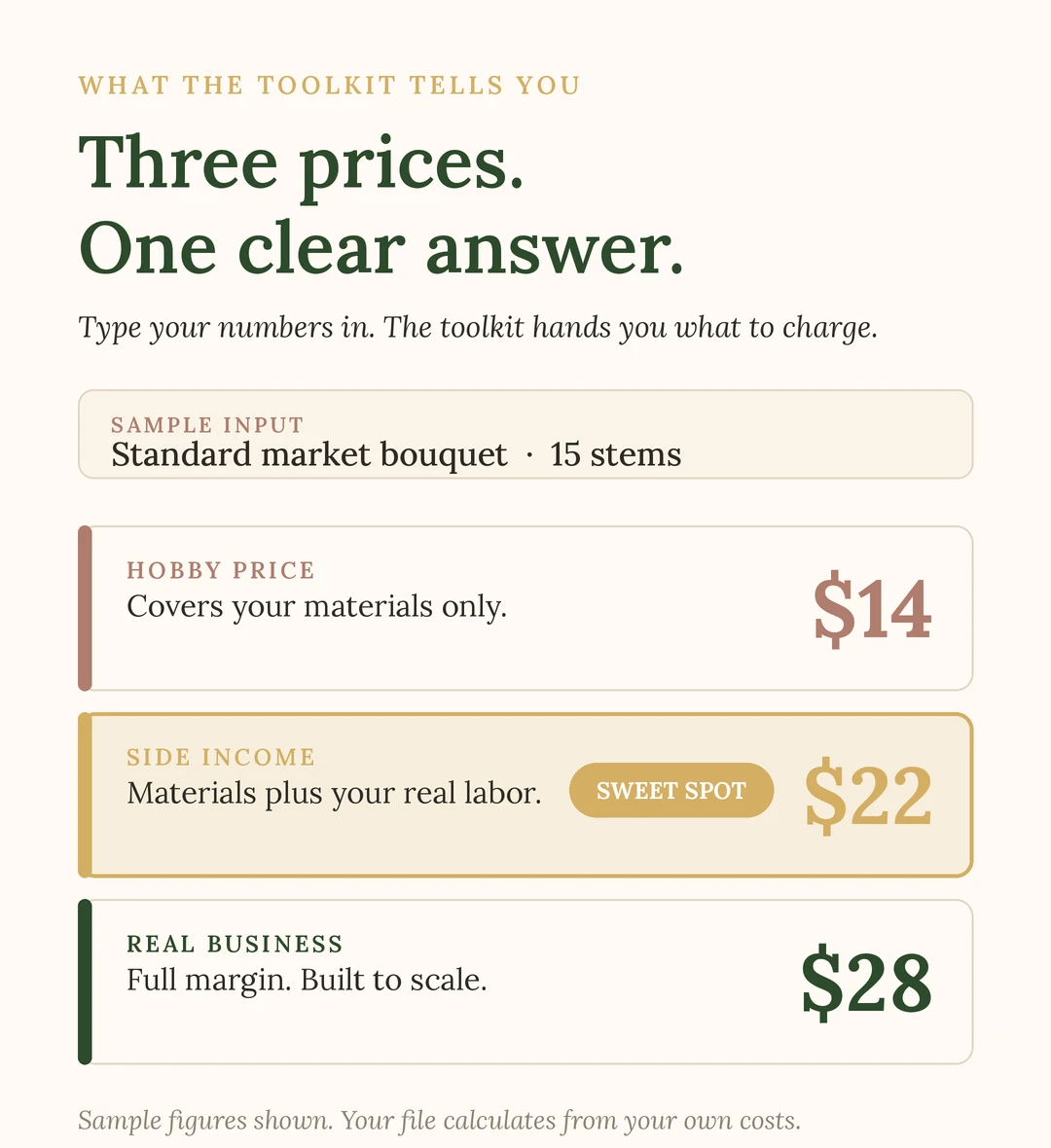
This calculator checks one bunch at a time. The Flower Farm Pricing Toolkit I built is one spreadsheet with 17 tabs and 11 calculators. It works out your true cost per stem for 35 varieties, seed to sale, then turns it into bouquet, market, CSA and wedding prices with your labor built in. It works in Excel and Google Sheets and costs $27. If it is not for you, reply to your purchase email within 14 days for a full refund. See the $27 toolkit.
Price per stem questions
What does price per stem mean?
It is the price of one flower stem. Growers sell in bunches, buckets and bouquets, so price per stem is the bunch price divided by the number of stems in it. It lets you compare a 5-stem bunch with a 10-stem one, or your price with a wholesale list.
How do you calculate price per stem?
Divide the bunch or bucket price by the number of stems. A $9 bunch of 10 zinnias is $0.90 a stem. Then subtract what one stem costs you to grow; what is left is what each stem earns.
How many stems are in a bunch of flowers?
Ten. Virginia Cooperative Extension calls ten stems per bunch the standard for most species, with some sold in fives or as singles.
What is a reasonable cost per stem for flowers?
University of Tennessee Extension’s 2025 zinnia budget comes to about $0.67 a stem: $6,166.82 in costs, including labor at $15.87 an hour and marketing, for 9,256 stems sold at $1.00. Your own cost depends on the variety, your yield and your time. The profit per acre calculator on this site shows a lower break-even, $0.59, because it counts the budget’s marketing cost as a share of whatever price you charge.
The next step: what to charge
Flower Farm Pricing Toolkit
17 tabs and 11 calculators in one spreadsheet
True cost per stem for 35 varieties, seed to sale
Bouquet, market, CSA and wedding prices with your labor built in
Works in Excel and Google Sheets, instant download
Flower farm profit per acre is your sales minus every cost, including your own hours, divided by the acres you have in beds. University of Tennessee Extension’s 2025 zinnia budget shows $9,256 in sales and $3,089 left over on just 1,000 square feet, while a Virginia Tech extension guide cites $25,000 to $35,000 in value per acre for field-grown cut flowers.
I built this free calculator so you can run that math on your own beds in about a minute. When you are ready to turn your numbers into real prices for bouquets, CSA shares, weddings and market tables, the Flower Farm Pricing Toolkit is the spreadsheet I made to do it all in one place.
Flower Farm Profit Per Acre Calculator
Pick a crop to load University of Tennessee Extension’s 2025 budget numbers, then change anything to match your farm. Results update as you type.
Quick start
$
Count planted beds only, not paths. 1 acre is 43,560 square feet.
Fine-tune yield and costs (per 1,000 sq ft)
What the beds produce
%
What it costs you
% of sales
$
hrs
$
$
Nothing you type here is saved or sent anywhere.
How the profit per acre math works
1Stems soldplants x % sold x stems per plant
2Salesstems sold x price per stem
3Profitsales minus all costsmarketing, growing, your labor, overhead
4Per acreprofit per 1,000 sq ft x 43.56a ceiling, not a promise
Your labor is counted as a cost on purpose. If you leave it out, the profit looks bigger, but it is really unpaid wages. The line “what you earn per hour worked” puts it back so you can see what the beds actually paid you.
Why the per acre number can look too good
Scale a 1,000 square foot budget up to a full acre and the numbers jump. The field-acre estimates tell a different story.
Sales per acre: on paper vs. in the field
Small-plot budget scaled to an acreField-acre estimate
Multiply the zinnia budget by 43.56 and you get more than $130,000 of profit per acre and over 400,000 stems. The field-acre estimates are a small fraction of that. The gap is the part most profit calculators skip: an acre has paths and headlands, not every crop yields like zinnias, and you have to find a buyer for every stem you count. Use the per 1,000 sq ft result as your honest number, and treat the per acre line as a ceiling.
Same 1,000 square feet, very different profit
Crop choice moves your profit as much as acreage does. In University of Tennessee’s 2025 budgets, zinnias keep about a third of their sales after every cost, while single-stem sunflowers keep about an eighth. One zinnia plant gives about 8 stems; a single-stem sunflower gives 1. Switch the calculator’s starting numbers to compare them yourself.
Zinnias
$3,089 kept
of $9,256 in sales
33% of sales kept. 9,256 stems at $1.00. Many stems per plant.
Sunflowers, single stem
$629 kept
of $4,760 in sales
13% of sales kept. 2,800 stems at $1.70. One stem per plant.
These are the calculator’s starting numbers, taken from the University of Tennessee zinnia budget: 1,780 plants on 1,000 square feet, 65 percent marketed, 8 stems per plant, $1.00 a stem.
Profit: $9,256 minus $6,167 = $3,089 on 1,000 square feet
Break-even: about $0.59 a stem. Below that, every stem you sell costs you money.
Notice how much rides on the price per stem. That is the one number you control at the market table. If you are not sure what your stems really cost you, the free Flower Pricing Reality Check works out your cost per stem, and the Flower Farm Pricing Toolkit turns it into prices for every way you sell.
What the full toolkit adds
This page answers one question: does the space pay? The toolkit answers the next one, which is what to charge for every stem, bouquet and share you sell.
The next step: what to charge
Flower Farm Pricing Toolkit
17 tabs and 11 calculators in one spreadsheet
True cost per stem for 35 varieties, seed to sale
Bouquet, market, CSA and wedding prices with your labor built in
Works in Excel and Google Sheets, instant download
It depends far more on what you sell than on the acreage. A Virginia Tech extension guide cites $25,000 to $35,000 in value per acre for field-grown cut flowers, and that is sales, not profit. Subtract seed, marketing, overhead and your own hours to find profit. University of Tennessee’s 2025 zinnia budget leaves about a third of sales as profit after paying labor.
Is flower farming profitable on a small plot?
It can be. University of Tennessee Extension’s 2025 zinnia budget shows $9,256 in sales and $3,089 left after all costs, including paid labor, on just 1,000 square feet. Their single-stem sunflower budget leaves only $629 on the same space. Crop choice and price per stem make the difference, so run both through the calculator above.
How many stems can you grow in 1,000 square feet?
University of Tennessee Extension’s 2025 budgets estimate 9,256 marketable zinnia stems from 1,780 plants, assuming 65 percent are sold at 8 stems each, and 2,800 single-stem sunflowers on the same 1,000 square feet. Your own spacing, weather and pests will move these numbers, so track a full season of your harvest and use your real count.
What costs should I count when figuring flower farm profit?
Count marketing and selling costs, seed and plugs, soil and fertilizer, your labor hours at a real wage, and a share of tools, irrigation, cooler space and general overhead. University of Tennessee’s budgets add 20 percent of sales for marketing and 15 percent of production cost for overhead. Leaving out your own time is the most common way growers overstate profit.
Ready to price what those beds grow? The Flower Farm Pricing Toolkit does the math for bouquets, market bunches, weddings and CSA shares, with your labor already in it.
To price a bouquet, add up what your stems and sundries cost, multiply by 2 to 3 for market sales or 4 to 5 for weddings, then add your labor. Put your own numbers in the calculator below and it does the math for one bouquet. If you want every product priced at once, bouquets, weddings, CSA shares and bloom bars, that is what my Flower Farm Pricing Toolkit does.
Bouquet Pricing Calculator
Enter what is in one bouquet. Stem values are what each stem would sell for wholesale.
Stem tier
Stems
$ per stem
Hero (dahlias, ranunculus, peonies)
Mid-range (zinnias, snaps, cosmos)
Filler (feverfew, statice, grasses)
How the calculator works
It runs the same four steps from my bouquet pricing formula, so it works as a simple floral pricing calculator for any mixed arrangement. First it costs your stems at what they would sell for wholesale, even the ones you grew. Then it adds sundries like wrap and a band. Then it multiplies by your markup: 2 to 3 times for a market or stand, 4 to 5 times for weddings and events. Last, it adds your labor, your minutes times your hourly rate. The full walkthrough is in how to price a bouquet.
Where it sells
Markup on materials
Farmers market or roadside stand
2 to 3 times
Weddings and events
4 to 5 times, plus a design fee
What the research says about bouquet prices
Extension research backs up pricing above "garden money." Shoppers in a Utah State University Extension survey said they spend $9.75 to $151 on each flower purchase, $46 on average (Utah State University Extension, 2025). Virginia Tech's Holly Scoggins suggests keeping one or two bouquet price points with a consistent stem count rather than pricing every bunch differently (Marketing Specialty Cut Flowers, Virginia Tech). Mississippi State University Extension recommends checking your prices against wholesale florist price lists and the USDA Ornamental Wholesale Market Report so you are not far below what other farms charge (Do You Want to Grow and Sell Flowers?, MSU Extension, 2025).
A worked example
The default numbers are a large mixed bouquet: 3 hero stems, 5 mid-range and 4 filler, plus $2 in sundries, which comes to $25 in materials. At 3x that is $75, and 12 minutes at $30 an hour adds $6. Charge about $81, which sits in the premium or large designer range on my cheat sheet. A smaller mixed bouquet with fewer hero stems lands lower, so change the stem counts to match what you actually make.
What the toolkit adds
This page prices one bouquet. The Flower Farm Pricing Toolkit is the spreadsheet I built to price everything you sell: market bunches, CSA shares, weddings and bloom bars, with your labor built into every price. It works in Excel and Google Sheets.
Not sure what your stems cost you? The free Flower Pricing Reality Check works out your cost per stem, then you can bring that number back here.
Bouquet pricing FAQ
How do I price my bouquet?
Add up your stem costs and sundries, multiply by 2 to 3 for market sales or 4 to 5 for weddings, then add your labor. The calculator above does the math for you.
What is the average cost of a bouquet?
From my bouquet pricing cheat sheet: a small single-variety market bunch runs about $12 to $18, a mixed market bouquet about $25 to $45, and a premium or large designer bouquet about $50 to $85. Your local market matters, so check what sells near you.
Should I charge for my labor if I grew the flowers?
Yes. Your time is the most valuable thing in the bouquet. Put your minutes and your hourly rate into the calculator every time, even for flowers from your own beds.
What is the 3:5:8 rule for flowers?
It is a design rule, not a pricing rule. One common version builds a bouquet from 3 focal flowers, 5 stems of foliage and 8 filler stems, working from the center out (Daily Blooms). Other florists use it more loosely, grouping stems in 3s, 5s and 8s (Livingetc). For pricing, count all 16 stems in the calculator above, foliage included, because every one of them cost you something to grow.
To price a flower CSA share, multiply your weekly bouquet price by the number of weeks, then take 5 to 10 percent off as a thank-you for paying upfront. A $25 bouquet over a 10-week season is $250 of flowers, so the share sells for about $230 to $240.
I built this free calculator so you can price your own share in about a minute, and see the cost floor it has to clear. If you want every product priced in one place, bouquets, weddings, CSA shares and market bunches, that is what my Flower Farm Pricing Toolkit does.
Flower CSA Pricing Calculator
The starting numbers are an example. Replace them with yours. Results update as you type.
Quick start
$
weeks
Fine-tune discount, costs and bouquet
Season
%
Your cost floor
$
$
$0.47 a stem is University of Tennessee Extension’s 2025 zinnia budget: $4,316 to grow 9,256 stems on 1,000 sq ft, paid labor and overhead included, before selling costs. Use your own number if you have it.
No bouquet price yet?
$
min
$
Built price = (stems x value + sundries) x markup + your time, rounded up to the next dollar.
Nothing you type here is saved or sent anywhere.
How the CSA share math works
1Bouquet priceyour market bouquetwith your labor in it
2Seasonx weeksfull price for the season
3Thank-youminus 5 to 10%for paying upfront
4Share pricemust clear your floorseason costs / shares
It runs the same math as my CSA guide. Start from a weekly bouquet price you trust. If you do not have one, open “Fine-tune” and the calculator builds it the way my bouquet formula does: your stems at their wholesale value, plus sundries, times your markup, plus your time. Then it multiplies by the weeks and takes off your upfront discount. The full walkthrough is in how to start a flower CSA.
Step 4 is the check most people skip. The University of Kentucky’s Center for Crop Diversification puts it simply: add up your expected costs for the season, divide by the number of shares you are confident you can sell, and charge more than that so there is money to put back into the farm (Cut Flowers for CSA Production, 2021). The calculator’s floor does this per bouquet, from your cost per stem.
What flower CSA shares actually cost
The same University of Kentucky guide lists 2021 share prices from Kentucky cut flower farms. Divide each share by its weeks and the range is $10 to $30 a week. Shorter shares tend to cost more per week, and three 4-week shares ranged from $70 to $120 depending on location, design and delivery.
Kentucky flower CSA shares worked out to $10 to $30 a week
Use these as a sense check, not a target. A low share price that does not clear your floor is not a bargain for you. The same guide suggests valuing your design work at about 20 percent of a bouquet’s price: in a $20 bouquet, $4 is design and $16 is flowers and wrap.
A worked example
Say your market bouquet is $25, priced properly, with your labor in it, and each one holds 10 stems. These are the calculator’s starting numbers.
From $250 of bouquets to $181 left after flower costs
Share: $250 minus 5 percent = $237.50, rounded up to $238
Floor: (10 stems x $0.47 + $1 sundries) x 10 weeks = $57
Left for your arranging time, delivery and profit: $238 minus $57 = $181
25 members pay $5,950 before the season starts. That is revenue, not profit.
Not sure what your own stems cost? The free Flower Pricing Reality Check works out your cost per stem. Put that number in the calculator’s “Fine-tune” section in place of $0.47.
What the toolkit adds
This page prices one CSA share. The toolkit is the spreadsheet I built to price everything else you sell from the same costs, so your CSA, market table and weddings never undercut each other. Just want bouquets and market bunches? The Bouquet and Market Pricing Calculator is $7.
Price your share and everything else
Flower Farm Pricing Toolkit
17 tabs and 11 calculators in one spreadsheet
True cost per stem for 35 varieties, seed to sale
Bouquet, market, CSA and wedding prices with your labor built in
Works in Excel and Google Sheets, instant download
One-time $27 download. It does not promise income; it helps you set prices that cover your costs and your time.
Flower CSA pricing FAQ
How much should I charge for a flower CSA share?
Multiply your normal bouquet price by the number of weeks, then take 5 to 10 percent off as a thank-you for paying upfront. Then check it clears your floor: your season costs divided by the shares you can sell. The calculator above does both.
How much does a flower CSA share cost?
In 2021 Kentucky cut flower farms charged from $40 for a 2-week share to $195 for a 12-week share, according to the University of Kentucky Center for Crop Diversification. Per week, that is $10 to $30. Shorter shares usually cost more per week.
How do I start a cut flower CSA subscription?
Keep the first season simple: 8 to 14 weeks, one wrapped market bouquet a week, on-farm or market pickup, and a member cap you can absolutely deliver. Collect the full share price upfront, before you plant. The step by step is in how to start a flower CSA.
How many members should a first flower CSA have?
Start with 25 to 50 members, and cap your first season at a number your beds can feed every single week. You can grow it once you know your yields.
Should a CSA share cost less than buying bouquets each week?
A little. A 5 to 10 percent discount thanks members for paying upfront. Do not discount so hard that the CSA earns less per stem than your market table.
To price cut flowers, find your cost per stem first (that is your floor), then charge what the stem is worth on the market, not what it cost you to grow. For a benchmark, the USDA’s Boston wholesale report for September 30, 2025 listed zinnias at $15 to $18 for a 10-stem bunch and large dahlias at $20 for 5 stems, which works out to about $1.50 to $1.80 and $4.00 per stem (USDA AMS, Ornamental Wholesale Market Report, Boston).
From there, the price depends on where the stems are going: a florist, a market bunch, a designed bouquet, or a wedding. I’m a year-one flower farmer gardening in Central, South Carolina (Zone 7b), and I built the Flower Farm Pricing Toolkit ($27) to run this math for every channel at once. Below is the same method written out so you can do it by hand.
The formula in four steps
1Floortotal crop cost / stems you can sellnever sell below this
2Stem valuewhat the stem sells for wholesalelocal wholesaler, florist lists, USDA Boston report
3Channelflorist about 1x, bouquet 2 to 3x, wedding 4 to 5xtimes stem value
4Laborprice = stems + your timearranging, wrapping and selling time
Price per stem: a quick reference
These are the stem tiers I use in my bouquet pricing formula, next to what the USDA’s Boston wholesale report showed for the same kind of flower. Your local market will differ, so treat these as a starting point.
A large dahlia stem sells for over 2.5 times a zinnia stem at wholesale
Large dahlia ($20 per 5)
$4.00
Lisianthus ($27.50 per 10)
$2.75
Large sunflower ($8.50 per 5)
$1.70
Zinnia ($15 per 10)
$1.50
Price per stem = the report’s “mostly” bunch price / stems in the bunch. Dahlia from California, lisianthus from Canada, sunflower from New Jersey, zinnia from New England. Source: USDA AMS Boston ornamentals report, Sep 30, 2025.
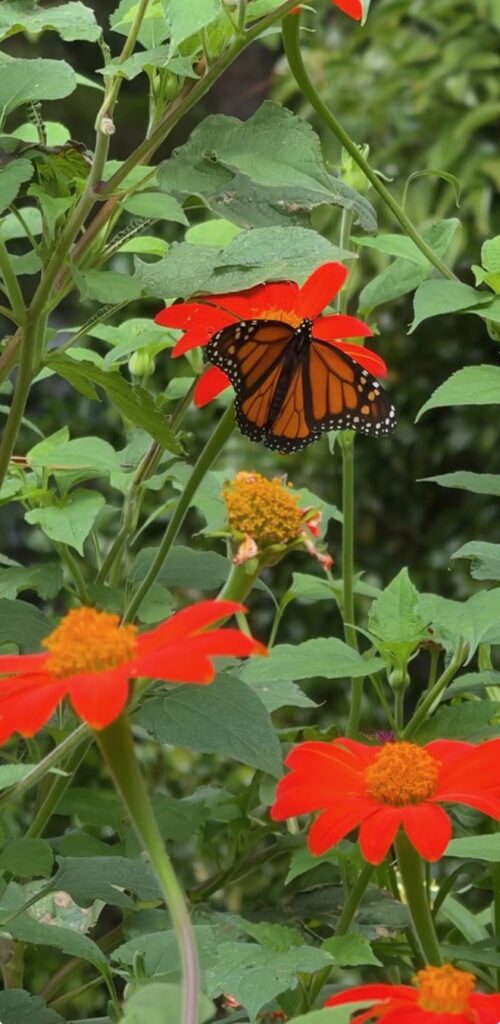
Mexican sunflowers in bloom. Price each stem by what it sells for, not what it cost to grow.
Step 1: find your floor (cost per stem)
Add up everything the crop cost you: seed or tubers, soil amendments, netting, water, and your share of tools and supplies. Divide by the number of stems you can actually sell. That number is your floor. It is not your price.
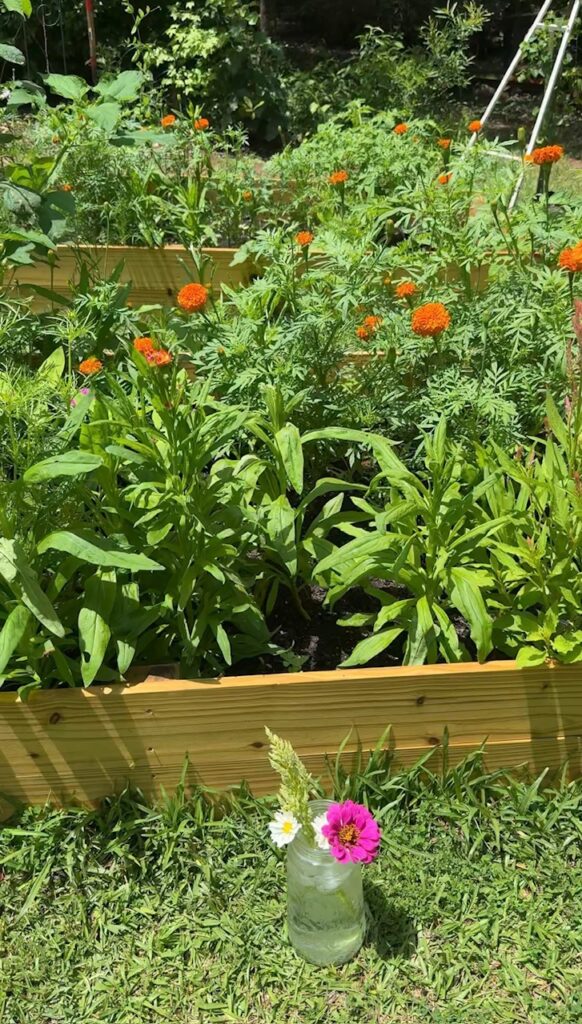
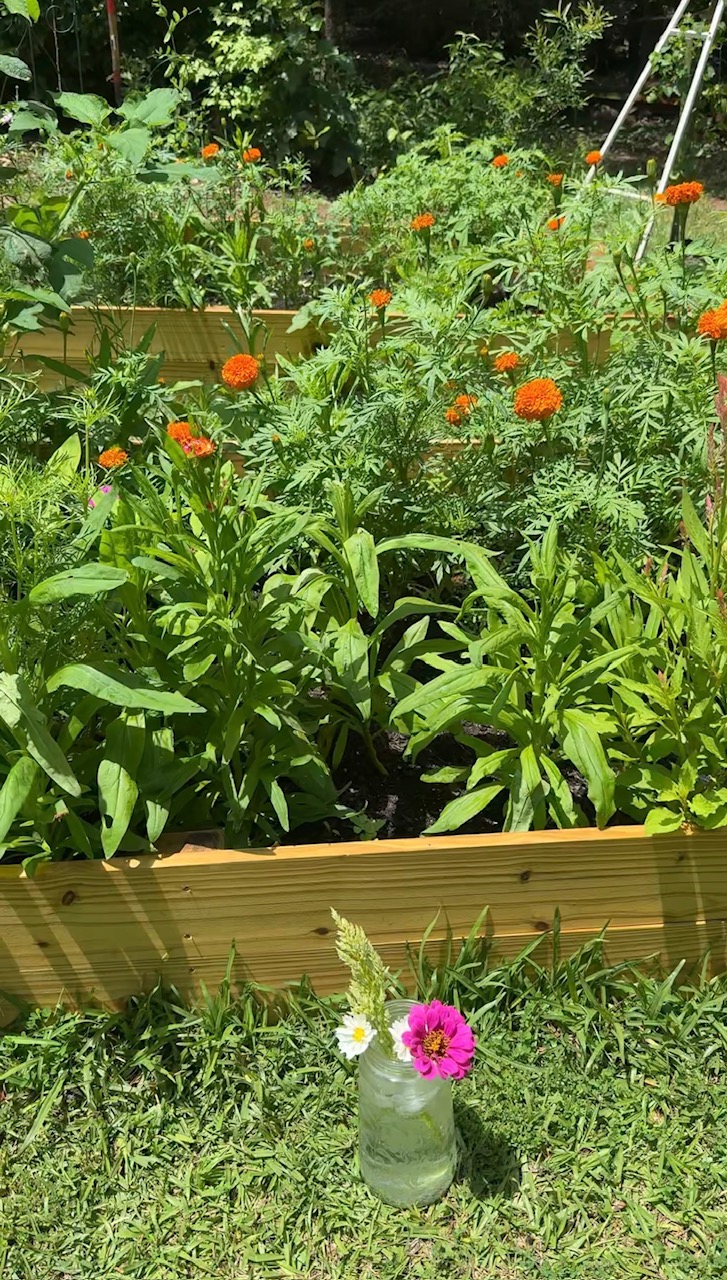
Raised cut flower beds with zinnias in bloom.
If you want to check your own numbers, my free Flower Pricing Reality Check has a cost-per-stem calculator built in, plus a five-sign self-check for underpricing.
Why cost alone underprices you
Say a zinnia bed cost $120 to grow, with 100 plants giving 25 sellable stems each. That is 2,500 stems at about $0.05 each. A 10-stem bunch cost you about $0.50 to grow, while the Boston wholesale report had a 10-stem zinnia bunch at $15 to $18. If you price from cost, you leave almost all of that on the table.
When the floor is high
Some crops cost real money per stem. Utah State University Extension’s peony budget for one high tunnel totals $1,770.64 in costs for 640 harvested stems, which is about $2.77 per stem, and it assumes a sale price of $5.00 per marketable stem (USU Extension, Peony Cut Flower Production Budget, 2021). For crops like this, the floor matters, and selling a hero stem at a mid-range price loses money.
Most cut flowers are sold in 10-stem bunches. Mississippi State University Extension notes that sunflowers usually go in 5-stem bundles, dahlias by the single stem, and zinnias in bunches of 10 or 25 (MSU Extension, Do You Want to Grow and Sell Flowers?, 2025).
Bunch price = stems in the bunch × stem value. A straight bunch takes little design time, so it sits close to stem value. A single-variety market bunch sits in the $12 to $18 range in the cheat sheet in my bouquet pricing post; use your own local market to place yourself inside or above that.
Step 3: price by sales channel
Channel
How to set the price
Florists and wholesale
At or a little above the average wholesale price for that stem
Market straight bunches
Stems × stem value
Market mixed bouquets
(Stem value × 2 to 3) + labor
Weddings and events
(Stem value × 4 to 5) + labor + design fee
For florists, grower Gretel Adams wrote in Growing for Market that her farm started from what florists pay wholesale and tried to price “a little above” the average wholesaler (Growing for Market, Guidelines for setting flower prices).
Doing this by hand for every variety and every channel gets slow. The Flower Farm Pricing Toolkit is one spreadsheet with a true cost-per-stem calculator, a bouquet builder, wedding quotes, a bloom bar calculator, and a 35-variety cost and yield reference, so you enter your numbers once.
Step 4: add your labor
Harvesting, conditioning, arranging, wrapping and selling all take time. Pick an hourly rate, time yourself on one bouquet, and add that cost on top of the stems. If you grew the flowers yourself, still count it; otherwise your price only covers the plants.
Worked example: a 10-stem zinnia bunch
Floor: 10 stems × $0.05 = $0.50 (from the zinnia bed above).
Stem value: Boston wholesale had 10 zinnias at $15 to $18.
To a florist: about $15 to $18, at or a little above your local wholesale price.
At market as a straight bunch: inside the $12 to $18 range, set by what your local market will bear.
The cost check tells you that you are safe. The market check tells you what to charge. If you are curious what these prices add up to over a season, see How Much Can You Make Selling Flowers?
That bunch has a $0.50 floor and a $15 to $18 wholesale price. Now do it for every crop.
The toolkit runs the same floor and price check on every variety and every channel: bouquets, market bunches, weddings, CSA and bloom bars, with your labor counted.
Per stem means the price of one flower stem. Many flowers are sold in bunches, so the per-stem price is the bunch price divided by the stems in it. On the USDA’s Boston wholesale report for September 30, 2025, zinnias at $15 for 10 stems work out to $1.50 a stem.
What is a good price per stem for cut flowers?
Start from wholesale. The USDA’s Boston report for September 30, 2025 had zinnias at about $1.50 to $1.80 a stem, large sunflowers at $1.70 and large dahlias at $4.00. Make sure that is above your own cost per stem, then multiply for designed work. The free Flower Pricing Reality Check works out your cost per stem in about a minute.
How do florists price their flowers?
Florists usually start from what they pay wholesale. Mississippi State University Extension suggests growers compare wholesale florists’ price lists and check the USDA Ornamental Wholesale Market Report for Boston. If you sell to florists, price at or a little above the average wholesale price for that stem.
How much should I charge for a bouquet of flowers?
The cheat sheet in my bouquet pricing post puts a mixed market bouquet at $25 to $45 and a premium designer bouquet at $50 to $85. Build yours with (stem value × 3) + labor, then check it against what sells at your local market.
How many stems are in a $20 bouquet?
There is no standard count. Work backwards: subtract your labor and wrap, divide by your markup, and fill what is left with stems at their value. Hero stems use up the budget fastest, so a $20 bouquet leans on mid-range flowers and filler.
What is the 3-5-8 rule for florists?
It is an arranging guideline, not a pricing rule. Florists quoted by Livingetc describe grouping stems in odd numbers of 3, 5 or 8 for a more natural look. To price an arrangement built that way, count the stems in each tier and use the formula above.
Should I price cut flowers per stem or per bunch?
Both. Know your price per stem, then sell in the units your buyers expect. Mississippi State University Extension notes that most flowers sell in 10-stem bunches, sunflowers in 5-stem bundles, and dahlias by the stem.
Price every stem, bunch and bouquet at once
Flower Farm Pricing Toolkit
17 tabs and 11 calculators in one spreadsheet
True cost per stem for 35 varieties, seed to sale
Bouquet, market, CSA and wedding prices with your labor built in
Works in Excel and Google Sheets, instant download
Creeping thyme is one of the prettiest, toughest ground covers you can plant. It spills over retaining walls, fills the gaps between pavers, and even works as a low-water lawn alternative. Here is exactly how I planted mine from seed, step by step, so yours gets the best possible start.
Quick answer: Scatter creeping thyme seed about an eighth of an inch deep, or right on top of loose soil, keep it consistently moist with a gentle shower setting once or twice a day, and be patient as it fills in. It is a low-growing, spreading ground cover that thrives in sun and poor soil.
Where to plant creeping thyme
Creeping thyme loves sun and does not mind lean soil. I planted mine along a retaining wall so it can trail and hang over the edge, but it is just as happy between stepping stones, along a walkway, or spreading across a slope. Give it a spot with good sun and it will reward you.
How to plant the seeds
The seeds are tiny, so they come in a little packet to keep you from losing them. They only need to be about an eighth of an inch deep, which is barely under the surface, so I simply scatter them right on top of my existing soil.
Pour a little seed into the palm of your hand
Spread it across the area, using your fingers to disperse the seeds evenly
Leave them sitting on top of the soil or barely press them in, no deep planting needed
Watering, the part that matters most
This is where most people go wrong. After spreading the seed, water it in with your hose on a gentle shower setting so you do not wash the tiny seeds away. Then keep the ground consistently damp. I water every single day on the shower setting, and sometimes twice a day when it gets warm, until the seedlings are established.
What to expect as it spreads
Be patient. Creeping thyme starts small and fills in over time into a dense, low mat of green that bursts into tiny flowers. Keep it watered through establishment, and once it takes hold it is wonderfully low maintenance and drought tolerant.
The tool I used
As an Amazon Associate I earn from qualifying purchases, at no extra cost to you.
A hose with a gentle shower setting is the one thing you really need so you do not blast the seeds out of place. Here is the garden hose I used.
Only about an eighth of an inch, barely under the surface. You can scatter the seeds right on top of loose soil and lightly water them in.
How often should I water creeping thyme seeds?
Keep the soil consistently moist while seeds germinate and establish, watering daily on a gentle shower setting, and twice a day in hot weather. Ease off once it is established, since mature creeping thyme is drought tolerant.
How long does creeping thyme take to spread?
It starts slow and fills in over a season or two into a dense mat. Consistent watering during establishment speeds it along.
Is creeping thyme a good lawn alternative?
Yes. It is low growing, handles light foot traffic, needs little water once established, and flowers, which makes it a popular low-maintenance lawn alternative and filler between pavers.
To start a flower CSA, sell 25 to 50 prepaid shares for an 8 to 14 week season, and price each share at your bouquet price times the number of weeks, minus a small discount for paying upfront. A $25 bouquet over 10 weeks makes a share of about $230 to $240. If a farmers market is a gamble every Saturday, a flower CSA is the closest thing a grower gets to a paycheck. Your customers pay in the spring, you deliver bouquets through the season, and you plant knowing exactly how many stems already have a home.
Here is how to set one up so it actually pays. If you would rather go straight to your own numbers, the Flower Farm Pricing Toolkit is the spreadsheet I built to price CSA shares, bouquets, weddings and market tables with the profit built in.
Quick answer: A flower CSA is a prepaid subscription: members pay upfront for a season of weekly bouquets. Start with 25 to 50 members and an 8 to 14 week season. Price each share at your normal bouquet price times the number of weeks, minus a small loyalty discount for paying upfront. The magic is that the money lands before you cut a single stem.
What a flower CSA is
CSA stands for community supported agriculture. A member buys a share upfront, then receives a bouquet every week (or every other week) for a set season. You get the cash before your costs hit, and they get fresh flowers all summer without thinking about it. Everybody wins, and you carry no market-day risk.
Why it is the smartest money in flower farming
Cash upfront. You are paid in spring, when you need money for seeds and supplies, not in dribs at the market.
Guaranteed sales. Those stems are already sold. No hauling unsold buckets home.
Loyal customers. CSA members become your most reliable buyers and your best word of mouth.
Predictable planning. You know exactly how many bouquets you owe each week, so you plant to a number instead of a guess.
How to structure your CSA
Keep the first one simple:
Season length: 8 to 14 weeks is common. A single summer session, say June through August, is the easiest to manage. You can always add spring and fall sessions later.
Frequency: weekly is the classic. Offer an every-other-week option if that fits your growing capacity.
Pickup or delivery: on-farm or a market pickup is easiest and cheapest. Local delivery is a nice upsell if you have the time and charge for it.
Share size: one wrapped market bouquet per week is the standard share. That is plenty to start.
How to price a flower CSA share
Your CSA share is just your bouquet price times the number of weeks, with a small thank-you for paying upfront. Do not underprice it because it is a subscription. Use the same costing you would for any bouquet, then decide your discount. Or plug your own numbers into the free Flower CSA Pricing Calculator.
An example. Say your market bouquet is $25, priced properly, with your labor in it. A 10-week share is:
10 weeks x $25 = $250 of flowers
Offer it at $230 to $240, a 4 to 8 percent loyalty discount for paying the whole season upfront
You collect $230 or more per member, in the bank, before the season starts
Now scale it. Just 25 members at $240 is $6,000 upfront. Fifty members is $12,000. That is real, predictable money, and it is the exact math the pricing tools below run for you.
Before you set your share price, check what one bouquet really costs you. The free Flower Pricing Reality Check works out your cost per stem in about a minute, and the Flower Farm Pricing Toolkit turns that cost into a share price with your labor and profit already in it.
Extension research agrees on the floor. The University of Kentucky’s Center for Crop Diversification says to add up your expected season costs, including labor, land, equipment and marketing, divide by the number of shares you are confident you can sell, then charge more than that so you have money to reinvest. It also suggests valuing your design work at about 20 percent of the bouquet’s cost (University of Kentucky, 2021).
How many members to start with
Start small and deliver flawlessly. 25 to 50 members is ideal for a newer grower. It is enough to matter and few enough that you will never miss a week. Larger farms run 100-plus member CSAs, but that is a year-two problem. A CSA that leaves members thrilled sells itself the next spring.
Set it up so it actually pays
Do:
Collect the full share price upfront, before you plant
Price the share off your real bouquet cost, not a random round number
Cap your first season at a number you can absolutely deliver
Communicate a clear season, pickup day, and what a share includes
Do not:
Discount so hard that the CSA earns less per stem than your market table
Overpromise varieties you cannot guarantee, since weather happens
Take on more members than your beds can feed
Forget that a happy member is next year’s renewal and this year’s referral
Key takeaways: A flower CSA gets you paid upfront for flowers you have not grown yet. Start with 25 to 50 members and an 8 to 14 week season, price each share at your bouquet price times the weeks with a small loyalty discount, and deliver every single week. It is the most reliable cash flow a small grower can build.
Get the free pricing breakdown by email
Five short emails: the full breakdown of the free Flower Pricing Reality Check, then how to find your floor for one bouquet, three prices you can say without flinching, and why big quotes come out too small. Your bouquet price is where a fair share price starts.
By signing up you agree to get these emails from Anna Katherine. Unsubscribe anytime. Privacy policy.
Frequently asked questions
How do I start a cut flower CSA subscription?
Pick a season of 8 to 14 weeks, decide on weekly or every-other-week bouquets, and choose an easy pickup spot. Price each share at your bouquet price times the weeks, minus a small upfront discount, then sell 25 to 50 shares in spring and collect the full price before you plant. The Flower Farm Pricing Toolkit works out the share price from your real costs.
How much should I charge for a flower CSA share?
Multiply your normal bouquet price by the number of weeks, then take 5 to 10 percent off as a thank-you for paying upfront. A 10-week share at a $25 bouquet price lands around $230 to $240.
How many weeks should a flower CSA run?
8 to 14 weeks is typical. A single summer session is the simplest to manage for your first year.
How many CSA members should I start with?
25 to 50 is a comfortable, deliverable number for a newer grower. Nail that before you scale to 100-plus.
Is a flower CSA profitable?
Yes, and it is the most predictable income in flower farming because it is prepaid and pre-sold. Profit still depends on pricing each share off your real costs, not guessing.
Price your CSA the smart way
A CSA is only as profitable as the price you set on the share, and that starts with pricing a single bouquet correctly. Start with how to price a bouquet, run your numbers in the $7 pricing calculator, and get the full CSA, market, and wedding pricing built out in the $27 Flower Farm Pricing Toolkit.
To price wedding flowers, multiply your flower cost by 4 to 5, then add your labor, hard goods, delivery and setup, and hold a wedding minimum. For context, couples married in 2025 spent $2,800 on wedding flowers on average (The Knot Real Weddings Study). Your first wedding inquiry is thrilling and a little terrifying. Someone loves your flowers enough to want them on the most photographed day of their life. Then comes the hard part: the number. Underquote a market bouquet and you lose a few dollars. Underquote a wedding and you can lose a whole weekend, plus the profit from ten other sales, because a wedding is mostly labor you cannot see when you are staring at a pretty mood board.
Here is how the pros build a wedding quote, so yours pays you properly. If you would rather have the quote math done for you, the Flower Farm Pricing Toolkit has wedding quote templates and a printable client view.
Quick answer: Price wedding flowers with a recipe, not a guess: multiply your flower cost by 4 to 5, then add labor, hard goods, and delivery and setup on top. Couples married in 2025 spent $2,800 on wedding flowers on average, according to The Knot. If your quote comes in far under that for a full wedding, you are leaving money on the table.
What couples actually pay in 2026
Knowing the market keeps you from quoting scared. Recent averages from The Knot and Joy:
Total wedding flowers: $2,800 on average for couples married in 2025 (The Knot)
Bridal bouquet: $100 to $350
Bridesmaid bouquet: $50 to $110 each
Boutonniere: $10 to $30 each
Centerpieces: $50 to $600 each, depending on size
Altar arrangement: $60 to $450
Arch or arbor: $200 to $1,000 (item ranges: Joy, 2025)
Flowers themselves run about $2 to $8 a stem for wedding work, more for premium blooms. A good sanity check: wedding flowers usually run 8 to 10 percent of the couple’s total budget.
The wedding pricing recipe
Weddings are not priced like market bunches. Use this build:
(flower cost x 4 to 5) + labor + hard goods + delivery and setup + a service minimum
Flowers: mark your wholesale stem cost up 4 to 5 times for weddings, higher than the 3x you use for a market bouquet, because wedding work is custom and labor heavy.
Labor: consultation, sourcing, prep, design, and the wedding day itself. Bill it at 2 to 2.5 times your wage. A single wedding can eat 10 to 20 hours, and this is the cost growers forget most.
Hard goods: vases, foam, tape, ribbon, candles, arch hardware. Pass these through with a markup, do not eat them.
Delivery and setup: $50 to $500 depending on size and distance. Charge separately for teardown if you handle it.
A wedding minimum: set a floor, many growers start at $1,500 to $2,500, so a tiny wedding does not swallow a Saturday for $200.
Price the wedding piece by piece
Build the quote as a recipe of parts, then total it. For each item, cost the stems, multiply by your wedding markup, and add the design time that piece takes. A bridal bouquet is not just flowers, it is the most detailed 45 minutes of your week. Price it like it.
Then add your hard goods, your delivery and setup, and check the grand total against that 8 to 10 percent benchmark. If a couple says the budget is $30,000, flowers in the $2,400 to $3,000 range are completely normal, not greedy.
The mistakes that eat a wedding’s profit
Do:
Charge for every hour, not just the flowers
Set and hold a wedding minimum
Bill delivery, setup, and teardown as their own line items
Quote from your costs, then check against the market
Do not:
Quote only the stems and give the labor away
Say yes to a wedding that comes in under your minimum
Absorb vases, candles, and hardware into your own pocket
Let a couple’s budget set your prices instead of your costs
Key takeaways: Weddings pay well only if you price the whole job. Mark flowers up 4 to 5x, bill your labor at 2 to 2.5x wage, pass through hard goods, charge for delivery and setup, and hold a minimum. Couples married in 2025 spent $2,800 on flowers on average (The Knot). Quote the hours, not just the blooms.
Frequently asked questions
How much should I charge for a bridal bouquet?
Bridal bouquets commonly run $100 to $350, depending on size and stems. Cost your flowers, multiply by 4 to 5, and add the design time, which for a bridal bouquet is significant.
What markup do florists use for weddings?
Most mark flowers up 4 to 5 times wholesale for weddings, then bill labor separately at 2 to 2.5 times their wage, plus hard goods and delivery.
What percentage of a wedding budget goes to flowers?
Typically 8 to 10 percent. It is a useful sanity check on your total quote, not a substitute for costing the actual pieces.
Should I have a wedding minimum?
Yes. A minimum, often $1,500 to $2,500 for full weddings, keeps small jobs from eating a full day of labor for very little profit.
Quote your next wedding without guessing
A wedding quote has a lot of moving parts, and doing the math by hand at 11pm is how mistakes and undercharging happen. My $27 Flower Farm Pricing Toolkit has wedding quote templates with a printable client view built in, so you can price a whole wedding, piece by piece, and hand the couple a clean proposal.
Field-grown cut flowers bring in about $25,000 to $35,000 an acre a year in sales, according to a Virginia Tech extension guide. What you keep is much smaller: in the University of Tennessee Extension’s 2025 zinnia budget, a 1,000 square foot patch sells $9,256 of stems and keeps $3,089 after every cost, labor included, about a third. If you have ever stood in your cutting patch doing quiet math in your head, you are not alone. Flowers are one of the highest-earning things you can grow on a small piece of land, but only if you price them to keep the money.
Here is the real picture, and the lever that decides which side of it you land on. If you would rather go straight to your own numbers, the Flower Farm Pricing Toolkit is the spreadsheet I built to price every stem, bouquet, CSA share and wedding with the profit built in.
Quick answer: Field-grown cut flowers are worth about $25,000 to $35,000 per acre per year in sales, according to a Virginia Tech extension guide. That is revenue, not profit. In a 2025 University of Tennessee Extension zinnia budget, 1,000 square feet kept $3,089 of $9,256 in sales after all costs. What you actually keep comes down to how you price.
What growers actually earn
Cut flowers punch far above their footprint. A few realistic benchmarks:
A full acre, field-grown: about $25,000 to $35,000 in sales a year (Virginia Tech)
One 1,000 sq ft zinnia patch: $9,256 in sales, $3,089 kept (UT Extension, 2025)
Those are wide ranges on purpose. Where you land depends on your market, your region, and your skill as a grower. The same bed of zinnias can earn triple in an affluent suburb what it earns at a sleepy rural market.
On-farm stand: $20 to $30 a bouquet, with almost no selling time
Weddings and events: $3,000 to $5,000 per event, and some farms clear $60,000 to $80,000 a year on weddings alone
Wholesale to florists: $500 to $1,000 an order, steady but thinner margins
Grocery wholesale: $8 to $12 a bouquet, the lowest margin of the bunch
A part-time grower working a couple of weekend markets can realistically pull $500 to $800 a week in peak season. Stack a CSA and a few weddings on top and you have a real business.
The catch nobody tells you: revenue is not profit
Here is where the dream meets the spreadsheet. That $30,000 an acre is what comes in, not what you keep. Out of it come seeds, soil, tools, market fees, wraps and buckets, and your own labor, which is the biggest cost of all.
And this is the part that decides everything: the number one reason a busy flower farm still is not profitable is underpricing. You can grow beautifully, sell out every Saturday, and still work for free if your prices do not cover your true costs plus your time. Profit is not what is left over by accident. It is what you build in on purpose, at the moment you set your prices.
This is why I built the Flower Farm Pricing Toolkit. It takes your seed, labor and market costs and turns them into a per-stem floor and a bouquet, CSA and wedding price you can stand behind. If you want to check one number first, the free Flower Pricing Reality Check works out your cost per stem in about a minute, and how to price cut flowers walks through the per-stem and per-bunch formula.
A realistic first-year picture
Most growers do not hit $35,000 an acre in year one, and that is normal. A realistic first season on a small plot, sold mostly at markets and a small CSA, might land somewhere around $8,000 to $20,000, while you learn what grows well and what your market will pay. The farms that grow fast from there are almost never the ones with the prettiest flowers. They are the ones that priced right from the start and reinvested. For what to plant first, start with the cut flower garden cheat sheets.
What to buy before the first market
Here’s what to look for before the first market day. It is a short list.
Harvest snips: long curved blades for clean cuts in tight spots, like the Corona long curved snips.
Lean into high-margin outlets like CSAs, farm stands, and weddings
They do not:
Guess at prices and hope
Compete on being the cheapest bouquet at the market
Forget that their time is the most expensive input on the farm
Key takeaways: Cut flowers can earn $25,000 to $35,000 in sales an acre (Virginia Tech), and in UT Extension’s 2025 zinnia budget about a third of sales was left after costs. But revenue is not profit. The growers who actually keep money are the ones who price right and sell through high-margin channels. Pricing is the lever. Pull it on purpose.
Frequently asked questions
How much can you make selling flowers on a small plot?
Virginia Tech’s extension guide puts field-grown cut flowers at about $25,000 to $35,000 in sales per acre, so a quarter acre brings in a fraction of that. On a smaller scale, University of Tennessee Extension’s 2025 budget shows 1,000 square feet of zinnias selling $9,256 of stems and keeping $3,089 after costs. Your number depends on your yields, your market and your prices.
Is flower farming actually profitable?
It can be one of the most profitable crops per acre, but only if you price to cover your costs and your labor. Underpricing is the most common reason a busy flower farm does not turn a profit.
What is the most profitable way to sell flowers?
High-margin, direct channels like farm stands, flower CSAs, and weddings tend to keep the most money. Grocery wholesale moves volume but has the thinnest margins.
How much do flower farmers charge per bouquet?
Market bouquets commonly sell for $15 to $30, depending on the market and the design. The right number for you depends on your true costs and markup.
How much profit per acre does a flower farm make?
The per-acre figures on this page are revenue. In University of Tennessee Extension’s 2025 zinnia budget, 1,000 square feet kept $3,089 of $9,256 in sales, about 33 percent, after marketing, labor and overhead. Profit is what is left after seeds, soil, market fees, packaging and your own labor, and it is different on every farm. Growers who cost their labor into every stem and sell through high-margin channels keep the most. Run your own cost per stem with the free Flower Pricing Reality Check to see where you stand.
What does a flower farmer earn as a salary?
Most small flower farmers pay themselves out of what is left after costs, not a fixed salary, and in a first season that is usually modest while the market and the growing are still being learned. The farms that reach a real owner’s wage are the ones that priced right from the start. The Flower Farm Pricing Toolkit builds your hourly wage into every price so your pay is a line in the plan, not a leftover.
Want to know your real numbers?
Every figure on this page is an average. Your farm is not average. The only way to know what you can make is to run your own costs, and the only way to keep the money is to price on purpose.
(function(){
function $(id){return document.getElementById(id);}
function v(id){var x=parseFloat($(id).value);return isNaN(x)||x<0?0:x;}
function c2(x){return Math.round((x+(x<0?-1e-9:1e-9))*100)/100;}
function m(x){x=c2(x);return (x<0?"-$":"$")+Math.abs(x).toFixed(2);}
function esc(s){return String(s).replace(/&/g,"&").replace(/</g,"<").replace(/"/g,""");}
function bars(items,max){var h='<div class="bars">';items.forEach(function(it){var w=max>0?Math.max(0,it.v)/max*100:0;h+='<div class="b" title="'+esc(it.l+": "+it.t)+'"><span>'+esc(it.l)+'</span><div class="track"><div class="fill" style="width:'+w.toFixed(1)+'%;background:'+it.c+'"></div></div><span class="val">'+esc(it.t)+'</span></div>';});return h+'</div>';}
function run(){
var P=v("ps-pr"),N=v("ps-n"),C=v("ps-c"),S=v("ps-s"),L=v("ps-l"),W=v("ps-w"),M=v("ps-m");
var out=$("ps-out");
if(N<=0){out.innerHTML='<div class="hero neg"><div class="k">Price per stem</div><div class="v">Add stems</div><div class="small">Enter how many stems are in the bunch or bucket.</div></div>';return;}
var per=c2(P/N),extra=(S+L/60*W)/N,floor=c2(C+extra),gap=c2(per-floor),bunchFloor=c2(floor*N),profit=c2(P-floor*N),target=c2(floor*M),targetBunch=c2(c2(floor*M)*N),mult=floor>0?per/floor:0;
var neg=gap<0;
var h='<div class="hero'+(neg?' neg':'')+'"><div class="k">Your price per stem</div><div class="v">'+m(per)+'</div><div class="small">'+m(P)+' for '+N+' stems. '+(floor>0?'That is '+mult.toFixed(2)+'x your full cost of '+m(floor)+' a stem.':'Add your cost per stem to see your floor.')+'</div></div>';
h+='<div class="tiles"><div class="tile"><div class="k">Your floor (break-even)</div><div class="v">'+m(floor)+'</div><div class="s">a stem, or '+m(bunchFloor)+' for all '+N+' stems</div></div><div class="tile"><div class="k">'+(neg?'You lose':'You keep')+'</div><div class="v" style="color:'+(neg?'#D9622B':'#1F7FA8')+'">'+m(Math.abs(profit))+'</div><div class="s">on these '+N+' stems, '+m(Math.abs(gap))+' a stem</div></div><div class="tile"><div class="k">Price at '+M+'x markup</div><div class="v">'+m(targetBunch)+'</div><div class="s">'+m(target)+' a stem</div></div></div>';
if(neg){h+='<p class="small" style="margin-top:10px;color:#9a3a14"><strong>This price is under your floor.</strong> Every one sold at '+m(P)+' loses '+m(Math.abs(profit))+'. Charge at least '+m(bunchFloor)+' or put fewer stems in it.</p>';}
var mx=Math.max(per,floor,target,0.01);
var title=neg?'Your price is '+m(Math.abs(gap))+' a stem below your floor':'Your price clears your floor by '+m(gap)+' a stem';
h+='<div class="chart-t">'+esc(title)+'</div><div class="legend"><span><i style="background:#D9622B"></i>Your cost</span><span><i style="background:#1F7FA8"></i>Price</span></div>';
h+='<div role="img" aria-label="'+esc('Bar chart, per stem: your floor is '+m(floor)+', your price is '+m(per)+', and the price at '+M+'x markup is '+m(target)+'.')+'">'+bars([{l:"Your floor",v:floor,t:m(floor),c:"#D9622B"},{l:"Your price",v:per,t:m(per),c:"#1F7FA8"},{l:"At "+M+"x",v:target,t:m(target),c:"#1F7FA8"}],mx)+'</div>';
h+='<p class="small">Per stem. Starting cost from <a href="https://arec.tennessee.edu/wp-content/uploads/sites/17/2025/10/ZinniaBudget-8.4.25.pdf" target="_blank" rel="noopener">UT Extension zinnia budget, 2025</a> ($6,166.82 in costs for 9,256 stems).</p>';
h+='<div class="cta"><p><strong>Your floor is '+m(floor)+' a stem. Now price everything else from it.</strong> The Flower Farm Pricing Toolkit works out your true cost per stem for 35 varieties, seed to sale, and turns it into bouquet, market, CSA and wedding prices with your labor built in.</p><div class="btns"><a class="btn" href="https://annakatherinepage.com/product/flower-farm-pricing-toolkit/">Get the $27 toolkit</a></div></div>';
out.innerHTML=h;
}
["ps-pr","ps-n","ps-c","ps-s","ps-l","ps-w","ps-m"].forEach(function(id){$(id).addEventListener("input",run);});
run();
})();
window.fluent_form_ff_form_instance_2_1 = {"id":"2","ajaxUrl":"https:\/\/annakatherinepage.com\/wp-admin\/admin-ajax.php","settings":{"layout":{"labelPlacement":"top","helpMessagePlacement":"with_label","errorMessagePlacement":"inline","asteriskPlacement":"asterisk-right"},"restrictions":{"denyEmptySubmission":{"enabled":false}}},"form_instance":"ff_form_instance_2_1","form_id_selector":"fluentform_2","rules":{"email":{"required":{"value":true,"message":"This field is required"},"email":{"value":true,"message":"This field must contain a valid email"}}},"debounce_time":300,"file_upload_settings":[]};
(function(){
var P={z:{pl:1780,mk:65,sp:8,pr:"1.00",mf:20,gc:959,lh:112,wg:15.87,fx:1579},s:{pl:4000,mk:70,sp:1,pr:"1.70",mf:20,gc:947,lh:68,wg:15.87,fx:1153}};
function $(id){return document.getElementById(id);}
function v(id){var x=parseFloat($(id).value);return isNaN(x)||x<0?0:x;}
function money(x){return (x<0?"-$":"$")+Math.round(Math.abs(x)).toLocaleString("en-US");}
function num(x){return Math.round(x).toLocaleString("en-US");}
function esc(s){return String(s).replace(/&/g,"&").replace(/</g,"<");}
$("ac-crop").addEventListener("change",function(){var p=P[this.value];for(var k in p){$("ac-"+k).value=p[k];}run();});
function bars(items,max){var h='<div class="bars">';items.forEach(function(it){var w=max>0?Math.max(0,it.v)/max*100:0;h+='<div class="b" title="'+esc(it.l+": "+it.t)+'"><span>'+esc(it.l)+'</span><div class="track"><div class="fill" style="width:'+w.toFixed(1)+'%;background:'+it.c+'"></div></div><span class="val">'+esc(it.t)+'</span></div>';});return h+'</div>';}
function line(stems,mf,flat,price,be){
var W=Math.max(300,Math.min(640,($('ac-out').clientWidth||560))),H=Math.round(W*0.42)+40,L=58,R=14,T=14,B=30;var xmax=Math.max(price*2,be*1.6,1);xmax=Math.ceil(xmax*4)/4;
function prof(p){return stems*p*(1-mf)-flat;}
var ymin=prof(0),ymax=prof(xmax);if(ymax<=0)ymax=Math.abs(ymin)*0.3;
function X(p){return L+(p/xmax)*(W-L-R);}function Y(y){return T+(ymax-y)/(ymax-ymin)*(H-T-B);}
var s='<svg viewBox="0 0 '+W+' '+H+'" role="img" aria-label="Line chart: profit per 1,000 square feet rises with price per stem; it crosses zero at the break-even price of $'+be.toFixed(2)+'.">';
[ymin,0,ymax].forEach(function(t){s+='<line x1="'+L+'" x2="'+(W-R)+'" y1="'+Y(t)+'" y2="'+Y(t)+'" stroke="'+(t===0?'#8a8579':'#ece6db')+'" stroke-width="1"/><text x="'+(L-6)+'" y="'+(Y(t)+4)+'" text-anchor="end">'+money(t)+'</text>';});
for(var i=0;i<=4;i++){var p=xmax*i/4;s+='<text x="'+X(p)+'" y="'+(H-10)+'" text-anchor="middle">$'+p.toFixed(2)+'</text>';}
s+='<line x1="'+X(0)+'" y1="'+Y(prof(0))+'" x2="'+X(xmax)+'" y2="'+Y(prof(xmax))+'" stroke="#1F7FA8" stroke-width="2.5" stroke-linecap="round"/>';
if(be>0&&be<=xmax){s+='<circle cx="'+X(be)+'" cy="'+Y(0)+'" r="5" fill="#D9622B" stroke="#fffdf9" stroke-width="2"/><text x="'+(X(be)+8)+'" y="'+(Y(0)+18)+'" style="fill:#1f1d1a;font-weight:600">break-even $'+be.toFixed(2)+'</text>';}
s+='<circle cx="'+X(price)+'" cy="'+Y(prof(price))+'" r="5" fill="#1F7FA8" stroke="#fffdf9" stroke-width="2"/><text x="'+(X(price)-8)+'" y="'+(Y(prof(price))-10)+'" text-anchor="end" style="fill:#1f1d1a;font-weight:600">you: '+money(prof(price))+'</text>';
s+='<rect class="hit" x="'+L+'" y="'+T+'" width="'+(W-L-R)+'" height="'+(H-T-B)+'" fill="transparent"/></svg>';
return {svg:s,X:X,L:L,R:R,W:W,xmax:xmax,prof:prof};
}
function run(){
var sqft=$("ac-unit").value==="acre"?v("ac-area")*43560:v("ac-area");var k=sqft/1000;
var stems=v("ac-pl")*(Math.min(v("ac-mk"),100)/100)*v("ac-sp");var price=v("ac-pr");var mf=Math.min(v("ac-mf"),100)/100;
var sales=stems*price,mkt=sales*mf,gc=v("ac-gc"),lab=v("ac-lh")*v("ac-wg"),fx=v("ac-fx");var flat=gc+lab+fx;var cost=mkt+flat;var net=sales-cost;
var perHour=v("ac-lh")>0?(net+lab)/v("ac-lh"):0;var be=stems*(1-mf)>0?Math.ceil(flat/(stems*(1-mf))*100)/100:0;
var h='<div class="hero'+(net<0?' neg':'')+'"><div class="k">'+(net<0?'These beds lose, per 1,000 sq ft':'You keep, per 1,000 sq ft of beds')+'</div><div class="v">'+money(net)+'</div><div class="small">'+num(stems)+' stems sold, '+money(sales)+' in sales, '+money(cost)+' in costs including your labor.'+(k!==1?' Your '+num(sqft)+' sq ft: <strong>'+money(net*k)+'</strong>.':'')+'</div></div>';
h+='<div class="tiles"><div class="tile"><div class="k">You earn per hour worked</div><div class="v">'+money(perHour)+'</div><div class="s">profit plus wage, per hour</div></div><div class="tile"><div class="k">Break-even price</div><div class="v">$'+be.toFixed(2)+'</div><div class="s">per stem, after all costs</div></div><div class="tile"><div class="k">Per acre ceiling</div><div class="v">'+money(net*43.56)+'</div><div class="s">only if every acre did this</div></div></div>';
if(sqft>=43560/4){h+='<p class="small" style="margin-top:10px">Heads up: an acre of beds at these numbers means selling '+num(stems*43.56)+' stems a season. A Virginia Tech extension guide cites $25,000 to $35,000 in value per acre for field-grown cut flowers. Line up buyers for this volume before you plant for it.</p>';}
if(net<0){h+='<p class="small" style="margin-top:10px;color:#9a3a14"><strong>These beds lose money.</strong> Raise your stem price above the break-even, cut costs, or sell more of what you grow.</p>';}
if(sales>0){var c="#D9622B",p="#1F7FA8";var items=[{l:"Marketing",v:mkt},{l:"Labor",v:lab},{l:"Overhead",v:fx},{l:"Growing",v:gc}].sort(function(a,b){return b.v-a.v;}).map(function(i){return {l:i.l,v:i.v/sales,t:Math.round(i.v/sales*100)+"¢",c:c};});items.push({l:net<0?"Loss":"You keep",v:Math.abs(net)/sales,t:(net<0?"-":"")+Math.round(Math.abs(net)/sales*100)+"¢",c:net<0?"#8a8579":p});
var mx=0;items.forEach(function(i){if(i.v>mx)mx=i.v;});
h+='<div class="chart-t">Where each $1 of sales goes</div><div class="legend"><span><i style="background:#D9622B"></i>Costs</span><span><i style="background:#1F7FA8"></i>Profit</span></div>'+bars(items,mx);}
var ln=line(stems,mf,flat,price,be);
h+='<div class="chart-t">Price per stem is your biggest lever</div><div style="position:relative" id="ac-lw">'+ln.svg+'<div class="tip" id="ac-tip"></div></div><p class="small">Profit per 1,000 sq ft at each stem price, with your other numbers held the same.</p>';
h+='<div class="cta"><p><strong>Your floor is $'+be.toFixed(2)+' a stem. Now set prices that clear it.</strong> The Flower Farm Pricing Toolkit turns your real costs into prices for bouquets, market bunches, CSA shares and weddings, with your labor built in.</p><div class="btns"><a class="btn" href="https://annakatherinepage.com/product/flower-farm-pricing-toolkit/">Get the $27 toolkit</a></div></div>';
$("ac-out").innerHTML=h;
var w=$("ac-lw"),tip=$("ac-tip"),svg=w.querySelector("svg");
w.addEventListener("mousemove",function(e){var r=svg.getBoundingClientRect();var sx=(e.clientX-r.left)/r.width*ln.W;if(sx<ln.L||sx>ln.W-ln.R){tip.style.display="none";return;}var pp=(sx-ln.L)/(ln.W-ln.L-ln.R)*ln.xmax;tip.innerHTML="$"+pp.toFixed(2)+" a stem: "+money(ln.prof(pp));tip.style.display="block";tip.style.left=Math.min(e.clientX-w.getBoundingClientRect().left+10,r.width-170)+"px";tip.style.top="0px";});
w.addEventListener("mouseleave",function(){tip.style.display="none";});
}
["ac-area","ac-unit","ac-pr","ac-pl","ac-mk","ac-sp","ac-mf","ac-gc","ac-lh","ac-wg","ac-fx"].forEach(function(id){$(id).addEventListener("input",run);$(id).addEventListener("change",run);});
run();
var rt;window.addEventListener('resize',function(){clearTimeout(rt);rt=setTimeout(run,200);});
})();
(function(){
function v(id){var n=parseFloat(document.getElementById(id).value);return isNaN(n)||n<0?0:n;}
function m(n){return '$'+n.toFixed(2);}
function calc(){
var stems=v('bq-hn')*v('bq-hp')+v('bq-mn')*v('bq-mp')+v('bq-fn')*v('bq-fp');
var mat=stems+v('bq-sun');
var mk=parseFloat(document.getElementById('bq-mk').value);
var retail=mat*mk;
var labor=v('bq-min')/60*v('bq-rate');
var price=retail+labor;
var note=mk<=2?'<p style="color:#8a2d1c;margin:.5em 0 0">At 2x you barely cover materials once labor is in. Try 3x.</p>':'';
document.getElementById('bq-out').innerHTML='<p style="margin:0">Flowers: '+m(stems)+'<br>Materials with sundries: '+m(mat)+'<br>Times '+mk+': '+m(retail)+'<br>Labor: '+m(labor)+'</p><p style="font-size:1.3em;margin:.5em 0 0"><strong>Charge about '+m(Math.ceil(price))+'</strong></p>'+note;
}
var ids=['bq-hn','bq-hp','bq-mn','bq-mp','bq-fn','bq-fp','bq-sun','bq-mk','bq-min','bq-rate'];
for(var i=0;i<ids.length;i++){var el=document.getElementById(ids[i]);el.addEventListener('input',calc);el.addEventListener('change',calc);}
calc();
})();
(function(){
function $(id){return document.getElementById(id);}
function v(id){var x=parseFloat($(id).value);return isNaN(x)||x<0?0:x;}
function up(x){return Math.ceil(Math.round(x*100)/100);}
function money(x){return (x<0?"-$":"$")+Math.round(Math.abs(x)).toLocaleString("en-US");}
function cents(x){return "$"+x.toFixed(2);}
function run(){
var bp,built="";
if($("cs-src").value==="stems"){var mat=v("cs-st")*v("cs-sv")+v("cs-sun");var mk=parseFloat($("cs-mk").value);var lab=v("cs-min")/60*v("cs-rate");bp=up(mat*mk+lab);built=" Built from your stems: "+cents(mat)+" in materials x "+mk+" + "+cents(lab)+" of your time.";}
else{bp=v("cs-bp");}
var wk=Math.max(1,Math.round(v("cs-wk")));var mem=Math.round(v("cs-mem"));var dc=Math.min(v("cs-dc"),50);
var full=bp*wk;var share=up(full*(1-dc/100));var cash=share*mem;var perB=share/wk;
var fw=v("cs-st")*v("cs-cps")+v("cs-sun");var floor=up(fw*wk);var left=share-floor;var neg=left<0;
var h='<div class="hero'+(neg?' neg':'')+'"><div class="k">Charge about this per share</div><div class="v">'+money(share)+'</div><div class="small">'+wk+' weekly bouquets at '+money(bp)+' is '+money(full)+'. Less '+dc+'% for paying upfront.'+built+'</div></div>';
h+='<div class="tiles"><div class="tile"><div class="k">Cash before the season</div><div class="v">'+money(cash)+'</div><div class="s">'+mem+' members. Revenue, not profit.</div></div><div class="tile"><div class="k">Members pay per bouquet</div><div class="v">'+cents(perB)+'</div><div class="s">Kentucky 2021: $10 to $30 a week</div></div><div class="tile"><div class="k">Your floor</div><div class="v" style="color:#D9622B">'+money(floor)+'</div><div class="s">a share, flowers and sundries</div></div></div>';
if(dc>10){h+='<p class="small" style="margin-top:10px;color:#9a3a14">Over 10 percent off, the CSA can earn less per stem than your market table. Most growers stay at 5 to 10 percent.</p>';}
if(neg){h+='<p class="small" style="margin-top:10px;color:#9a3a14"><strong>This share does not cover your flower costs.</strong> Raise the bouquet price, cut the discount, or use fewer stems.</p>';}
if(share>0){var mx=Math.max(floor,Math.abs(left),1);
h+='<div class="chart-t">'+(neg?'Your flower costs are '+money(-left)+' more than the share':'Your '+money(share)+' share clears your flower costs by '+money(left))+'</div><div class="legend"><span><i style="background:#D9622B"></i>Costs</span><span><i style="background:#1F7FA8"></i>Left for your time and profit</span></div>';
h+='<div class="bars" role="img" aria-label="Bar chart: of a '+money(share)+' share, flower and sundry costs are '+money(floor)+' and '+(neg?'the share falls short by '+money(-left):money(left)+' is left for your time and profit')+'.">';
h+='<div class="b" title="Flower costs: '+money(floor)+'"><span>Flower costs</span><div class="track"><div class="fill" style="width:'+(floor/mx*100).toFixed(1)+'%;background:#D9622B"></div></div><span class="val">'+money(floor)+'</span></div>';
h+='<div class="b" title="'+(neg?'Short':'Left over')+': '+money(left)+'"><span>'+(neg?'Short':'Left over')+'</span><div class="track"><div class="fill" style="width:'+(Math.abs(left)/mx*100).toFixed(1)+'%;background:'+(neg?'#8a8579':'#1F7FA8')+'"></div></div><span class="val">'+money(left)+'</span></div></div>';
h+='<p class="small">Floor: '+v("cs-st")+' stems x '+cents(v("cs-cps"))+' + '+cents(v("cs-sun"))+' sundries = '+cents(fw)+' a bouquet, x '+wk+' weeks. Your arranging and delivery time comes out of what is left.</p>';}
h+='<div class="cta"><p><strong>Your floor is '+money(floor)+' a share ('+cents(fw)+' a bouquet). Now set prices that clear it.</strong> The Flower Farm Pricing Toolkit prices your bouquets, market bunches, CSA shares and weddings from your real costs, with your labor built in.</p><div class="btns"><a class="btn" href="https://annakatherinepage.com/product/flower-farm-pricing-toolkit/">Get the $27 toolkit</a></div></div>';
$("cs-out").innerHTML=h;
}
["cs-bp","cs-wk","cs-mem","cs-dc","cs-st","cs-cps","cs-sun","cs-src","cs-sv","cs-mk","cs-min","cs-rate"].forEach(function(id){$(id).addEventListener("input",run);$(id).addEventListener("change",run);});
run();
})();
window.fluent_form_ff_form_instance_2_2 = {"id":"2","ajaxUrl":"https:\/\/annakatherinepage.com\/wp-admin\/admin-ajax.php","settings":{"layout":{"labelPlacement":"top","helpMessagePlacement":"with_label","errorMessagePlacement":"inline","asteriskPlacement":"asterisk-right"},"restrictions":{"denyEmptySubmission":{"enabled":false}}},"form_instance":"ff_form_instance_2_2","form_id_selector":"fluentform_2","rules":{"email":{"required":{"value":true,"message":"This field is required"},"email":{"value":true,"message":"This field must contain a valid email"}}},"debounce_time":300,"file_upload_settings":[]};
(function () {
var c = document.body.className;
c = c.replace(/woocommerce-no-js/, 'woocommerce-js');
document.body.className = c;
})();
var fluentFormVars = {"ajaxUrl":"https://annakatherinepage.com/wp-admin/admin-ajax.php","forms":[],"step_text":"Step %activeStep% of %totalStep% - %stepTitle%","step_completed_text":"Completed","is_rtl":"","date_i18n":{"previousMonth":"Previous Month","nextMonth":"Next Month","months":{"shorthand":["Jan","Feb","Mar","Apr","May","Jun","Jul","Aug","Sep","Oct","Nov","Dec"],"longhand":["January","February","March","April","May","June","July","August","September","October","November","December"]},"weekdays":{"longhand":["Sunday","Monday","Tuesday","Wednesday","Thursday","Friday","Saturday"],"shorthand":["Sun","Mon","Tue","Wed","Thu","Fri","Sat"]},"daysInMonth":[31,28,31,30,31,30,31,31,30,31,30,31],"rangeSeparator":" to ","weekAbbreviation":"Wk","scrollTitle":"Scroll to increment","toggleTitle":"Click to toggle","amPM":["AM","PM"],"yearAriaLabel":"Year","firstDayOfWeek":1},"pro_version":"","fluentform_version":"6.2.17","force_init":"","stepAnimationDuration":"350","upload_completed_txt":"100% Completed","upload_start_txt":"0% Completed","uploading_txt":"Uploading","choice_js_vars":{"noResultsText":"No results found","loadingText":"Loading...","noChoicesText":"No choices to choose from","itemSelectText":"Press to select","maxItemTextSingular":"Only %%maxItemCount%% option can be added","maxItemTextPlural":"Only %%maxItemCount%% options can be added"},"input_mask_vars":{"clearIfNotMatch":false},"nonce":"c8a2c8f7c4","file_delete_nonce":"486b942568","form_id":"2","step_change_focus":"1","has_cleantalk":"","pro_payment_script_compatible":"","token_nonce":"0dc3e7fcba"};
var fluentform_submission_messages_2 = {"file_upload_in_progress":"File upload in progress. Please wait...","javascript_handler_failed":"Javascript handler could not be loaded. Form submission has been failed. Reload the page and try again"};
var fluentform_payment_messages_2 = {"stock_out_message":"This Item is Stock Out","item_label":"Item","price_label":"Price","qty_label":"Qty","line_total_label":"Line Total","sub_total_label":"Sub Total","discount_label":"Discount","total_label":"Total","signup_fee_label":"Signup Fee","trial_label":"Trial","processing_text":"Processing...","confirming_text":"Confirming..."};
var fluentform_save_progress_messages_2 = {"copy_button":"Copy","email_button":"Email","email_placeholder":"Your Email Here","copy_success":"Copied"};
var fluentform_address_messages_2 = {"please_wait":"Please wait ...","location_not_determined":"Could not determine address from location.","address_fetch_failed":"Failed to fetch address from coordinates.","geolocation_failed":"Geolocation failed or was denied.","geolocation_not_supported":"Geolocation is not supported by this browser."};
var fluentform_gateway_messages_2 = {"request_failed":"Request failed. Please try again","payment_failed":"Payment process failed!","no_method_found":"No method found","processing_text":"Processing..."};
var fluentform_submission_messages_global = {"javascript_handler_failed":"Javascript handler could not be loaded. Form submission has been failed. Reload the page and try again"};
var fluentform_address_messages_global = {"please_wait":"Please wait ...","location_not_determined":"Could not determine address from location.","address_fetch_failed":"Failed to fetch address from coordinates.","geolocation_failed":"Geolocation failed or was denied.","geolocation_not_supported":"Geolocation is not supported by this browser."};
//# sourceURL=fluent-form-submission-js-extra