Disclosure
This post contains affiliate links, which means I may earn a small commission if you make a purchase through my links, at no extra cost to you.
Last updated June 5, 2026 by Anna Katherine Page
This post contains affiliate links. If you buy through them I may earn a small commission, at no extra cost to you. I only recommend products I actually use.
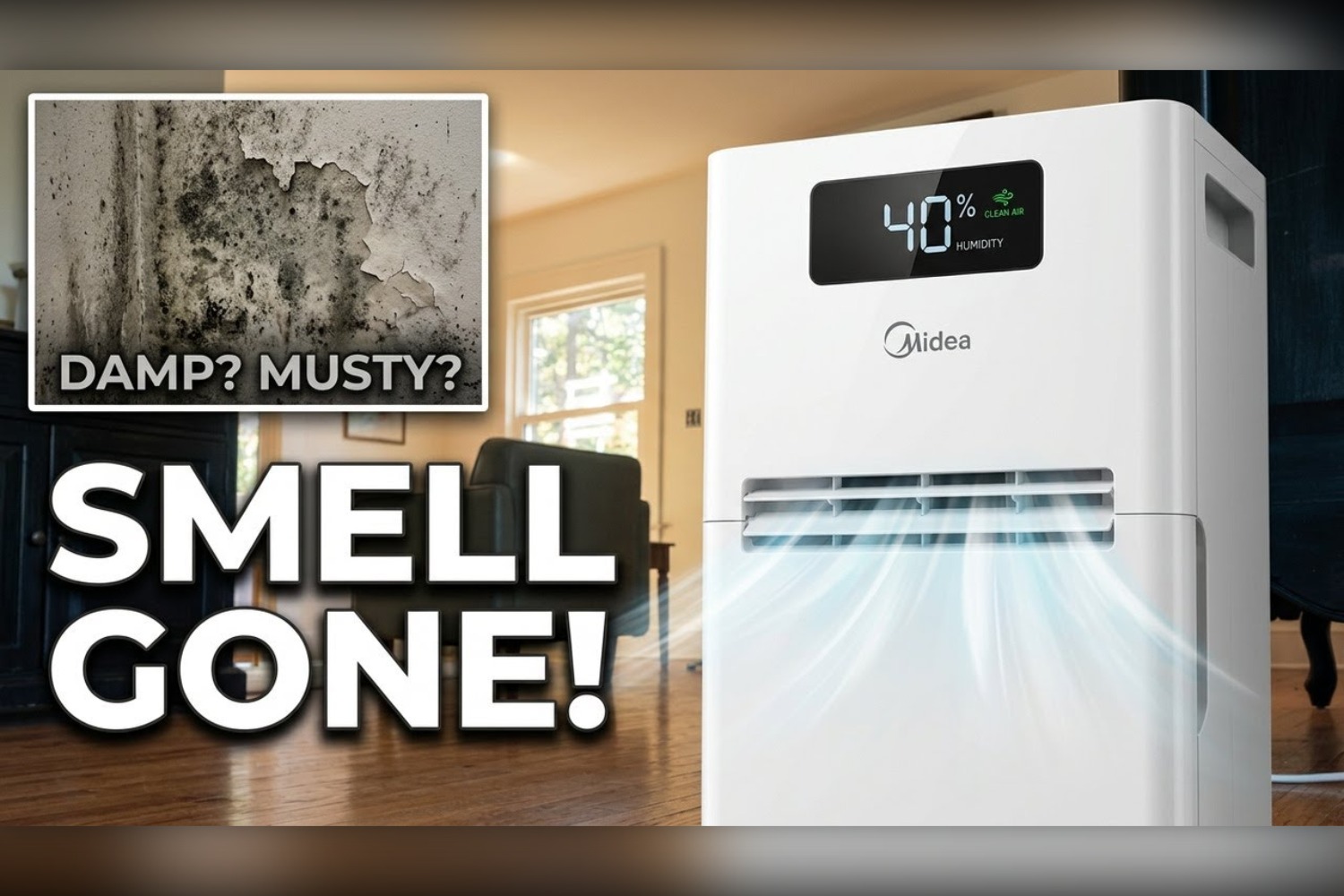
Quick answer: If your home smells like mold, the cause is almost always trapped humidity in the air, especially in older houses. The fastest fix is a portable dehumidifier sized for the room. I run a Midea 50-pint dehumidifier in my 75-year-old house and the musty smell was gone the same day it was plugged in.
My house was built in 1949. I love it. The original hardwoods, the plaster walls, the windows that have been there longer than I have been alive. I do not love what older homes do when summer humidity rolls in.
That damp, musty, slightly-mildew smell that hits you the second you walk in the door is not actually about cleanliness. It is about the air itself holding too much moisture. And once you fix that, the smell disappears.
Why your home smells like mold (and it is not always actual mold)
That smell is microbial growth that thrives in damp air. It can come from spores on baseboards, behind walls, inside upholstery, or in the crawl space underneath the house. In a well-sealed older home, humidity gets trapped indoors with nowhere to go. The relative humidity climbs above 60 percent, and the smell follows.
The fix is not just deodorizing. Sprays mask the smell for a few hours. To make it go away, you have to pull the moisture out of the air. That is what a dehumidifier does.
How to get rid of the mold smell in your home
Step 1 — Check your indoor humidity
Before buying anything, check what your humidity actually is. A small indoor hygrometer tells you the relative humidity in any room. Anything above 55 percent is the danger zone for mold growth and musty smell. The target is 40 to 50 percent.
Step 2 — Run a dehumidifier sized for the room
A dehumidifier pulls water out of the air and collects it in a tank or drains it through a hose. I use a Midea 50-pint dehumidifier in my living room. The 50-pint size handles up to a 4,500 square foot space, which is overkill for one room but means it runs less often and is quieter. For one room or a basement, a 20 to 35-pint model is plenty.
The Midea has features I would not give up now that I have used them:
Wheels on the base. Easy to move room to room without lifting.
Washable filter. No replacement filters to buy. Rinse it in the sink with dish soap.
Easy-pull water tank. One hand removal even when full.
Auto humidistat. Set the target humidity and the unit cycles itself.
Step 3 — Decide between tank or hose drainage
You have two options for the water it pulls out. Empty the tank twice a day, or run a drain hose kit from the unit to a sink or floor drain so it self-empties. I picked the tank because the unit lives in my living room, nowhere near a drain. I save the water and use it for my plants.
Step 4 — Address the air leaks
A dehumidifier solves the symptom. To stop the problem from coming back, look at where the moisture is getting in. In older homes the usual suspects are the crawl space, an un-vented bathroom fan, an HVAC return that pulls humid attic air, and old windows that condensate. Fix what you can.
My honest Midea dehumidifier review
Within an hour of plugging the Midea in, the air in my living room felt different. By the end of the first day, the musty smell I had lived with for two summers was gone. I empty the tank twice a day in peak summer, less in spring and fall, and almost never in winter. The water it pulls out is shocking. It is genuinely gallons per day from one room.
I give it 10 out of 10 for an older home. The price is reasonable for what it replaces (a whole-house dehumidification system runs thousands), and I have not had to buy a single replacement part.
How often should you run a dehumidifier?
Run it whenever indoor humidity is above 55 percent. In humid climates, that is most of the year. Set the target to 45 percent on the unit and let it cycle itself. The auto-humidistat shuts it off when the target is hit and restarts when humidity climbs back.
Signs your home has a humidity problem
Musty smell that returns no matter how often you clean. The smell is in the air, not on the surfaces.
Condensation on windows. A clear sign the air is holding more moisture than it can carry.
Wood floors feel slightly tacky. Surface moisture pulled from humid air.
Allergy symptoms indoors. Mold spores thrive in humid air and trigger reactions.
Visible mildew at baseboards or grout. Far past the early warning stage.
Key takeaways
Mold smell is a moisture problem first, a cleaning problem second.
A portable dehumidifier sized for the room is the fastest fix.
The Midea 50-pint has wheels, a washable filter, and an auto humidistat.
Address air leaks and ventilation to keep humidity down long term.
Frequently asked questions
Why does my home smell like mold but I cannot see any?
Most musty smell in a home comes from microbial growth in damp air, baseboards, behind walls, or in the crawl space, not from visible mold colonies. The smell can be present long before mold is visible. Reduce humidity below 50 percent and the smell typically clears within 24 to 48 hours.
What is the best dehumidifier for an old house?
For most older homes, a 50-pint portable dehumidifier handles a full main floor without running constantly. The Midea 50-pint is a strong pick because of the wheels, washable filter, and auto humidistat. For just one room or a basement, a 20 to 35-pint model is enough.
How long until a dehumidifier removes mold smell?
Most people notice a difference within hours of plugging it in. The musty smell is usually gone within 24 to 48 hours of running the unit, assuming the source is humidity and not a hidden water leak.
Where should a dehumidifier be placed?
In the room with the worst smell or highest humidity, usually a basement, bathroom-adjacent room, or living area in an older home. Keep it at least 6 inches from walls so air can circulate around the intake.
Can a dehumidifier replace a HVAC system?
No. It dehumidifies the air but does not heat or cool it. It works alongside your HVAC by reducing how hard the AC has to work, since dry air feels cooler than humid air at the same temperature.
Is the water from a dehumidifier safe to drink?
No. It is not filtered or treated and can contain bacteria from the coils. It is fine for watering non-edible plants, which is how I use mine.
Final notes if your home smells like mold
If your home smells like mold and you have ruled out a visible water leak, the cause is almost always trapped indoor humidity. A portable dehumidifier sized for the room is the single fastest fix. Pair it with a hygrometer so you can confirm the humidity level drops below 50 percent. If your home smells like mold even after the humidity drops, look at the crawl space and HVAC return next.
About Anna Katherine
I am Anna Katherine Page. I share home care, furniture restoration, and resale tips from my 1949 home in Seneca, South Carolina. Follow along on TikTok and YouTube for more.
Leave a Reply