This post contains affiliate links, which means I may earn a small commission if you make a purchase through my links, at no extra cost to you.
The Nood Flasher Pro is an at-home IPL hair removal device from Nood Ventures LLC, cleared by the FDA under 510(k) K241106 for permanent hair reduction. It is the only device in its price bracket whose energy output can be looked up in a public regulatory document. Almost every competitor publishes no energy figure at all, which makes most spec comparisons in this category unverifiable.
Some links in this post are affiliate links, which means I earn a commission if you buy through them at no extra cost to you. I bought my Nood Flasher Pro myself. I have not personally used the Braun, Philips, Ulike, JOVS, Silk’n or Kenzzi devices, so the comparison below is a documentation audit, not a hands-on test of those units. I say which is which throughout.
Key takeaways
- The Nood Flasher Pro is FDA cleared, not FDA approved. Clearance means substantial equivalence to an existing device, not proof that it works.
- Its cleared energy range is 1.84 to 5.23 J/cm² for model T16A. Nood’s own marketing pages list 6, 7 and 7.2 J/cm². The lowest number is the one with a regulatory document behind it.
- Braun, Philips, JOVS and Kenzzi publish no J/cm² figure on their own websites. Every competitor energy number circulating online traces back to independent teardowns, not to the manufacturer.
- The brand name on the box is often not the company on the FDA file. Nood’s clearance is held by Shenzhen Mlay Intelligent Technology Co., Ltd. Ulike and Silk’n file under their own names.
- The entire at-home IPL category has roughly 32 adverse event reports in FDA’s MAUDE database, all time. No brand stands out as unusually risky, and none has a clean sheet either.
- IPL only works where there is contrast between dark hair and lighter skin. On blonde, red, grey or white hair it does nothing, and on deeper skin tones it is a burn risk rather than a treatment.
Check today’s Nood Flasher Pro price on Amazon
What is the Nood Flasher Pro?
The Nood Flasher Pro is a handheld intense pulsed light device. Inside it is a filtered xenon flashlamp, which is the same class of light source clinics use in their IPL platforms, running at a small fraction of clinic energy. It ships with two interchangeable lenses: a Hairless lens filtered to 510 to 1200 nm for hair, and an Ageless lens filtered to 560 to 1100 nm marketed for skin.
One thing worth clearing up straight away, because the Amazon listing muddies it. This is not a laser. A laser emits coherent light at a single wavelength. IPL emits a broad band of wavelengths from a flashlamp. The FDA classifies it under product code OHT, which is explicitly a non-laser category. Both can reduce hair, but they are different tools and they do not perform the same.
Its clearance is 510(k) K241106, decided May 22, 2024. That file covers eight models across two specification tiers. The Flasher Pro is model T16A, cleared at 1.84 to 5.23 J/cm², pulse duration 0.5 to 2.5 ms, spot size 3.9 cm². If you take one number away from this article, take that one, because you are about to see how rare it is to be able to state a number like that at all.
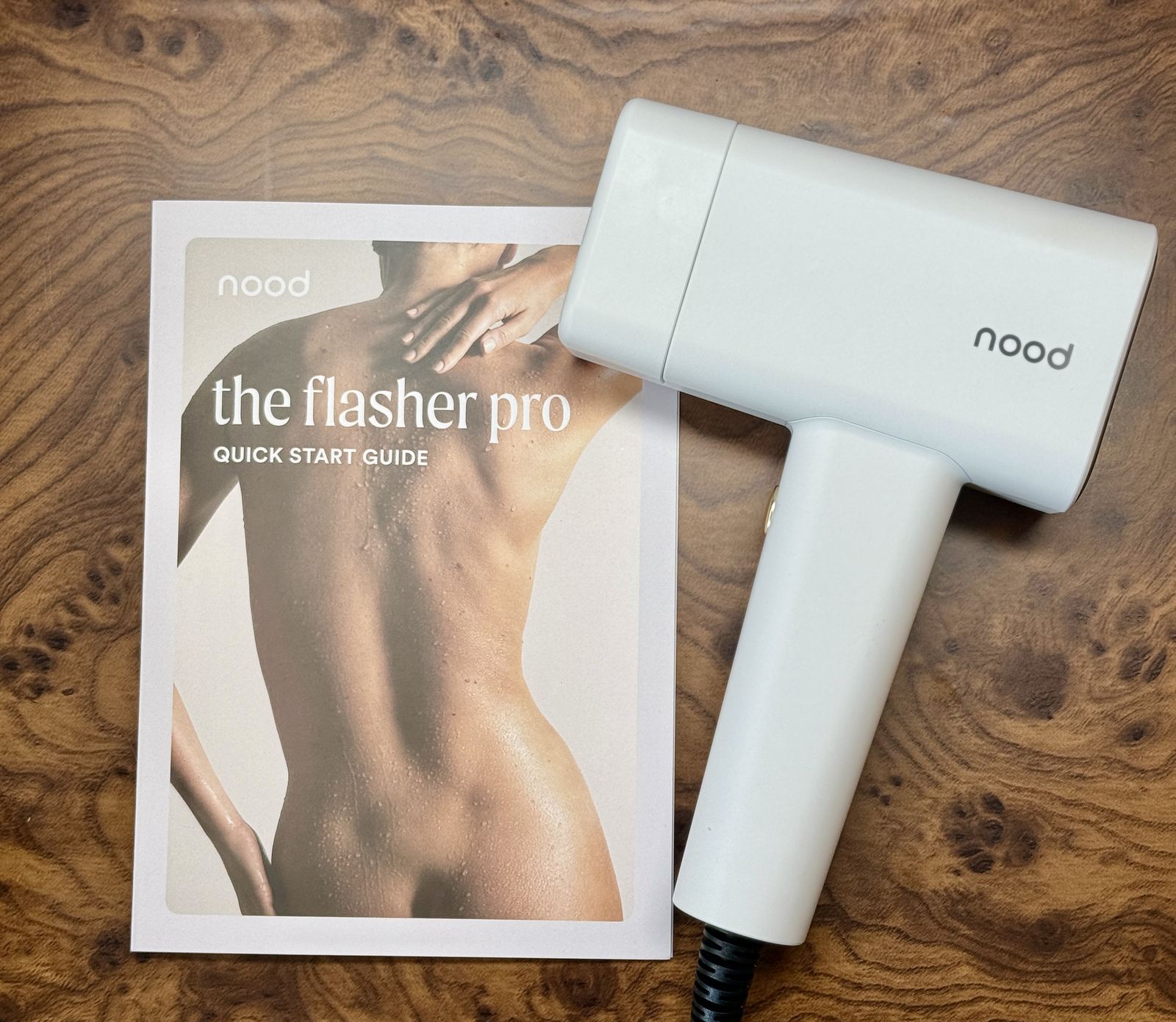
Current pricing sits on the Amazon listing. The eligibility chart is in the listing photos, which is worth checking before anything else here matters.
Why is it so hard to compare at-home IPL devices?
Because the number that determines whether a device works is the number almost nobody publishes.
Hair reduction with light works by selective photothermolysis, described by Anderson and Parrish in Science in 1983. Melanin in the hair shaft absorbs light, converts it to heat, and damages the follicle. How much damage you get depends on fluence, which is energy delivered per unit area, measured in joules per square centimetre. Fluence is the whole ball game. Flash count, “ice cooling”, app connectivity and 999,999-flash lifetime guarantees are all downstream of it.
So I went looking for the fluence of every major at-home IPL device, on the manufacturer’s own website. Here is what I found.
Braun’s US Silk-expert Pro pages list “10 intensity levels” and no joules. Philips does not publish a J/cm² figure for the Lumea range. JOVS does not publish one, and one independent reviewer noted the printed manual contains no technical specifications whatsoever. Kenzzi publishes no joules, no wavelength, no spot size and no flash count, while describing itself as FDA cleared. Ulike does publish a number, 6.67 J/cm², but that figure is the total across a four-pulse burst rather than the energy of a single flash, which works out to roughly 1.67 J/cm² per pulse.
And Nood publishes a fluence. Three of them, in fact: 6 J/cm² on one page, 7 on another, 7.2 on the comparison page. None of those match the 5.23 J/cm² ceiling in its own FDA file.
That is the real story of this category. It is not that one device is secretly twice as powerful as another. It is that you are being asked to choose between products whose defining specification is either absent, inconsistent, or quietly measured in a way that flatters it.
What does each brand actually publish?
Read this table as a documentation audit rather than a performance ranking. The right-hand column is the point. Prices are US list or typical street price at the time of writing and move constantly.
| Device | Fluence figure available | Who published it | Typical price |
|---|---|---|---|
| Nood Flasher Pro | 1.84 to 5.23 J/cm² (cleared) 6, 7 and 7.2 J/cm² (marketed) |
FDA 510(k) K241106, model T16A. A primary regulatory document. The marketed figures come from three different pages of Nood’s own site. | $299 to $409 |
| Philips Lumea 9000 | 2.5 to 6.5 J/cm² | An independent teardown by WeAreBodyBeautiful. Philips publishes nothing. | Around £539 RRP |
| Braun Silk-expert Pro 5 | 3 to 6 J/cm² | The same independent reviewer. Braun’s own page lists only “10 intensity levels”. | $429.99 |
| JOVS Venus Pro II | 1 to 6 J/cm² | An independent review, which notes the manual contains no technical specifications at all. | $299 |
| Ulike Air 10 | Around 1.67 J/cm² per flash | Ulike’s headline 6.67 J/cm² is a four-pulse burst total, not a single-flash figure. | $259 to $369 |
| Kenzzi | Not published | No joules, no wavelength, no spot size, no flash count, while the brand describes itself as FDA cleared. | Varies |
Check today’s Nood Flasher Pro price on Amazon
One caveat on wavelength, since it is the other spec people quote at each other. The upper bound of an IPL range is a lamp emission tail and is not meaningfully comparable between brands. Only the lower cutoff, the point where the filter starts letting light through, tells you anything about what the device is aimed at.
Who actually makes these devices?
This was the part I did not expect. If you search FDA’s 510(k) database for product code OHT and count clearances by applicant, the names that come up are mostly not the names on the boxes.
Shenzhen Ulike Smart Electronics Co., Ltd. holds 18 clearances under its own name. Cyden Limited, which makes Silk’n devices, holds 15. Home Skinovations, Ltd. holds four. Philips Consumer Lifestyle B.V. holds two.
Nood does not appear at all. The Flasher Pro’s clearance is held by Shenzhen Mlay Intelligent Technology Co., Ltd., a contract manufacturer with three clearances under this product code, covering long lists of model numbers sold under many different brands. K241106 alone covers eight models. Its sibling clearance K240264 covers eleven.
This is not a scandal and it is not unique to Nood. It is how most of the consumer beauty device market works, and it is worth understanding for two practical reasons. First, several brands you think of as competitors are the same hardware with different housings and different markups. Second, when the marketing on a brand’s website contradicts the numbers in its regulatory file, that is often because the brand did not generate those numbers and the file belongs to somebody else.
How many safety reports has each brand received?
FDA runs a public database of adverse event reports called MAUDE. I pulled every report filed under product code OHT, which is the at-home light-based hair removal category.
The whole category has about 32 reports, all time. Nood Ventures LLC appears on one. Shenzhen Ulike Smart Electronics appears on two. Philips entities appear on two. Kenzzi Limited, Cyden Limited, Conair Corporation, Home Skinovations and Procter & Gamble Manufacturing Company each appear on one. Most of the rest are filed by manufacturers whose names never reach a consumer.
Read that carefully, in both directions. Thirty-two reports across a category that has sold many millions of units is a very small number, and MAUDE reports are unverified, are not proof that a device caused anything, and are heavily under-reported for consumer products. So this is not a scare table and no brand here looks dangerous.
The Nood report is worth knowing about anyway, because it is specific. A woman in her thirties reported a rash on her leg after two uses of the Flasher 2.0, the predecessor model, that led to an emergency room visit and did not clear for three weeks. A dermatologist later suggested eczema as an alternative explanation. That contradiction is exactly why MAUDE entries are not evidence of cause. It is still a useful reminder that “pain-free” and “risk-free” are different claims, and this device is neither.
How does an at-home IPL device compare to a clinic laser? (short version)
Not favourably, and anyone telling you otherwise is selling something. The honest version is that the gap is real and the price gap is also real, and you get to decide which one matters more to you. The full clinic comparison, with course prices by city, is in Nood vs Laser Hair Removal.
Professional diode lasers are cleared in the range of roughly 5 to 40 J/cm². The Flasher Pro’s cleared ceiling is 5.23. That is not a marketing difference, it is the mechanism. More energy into the follicle means more follicles that do not come back.
The published research lines up with that. A 2023 randomised head-to-head trial in PLOS ONE put a professional diode laser against a home IPL device over six sessions and reported 85 to 88 percent underarm hair reduction for the professional device against 46 to 52 percent for the home one. Worth stating the limits: only 15 of 30 enrolled participants completed it, follow-up was three weeks, and the home device tested was a Silk’n, not a Nood.
The most useful study for setting expectations is an independent randomised trial by Thaysen-Petersen published in the British Journal of Dermatology in 2015. Eight weekly self-administered home treatments produced up to 59 percent reduction in growing hair, and the hair that remained was 38 percent thinner. Then treatment stopped, and three months later growing hair had returned to 29 percent above where it started. Every serious source in this field says the same thing in different words: this is maintenance, not a cure. The American Academy of Dermatology puts most patients at two to six laser treatments with maintenance sessions afterwards.
Where the home device wins is arithmetic and privacy. A six-session underarm course at a clinic commonly runs $450 to $1,500, and a six-session bikini course $570 to $1,800. The device costs less than two mid-range clinic sessions and is not limited to one body area. If you have ever bought a package and not finished it, you already understand the appeal.
How much do you save treating multiple areas?
This is where the whole comparison actually turns, and almost nobody models it properly. Clinic pricing is charged per area. A device is charged once. So the question is not “is a device cheaper than a laser session”, it is “how many areas do you plan to treat”, and the answer changes the arithmetic by an order of magnitude.
I built the numbers below from eleven real clinic rate cards rather than from aggregator averages, because the major aggregators model their state-level ranges from a cost of living index instead of surveying clinics. Every clinic in the set publishes a single-session price list on its own website: Laser and Glow in Houston, Texas Laser and Aesthetics in Austin, SKIN Las Vegas, Radiant Laser MD in Cambridge, Foxy Laser in Denver, Miami Skin Spa, Le Reve Med Spa in Pasadena, M. STUDIO in New York, ELLEMES in Atlanta, City Laser Clinic in San Francisco and Well Medical Arts in Seattle. Session counts follow NYC Laser’s published guidance of 6 to 8 sessions for face, underarms and bikini, and 8 to 10 for legs, arms, back and chest.
The first thing that falls out of eleven price lists is that geography moves the number more than anything else in this comparison does. The same six session underarm course is $294 in Houston and $2,094 in Seattle. That is a 7x spread on identical treatment, and it is larger than any bundle discount, any package deal and any brand difference in the entire category.
One area at a time
At a single area, the device is not an automatic win. It beats the clinic comfortably on large areas and loses badly on small facial ones, and where you live decides the rest.
| Area | Houston, TX | Pasadena, CA | Seattle, WA | Pasadena sessions to equal $379 |
|---|---|---|---|---|
| Upper lip | $150 | $270 | $1,194 | 8.4 |
| Underarms | $294 | $600 | $2,094 | 3.8 |
| Bikini line | $294 | $570 | $1,194 | 4.0 |
| Brazilian | $534 | $900 | $2,994 | 2.5 |
| Full arms | $840 | $1,360 | $3,992 | 2.2 |
| Back | $1,032 | $1,920 | $3,992 | 1.6 |
| Full legs | $1,800 | $1,920 | $3,992 | 1.6 |
Read the last column as the honest headline for a single area: at mid-range California pricing it takes fewer than two clinic sessions on full legs to spend what the whole device costs, but more than eight sessions on an upper lip. If your only complaint is your upper lip and you live somewhere cheap, buy the clinic sessions. The device is not built for you.
Stacking areas, over five and ten years
Now add areas. Clinic totals below use the Pasadena rate card, a 6 to 8 session initial course, and one maintenance session per area per year after that, which is what the clinics themselves describe. The device column is one $379 purchase, and one replacement at year five for the ten year figure.
| What you treat | Clinic, initial course | Clinic, 5 years | Clinic, 10 years | Device, 10 years | 10 year difference |
|---|---|---|---|---|---|
| 1 area. Underarms | $600 | $1,000 | $1,500 | $758 | $742 |
| 2 areas. Add bikini line | $1,170 | $1,950 | $2,925 | $758 | $2,167 |
| 3 areas. Add upper lip | $1,440 | $2,400 | $3,600 | $758 | $2,842 |
| 4 areas. Underarms, Brazilian, upper lip, full legs | $3,690 | $5,830 | $8,505 | $758 | $7,747 |
| 6 areas. Add full arms and chin | $5,320 | $8,320 | $12,070 | $758 | $11,312 |
| 9 areas. Add stomach, back, neck | $8,800 | $13,640 | $19,690 | $758 | $18,932 |
| 13 areas. Everything on the list | $12,410 | $19,310 | $27,935 | $758 | $27,177 |
The line that matters is not any single total. It is the marginal cost of adding one more area. At the Pasadena rate card that is $270 to $1,920 depending on the area, every time, forever. On the device it is zero. That is the entire economic argument for owning one, and it is the reason the gap widens from 1.6x at one area to roughly 33x at thirteen.
If the arithmetic lands for you, the device is on Amazon here. It is one purchase and it covers every area on that list, which is the whole point of the table above.
What it costs you in time
The savings are not free. You are trading money for labour, and nobody selling these devices puts a number on that, so here is one.
The cleared spot size is 3.9 cm². Working from that and an estimated 1.2 second flash cycle, a four-area routine covering underarms, Brazilian, upper lip and full legs runs roughly 1,400 flashes and about 28 minutes per session. Twice a week for eight weeks, then monthly maintenance, comes to roughly 34 hours over five years. Against $5,451 saved at the Pasadena rate card, that is about $162 an hour for your trouble. A thirteen area routine is around 76 minutes a session and 90 hours over five years, at roughly $211 an hour.
Whether that is a good wage is your call. It is a real one, and it is a better way to think about the decision than a raw savings number.
One more thing that falls out of the same maths: even the thirteen area, five year path uses roughly 269,000 flashes, comfortably inside the lamp’s 500,000 flash rating. The lamp is not the constraint. Your patience is.
Where the savings argument breaks
Three situations flatten the gap, and a model that ignores them is a sales pitch.
Clinics discount multi-area buys, heavily. City Laser Clinic publishes a full body session at $1,800 against roughly $2,559 for the same areas bought separately, then takes another 15 percent off a package of six and adds three free sessions on top. Bundling roughly halves the a la carte number. Renova Laser in Houston sells any three areas for $799 against $1,197 separately. My tables use a la carte pricing, so read them as the ceiling, not the likely bill.
The cheapest published full body package is far below my model. SEV Laser publishes an eight session full body package at $470 to $540 per session depending on region, and an 18 month unlimited membership at $340 to $400 a month with free annual touch-ups for life. Against a full body package at that price the device is still roughly a tenth of the cost, but the gap is nothing like 33x.
Unlimited memberships erase the maintenance advantage entirely. Milan Laser sells a flat lifetime fee per area with free touch-ups for life, and publishes no price at all anywhere on its site. Against a Milan customer, every maintenance row in my tables goes to zero and the only remaining lever is the up front number, which you cannot see without a consultation.
And the figure I deliberately left out: the $697 that gets quoted everywhere as “the average cost of laser hair removal”. That is the American Society of Plastic Surgeons number for skin treatments using combination lasers, which bundles hair removal with IPL, tattoo removal and leg vein treatment. It is a surgeon fee only and it is not a hair removal price. It should stop being used as one.
How do you use the Nood Flasher Pro?
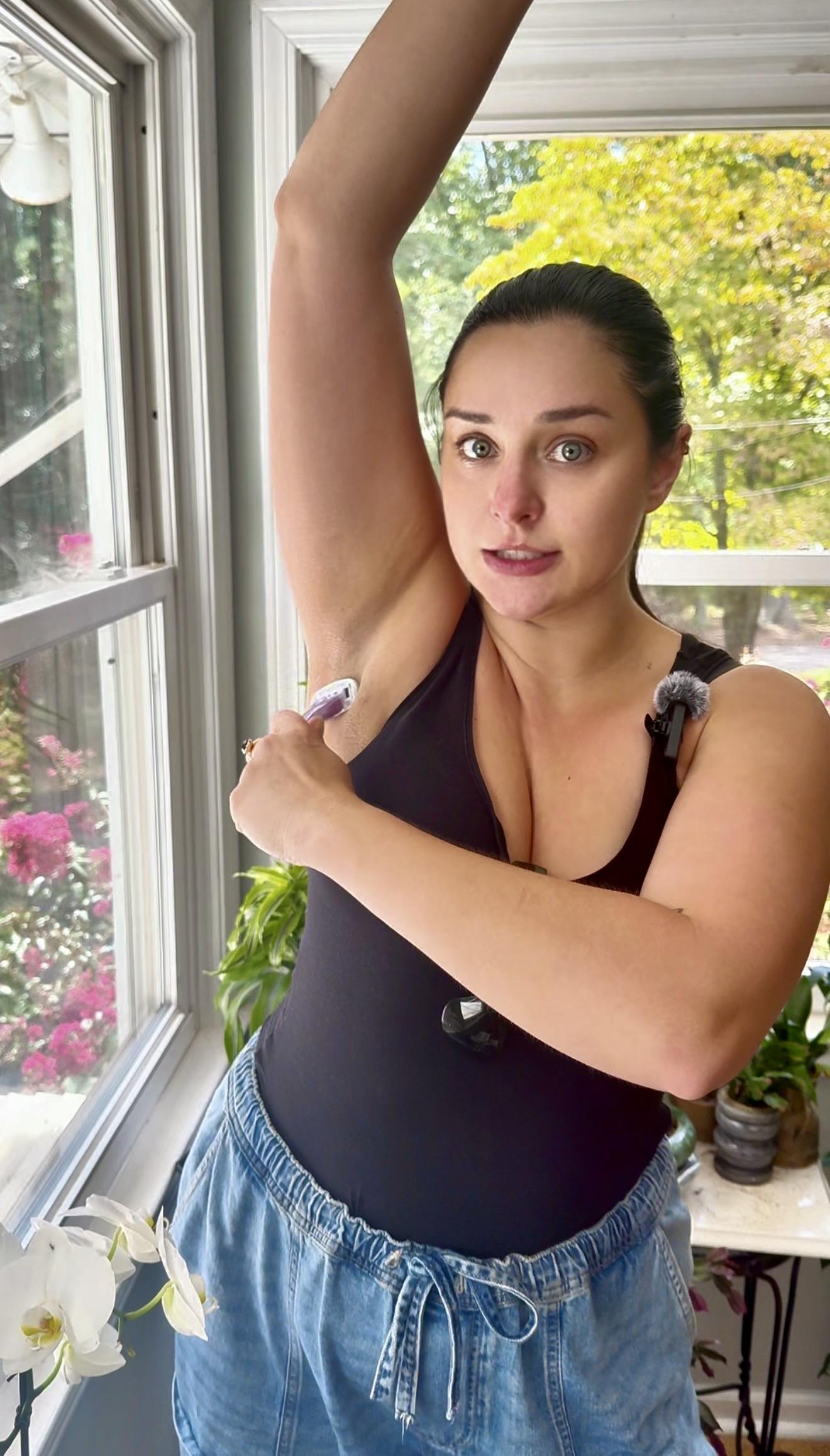
Shave the area first. IPL targets pigment in the follicle, not the hair above the skin, and leaving stubble on the surface just burns it and wastes energy. Skip waxing and epilating entirely while you are using it, because both remove the follicle target the light needs.
Nood’s FAQ says to start at level 3 of 5 and work up. The Pro’s genuine upgrade over the Flasher 2.0 is the sapphire contact plate, which the brand says reaches 60 °F and which is the reason the higher levels are tolerable at all. Describe it as a cooling plate rather than a breakthrough and you have it about right.
On schedule, Nood publishes three different protocols across its own site: every three days for twelve weeks then monthly, twice weekly for two months then every three to six months, and twice weekly then every one to two months. The middle version is the one most reviewers describe and the one I would follow. Twice a week for eight weeks, then maintenance.
The Ageless lens ships with almost no instruction, which is a genuine gap. It sits outside the hair removal clearance entirely, so treat it as an extra you experiment with rather than a second reason to buy. The step by step for that lens is in the Nood Ageless Lens Review. For upper lip and chin, see Can You Use Nood on Your Face.
Who should skip the Nood Flasher Pro?
Quite a lot of people, and this is the section most reviews leave out.
Skip it if your hair is blonde, red, grey or white. There is no eumelanin for the light to absorb, so nothing happens. This is physics, not a defect, and it applies to every IPL device on this page equally.
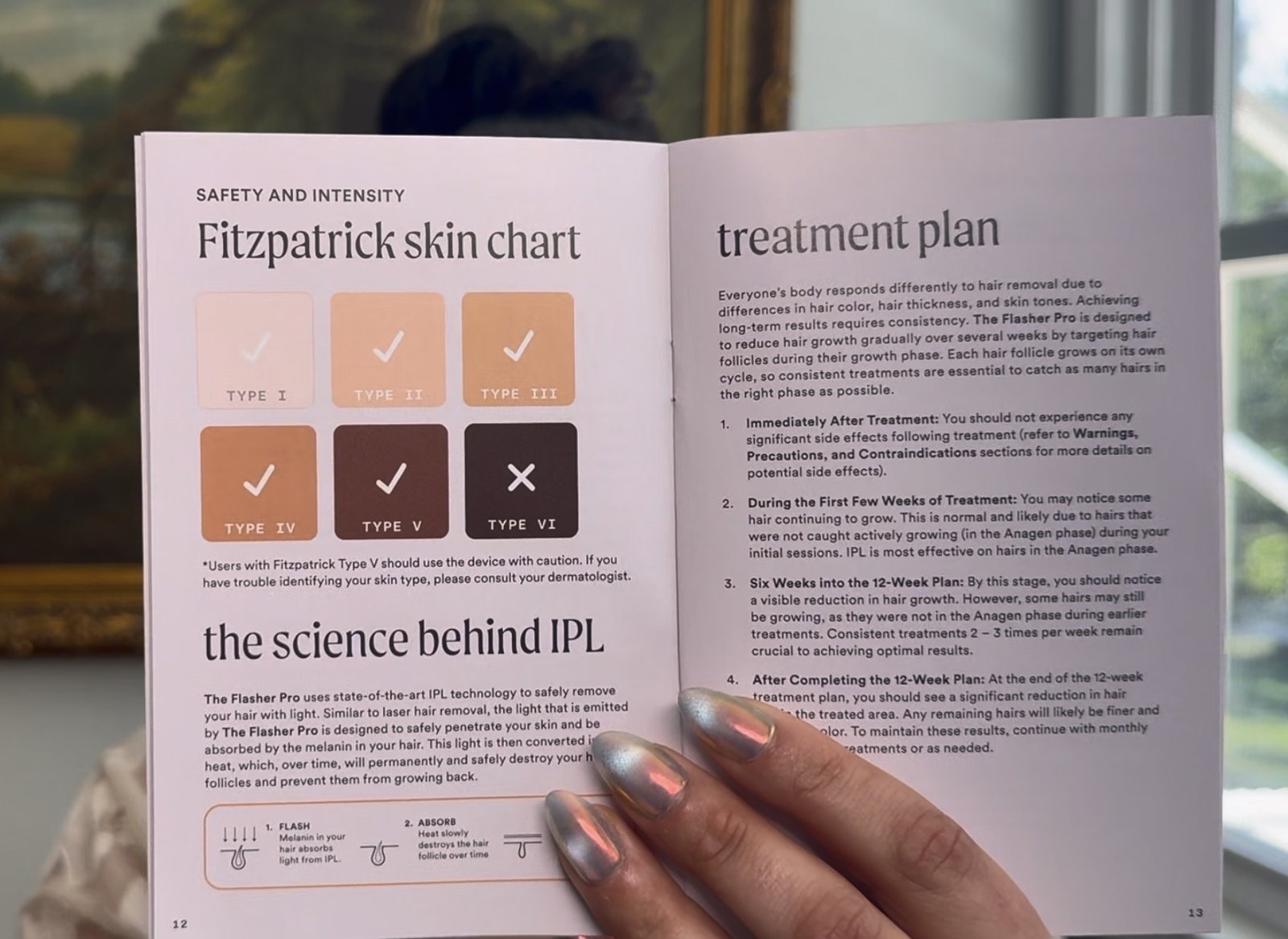
Skip it if you have a deeper skin tone. When the epidermis holds more melanin than the follicle, your skin absorbs the energy instead of the hair. That is a burn risk rather than a disappointing result. Nood markets the hair lens for fair to olive skin and the Ageless lens for Fitzpatrick types I to IV. Professional diode systems are cleared for types I to VI, including tanned skin, which is a real reason to go to a clinic instead.
Skip it if you want facial hair on the lower face or neck removed and you have hormonal growth. The clearance’s facial permission stops at the chin line, and coarse hormonal hair is the case where electrolysis, at roughly $90 to $180 an hour, is the treatment that actually finishes the job.
Skip it if you are buying it for wrinkles. IPL at clinic strength is a pigment and redness treatment. In a three-way periorbital comparison against fractional laser and radiofrequency, fractional laser performed best overall and IPL performed worst for wrinkles. There are no published clinical trials of at-home IPL for skin at all. If lines are your target, a retinoid has meta-analysis level evidence behind it and costs a fraction of this. I wrote about the one I use in my PRMR Youth Radiance Vitatinol serum review.
And skip it if you cannot commit to twice a week for two months and then maintenance forever. The device does not fail people nearly as often as the schedule does.
Which at-home IPL device should you buy?
If you have decided you want one, here is how to choose, in order.
Buy the one whose energy output you can verify. Right now that is the Nood Flasher Pro, not because it is the most powerful but because it is the only one in this comparison whose fluence appears in a document the manufacturer did not write. In a category this opaque, verifiability is worth more than a spec sheet you cannot check.
Buy the one with a real cooling plate, because comfort determines whether you finish the protocol, and finishing the protocol is the only thing that produces a result.
Buy it from a retailer with a return policy you trust. This matters more with Nood than with most brands. Nood Ventures LLC, based in Austin, Texas, is not BBB accredited and holds an F rating with the Better Business Bureau, with 41 complaints filed in three years and a failure to respond to 23 of them. The complaints cluster on fulfilment, subscription charges and refunds rather than on the device itself, and Nood’s own direct guarantee carries a $29.95 restocking fee and only applies to purchases made on its own site. Buying through Amazon sidesteps all of that.
Nood The Flasher Pro
IPL hair removal handset with two lenses and a sapphire cooling plate. FDA cleared under K241106 for permanent hair reduction.
Around $299 to $409
If you have read this far and none of the skip conditions are you, the device is on Amazon here. Buy it from Amazon rather than direct, for the reason in the section above.
Frequently asked questions
Is the Nood Flasher Pro FDA approved?
No. It is FDA cleared, which is a different thing. Clearance under 510(k) K241106 means FDA agreed the device is substantially equivalent to one already on the market. It is not a finding that the device works, and many clearances in this category include no clinical study at all. “FDA approved” is not a claim any at-home IPL device can make.
How does the Nood Flasher Pro compare to Braun, Philips and Ulike?
On paper, you cannot say, and neither can anyone else. Braun and Philips publish no J/cm² figure on their own sites, Ulike’s published figure is a four-pulse burst total rather than a single flash, and Kenzzi publishes nothing at all. Nood is the only brand in this group with an energy range in a public FDA file, which is why it is the one I can describe precisely.
Is the Nood Flasher Pro as strong as a clinic laser?
No, and it is not designed to be. Its cleared ceiling is 5.23 J/cm². Professional diode lasers are cleared from roughly 5 to 40 J/cm². Home devices are deliberately limited because they are used without training, screening or supervision. In one randomised head-to-head, a professional diode reached 85 to 88 percent underarm reduction against 46 to 52 percent for a home IPL device.
Does IPL work on blonde, red or grey hair?
No. IPL needs melanin in the hair shaft to absorb the light and convert it to heat. Blonde, red, grey and white hair do not have enough of it, so there is nothing for the energy to target. No at-home device on the market solves this. Electrolysis is the only method that works regardless of hair colour. The full answer is in Does Nood Work on Blonde Hair?
Does the Ageless lens get rid of wrinkles?
No, and it is not cleared to. K241106 is a hair removal clearance with no skin, pigment or collagen indication in it. There are no published clinical trials of at-home IPL for skin. Clinic IPL is genuinely useful for pigment and redness, at roughly 10 to 35 J/cm², which is several times what this device delivers. Treat the second lens as an experiment, not a purchase reason. The clinic comparison is in Nood Ageless Lens vs an In-Office IPL Photofacial. What realistically changes week by week is in Nood Ageless Lens Before and After.
How long before you see results from an at-home IPL device?
Eight weeks is the realistic first checkpoint. The independent trial with the clearest data used eight weekly treatments and reported up to 59 percent reduction in growing hair, with remaining hair 38 percent thinner. Most people notice slower regrowth before they notice less hair. Anyone promising a visible change in two weeks is describing shaving.
Is permanent hair removal possible with IPL?
No. The cleared claim is permanent hair reduction, which FDA defines as a long term stable reduction in the amount of hair regrowing when measured at 6, 9 and 12 months after a treatment course. Only electrolysis carries a permanent hair removal claim in the US. In the one trial that followed people after they stopped, growing hair returned to 29 percent above baseline within three months.
How much do you save doing multiple areas at home?
It depends almost entirely on how many areas you treat and where you live. At Pasadena rate card prices, one area over five years is about $621 saved, four areas about $5,451, and thirteen areas about $18,931, because the clinic charges per area and the device does not. The marginal cost of adding one more area is $270 to $1,920 at a clinic and zero on a device. Multi-area bundles and unlimited memberships narrow the gap considerably.
Should you buy Nood on Amazon or from Nood directly?
Amazon. Nood Ventures LLC holds an F rating with the Better Business Bureau, is not accredited, and failed to respond to 23 of 41 complaints filed over three years, most of them about fulfilment, subscription charges and refunds. Nood’s own money-back guarantee carries a $29.95 restocking fee and applies only to purchases made on its own website, so it does not cover an Amazon or Walmart unit anyway. Check today’s Nood Flasher Pro price on Amazon.
Is level 1 enough on the Nood Flasher Pro?
Nood recommends starting at level 3 of 5 and working up or down based on your skin’s sensitivity, and using the highest level your skin can tolerate, because higher levels deliver more light per pulse. So level 1 is a setting for skin that cannot take more, not the place to start. The full protocol is in How do you use the Nood Flasher Pro? above.
Related comparisons: Nood Flasher Pro vs Braun Silk-expert Pro 5 · Nood Flasher Pro vs Ulike Air 10 · Nood Flasher Pro vs Philips Lumea 9000 · Nood Flasher Pro vs Flasher 2.0 · Does Nood Work on Blonde Hair? · Nood vs Laser Hair Removal · Hairless vs Ageless Lens
Related reading
- Nood Ageless Lens vs an In-Office IPL Photofacial, the published research on what clinic IPL does, what it has never done, and how the energy actually compares.
- Nood Ageless Lens Review, how to use the skin lens step by step.
- Nood Hairless vs Ageless Lens, which lens does what and which one you need.
- Dermaplaning vs Waxing, the two options for peach fuzz and facial hair.
- Does Nood Work?, the evidence for both lenses.
Sources. FDA 510(k) database, K241106 and K240264, applicant Shenzhen Mlay Intelligent Technology Co., Ltd. FDA MAUDE adverse event database, product code OHT. Anderson RR and Parrish JA, Science, 1983. Thaysen-Petersen D et al., British Journal of Dermatology, 2015. Randomised diode versus home device comparison, PLOS ONE, 2023. Periorbital three-way comparison, Lasers in Medical Science, 2021. American Academy of Dermatology. Better Business Bureau profile for Nood, Austin, Texas. Manufacturer specification pages for Nood, Braun, Philips, JOVS, Ulike and Kenzzi, checked August 2026.
Leave a Reply