Disclosure
This post contains affiliate links, which means I may earn a small commission if you make a purchase through my links, at no extra cost to you.
This post contains affiliate links. As an Amazon Associate, purchases made through these links may earn a commission at no extra cost to you.
Short answer: it depends on which blonde. Nood lists dark blonde as a good fit for the Flasher Pro and light blonde, red and grey as not recommended. That is not a Nood limitation. It is how IPL works, and no at-home device gets around it whatever the listing says. Here’s what to look for, and what to use instead if your hair is on the wrong side of the line.
The short version
Dark blonde, light brown, brown or black hair on fair to olive skin: IPL is a fit. The Nood Flasher Pro is the device with the strongest published energy figure in the category, and the reasons are in the full IPL comparison.
Light blonde, strawberry blonde, red, grey or white hair: IPL is not a fit, on any brand. Electrolysis is the method that works on every hair color. For facial peach fuzz, dermaplaning is the practical maintenance option.
Why hair color decides it
IPL is a flash of broad-spectrum light. It does nothing on its own. The result comes from pigment in the hair absorbing that light, converting it to heat, and that heat damaging the follicle enough to slow regrowth. The pigment doing the absorbing is melanin, and specifically eumelanin, the brown-black kind.
Dark hair has a lot of eumelanin, so it absorbs strongly and heats fast. Dark blonde has enough to work with. Light blonde has very little. Red hair is colored mainly by pheomelanin, a different pigment that absorbs poorly at the wavelengths IPL uses. Grey and white hair has lost its pigment altogether. In each of those cases the light passes through the hair and lands in the skin instead, which is why the manufacturers say not recommended rather than results may vary.
The same physics applies at the clinic. Diode and alexandrite lasers depend on melanin too. If a clinic tells you their laser works on blonde or grey hair, ask which wavelength and what the evidence is.
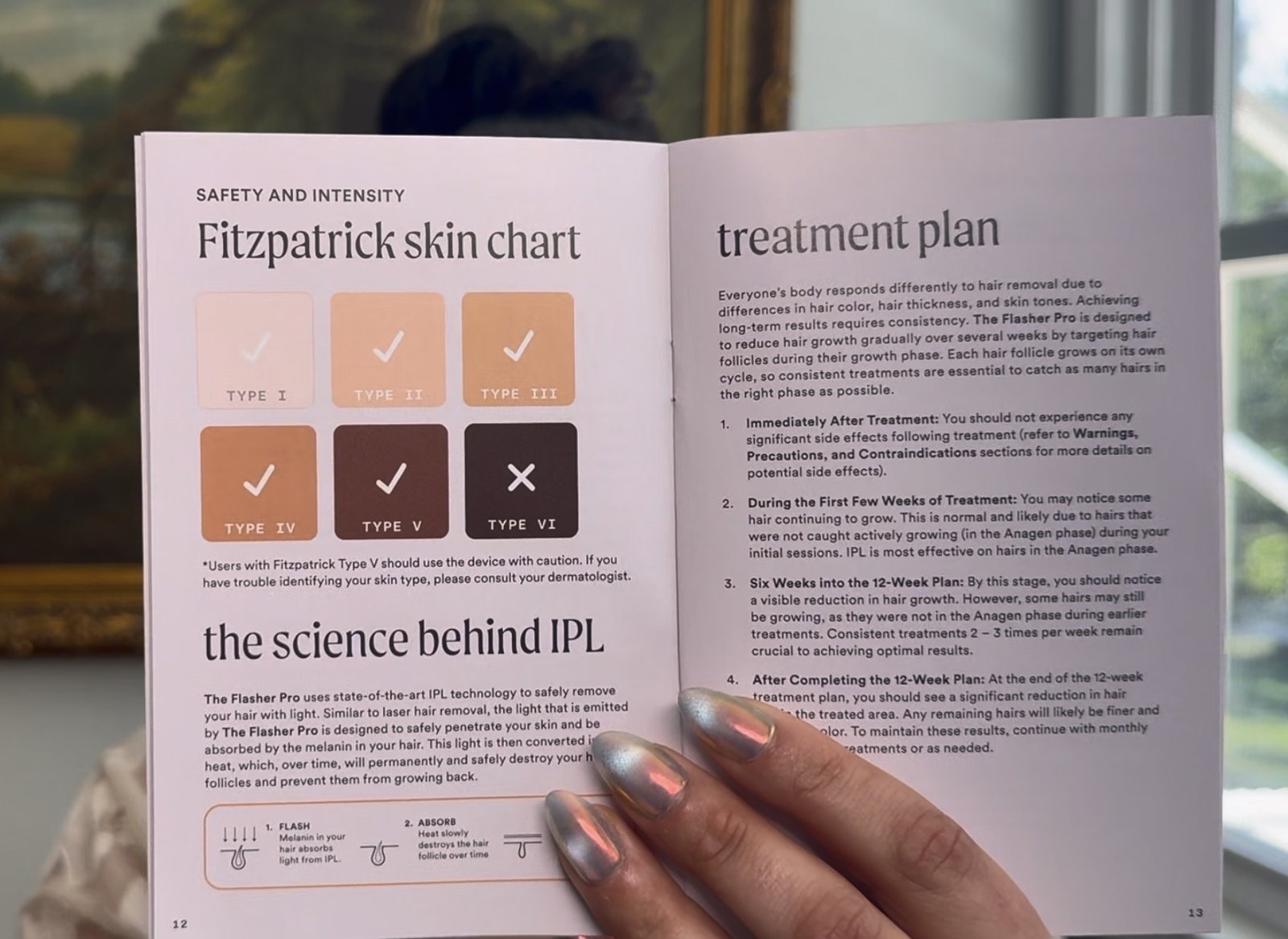
Nood’s skin type chart. Hair color is the other half of the same rule: the device needs pigment in the hair and contrast with the skin.
What Nood actually says
Nood’s product page for the Flasher Pro puts it plainly. Good fit for black, brown and dark blonde hair. Not recommended for light blonde, red and grey. Good fit for very fair, fair, white-olive and olive to light brown skin. Not recommended for brown and dark brown to black skin tones. The FAQ adds that IPL is not safe or suitable for the deeper skin tones, which is a stronger statement than the hair one, and worth taking at face value.
One useful detail: the Ageless skin lens is listed for Fitzpatrick I to IV regardless of hair color. If the reason for buying is sun spots or redness rather than hair, light hair does not rule the device out. That lens is covered in its own review.
Where the line falls, by hair color
Hair color
IPL at home
What works instead
Black or dark brown
Yes, best case
IPL
Medium brown
Yes
IPL
Dark blonde
Yes, per Nood’s chart
IPL
Light blonde
Not recommended
Electrolysis; dermaplaning for facial fuzz
Strawberry blonde or red
Not recommended
Electrolysis
Grey or white
Not recommended
Electrolysis
Do not trust a device that claims otherwise
Some listings on Amazon say their IPL works on blonde or grey hair. Look for how they say it. If the claim is a marketing line with no wavelength, no energy figure and no chart, treat it as a claim. A device with less energy than the Flasher Pro cannot heat pigment that is not there. The physics does not change with the brand.
What is true is that “blonde” covers a wide range, and plenty of people who describe themselves as blonde have hair that reads as dark blonde or light brown up close. The test is simple: look at the hair against the skin in daylight. If it is clearly darker than the skin, there is contrast to work with. If it disappears against the skin, there is not.
What to use instead
Electrolysis. A fine probe delivers current to each follicle individually, so it does not care about pigment. It is the only method the FDA allows to be marketed as permanent hair removal; lasers and IPL are cleared for permanent hair reduction, which is a different claim. It is slow and it is per-hair, so it suits small areas like the upper lip, chin and bikini line rather than full legs.
Dermaplaning for the face. It removes the fine vellus hair, the peach fuzz, along with dead surface skin, and it works on any color because it is mechanical. It is maintenance rather than reduction: the hair returns in a week or two, unchanged. The tools compared here and the step-by-step cover it.
Waxing or sugaring for body areas where electrolysis is impractical. Also maintenance, also color-blind.
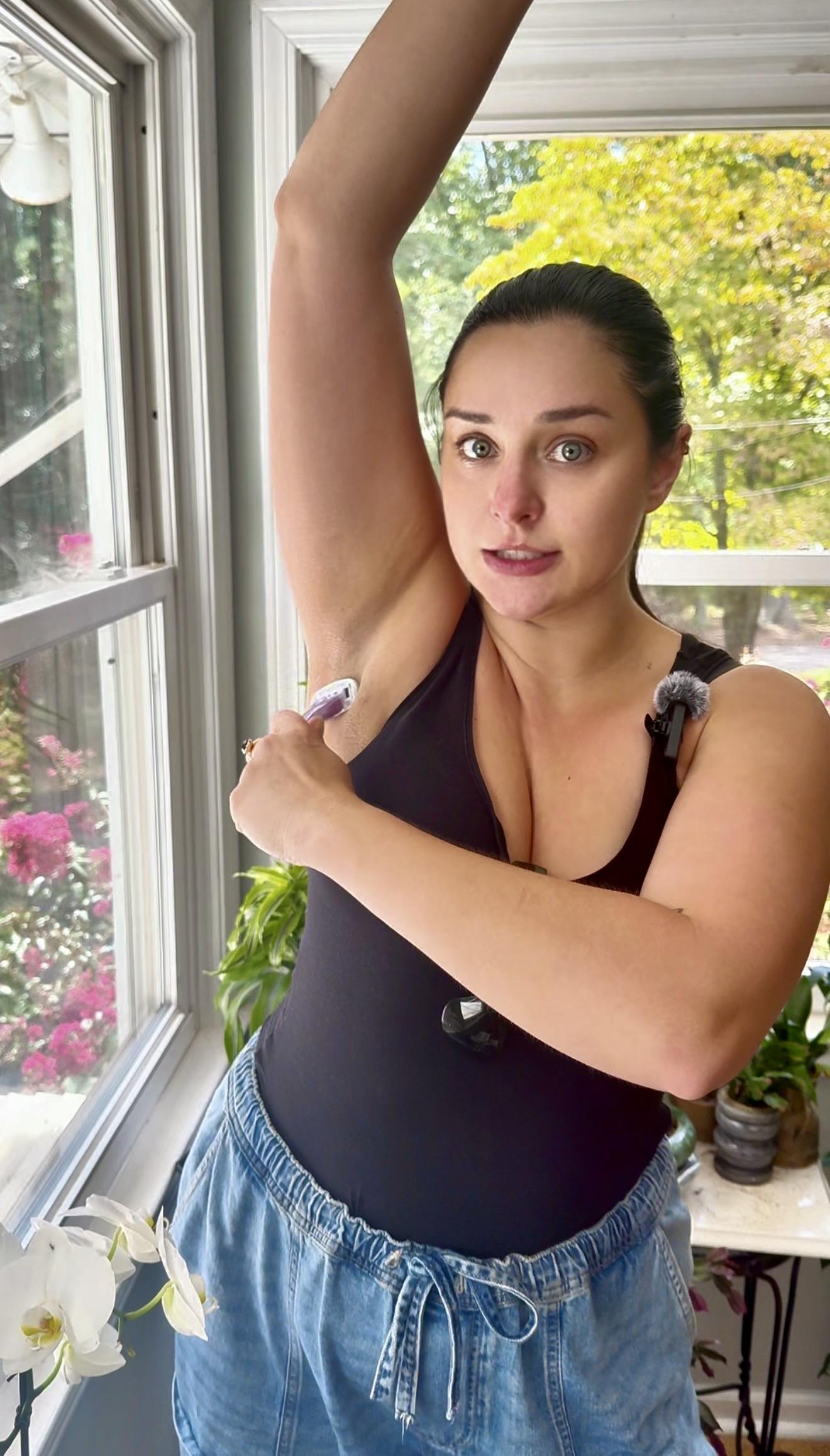
Underarm hair is usually darker and coarser than hair elsewhere, which is why it is often the first area IPL shows results on, even for people whose leg hair is lighter.
If you are on the right side of the line
For dark blonde and darker, the choice comes down to energy, cooling and price, and the Flasher Pro is the one with a cleared energy range in a public FDA file. How it compares to Nood’s older handset is here, and against Ulike, Braun and Philips in the full comparison.
Does Nood work on blonde hair?
On dark blonde, yes. Nood lists dark blonde as a good fit for the Flasher Pro. On light blonde it says not recommended, and that is the honest answer for any IPL device, because there is not enough pigment in the hair for the light to target.
Does Nood work on red hair?
No. Red hair is colored mostly by pheomelanin, which absorbs IPL wavelengths poorly. Nood lists red as not recommended, and clinic lasers have the same problem.
Does Nood work on grey or white hair?
No. Grey and white hair has lost its pigment, so there is nothing for the light to heat. Electrolysis is the method that works regardless of hair color.
Can I make IPL work on blonde hair by turning the level up?
No, and it is a bad idea. A higher setting puts more energy into the skin, not into hair that has no pigment to absorb it. That raises the burn risk without improving the result.
What about a mix of dark and light hairs?
IPL will reduce the dark ones and leave the light ones. On legs or underarms that often still looks like a real improvement. On the face it can leave a fine blonde fuzz that dermaplaning handles better.
Checked September 2026 against Nood’s Flasher Pro product page and FAQ, and the FDA’s distinction between permanent hair removal (electrolysis) and permanent hair reduction (laser and IPL, including Nood’s 510(k) K241106).
Leave a Reply