Disclosure
This post contains affiliate links, which means I may earn a small commission if you make a purchase through my links, at no extra cost to you.
Can you use Nood on your face? Yes. Nood says the Flasher Pro can go anywhere on the face or body except the eyebrows and the skin right around the eyes, so the upper lip, chin, jawline, and neck are all allowed. The catch is fit. It needs dark hair on lighter skin, it will not do anything for peach fuzz, and the face is the area where the cautions matter most. If your facial hair is dark and you are already treating legs or underarms, the Nood Flasher Pro is a reasonable pick. Here’s what to look for before the first flash.
Yes on: upper lip, chin, jawline, and neck. Nood’s page allows the whole face outside the eye area, and its own list names the chin and neck.
No on: eyebrows, the skin around the eyes, tattoos, moles, and dark freckles.
Works on: black, brown, and dark blonde hair. That is Nood’s own chart.
Does not work on: peach fuzz, or light blonde, red, and grey hair. Nood also rules out brown to black skin tones.
Before you start: shave instead of waxing or tweezing, run the skin test, and pause retinol and acids on the area.
Where you can use Nood on your face
Nood’s product page for the Flasher Pro is the source here, with its general FAQ filling in the cautions.
Area
Nood’s guidance
The move
Upper lip
Allowed. The page says anywhere on the face outside the eye area and eyebrows
Shave first and start on the lowest level
Chin and jawline
Allowed. The chin is named in Nood’s own area list
The best facial fit when the hair is dark and coarse
Neck
Allowed. Named in Nood’s area list
Same routine as the chin
Cheeks and sideburns
Covered by the whole-face wording. The manual holds the full area list
Check the manual, and only treat hair you are sure you want gone
Eyebrows
Not suitable
Tweeze or thread, including the space between the brows
Around the eyes
Not suitable
Stay below the cheekbones
Tattoos, moles, dark freckles
Do not flash over them
Work around them. Nood says light freckles are fine
What Nood says vs what the FDA file says
One detail worth knowing. The FDA 510(k) file that the Nood Flasher Pro comparison post traces to this device, K241106, lists small areas such as the underarms and “facial hair below the chin line.” The file names the manufacturer and its model numbers, not the Nood brand. Nood’s own page goes further and allows the whole face outside the eye area.
So use from the chin line down is the part with the clearance wording behind it. The upper lip, cheeks, and sideburns rest on the brand’s instructions. That is not a reason to panic. It is the reason to run the skin test, start low, and stay well clear of the eyes.
Will Nood work on your facial hair?
IPL works by contrast. Pigment in the hair absorbs the flash and turns it into heat, and the heat is what slows regrowth. Nood says its hair removal lens needs high contrast between the hair and the skin. On the face, that sorts people quickly.
Dark, coarse hairs on the upper lip, chin, or jawline: the best fit. There is plenty of pigment for the light to target.
Peach fuzz: not a fit. Fine, pale facial fuzz has too little pigment to target. What works here is dermaplaning. A sonic dermaplaning tool like the Michael Todd Sonicsmooth Pro+ is built for exactly that, and the other options are in the best at-home dermaplaning tools.
Light blonde, red, or grey hair: Nood lists all three as not recommended. Mayo Clinic notes that electrolysis is the better option for naturally blond or white hair. More on that in Does Nood Work on Blonde Hair?
Brown to dark brown or black skin: Nood says IPL is not safe or suitable. A clinic consult is the move, since office lasers cover more skin tones.
Hormonal hair: if coarse chin or neck hair showed up suddenly or keeps getting heavier, the first stop is a doctor. Mayo Clinic notes that blood tests can show whether hormone levels are behind it. A device treats the hair, not the cause.
Run the Skin Safety Test. Nood recommends one before starting treatment. Pick a small patch along the jaw and follow the timing in the manual.
Shave. Do not wax, tweeze, or thread. Nood says to shave the area so the light reaches the follicle, and to stick to shaving between sessions, because pulling the hair out reduces effectiveness. On the face, a facial razor or a dermaplaning tool handles this step.
Go in clean, dry, and bare. Nood says no lotions, creams, or self-tanner on the skin. Take makeup off first.
Pause retinol and acids on the area. Nood’s general FAQ calls for at least 7 days between retinol or acid-based products and a session. It also says to wait about six months after finishing Accutane.
Start low. The Flasher Pro has five intensity levels. Nood’s general guidance is to start at level 3 and adjust by comfort. Facial skin is more reactive than a shin, so the cautious move is level 1 on the face, stepping up only if the skin stays calm.
Press the window flat and stay below the cheekbones. Nood’s general FAQ says the handset has a sensor that will not flash until the whole window is against the skin. Look away from the flash anyway.
Keep the schedule. For the hair lens, Nood’s product page says every three days for up to 12 weeks, then monthly.
Skip tanned or sunburned skin. Nood says to wait at least two weeks after tanning and a month after a sunburn, and to let a spray tan fade first.
Hairless lens or Ageless lens on the face?
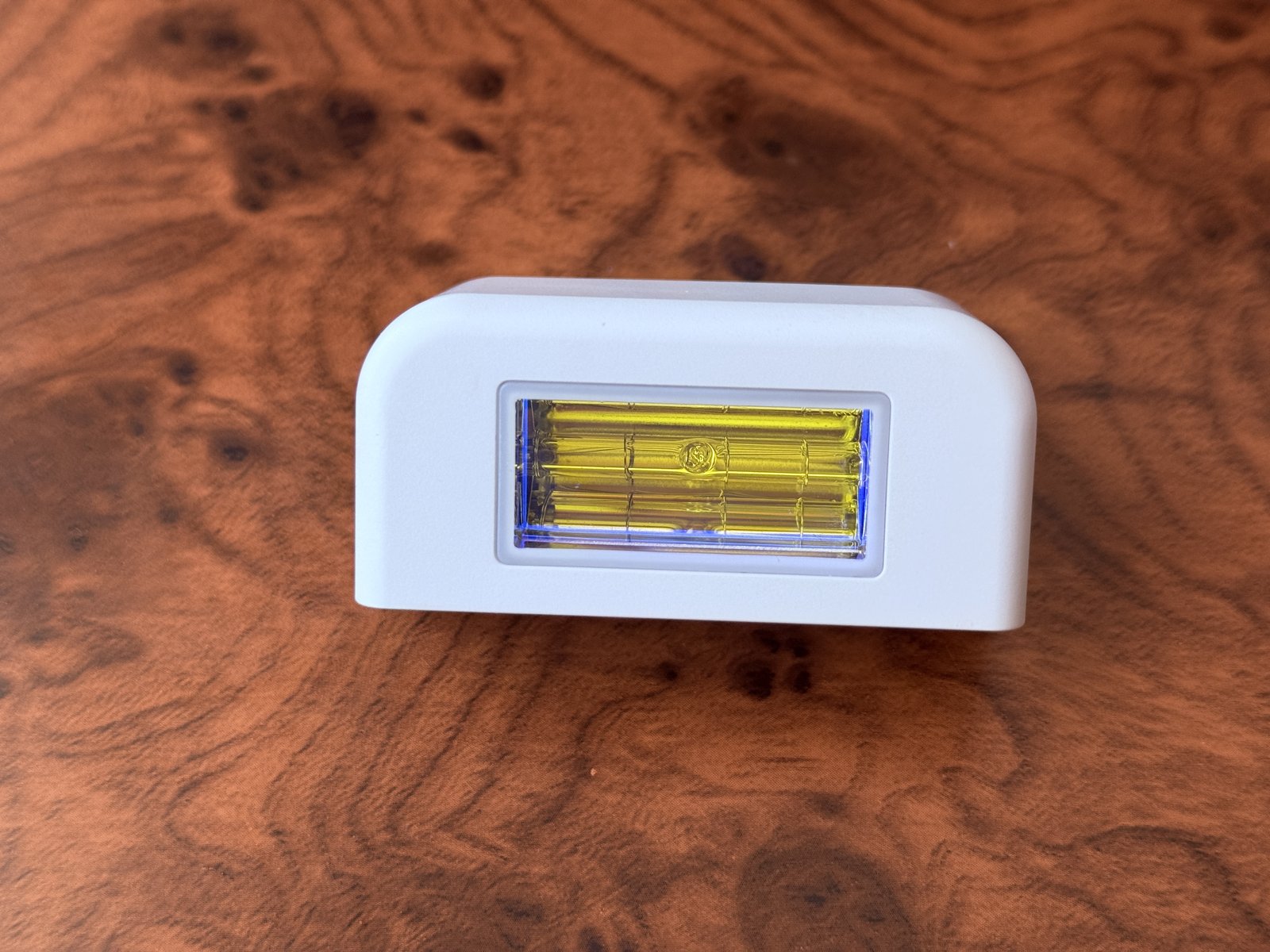
The Flasher Pro ships with two lenses. The Hairless lens is the one for facial hair. The Ageless lens is the skin lens, and it is covered in Nood Hairless vs Ageless Lens and in the Nood Ageless Lens review, which includes a video walkthrough.
One caution from Nood’s own FAQ: the Ageless lens can also reduce hair where it is used over time. Keep either lens away from any hair you want to keep, like the hairline, the edge of the brows, or a beard line.
The face-specific risk to know about
One risk rarely makes a product page: paradoxical hair growth, where hair in or near the treated area comes in thicker instead of thinner.
A 2021 systematic review in the American Journal of Clinical Dermatology (Snast and colleagues) pooled 22 studies of laser and light hair removal covering 9,733 patients. It estimated paradoxical growth in about 3% of them, with a confidence range of 1% to 6%, and tied it mainly to the face and neck. Away from the face and neck it was rare, at 0.08%.
The review covered laser and IPL hair removal and does not report on at-home devices, so the number does not transfer directly. In three of the four studies that tracked it, the extra growth eased with continued treatment. The takeaway: if facial hair looks denser or starts spreading after a run of sessions, see a dermatologist before deciding whether to keep going.
Who should skip Nood for the face
Peach fuzz is the only goal. Dermaplaning is the right tool for that job.
Light blonde, red, or grey facial hair. Electrolysis is the route that does not depend on pigment.
Brown to black skin. Book a clinic consult instead.
The upper lip is the only area on your list. A short course of clinic sessions can be the better buy for one small area. The comparison is in Nood vs Laser Hair Removal.
New or fast-growing coarse hair on the chin or neck. See a doctor first.
Pregnant or breastfeeding. Nood recommends waiting.
On Accutane, or finished it within about six months. Nood says to wait.
The verdict
Nood on the face makes sense when the hair is dark, the skin is on the lighter side of Nood’s chart, and the face is one of several areas you plan to treat. The face is a small add-on to a routine you are already doing, and the same device covers legs, underarms, and bikini line with no refills to buy.
It is the wrong tool for peach fuzz, pale hair, deeper skin tones, and anything near the eyes. For fuzz, look at dermaplaning, and for the method comparison see Dermaplaning vs Waxing.
Yes. Nood says the Flasher Pro can be used anywhere on the face or body except the eyebrows and the area right around the eyes. It works on dark hair, not on peach fuzz.
Can you use Nood on your upper lip?
Yes, by Nood’s instructions. The upper lip falls under the whole-face wording on its product page. Shave first, start on the lowest level, and keep the window flat on the skin.
Can you use Nood on chin hair?
Yes. Nood names the chin and neck in its own area list, and dark, coarse chin hair is the best facial fit for IPL. If the hair appeared suddenly or keeps getting heavier, see a doctor first.
Does Nood work on peach fuzz?
No. Peach fuzz is fine and pale, and IPL needs pigment in the hair to work. Dermaplaning is the better tool for facial fuzz.
Can you use Nood on your eyebrows?
No. Nood says the Flasher Pro is not suitable for the eyebrows or the areas right around the eyes.
Can men use Nood on their face?
Nood says the device works for men and women and lists the chin and neck as treatment areas. Expect hair reduction, not a permanent clean line, and only treat hair you are sure you want gone.
How often should you use Nood on your face?
Nood’s product page sets the hair lens schedule at every three days for up to 12 weeks, then monthly for maintenance.
Sources: Nood’s Flasher Pro product page and FAQ, the Amazon listing, the FDA 510(k) summary for K241106, Mayo Clinic (hirsutism diagnosis and treatment), the American Academy of Dermatology (laser hair removal), and Snast et al., American Journal of Clinical Dermatology, 2021. This post is general information, not medical advice.
Leave a Reply