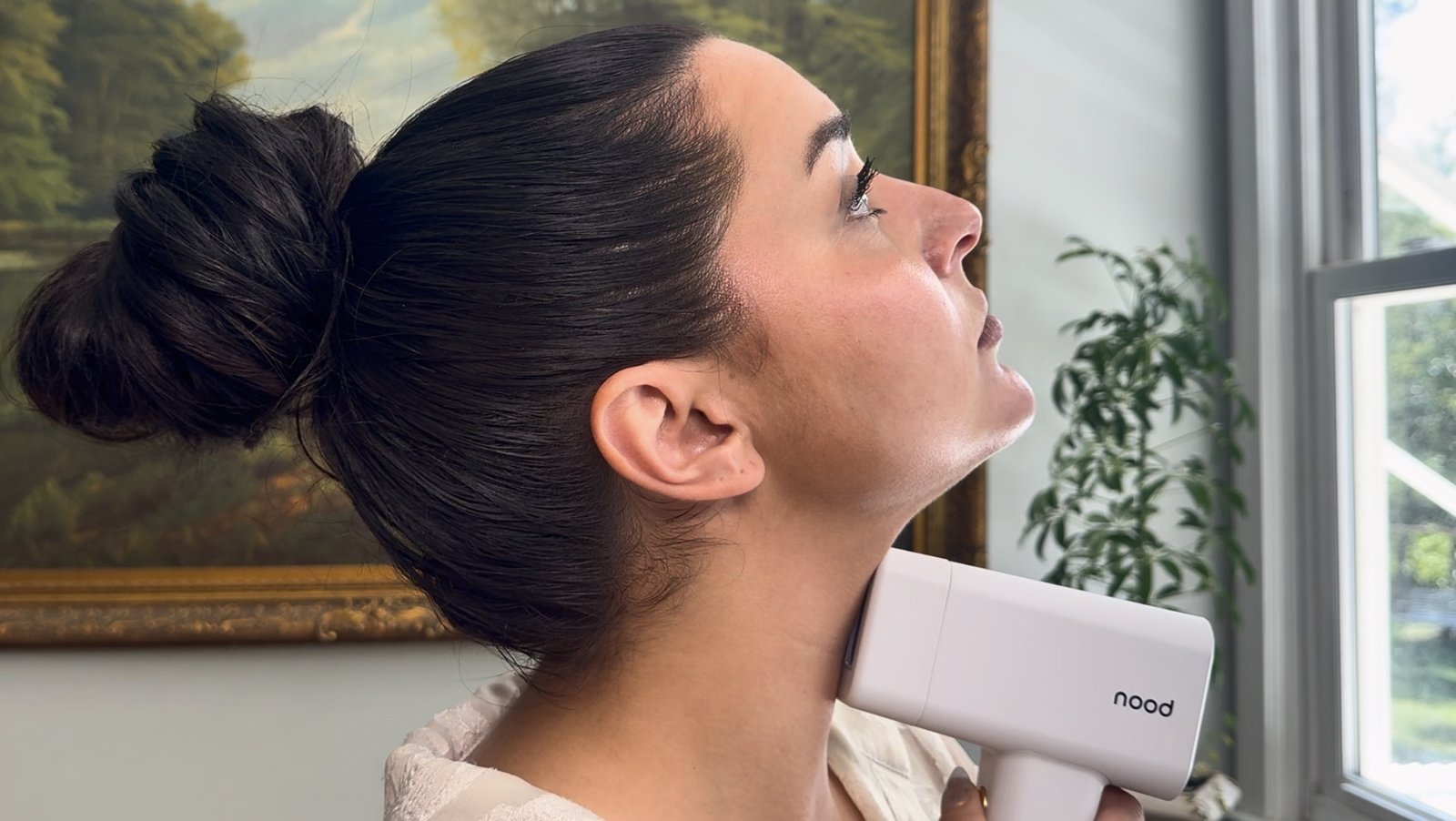
Kenzzi vs Nood: for most shoppers, the Nood Flasher Pro is the pick. Nood publishes its energy figure, wavelength range, and window size, includes a second lens for skin in the same box, and sells online. The Kenzzi Ice Cooling IPL is the pick if you want to buy from a store, since Kenzzi now sells through retailers like CVS and Walmart and backs the handset with a 3-year replacement warranty. Here’s what to look for before you choose.
Pick the Nood Flasher Pro if you want published specs you can compare, a hair lens and a skin lens in one kit, and online ordering.
Pick the Kenzzi Ice Cooling IPL if you want to buy in a store, you like having a printed flash count, and the 3-year replacement warranty matters to you.
Skip both if your skin is brown to black or your hair is very light blonde, red, or gray. Both brands rule out the deepest skin tones, and IPL needs pigment in the hair to work.
Same on both: five intensity levels, built-in cooling, a glide mode for large areas, and a 90-day money-back offer with conditions worth reading.
Nood vs Kenzzi, side by side
This table compares the Nood Flasher Pro with the Kenzzi Ice Cooling IPL Handset, using what each brand’s own pages say. Prices move with sales, so check today’s price at the retailer.
Nood Flasher Pro
Kenzzi Ice Cooling IPL
Where it sells
Amazon and Nood’s own site
Retail partners. Kenzzi’s page links to CVS
Energy figure on the product page
7 J/cm²
None listed
Wavelength on the product page
510 to 1200 nm for the hair lens
None listed
Treatment window
3 cm²
Described as larger, no size given
Intensity levels
5
5
Cooling
CryoSoothe cooling
Built-in ice cooling plate
Glide mode
Continuous Glide Mode
Auto Glide Mode
Flash count
Lifetime flash guarantee, no count on the page
999,999 flashes
Second lens for skin
Yes, the Ageless lens is included
None listed
Brand schedule
Every 3 days for up to 12 weeks, then monthly
3 to 4 times a week for the first 1 to 4 weeks, then 2 to 3 times a week, then touch-ups every 1 to 2 months
Face
Yes, except the eyebrows and around the eyes
Yes, on a lower setting
Skin tones ruled out
Fitzpatrick V to VI
Skin type V to VI
Money-back window
90 days on direct purchases, minus a restocking fee
90 days in the USA, with usage and photo conditions
Warranty
Nood’s warranty page covers one year and is written for the Flasher 2.0
3-year replacement warranty
FDA wording on the page
No FDA claim on the product page
Says FDA cleared, no clearance number given
Kenzzi also lists a Sapphire Ice Cooling IPL, which its site sends to Walmart. The rest of this post sticks to the Ice Cooling IPL Handset, the model Kenzzi’s site sends to CVS.
The biggest difference: what each brand publishes
At-home IPL handsets look alike on a shelf. The numbers are what let you compare them, and this is where the two brands split.
Nood’s product page lists 7 J/cm² of energy, a 3 cm² treatment window, a 510 to 1200 nm range for the Hairless lens, and a 560 to 1100 nm range for the Ageless lens. Kenzzi’s page for the Ice Cooling IPL lists five intensity levels, a 999,999 flash capacity, and a larger treatment window, with no energy figure, no wavelength, and no window size.
A published number is not proof of results. It does give you something to hold the brand to, and something to line up against other devices. How Nood’s figures compare with the rest of the category is covered in Nood Flasher Pro vs Other IPL Devices, and the Ulike matchup is in Nood Flasher Pro vs Ulike Air 10.
Where Kenzzi wins
You can buy it in person. Kenzzi’s FAQ says its products are sold through retailers and names Walmart and CVS for North America. That means a store return desk if something goes wrong in the first weeks.
The warranty is longer on paper. Kenzzi posts a 3-year replacement warranty for the Ice IPL device in the US. Keep the receipt, since a claim needs proof of purchase and a video of the defect.
The flash count is printed. Kenzzi lists 999,999 flashes. Nood promises a lifetime flash guarantee and gives no count on the product page.
The guarantee covers store purchases. Kenzzi’s 90-day money-back page says it applies to US customers, including in-store purchases.
Where Nood wins
The specs are public. Energy, wavelength, and window size are all on the product page.
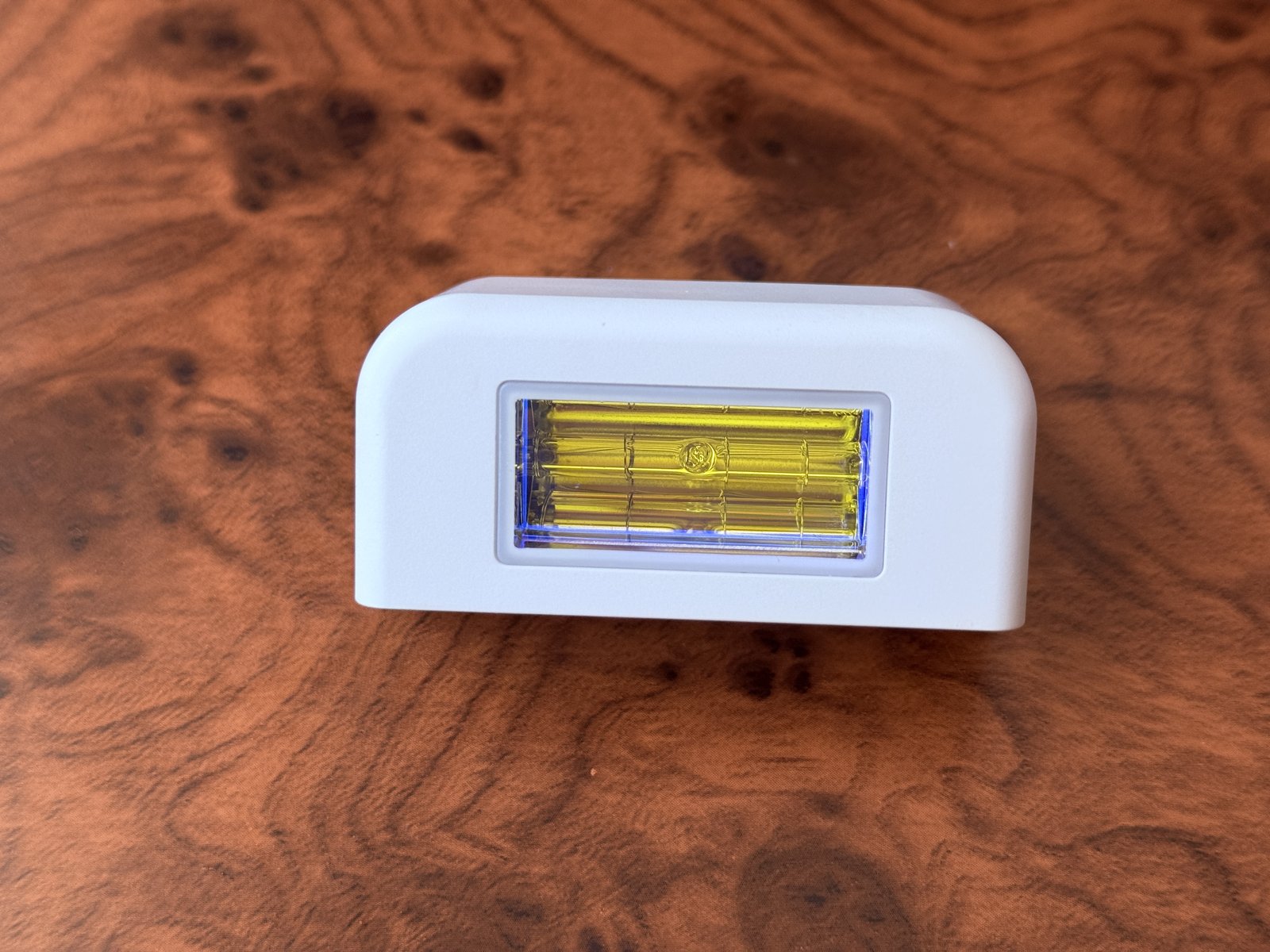
Two lenses in one kit. The Flasher Pro ships with the Hairless lens for hair and the Ageless lens for skin. Kenzzi’s pages list no skin lens. The difference between the two is in Nood Hairless vs Ageless Lens, and the skin lens has its own review with a video walkthrough.
A lighter schedule. Nood’s page calls for a session every 3 days. Kenzzi’s page starts at 3 to 4 sessions a week.
Online ordering. The Flasher Pro is on Amazon, sold by Nood Beauty, and on Nood’s own site.
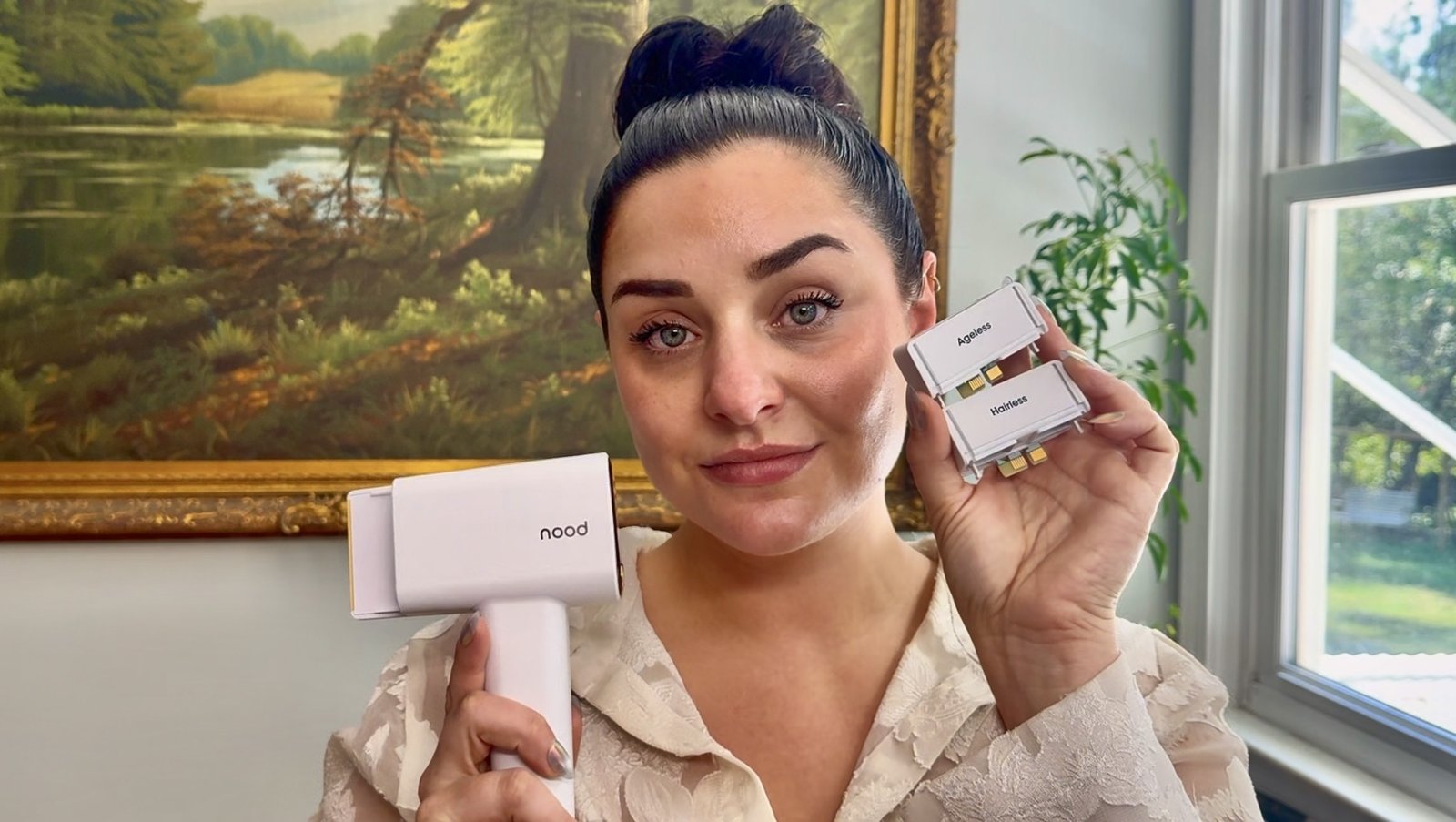
The Flasher Pro handset with both lens cartridges. Kenzzi’s pages list no second lens.
Both brands advertise 90 days. The conditions are different, and where you buy decides whether the offer applies at all.
Nood: the 90-day satisfaction guarantee refunds the purchase minus a restocking fee, and Nood’s page says it only applies to purchases made directly through its own sites. An Amazon order falls under the return policy shown on the Amazon listing instead, so check that window before you buy.
Kenzzi: the 90-day guarantee is for US purchases. To qualify, Kenzzi asks for at least 60 days of use, at least six treatments spaced a week apart, a dated photo before each of those six sessions, and proof of purchase.
The move with either device is to save the receipt, take a dated photo before the first session, and put the last day of the return window on the calendar.
Will either one work on your hair and skin?
IPL works by contrast. Pigment in the hair absorbs the light, so dark hair on lighter skin is the best fit for both devices.
Deeper skin tones: Kenzzi lists skin type V to VI under do not use. Nood says IPL is not safe or suitable for brown or dark brown to black skin.
Light hair: Nood says the Hairless lens may not be suitable for very light blonde, red, or gray hair. More on that in Does Nood Work on Blonde Hair?
Not sure: Kenzzi’s page has a compatibility quiz, and Nood prints a hair and skin chart. Nood also recommends a Skin Safety Test before the first full session.
Health conditions: Kenzzi’s page lists pregnancy, nursing, and a set of medical conditions under do not use. Read that list, and ask a doctor if any of it applies to you.
What the brands claim about results
Nood’s page says 86% saw a significant reduction in hair regrowth and cites up to 95% hair reduction. Kenzzi’s page cites a consumer perception study after 4 weeks of use in which 93% noticed significantly reduced regrowth.
Both sets of numbers come from the brands, and neither page shows a head-to-head trial. Treat them as marketing, expect hair reduction that needs upkeep, and judge by your own dated photos. For how at-home IPL compares with a clinic, see Nood vs Laser Hair Removal.
Kenzzi vs Nood: who should buy which
Nood Flasher Pro: the pick for most people. It suits anyone who wants to see the numbers before buying, anyone who wants the skin lens in the same kit, and anyone who prefers to order online.
Kenzzi Ice Cooling IPL: the pick for anyone who wants to buy from a store shelf, wants a long replacement warranty, and is comfortable with fewer published specs.
Neither: brown to black skin, or very light blonde, red, or gray hair. A clinic consult is the better first step.
For most shoppers the Nood Flasher Pro is the stronger buy. Nood publishes its energy figure, wavelength range, and window size, and it ships with a second lens for skin. Kenzzi’s Ice Cooling IPL makes sense if you want to buy in a store and value its 3-year replacement warranty.
Where can you buy Kenzzi now?
Kenzzi’s FAQ says its products are sold through retailers, and it names Walmart and CVS for North America. The Ice Cooling IPL page on kenzzi.com sends shoppers to CVS, and the Sapphire Ice Cooling IPL page sends them to Walmart.
Is Kenzzi FDA cleared?
Kenzzi’s product page for the Ice Cooling IPL Handset says FDA cleared. The page does not give a clearance number, so ask the retailer or the brand for it if that matters to you.
Can you use Kenzzi or Nood on your face?
Both brands list the face. Kenzzi suggests a lower setting for delicate spots like the face and bikini line. Nood says the Flasher Pro is not suitable for the eyebrows or the area right around the eyes.
Do Kenzzi and Nood work on dark skin?
No. Kenzzi lists skin type V to VI under do not use, and Nood says IPL is not safe or suitable for brown or dark brown to black skin. A clinic consult is the better route for deeper skin tones.
Do Kenzzi and Nood work on blonde or gray hair?
IPL needs pigment in the hair. Nood says its hair lens may not be suitable for very light blonde, red, or gray hair. Kenzzi points shoppers to a compatibility quiz for their hair and skin combination.
Sources: Nood’s Flasher Pro product page and warranty page, the Nood Flasher Pro Amazon listing, Kenzzi’s Ice Cooling IPL Handset and Sapphire Ice Cooling IPL product pages, Kenzzi’s FAQ, 90-day guarantee page, and US warranty page, and the Kenzzi listing at CVS. Details checked October 2026 and can change. This post is general information, not medical advice.
Can you use Nood on your face? Yes. Nood says the Flasher Pro can go anywhere on the face or body except the eyebrows and the skin right around the eyes, so the upper lip, chin, jawline, and neck are all allowed. The catch is fit. It needs dark hair on lighter skin, it will not do anything for peach fuzz, and the face is the area where the cautions matter most. If your facial hair is dark and you are already treating legs or underarms, the Nood Flasher Pro is a reasonable pick. Here’s what to look for before the first flash.
Yes on: upper lip, chin, jawline, and neck. Nood’s page allows the whole face outside the eye area, and its own list names the chin and neck.
No on: eyebrows, the skin around the eyes, tattoos, moles, and dark freckles.
Works on: black, brown, and dark blonde hair. That is Nood’s own chart.
Does not work on: peach fuzz, or light blonde, red, and grey hair. Nood also rules out brown to black skin tones.
Before you start: shave instead of waxing or tweezing, run the skin test, and pause retinol and acids on the area.
Where you can use Nood on your face
Nood’s product page for the Flasher Pro is the source here, with its general FAQ filling in the cautions.
Area
Nood’s guidance
The move
Upper lip
Allowed. The page says anywhere on the face outside the eye area and eyebrows
Shave first and start on the lowest level
Chin and jawline
Allowed. The chin is named in Nood’s own area list
The best facial fit when the hair is dark and coarse
Neck
Allowed. Named in Nood’s area list
Same routine as the chin
Cheeks and sideburns
Covered by the whole-face wording. The manual holds the full area list
Check the manual, and only treat hair you are sure you want gone
Eyebrows
Not suitable
Tweeze or thread, including the space between the brows
Around the eyes
Not suitable
Stay below the cheekbones
Tattoos, moles, dark freckles
Do not flash over them
Work around them. Nood says light freckles are fine
What Nood says vs what the FDA file says
One detail worth knowing. The FDA 510(k) file that the Nood Flasher Pro comparison post traces to this device, K241106, lists small areas such as the underarms and “facial hair below the chin line.” The file names the manufacturer and its model numbers, not the Nood brand. Nood’s own page goes further and allows the whole face outside the eye area.
So use from the chin line down is the part with the clearance wording behind it. The upper lip, cheeks, and sideburns rest on the brand’s instructions. That is not a reason to panic. It is the reason to run the skin test, start low, and stay well clear of the eyes.
Will Nood work on your facial hair?
IPL works by contrast. Pigment in the hair absorbs the flash and turns it into heat, and the heat is what slows regrowth. Nood says its hair removal lens needs high contrast between the hair and the skin. On the face, that sorts people quickly.
Dark, coarse hairs on the upper lip, chin, or jawline: the best fit. There is plenty of pigment for the light to target.
Peach fuzz: not a fit. Fine, pale facial fuzz has too little pigment to target. What works here is dermaplaning. A sonic dermaplaning tool like the Michael Todd Sonicsmooth Pro+ is built for exactly that, and the other options are in the best at-home dermaplaning tools.
Light blonde, red, or grey hair: Nood lists all three as not recommended. Mayo Clinic notes that electrolysis is the better option for naturally blond or white hair. More on that in Does Nood Work on Blonde Hair?
Brown to dark brown or black skin: Nood says IPL is not safe or suitable. A clinic consult is the move, since office lasers cover more skin tones.
Hormonal hair: if coarse chin or neck hair showed up suddenly or keeps getting heavier, the first stop is a doctor. Mayo Clinic notes that blood tests can show whether hormone levels are behind it. A device treats the hair, not the cause.
Run the Skin Safety Test. Nood recommends one before starting treatment. Pick a small patch along the jaw and follow the timing in the manual.
Shave. Do not wax, tweeze, or thread. Nood says to shave the area so the light reaches the follicle, and to stick to shaving between sessions, because pulling the hair out reduces effectiveness. On the face, a facial razor or a dermaplaning tool handles this step.
Go in clean, dry, and bare. Nood says no lotions, creams, or self-tanner on the skin. Take makeup off first.
Pause retinol and acids on the area. Nood’s general FAQ calls for at least 7 days between retinol or acid-based products and a session. It also says to wait about six months after finishing Accutane.
Start low. The Flasher Pro has five intensity levels. Nood’s general guidance is to start at level 3 and adjust by comfort. Facial skin is more reactive than a shin, so the cautious move is level 1 on the face, stepping up only if the skin stays calm.
Press the window flat and stay below the cheekbones. Nood’s general FAQ says the handset has a sensor that will not flash until the whole window is against the skin. Look away from the flash anyway.
Keep the schedule. For the hair lens, Nood’s product page says every three days for up to 12 weeks, then monthly.
Skip tanned or sunburned skin. Nood says to wait at least two weeks after tanning and a month after a sunburn, and to let a spray tan fade first.
Hairless lens or Ageless lens on the face?
The Flasher Pro ships with two lenses. The Hairless lens is the one for facial hair. The Ageless lens is the skin lens, and it is covered in Nood Hairless vs Ageless Lens and in the Nood Ageless Lens review, which includes a video walkthrough.
One caution from Nood’s own FAQ: the Ageless lens can also reduce hair where it is used over time. Keep either lens away from any hair you want to keep, like the hairline, the edge of the brows, or a beard line.
The face-specific risk to know about
One risk rarely makes a product page: paradoxical hair growth, where hair in or near the treated area comes in thicker instead of thinner.
A 2021 systematic review in the American Journal of Clinical Dermatology (Snast and colleagues) pooled 22 studies of laser and light hair removal covering 9,733 patients. It estimated paradoxical growth in about 3% of them, with a confidence range of 1% to 6%, and tied it mainly to the face and neck. Away from the face and neck it was rare, at 0.08%.
The review covered laser and IPL hair removal and does not report on at-home devices, so the number does not transfer directly. In three of the four studies that tracked it, the extra growth eased with continued treatment. The takeaway: if facial hair looks denser or starts spreading after a run of sessions, see a dermatologist before deciding whether to keep going.
Who should skip Nood for the face
Peach fuzz is the only goal. Dermaplaning is the right tool for that job.
Light blonde, red, or grey facial hair. Electrolysis is the route that does not depend on pigment.
Brown to black skin. Book a clinic consult instead.
The upper lip is the only area on your list. A short course of clinic sessions can be the better buy for one small area. The comparison is in Nood vs Laser Hair Removal.
New or fast-growing coarse hair on the chin or neck. See a doctor first.
Pregnant or breastfeeding. Nood recommends waiting.
On Accutane, or finished it within about six months. Nood says to wait.
The verdict
Nood on the face makes sense when the hair is dark, the skin is on the lighter side of Nood’s chart, and the face is one of several areas you plan to treat. The face is a small add-on to a routine you are already doing, and the same device covers legs, underarms, and bikini line with no refills to buy.
It is the wrong tool for peach fuzz, pale hair, deeper skin tones, and anything near the eyes. For fuzz, look at dermaplaning, and for the method comparison see Dermaplaning vs Waxing.
Yes. Nood says the Flasher Pro can be used anywhere on the face or body except the eyebrows and the area right around the eyes. It works on dark hair, not on peach fuzz.
Can you use Nood on your upper lip?
Yes, by Nood’s instructions. The upper lip falls under the whole-face wording on its product page. Shave first, start on the lowest level, and keep the window flat on the skin.
Can you use Nood on chin hair?
Yes. Nood names the chin and neck in its own area list, and dark, coarse chin hair is the best facial fit for IPL. If the hair appeared suddenly or keeps getting heavier, see a doctor first.
Does Nood work on peach fuzz?
No. Peach fuzz is fine and pale, and IPL needs pigment in the hair to work. Dermaplaning is the better tool for facial fuzz.
Can you use Nood on your eyebrows?
No. Nood says the Flasher Pro is not suitable for the eyebrows or the areas right around the eyes.
Can men use Nood on their face?
Nood says the device works for men and women and lists the chin and neck as treatment areas. Expect hair reduction, not a permanent clean line, and only treat hair you are sure you want gone.
How often should you use Nood on your face?
Nood’s product page sets the hair lens schedule at every three days for up to 12 weeks, then monthly for maintenance.
Sources: Nood’s Flasher Pro product page and FAQ, the Amazon listing, the FDA 510(k) summary for K241106, Mayo Clinic (hirsutism diagnosis and treatment), the American Academy of Dermatology (laser hair removal), and Snast et al., American Journal of Clinical Dermatology, 2021. This post is general information, not medical advice.
Does Nood work? Short answer: yes, for the people IPL works for. That means dark hair (black, brown, or dark blonde) on very fair to light brown skin, a steady schedule for about two months, and touch-ups after that. What it delivers is less hair and finer regrowth, not permanent hair removal, and it is not a match for a clinic laser. If your hair and skin fit the chart, the Nood Flasher Pro is a reasonable buy. Here’s what to look for before spending the money.
It works on: black, brown, and dark blonde hair on very fair, fair, and olive to light brown skin. That is Nood’s own chart.
It does not work on: light blonde, red, or grey hair. Nood also lists brown and dark brown to black skin as not recommended.
What you get: hair reduction that lasts while you keep up maintenance. Not permanent removal.
What it takes: sessions twice a week for about two months, then touch-ups.
What it is not: a clinic laser. Professional devices run at higher energy and get there faster.
What working means for an IPL device
The Nood Flasher Pro is an intense pulsed light (IPL) device. Pigment in the hair absorbs the flash and turns it into heat, and that heat damages the follicle enough to slow regrowth. No pigment in the hair, no result. Too much pigment in the skin, and the skin takes the heat instead.
The device is FDA cleared, not FDA approved. Its clearance, 510(k) K241106, covers removal of unwanted hair and permanent reduction in hair regrowth. The FDA file defines that as a long-term, stable reduction in the amount of hair regrowing, measured at 6, 9, and 12 months after a treatment course. The same file states that no clinical study was performed for the clearance. Cleared means substantially equivalent to devices already on the market. It is not proof of a specific result.
So the useful question is not whether Nood removes hair forever. It is whether at-home light devices reduce hair, and by how much.
What the research says about at-home devices
No published trial has tested the Nood itself. The evidence is for the category.
A 2012 systematic review in the Journal of the European Academy of Dermatology and Venereology found seven studies of home light devices. Hair reduction ranged from 6% to 72% after repeated treatments. Most of the studies were uncontrolled, and the authors described the evidence as short term.
A 2015 randomized trial in the British Journal of Dermatology followed women through eight weekly treatments with a low-energy home laser. Growing hair dropped by up to 59%, and the hair that remained was up to 38% thinner. Three months after treatment stopped, hair counts were back above where they started.
A 2023 study in PLOS ONE compared a professional diode laser with a home device on underarms over six sessions. The professional laser reached 85% to 88% hair reduction. The home device reached 46% to 52%. It was small, with 15 people finishing.
Dermatologists read it the same way. Rachel Ward, MD, of Cleveland Clinic, says at-home devices have less power than office lasers and do not work as well, and that they suit light skin with dark hair.
The takeaway: these devices reduce hair while you keep using them. Stop, and hair comes back. Plan on maintenance from the start.
Will Nood work for you?
Hair color and skin tone decide it. This is how Nood’s chart sorts out.
Your hair and skin
Nood’s chart
The move
Black or brown hair, very fair to olive skin
Good fit
IPL is built for this contrast
Dark blonde hair, fair skin
Good fit
IPL works, with less pigment to target
Light blonde, red, or grey hair
Not recommended
Electrolysis, or dermaplaning for facial fuzz
Brown to dark brown or black skin
Not recommended
A clinic consult. Office lasers cover more skin tones
Tattoos in the treatment area
Do not flash over them
Work around them
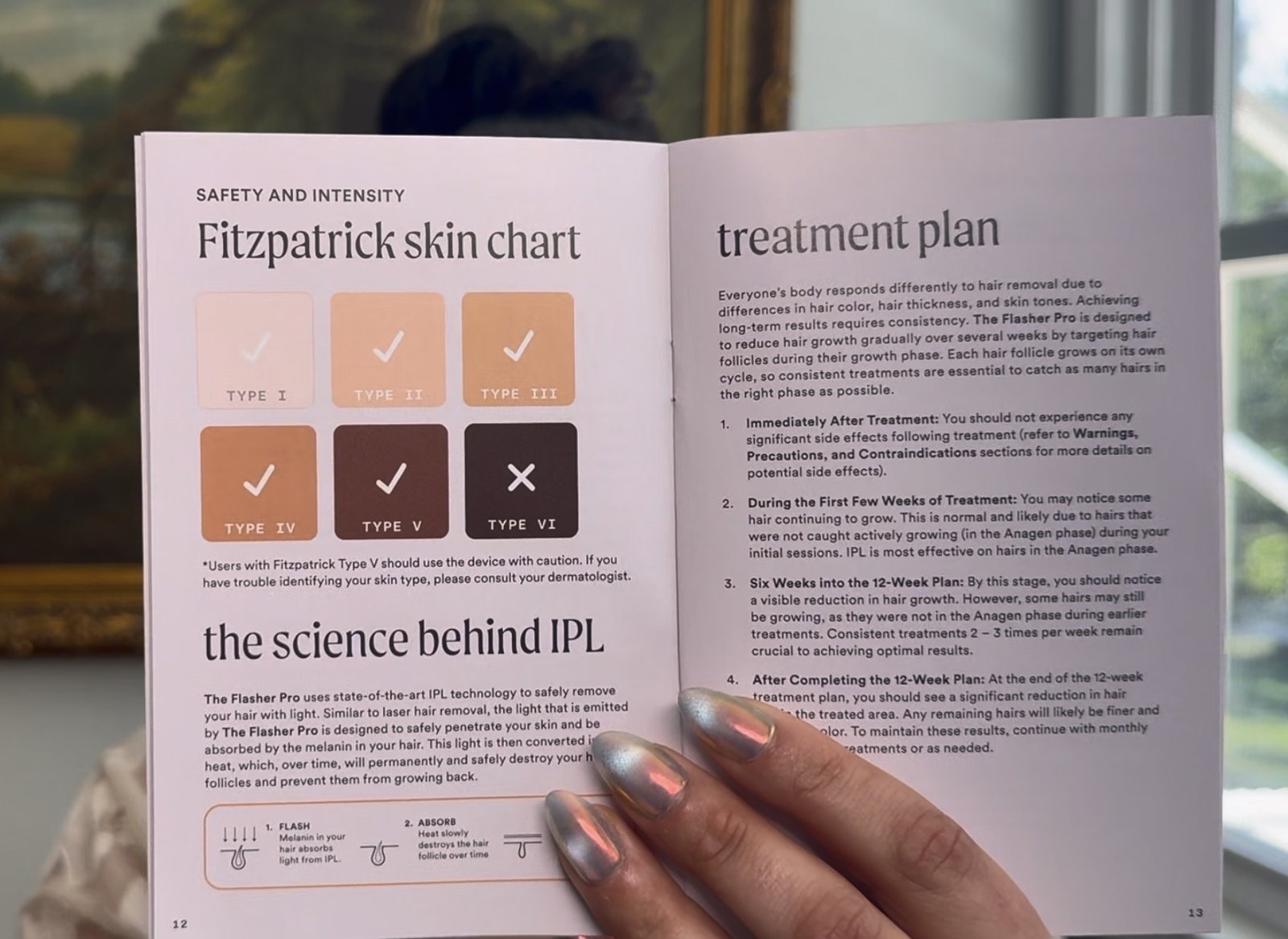
The skin type chart from the Nood manual. Check it against your own skin before buying.
Nood’s FAQ sets the schedule at twice a week for the first two months, then a touch-up every three to six months as needed. Its product page words it differently: every three days for up to 12 weeks, then monthly. Either way, budget two to three months before judging it.
The listing promises visible results after the first use. A better checkpoint is the end of the starter schedule. Hair grows in cycles, and light only affects follicles in the active growth phase, which is why every source calls for repeated sessions.
What works here:
Shave first. Nood says to shave the whole treatment area so the light reaches the follicle.
Skip waxing, plucking, threading, and epilating. Nood says they reduce effectiveness, because the follicle has to be intact.
Start at level 3 of 5 and move up or down by comfort. That is Nood’s guidance. The cooling plate, which Nood calls CryoSoothe, keeps the skin cool during flashes.
Keep it off tattoos and away from the eyebrows and eye area.
Where Nood falls short
It is not permanent removal. Light devices are cleared for permanent hair reduction. Electrolysis is the method recognized for permanent removal.
It is weaker than a clinic laser by design. Even clinic laser is not one and done: the American Academy of Dermatology says most patients need two to six treatments and may need maintenance after that. The cost and session math is in Nood vs laser hair removal.
The marketed energy figure runs higher than the cleared one. Nood’s product page says 7 J/cm². The FDA file for the Flasher Pro’s model clears 1.84 to 5.23 J/cm². Go by the cleared range.
The brand guarantee has a catch. Nood’s 90-day guarantee refunds the purchase minus a restocking fee. Read the return terms wherever you buy.
It is corded. The box includes a six-foot power adapter, so plan to sit near an outlet.
Is the Nood Flasher Pro worth it?
Worth it if your hair and skin fit the chart, you want to treat more than one area, and you will keep the twice-weekly schedule for two months. A clinic charges by the area. The device is one purchase for all of them.
Skip it if your hair is light blonde, red, or grey, if your skin tone is on the not recommended side of Nood’s chart, if you want one small area gone for good (book electrolysis), or if you want the fastest result and have the budget for a clinic.
The Flasher Pro also ships with a second lens for skin, the Ageless lens. Treat it as a bonus, not the reason to buy. The details are in the Nood Ageless lens review.
Still comparing brands? The full IPL comparison shows what each brand publishes about its energy output, and what it leaves out.
Yes, for dark hair on very fair to light brown skin, as long as the schedule is kept up. It reduces hair and thins regrowth. It does not remove hair permanently, and it does not work on light blonde, red, or grey hair.
Is Nood FDA approved?
No. The Flasher Pro is FDA cleared under 510(k) K241106, which means the FDA found it substantially equivalent to devices already on the market. Cleared and approved are different things, and at-home IPL devices are cleared.
How long does Nood take to work?
Nood’s schedule is twice a week for the first two months. Judge it at the end of that stretch, not after one session.
Is Nood permanent?
No. The cleared claim is permanent hair reduction, and research on home devices shows hair returning after treatment stops. Nood itself recommends touch-ups every few months.
Can you use Nood on your face?
Nood lists the chin and neck among its treatment areas and says not to use it on the eyebrows or around the eyes. The FDA clearance wording is facial hair below the chin line. Peach fuzz is usually too fine and light for IPL to target. For that, see the best at-home dermaplaning tools.
Does Nood work as well as laser hair removal?
No. Clinic lasers run at higher energy and reach a result in fewer sessions. What the at-home device offers is one purchase that covers every area, on your own schedule. The numbers are in Nood vs laser hair removal.
Does Nood work on blonde hair?
On dark blonde, yes, according to Nood’s chart. On light blonde, no. There is not enough pigment in the hair for the light to target. More in Does Nood work on blonde hair?
Checked October 2026 against Nood’s Flasher Pro product page and FAQ, the Amazon listing, FDA 510(k) K241106, Thaysen-Petersen et al. (Journal of the European Academy of Dermatology and Venereology, 2012, and British Journal of Dermatology, 2015), Hendricks et al. (PLOS ONE, 2023), Cleveland Clinic, and the American Academy of Dermatology. This post is general information, not medical advice.
The short answer: a realistic Nood Ageless lens before and after is a change in tone, not a change in lines or face shape. If the lens does its job, it shows up as softer dark spots and calmer redness, and Nood’s own timeline puts the best results at 8 to 12 weeks of consistent use. Wrinkles are the part to expect to look the same. So the verdict is simple: worth running if more even tone is the goal and your skin is in the fair to olive range (Fitzpatrick I to IV), and the wrong tool if fine lines are the goal.
Here’s what to look for when buying: the Ageless lens ships in the box with the Flasher Pro as the second of its two detachable lenses, next to the hair removal lens. Check the Nood Flasher Pro on Amazon.
Nood Ageless lens before and after: the quick verdict
What you are tracking
Realistic change
What that is based on
Dark spots and sun spots
The most likely place to see a difference
The Ageless lens filters light to 560 to 1100nm, and pigment is what clinic IPL has the strongest record on
Redness and blotchiness
May look calmer over time
Nood says changes in pigmentation irregularities or redness can take several weeks
Overall tone and texture
Subtle and gradual
Nood says some users notice subtle improvements after a few sessions
Fine lines and wrinkles
Plan on no visible change
A biopsy study of clinic IPL found no clinically noticeable wrinkle improvement after six sessions
Firmness and pores
Unproven
Brand claim only, with no device-specific data behind it
The timeline: what to expect week by week
The move is to judge this lens on Nood’s own schedule, not on a single week. This is what the brand says, next to what is worth looking for at each point.
When
What Nood says
What to look for
Sessions 1 to 3
Some users notice subtle improvements in tone and texture after a few sessions
Nothing obvious yet is normal. Take the before photo before the first flash.
Around week 4
The product page promises visibly younger skin in as little as one month
The first honest photo comparison. Look at the darkest spot, not the whole face.
Weeks 8 to 12
Most users see the best results after consistent use for 8 to 12 weeks
This is the real after photo. If the spots look the same here, the lens is not doing much for your skin.
After week 12
The product page says to keep going 2 to 3 times per week on an ongoing basis. The getting started guide lists maintenance every 4 to 6 weeks.
Nood frames results as something to maintain with continued sessions, not a one-time fix.
One caution on the numbers. Nood’s anti-aging page lists figures like 91 percent seeing a visible reduction in fine lines, and the attribution under them reads “results based on published IPL studies.” Those are not results from this device, so they should not set the bar for a before and after at home.
Why clinic before and afters look more dramatic
Most of the striking IPL before and after photos online come from in-office machines. A clinic photofacial runs at higher energy with an operator choosing the settings, and the pattern is well documented: treated brown spots often darken first, then fade over roughly 7 to 14 days, across a series of sessions spaced about a month apart, according to Walk-in Dermatology.
The Ageless lens is a lower energy, at-home take on the same idea, so it makes sense to plan for a slower and subtler change: gradual fading over weeks, not a spot that darkens and lifts in days. The full energy comparison is in Nood Ageless Lens vs an In-Office IPL Photofacial.
What the Ageless lens will not change
Wrinkles. Researchers took skin biopsies from six volunteers before and after six clinic IPL sessions and measured collagen and elastin. They reported no clinically noticeable improvement in facial wrinkles and no statistically significant change in the proteins they measured (El-Domyati et al., Journal of Drugs in Dermatology, 2011). That was clinic strength IPL, and there is no reason to expect an at-home lens to do more.
One more thing worth knowing before judging results: the Flasher Pro’s FDA clearance is for hair removal, and the skin lens sits outside it. The Nood Ageless Lens review covers that in detail, along with the full how-to.
How to take a before and after photo you can trust
The reason most at-home before and afters prove nothing is lighting. What works here is a fixed setup that never changes:
Shoot the before photo first. Clean, bare skin, before the first session.
Same place, same light. Stand in the same spot at the same time of day, facing the same window or lamp.
Same distance and angle. A phone tripod or a piece of tape on the floor does the job. Take front, left, and right.
No help from the camera. Rear camera, no filter, no portrait mode, no beauty setting.
Pick a day off from the device. That way any temporary warmth or pinkness from a session does not skew the photo.
Compare the checkpoints. Week 0, week 4, week 8, and week 12, side by side. Pick one or two specific spots and judge those.
Watch: how a session with the Ageless lens runs
This video walks through what the 560nm filter is, how to prep skin, and how a session runs, including keeping the plate flat and working in passes across the cheeks, jaw, and forehead.
How to give the lens its best shot
A before and after is only as good as the routine behind it. Nood’s getting started guide sets the basics:
Start with clean, dry skin. Remove makeup, SPF, and actives like retinoids, acids, and vitamin C first.
Start low. Nood’s guide says level 1 to 2 for the Ageless lens. The walkthrough video above runs level 3 of 5.
Mind the no-go zones. Single flashes on the face and neck, and nothing on the eye area, lips, or dark moles.
Stay consistent. Two to three short sessions a week is what the 8 to 12 week timeline assumes.
Protect the result. Moisturize after, skip actives for 24 hours, and wear SPF 30 or higher every day.
Nood says some users notice subtle changes in tone and texture after a few sessions, with the best results after 8 to 12 weeks of consistent use. Plan on judging it at week 8 at the earliest.
Does the Nood Ageless lens really work?
It filters light to 560 to 1100nm, the range IPL uses for pigment and redness, so dark spots and uneven tone are where a change is plausible. Nood’s results figures for skin are attributed to published IPL studies, not to a trial of this device, so treat it as a reasonable bet for tone and not a guarantee.
Does the Nood Ageless lens get rid of wrinkles?
Do not buy it for that. Nood markets it for the appearance of fine lines, but a biopsy study of clinic strength IPL found no clinically noticeable wrinkle improvement after six sessions.
How often should you use the Nood Ageless lens?
Nood’s product page says 2 to 3 times per week on an ongoing basis. Its getting started guide lists two sessions a week for the first eight weeks, then maintenance every 4 to 6 weeks.
Can you use the Nood Ageless lens on dark skin?
No. Nood lists the Ageless lens for Fitzpatrick skin tones I to IV and says IPL is not safe or suitable for brown or dark brown to black skin tones.
Sources: Nood product page, getting started guide, and anti-aging page, checked October 2026. El-Domyati et al., Intense Pulsed Light Photorejuvenation: A Histological and Immunohistochemical Evaluation, Journal of Drugs in Dermatology, 2011. Walk-in Dermatology, How Long Does It Take for Brown Spots to Fade After IPL. This post is general information, not medical advice. Talk to a dermatologist about your own skin.