(function(){try{var q=window.location.search;var m=q.match(/[?&]akp_notrack=([01])/);if(m){document.cookie='akp_notrack='+m[1]+';path=/;max-age='+(m[1]==='1'?15552000:0)+';SameSite=Lax';}var armed=/(^|; )akp_notrack=1(;|$)/.test(document.cookie)||(m&&m[1]==='1');if(armed&&!window.fbq){var n=function(){};n.queue=[];n.loaded=true;n.version='2.0';n.callMethod=function(){};window.fbq=n;window._fbq=n;}}catch(e){}})();
https://annakatherinepage.com/wp-content/plugins/burst-statistics/assets/js/timeme/timeme.min.js
var breeze_prefetch = {"local_url":"https://annakatherinepage.com","ignore_remote_prefetch":"1","ignore_list":["/?wc-api=wc_facebook_get_feed_data&secret=1760aef9e5a5d06e2a1f0f642c457ce5","/cart/","/checkout/","/my-account/","wp-admin","wp-login.php"]};
//# sourceURL=breeze-prefetch-js-extra
https://annakatherinepage.com/wp-content/plugins/breeze/assets/js/js-front-end/breeze-prefetch-links.min.js
https://annakatherinepage.com/wp-includes/js/jquery/jquery.min.js
https://annakatherinepage.com/wp-includes/js/jquery/jquery-migrate.min.js
https://annakatherinepage.com/wp-content/plugins/woocommerce/assets/js/jquery-blockui/jquery.blockUI.min.js
var wc_add_to_cart_params = {"ajax_url":"/wp-admin/admin-ajax.php","wc_ajax_url":"/?wc-ajax=%%endpoint%%","i18n_view_cart":"View cart","cart_url":"https://annakatherinepage.com/checkout/","is_cart":"","cart_redirect_after_add":"no"};
//# sourceURL=wc-add-to-cart-js-extra
https://annakatherinepage.com/wp-content/plugins/woocommerce/assets/js/frontend/add-to-cart.min.js
https://annakatherinepage.com/wp-content/plugins/woocommerce/assets/js/js-cookie/js.cookie.min.js
var woocommerce_params = {"ajax_url":"/wp-admin/admin-ajax.php","wc_ajax_url":"/?wc-ajax=%%endpoint%%","i18n_password_show":"Show password","i18n_password_hide":"Hide password"};
//# sourceURL=woocommerce-js-extra
https://annakatherinepage.com/wp-content/plugins/woocommerce/assets/js/frontend/woocommerce.min.js
window.__wc_fb_page_generated = 1792951000;
!function(f,b,e,v,n,t,s){if(f.fbq)return;n=f.fbq=function(){n.callMethod?
n.callMethod.apply(n,arguments):n.queue.push(arguments)};if(!f._fbq)f._fbq=n;
n.push=n;n.loaded=!0;n.version='2.0';n.queue=[];t=b.createElement(e);t.async=!0;
t.src=v;s=b.getElementsByTagName(e)[0];s.parentNode.insertBefore(t,s)}(window,
document,'script','https://connect.facebook.net/en_US/fbevents.js');
window.FacebookSignals = window.FacebookSignals || {
_held: false,
_releasing: false,
_pixelInitialized: false,
_pixelId: null,
_pixelUserInfo: {},
_pixelOptions: {},
_pendingPixelEvents: [],
_queue: [],
_config: {},
_attribution: {},
_seenEventIds: {},
_fbclid: (function() {
try {
var m = window.location.search.match(/[?&]fbclid=([^&]*)/);
return m ? decodeURIComponent(m[1]) : null;
} catch(e) { return null; }
})(),
init: function(config) {
config = config || {};
this._config = config;
this._attribution = config.attribution || {};
var cookieState = this._getCookie('wc_facebook_signals_state');
this._held = cookieState ? cookieState === 'held' : !!config.held;
this._fbclid = this._fbclid || null;
if (typeof fbq === 'function') {
fbq('consent', this._held ? 'revoke' : 'grant');
}
try {
var raw = window.sessionStorage.getItem('wc_facebook_signals_seen_event_ids');
this._seenEventIds = raw ? JSON.parse(raw) : {};
} catch (e) {
this._seenEventIds = this._seenEventIds || {};
}
},
initPixel: function(pixelId, userInfo, options) {
this._pixelId = pixelId;
this._pixelUserInfo = userInfo && typeof userInfo === 'object' && !Array.isArray(userInfo) ? userInfo : {};
this._pixelOptions = options || {};
if (!this._held) {
this._runPixelInit();
}
},
_runPixelInit: function() {
if (this._pixelInitialized || !this._pixelId || typeof fbq !== 'function') return;
fbq('init', this._pixelId, this._pixelUserInfo, this._pixelOptions);
this._pixelInitialized = true;
this._flushPendingPixelEvents();
},
_flushPendingPixelEvents: function() {
var pending = this._pendingPixelEvents;
this._pendingPixelEvents = [];
for (var i = 0; i < pending.length; i++) {
var ev = pending[i];
this._firePixelEvent(ev.name, ev.params, ev.method, ev.eventId);
}
},
_fireOrQueuePixelEvent: function(name, params, method, eventId) {
if (!this._pixelInitialized) {
this._pendingPixelEvents.push({
name: name, params: params || {}, method: method || 'track', eventId: eventId || null
});
return;
}
this._firePixelEvent(name, params || {}, method || 'track', eventId || null);
},
_firePixelEvent: function(name, params, method, eventId) {
method = method || 'track';
if (eventId) {
fbq(method, name, params || {}, { eventID: eventId });
} else {
fbq(method, name, params || {});
}
},
queueEvent: function(eventData) {
if (!eventData || !eventData.event_name) return;
var originalId = eventData.event_id || null;
if (originalId && this._seenEventIds[originalId]) return;
if (!this._held) {
this._fireOrQueuePixelEvent(eventData.event_name, eventData.custom_data || {}, eventData.method || 'track', originalId);
return;
}
eventData = this._cloneEventData(eventData);
eventData.event_id = this._generateEventId();
eventData.event_time = eventData.event_time || Math.floor(Date.now() / 1000);
this._queue.push(eventData);
var idToMark = originalId || eventData.event_id;
if (idToMark) {
this._seenEventIds[idToMark] = 1;
try {
window.sessionStorage.setItem(
'wc_facebook_signals_seen_event_ids',
JSON.stringify(this._seenEventIds)
);
} catch (e) {}
}
},
trackEvent: function(name, params, userData, method, eventId) {
method = method || 'track';
eventId = eventId || (params && params.eventID) || null;
if (this._held) {
this.queueEvent({
event_name: name,
custom_data: params || {},
event_id: eventId,
event_time: Math.floor(Date.now() / 1000),
method: method
});
} else {
this._fireOrQueuePixelEvent(name, params || {}, method, eventId);
}
},
release: function() {
var self = this;
if (!self._held || self._releasing || !self._config.ajaxUrl) {
return Promise.resolve({ success: true, data: { sent_count: 0 } });
}
self._releasing = true;
var attribution = self._collectAttribution();
var payload = JSON.stringify({
events: self._queue,
attribution: {
fbp: attribution.fbp || null,
fbc: attribution.fbc || null
},
fbclid: self._fbclid || null
});
var url = self._config.ajaxUrl +
(self._config.ajaxUrl.indexOf('?') === -1 ? '?' : '&') +
'action=' + encodeURIComponent(self._config.action);
return new Promise(function(resolve, reject) {
var xhr = new XMLHttpRequest();
xhr.open('POST', url, true);
xhr.setRequestHeader('Content-Type', 'application/json');
xhr.onload = function() {
if (xhr.status >= 200 && xhr.status < 300) {
try {
var resp = JSON.parse(xhr.responseText);
self._handleReleaseResponse(resp.data || {}, attribution);
resolve(resp);
} catch(e) { self._releasing = false; reject(e); }
} else {
self._releasing = false;
reject(new Error('Signal release AJAX failed: ' + xhr.status));
}
};
xhr.onerror = function() { self._releasing = false; reject(new Error('Network error')); };
xhr.send(payload);
});
},
_handleReleaseResponse: function(data, attribution) {
this._syncAttributionCookies(data || {}, attribution);
// Override cached user_info with fresh data from the release response.
if (data.user_info && typeof data.user_info === 'object' && !Array.isArray(data.user_info)) {
this._pixelUserInfo = data.user_info;
}
this._held = false;
this._releasing = false;
fbq('consent', 'grant');
this._runPixelInit();
var queue = this._queue;
for (var i = 0; i < queue.length; i++) {
var ev = queue[i];
this._fireOrQueuePixelEvent(ev.event_name, ev.custom_data || {}, ev.method || 'track', ev.event_id || null);
}
this._queue = [];
},
_collectAttribution: function() {
var clientParams = {};
if (typeof clientParamBuilder !== 'undefined') {
try {
clientParams = clientParamBuilder.processAndCollectParams(this._getAttributionUrl()) || {};
} catch (e) {}
}
var fbp = this._getCookie('_fbp') || clientParams._fbp || (typeof clientParamBuilder !== 'undefined' ? clientParamBuilder.getFbp() : null);
var fbc = this._getCookie('_fbc') || clientParams._fbc || (typeof clientParamBuilder !== 'undefined' ? clientParamBuilder.getFbc() : null);
if (!fbc && this._fbclid) {
fbc = 'fb.1.' + Date.now() + '.' + this._fbclid;
}
return { fbp: fbp || null, fbc: fbc || null };
},
_syncAttributionCookies: function(data, attribution) {
var fbp = data.fbp || (attribution && attribution.fbp) || null;
var fbc = data.fbc || (attribution && attribution.fbc) || null;
if (fbp) {
this._setAttributionCookie('_fbp', fbp, data.fbp_domain || null);
}
if (fbc) {
this._setAttributionCookie('_fbc', fbc, data.fbc_domain || null);
}
},
_setAttributionCookie: function(name, value, domain) {
if (!value) return;
var domainAttr = domain ? ';domain=' + domain : '';
document.cookie = name + '=' + encodeURIComponent(value) + ';path=/;max-age=7776000' + domainAttr + ';SameSite=Lax';
},
_getCookie: function(name) {
var match = document.cookie.match(new RegExp('(?:^|;\\s*)' + name.replace(/[.*+?^${}()|[\]\\]/g, '\\$&') + '=([^;]*)'));
if (!match) return null;
try { return decodeURIComponent(match[1]); } catch(e) { return null; }
},
_cloneEventData: function(eventData) {
var clone = {};
for (var key in eventData) {
if (Object.prototype.hasOwnProperty.call(eventData, key)) {
clone[key] = eventData[key];
}
}
return clone;
},
_generateEventId: function() {
if (window.crypto && typeof window.crypto.randomUUID === 'function') {
return window.crypto.randomUUID();
}
return 'xxxxxxxx-xxxx-4xxx-yxxx-xxxxxxxxxxxx'.replace(/[xy]/g, function(c) {
var r = Math.random() * 16 | 0;
return (c === 'x' ? r : (r & 0x3 | 0x8)).toString(16);
});
},
_getAttributionUrl: function() {
if (!this._fbclid) return window.location.href;
try {
var url = new URL(window.location.href);
if (!url.searchParams.get('fbclid')) {
url.searchParams.set('fbclid', this._fbclid);
}
return url.toString();
} catch (e) {
return window.location.href;
}
}
};
FacebookSignals.init({
held: false,
ajaxUrl: "https:\/\/annakatherinepage.com\/wp-admin\/admin-ajax.php",
action: 'facebook_release_signals',
pixelId: "5552345558112956",
attribution: {}
});
FacebookSignals.initPixel(
"5552345558112956",
{},
{"agent":"woocommerce_0-11.2.1-3.7.8"} );
document.addEventListener( 'DOMContentLoaded', function() {
document.body.insertAdjacentHTML( 'beforeend', '<div class=\"wc-facebook-pixel-event-placeholder\"></div>' );
}, false );
Skip to content
INIA vs Omnilux Contour: Which Red Light Mask Is Worth It
Disclosure
Quick answer: The INIA GLOW and the Omnilux Contour Face land in a similar range for light output, so the gap between them is not raw power. Omnilux wins on proof: it publishes its output, uses a clinically studied red and near-infrared pairing, and sells through beauty retailers with a two-year warranty. INIA wins on value and convenience, with swappable batteries and a far lower price. If you want the safest bet, buy the Omnilux. If you want a wireless red light habit for less, the INIA is the smart buy.
See the Omnilux Contour Face | See the INIA GLOW mask
INIA vs Omnilux at a glance
INIA GLOW
Omnilux Contour Face
Light types
Red, amber, near-infrared, plus a weak extra channel
Red and near-infrared together
Published output
Overstated on the listing; independent testing came in far lower
Published by the brand
Power
Wireless, swappable magnetic batteries
Rechargeable controller, plus a plug-in option
Material
Flexible silicone
Flexible medical-grade silicone
FDA status
Clearances tied to the manufacturer’s models; check the model you buy
Marketed as FDA cleared
Where to buy
Amazon
Sephora, Omnilux and other beauty retailers
Best for
Value, convenience, a nightly habit
Buyers who want published specs and a known brand
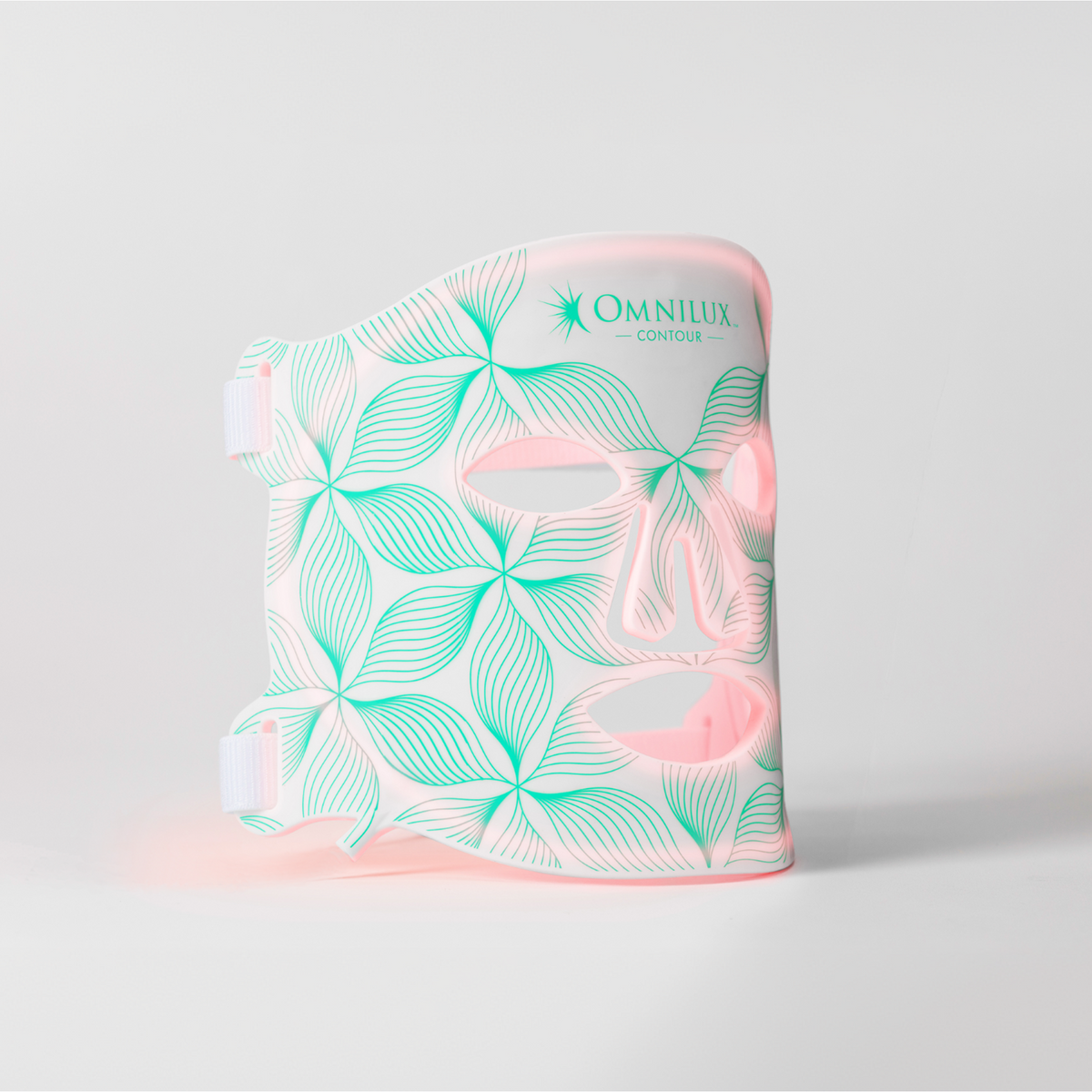
Omnilux Contour Face. Product photo: Omnilux. Light: wavelengths and output
Both masks use the two wavelengths with the most research behind them for skin: red light in the low 600s and near-infrared in the 800s. Omnilux pairs 633nm red with 830nm near-infrared and fires them at the same time. INIA lists 630nm red, 610nm amber and 850nm near-infrared.
Output is where the honest comparison gets interesting. INIA’s listing claims a figure that independent spectrometer testing did not come close to. The measured number for the INIA landed around 30 mW/cm², which is in the same range Omnilux publishes for the Contour. So the cheaper mask is not dramatically weaker in practice. What you are paying for with Omnilux is a brand that tells you the real number up front.
The full breakdown of the INIA’s spectrum, including its extra channel, is in the INIA red light therapy mask review .
Comfort and convenience
INIA: fully wireless. Two magnetic battery packs swap in and out, so one charges while the other runs. That makes it easy to wear lying down or while you move around.Omnilux: a battery controller connects to the mask, so it is cordless in use, with a power supply included if you prefer to plug in. Two velcro straps hold it in place, and it comes with a carry bag.Fit: both are soft silicone that bends to the face. Coverage along the jaw and chin varies with face shape, so expect the lower face to get a little less light on either one.
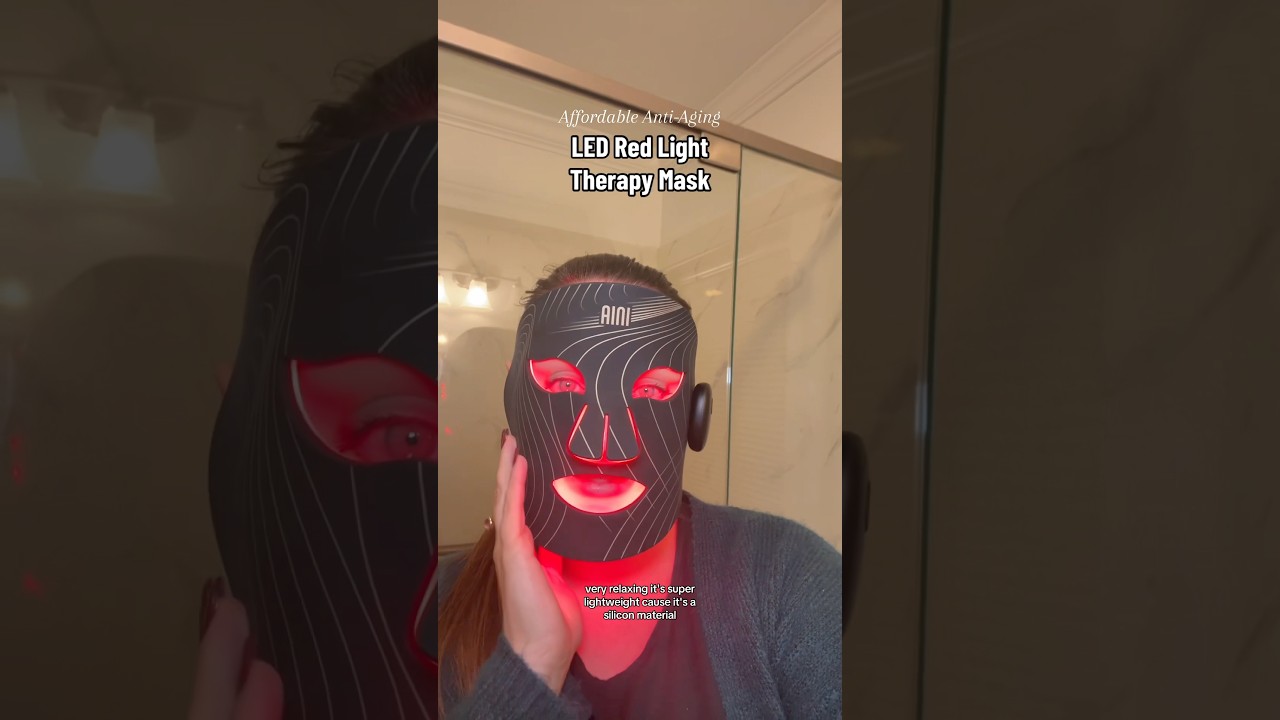
The INIA GLOW wireless mask in use. Sessions and schedule
Both brands recommend 10-minute sessions. Omnilux suggests three to five sessions a week for four to six weeks, then maintenance. INIA’s guidance is similar: a few sessions a week, then a lighter maintenance routine. Consistency matters more than which mask you choose. The mask you will actually put on most nights is the better mask.
Proof, clearance and warranty
Omnilux is marketed as FDA cleared and backs the device and the controller with a two-year warranty. It is one of the few at-home brands that publishes its output.INIA has FDA clearances linked to its manufacturers’ models, but not every current model shows a clearance number. Check the exact model number on the listing before you buy.
The move here: if published specs and a retailer return policy matter to you, that alone justifies the Omnilux.
What red light can and can’t do
Red and near-infrared light have the best evidence for overall skin texture and the look of fine lines, with results building over weeks. They are not a fix for dark spots or melasma, and neither mask replaces a retinoid or daily sunscreen. If you have a light-sensitive condition, take medication that makes you sensitive to light, or are pregnant, talk to your doctor before starting either mask.
Which one to buy
Buy the Omnilux Contour Face if you want published specs, a well-known brand, a two-year warranty and the option to return it through a beauty retailer.Buy the INIA GLOW if value comes first, you like the idea of swappable batteries, and you are comfortable buying a lesser-known brand on Amazon.Skip both if dark spots or acne are your main concern. Those need a different plan.
Shop the Omnilux Contour Face | Shop the INIA GLOW mask
FAQ
Is the INIA mask as good as Omnilux? For raw light output, independent testing puts the INIA in a similar range to what Omnilux publishes. Omnilux is the stronger choice for published specs, clearance and warranty. INIA is the stronger choice for value.
Is Omnilux worth the extra money? It is worth it if you value a brand that publishes its output, a two-year warranty and easy retailer returns. If you only want a consistent red light routine, the INIA covers the basics for much less.
How long does each session take? Ten minutes for both, a few times a week.
Can red light masks fade dark spots? The evidence for red light on dark spots is weak. Sunscreen and proven topicals do more for pigment.
Which mask is easier to use in bed? The INIA, since it is fully wireless with swappable batteries. The Omnilux is cordless too, but the controller connects to the mask.
Related reading
Your cart
(items: 0)
Products in cart
Available on backorder
Previous price:
Discounted price:
Your shopping cart is empty
(function () {
var c = document.body.className;
c = c.replace(/woocommerce-no-js/, 'woocommerce-js');
document.body.className = c;
})();
https://annakatherinepage.com/wp-includes/js/comment-reply.min.js
https://annakatherinepage.com/wp-includes/js/dist/hooks.min.js
https://annakatherinepage.com/wp-includes/js/dist/i18n.min.js
wp.i18n.setLocaleData( { 'text direction\u0004ltr': [ 'ltr' ] } );
//# sourceURL=wp-i18n-js-after
https://annakatherinepage.com/wp-includes/js/dist/private-apis.min.js
https://annakatherinepage.com/wp-includes/js/dist/url.min.js
https://annakatherinepage.com/wp-includes/js/dist/api-fetch.min.js
wp.apiFetch.use( wp.apiFetch.createRootURLMiddleware( "https://annakatherinepage.com/wp-json/" ) );
wp.apiFetch.nonceMiddleware = wp.apiFetch.createNonceMiddleware( "0d85342746" );
wp.apiFetch.use( wp.apiFetch.nonceMiddleware );
wp.apiFetch.use( wp.apiFetch.mediaUploadMiddleware );
wp.apiFetch.nonceEndpoint = "https://annakatherinepage.com/wp-admin/admin-ajax.php?action=rest-nonce";
//# sourceURL=wp-api-fetch-js-after
https://annakatherinepage.com/wp-content/uploads/burst/js/burst.min.js
var wc_facebook_signals_params = {"ajax_url":"https://annakatherinepage.com/wp-admin/admin-ajax.php","nonce":"10c47ff36d","action":"wc_facebook_update_signals_state"};
//# sourceURL=wc-facebook-signals-js-extra
https://annakatherinepage.com/wp-content/plugins/facebook-for-woocommerce/assets/js/facebook-for-woocommerce-signals.js
https://annakatherinepage.com/wp-content/plugins/woocommerce/assets/js/sourcebuster/sourcebuster.min.js
var wc_order_attribution = {"params":{"lifetime":1.0e-5,"session":30,"base64":false,"ajaxurl":"https://annakatherinepage.com/wp-admin/admin-ajax.php","prefix":"wc_order_attribution_","allowTracking":true},"fields":{"source_type":"current.typ","referrer":"current_add.rf","utm_campaign":"current.cmp","utm_source":"current.src","utm_medium":"current.mdm","utm_content":"current.cnt","utm_id":"current.id","utm_term":"current.trm","utm_source_platform":"current.plt","utm_creative_format":"current.fmt","utm_marketing_tactic":"current.tct","session_entry":"current_add.ep","session_start_time":"current_add.fd","session_pages":"session.pgs","session_count":"udata.vst","user_agent":"udata.uag"}};
//# sourceURL=wc-order-attribution-js-extra
https://annakatherinepage.com/wp-content/plugins/woocommerce/assets/js/frontend/order-attribution.min.js
https://annakatherinepage.com/wp-content/plugins/facebook-for-woocommerce/assets/js/frontend/pixel-events.js
(function() {
var processParams = function() {
if (typeof clientParamBuilder !== "undefined" && !/(?:^|;\s*)wc_facebook_signals_state=held(?:;|$)/.test(document.cookie)) {
clientParamBuilder.processAndCollectAllParams(window.location.href);
}
};
if (typeof clientParamBuilder !== "undefined") {
processParams();
return;
}
var fallbackScript = document.createElement("script");
fallbackScript.src = "https:\/\/unpkg.com\/meta-capi-param-builder-clientjs@1.3.2\/dist\/clientParamBuilder.bundle.js";
fallbackScript.onload = processParams;
document.head.appendChild(fallbackScript);
}());
//# sourceURL=facebook-capi-param-builder-js-after
/* WooCommerce Facebook Integration Event Tracking */
fbq('set', 'agent', (function(){var a='woocommerce_0-11.2.1-3.7.8';if(window.__wc_fb_page_generated&&(Math.floor(Date.now()/1000)-window.__wc_fb_page_generated)>1800){a=a.replace(/(\d+\.\d+\.\d+)/,'$1_c');}return a;})(), '5552345558112956');
window.wcFacebookPixelFiredEvents = window.wcFacebookPixelFiredEvents || {};
if (!window.wcFacebookPixelFiredEvents["74b2dee3-302c-4c41-ac51-e4839dbeb728"]) {
window.wcFacebookPixelFiredEvents["74b2dee3-302c-4c41-ac51-e4839dbeb728"] = true;
var isStale = window.__wc_fb_page_generated && (Math.floor(Date.now()/1000) - window.__wc_fb_page_generated) > 1800;
if (window.FacebookSignals && typeof window.FacebookSignals.trackEvent === 'function') {
window.FacebookSignals.trackEvent('PageView', {
"source": "woocommerce_0",
"version": "11.2.1",
"pluginVersion": "3.7.8"
}, null, 'track', isStale ? null : "74b2dee3-302c-4c41-ac51-e4839dbeb728");
} else if (isStale) {
fbq('track', 'PageView', {
"source": "woocommerce_0",
"version": "11.2.1",
"pluginVersion": "3.7.8"
});
} else {
fbq('track', 'PageView', {
"source": "woocommerce_0",
"version": "11.2.1",
"pluginVersion": "3.7.8"
}, {
"eventID": "74b2dee3-302c-4c41-ac51-e4839dbeb728"
});
}
}
//# sourceURL=facebook-for-woocommerce-inline-js-after
(function(){
function rgb(c){var m=(c||"").match(/[0-9.]+/g);return m?m.map(Number):null;}
function lum(a){return (0.299*a[0]+0.587*a[1]+0.114*a[2])/255;}
function effbg(el){var n=el;while(n){var c=rgb(getComputedStyle(n).backgroundColor);if(c&&(c.length<4||c[3]>0.5))return c;n=n.parentElement;}return null;}
var sel="main h1,main h2,main h3,main h4,main p,main li,main span,#frc h1,#frc h2,#frc h3,#frc p,#frc span,#frc li";
document.querySelectorAll(sel).forEach(function(t){
var bg=effbg(t);
if(!bg) return;
if(lum(bg)<0.30){
var fc=rgb(getComputedStyle(t).color);
if(fc && lum(fc)<0.5){ t.style.setProperty("color","#f7f1e6","important"); }
}
});
})();
Leave a Reply