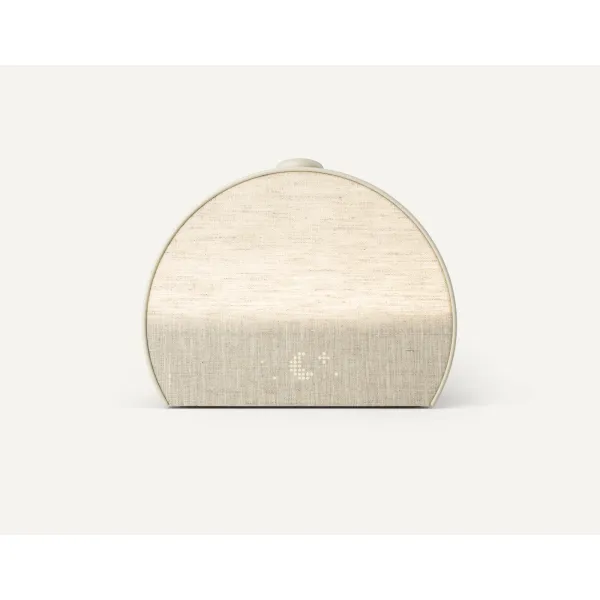
Quick answer: The best beauty device gifts start with the skin concern. The best beauty device gift depends on the skin concern. For instant glow, give the Michael Todd Beauty Sonicsmooth Pro+ or Dermaflash LUXE+. For lines and firmness, the NuFACE TRINITY+ or Medicube AGE-R Ultra Tune 40.68. For an all-round LED mask, the Shark CryoGlow. For hair removal plus a photofacial lens, the Nood Flasher Pro. Each pick below lists two or three places to buy so you can grab whichever has the best sale.
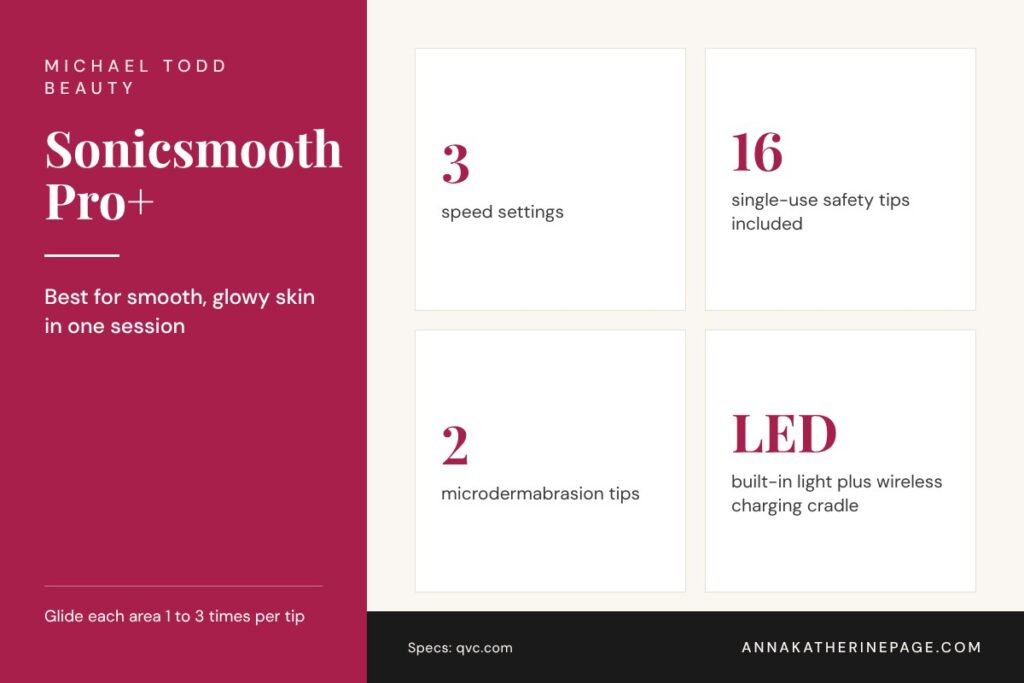
A sonic dermaplaning tool with three speeds, a built-in LED light, 16 single-use safety tips and two microdermabrasion tips, plus a wireless charging cradle (QVC product page). The safety tips are designed to glide over each area one to three times. The Dermaflash vs Michael Todd comparison breaks down how it stacks up.
Where to buy the Michael Todd Beauty Sonicsmooth Pro+:Michael Todd Beauty | Ulta | QVC. Prices change often, so check today’s price at each.
Dermaflash LUXE+
Dermaflash’s sonic dermaplaning device runs at 14,000 sonic vibrations per minute with a patented safety cage and two speeds, Gentle and Invigorating. It comes with four Microfine Edges and Preflash cleanser, and Dermaflash recommends once a week (Dermaflash product page).
Where to buy the Dermaflash LUXE+:Dermaflash | Ulta | Dermstore. Prices change often, so check today’s price at each.
For a first device
Solawave 4-in-1 Skincare Wand
Red light at 630 nm, a galvanic current, therapeutic warmth and massage in one wand, with 3 minutes per area and an automatic shutoff. Solawave says it is FDA cleared and recommends 3 to 5 sessions a week (Solawave product page).
Where to buy the Solawave 4-in-1 Skincare Wand:Ulta | Solawave. Prices change often, so check today’s price at each.
CurrentBody Skin LED Eye Perfector
Amber, red, deep red and near-infrared light aimed at the eye area, in 3-minute sessions six days a week, with comfort goggles and a charging stand in the kit (Sam’s Club listing). Sam’s Club members can buy it there, which makes it an easy add to a warehouse run.
Where to buy the CurrentBody Skin LED Eye Perfector:Sam’s Club | CurrentBody. Prices change often, so check today’s price at each.
For lines and firmness
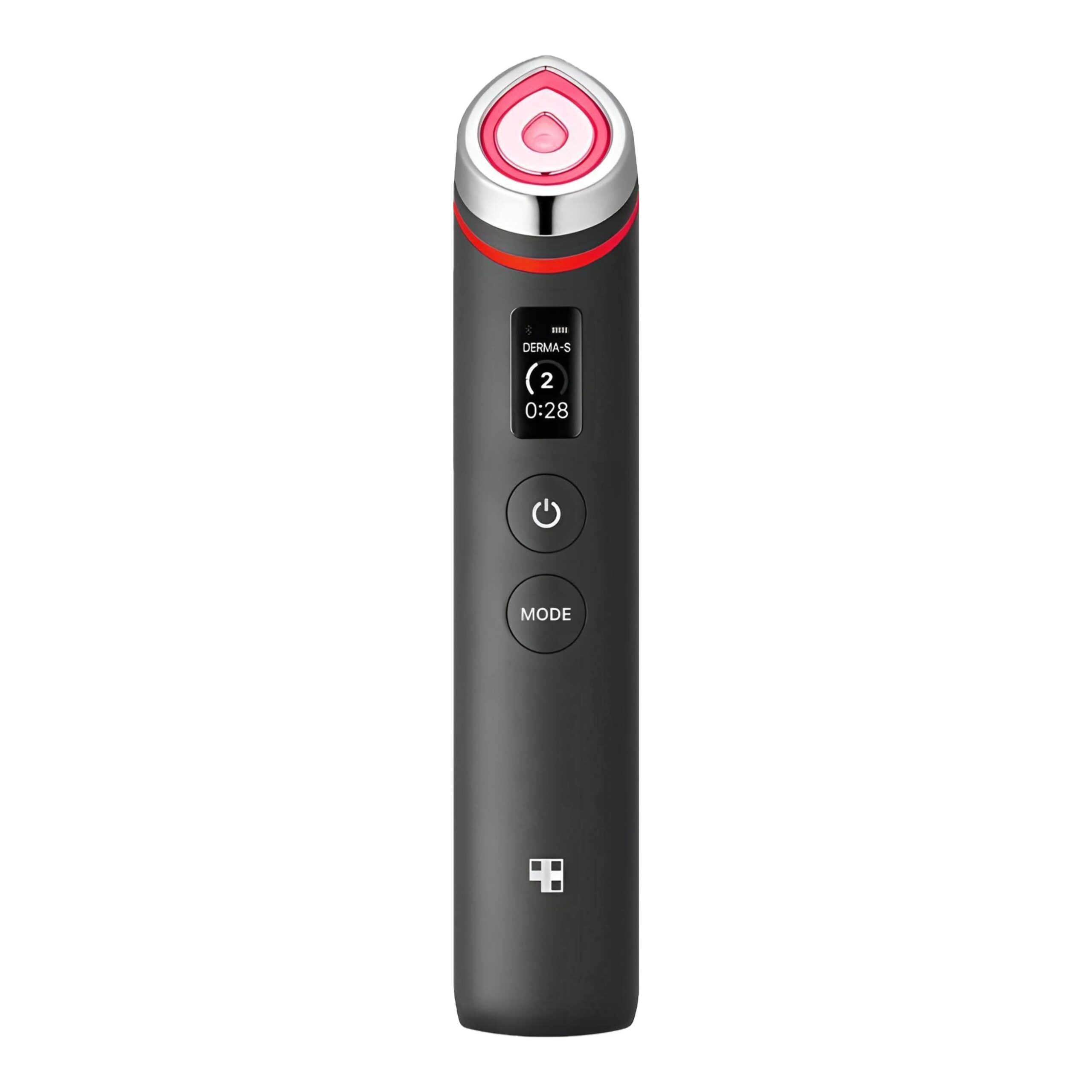
Medicube AGE-R Ultra Tune 40.68
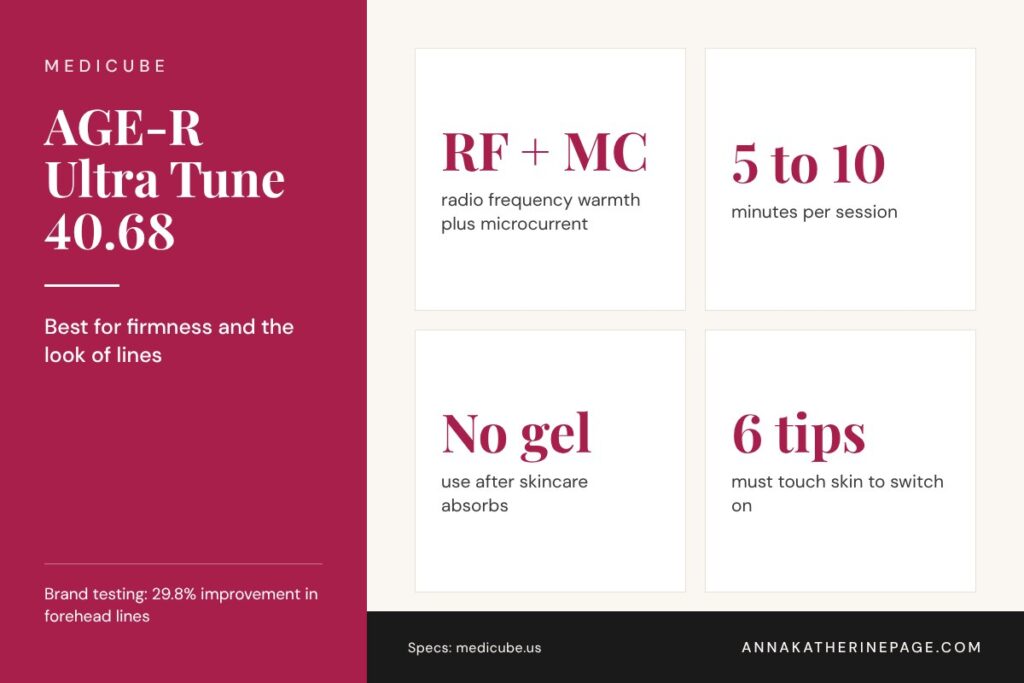
Radio frequency warmth plus microcurrent, 5 to 10 minutes, used after skincare has absorbed, with no special gel (Medicube product page). See how it differs from the Booster Pro in Booster Pro vs Ultra Tune.
Where to buy the Medicube AGE-R Ultra Tune 40.68:Amazon | Medicube US. Prices change often, so check today’s price at each.
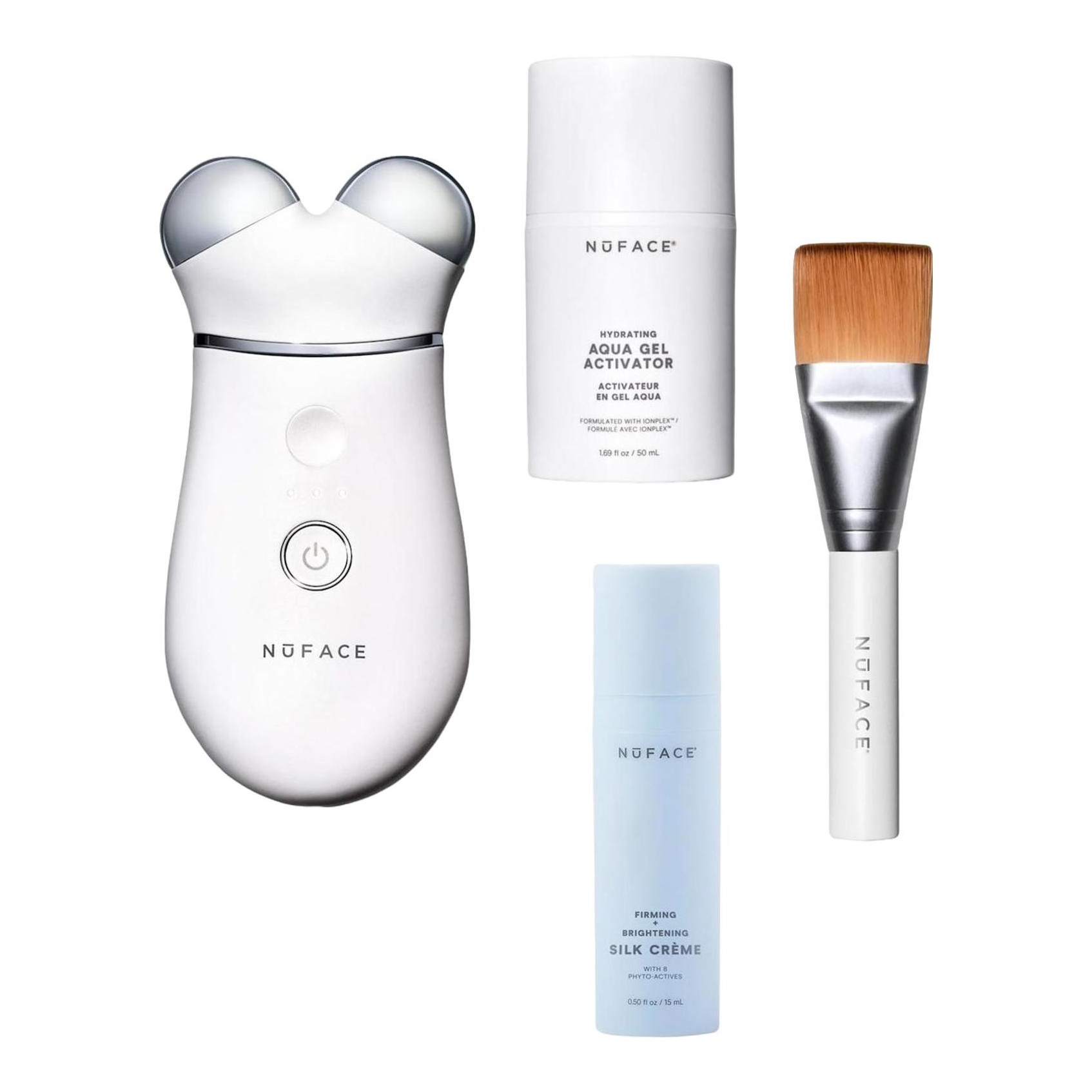
NuFACE TRINITY+
NuFACE’s FDA-cleared microcurrent device tops out at 340 microamps with a Boost button for extra power, in 5-minute sessions. NuFACE recommends 5 times a week for 60 days, then 2 to 3 times a week (NuFACE product page).
Where to buy the NuFACE TRINITY+:NuFACE | Ulta | Sephora. Prices change often, so check today’s price at each.
Where to buy the Medicube AGE-R Booster Pro X2:TikTok Shop | Amazon | Medicube US. Prices change often, so check today’s price at each.
Shark FacialPro Glow
A hydro-powered extraction facial with a 9% AHA and BHA exfoliating gel and a hydrating finish, in about 10 minutes once a week. Shark reports reduced pore visibility after a single use in a 60-person study, and backs it with a two-year limited warranty (SharkNinja product page).
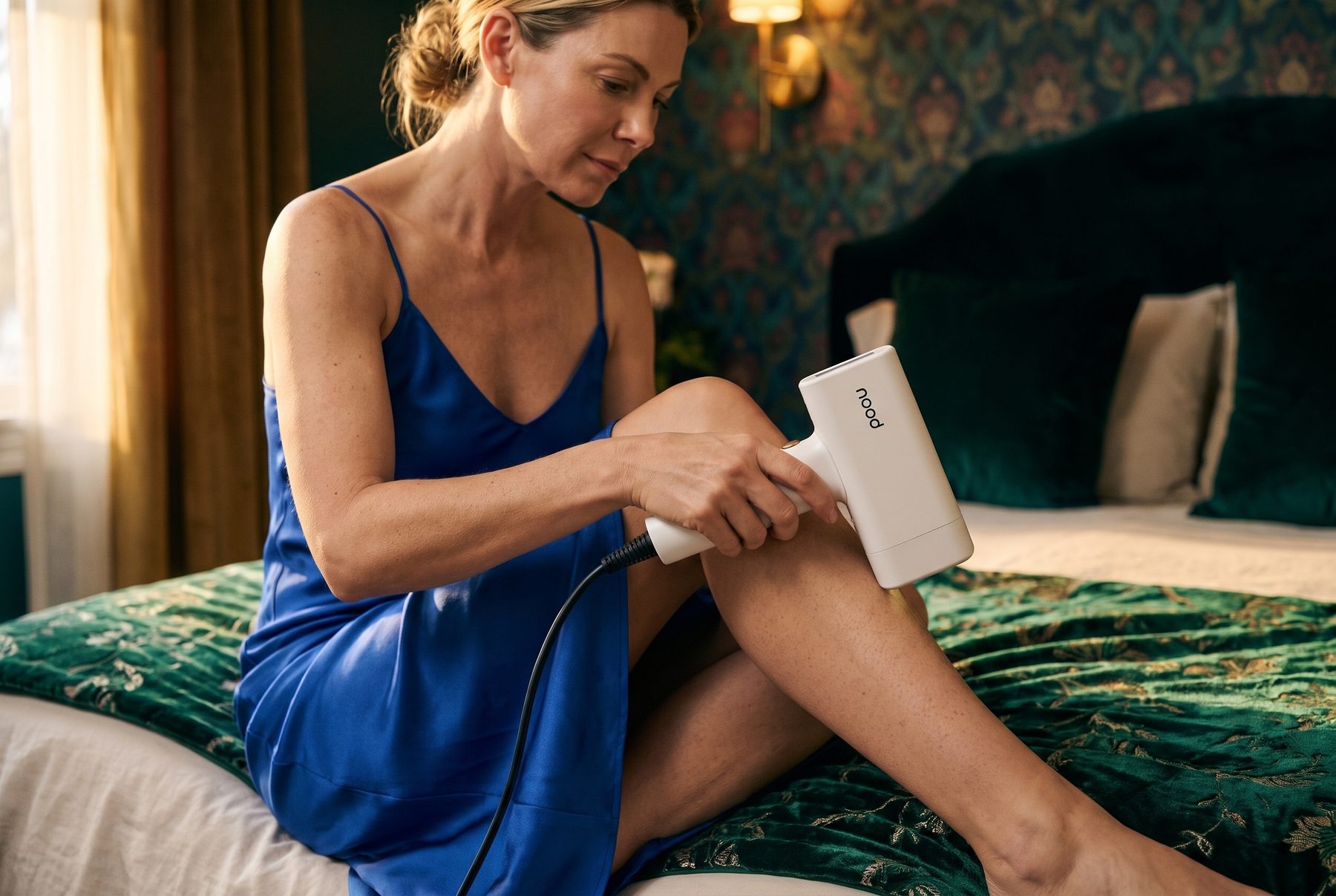
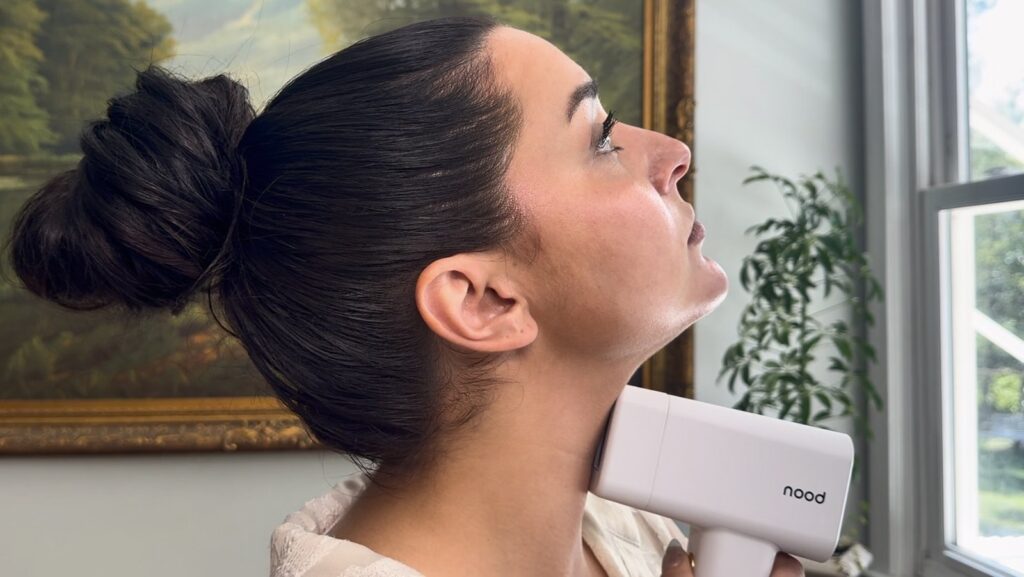
An IPL hair removal device that comes with two lenses: the Hairless Lens and the Ageless Lens for fine lines, dark spots and texture. Nood lists 6 J/cm² of broad-spectrum light, about 10-minute treatments and at least weekly Ageless sessions for maintenance. It suits Fitzpatrick skin types I to IV, and Nood recommends a skin safety test first (Nood Ageless Lens page). More in the Nood Ageless Lens review.
Where to buy the Nood Flasher Pro:Amazon | Nood. Prices change often, so check today’s price at each.
For the LED mask lover
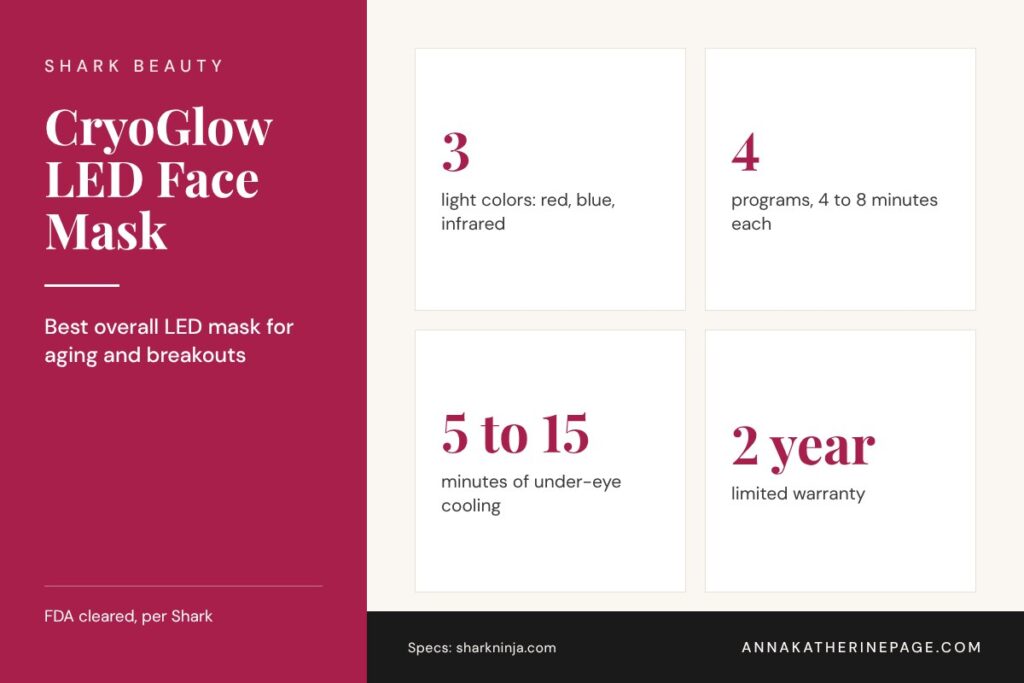
Shark CryoGlow
Red, blue and infrared light with four programs and under-eye cooling, FDA cleared per Shark. The best LED face masks guide compares it with Omnilux, CurrentBody and Dr. Dennis Gross.
Where to buy the Shark CryoGlow:Ulta | SharkNinja | Best Buy. Prices change often, so check today’s price at each.
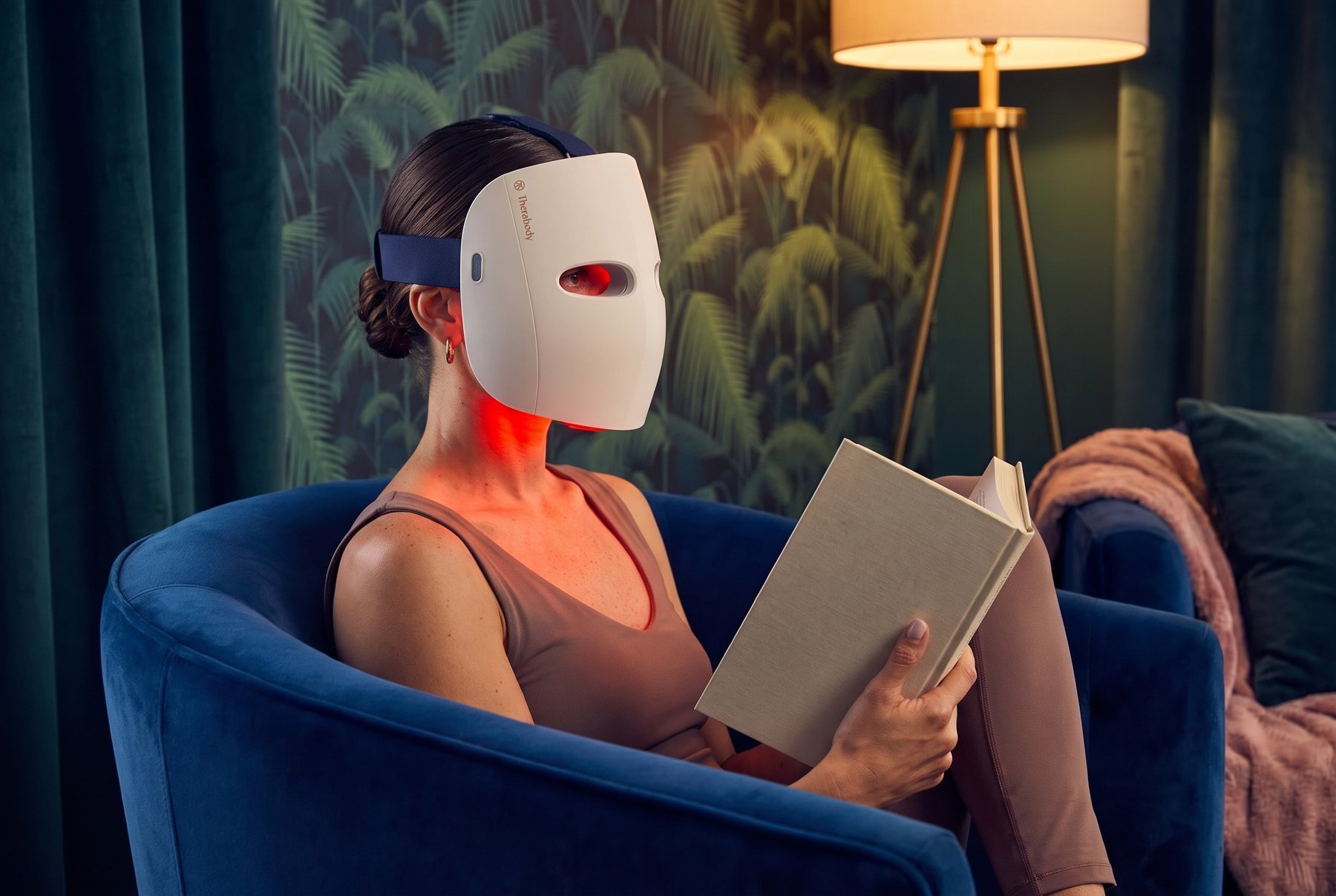
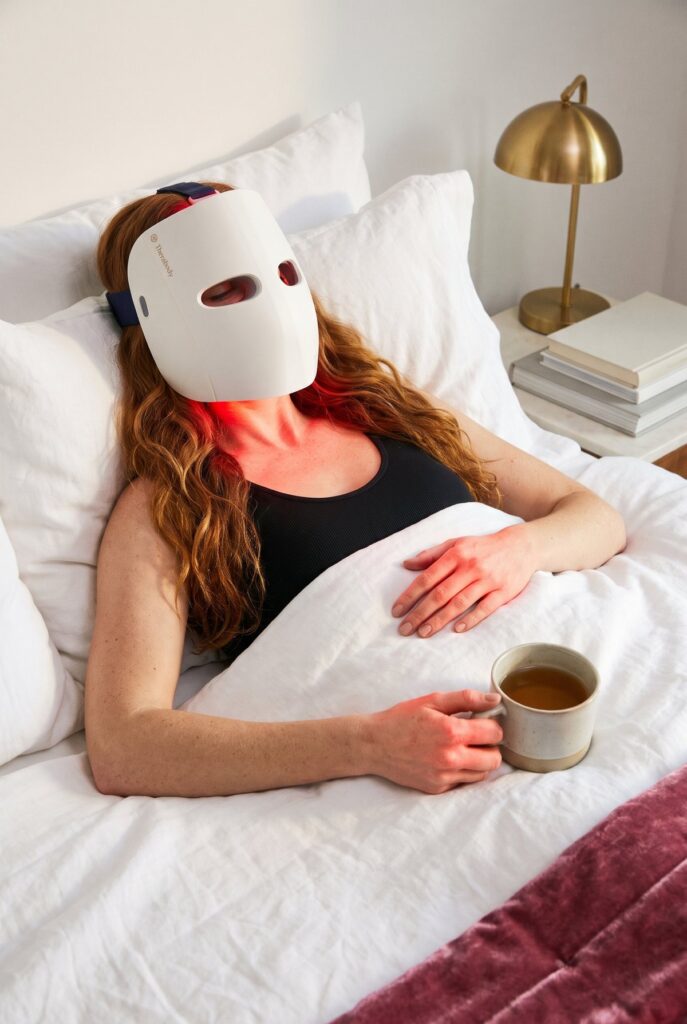
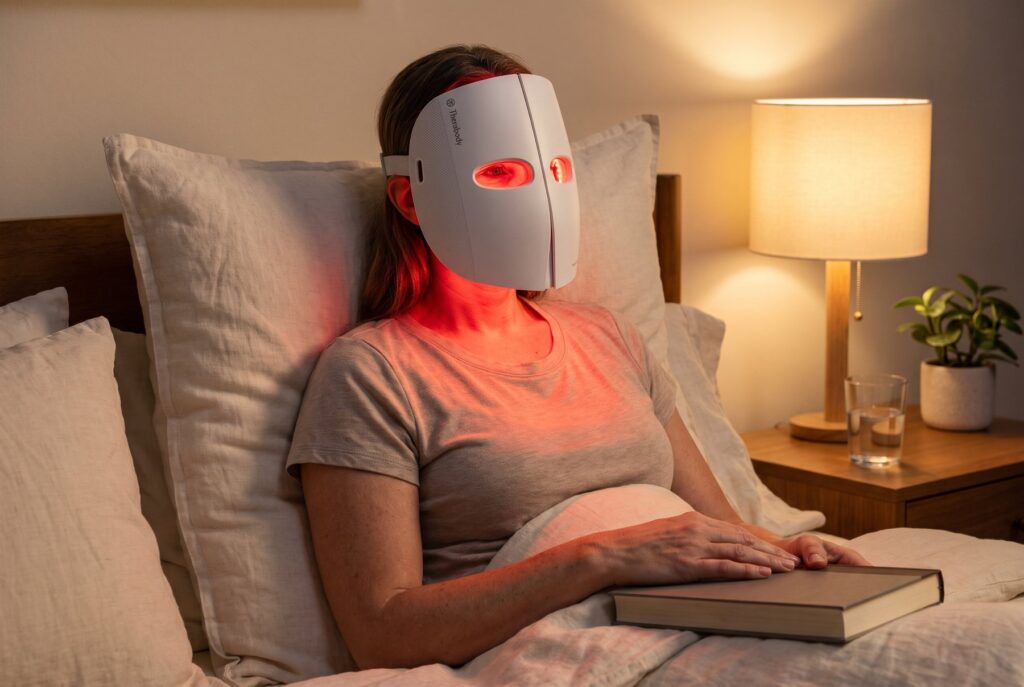
TheraFace Mask Glo
Therabody’s cordless full-face mask with red, infrared and blue light, built for gifting to someone who wants a mask without a cord. Torn between the Glo and the full TheraFace Mask? The TheraFace Mask Glo vs TheraFace Mask comparison covers what each one adds.
A cold laser system for at-home skin rejuvenation sold through luxury beauty retailers as the LYMA Laser Starter Kit. It is the most expensive device on this list by a wide margin, so it is a gift for the person who has already tried everything else.
Where to buy the LYMA Laser Starter Kit:Dermstore | Bluemercury. Prices change often, so check today’s price at each.
How to pick the right beauty device gifts
Match the concern, not the hype. Dermaplaning is for texture and fuzz, LED and RF are for lines and firmness, IPL is for hair and spots.
Check skin tone limits. IPL devices like the Nood Flasher Pro are not meant for deeper skin tones (Fitzpatrick V and VI).
Think about routine. A 3-minute device gets used; a 70-minute one may not.
Buy where returns are easy. Sephora, Ulta, Dermstore and the brands all list return windows on their sites.
Frequently asked questions
What is a good beauty device gift for a beginner?
A dermaplaning tool like the Michael Todd Beauty Sonicsmooth Pro+ or Dermaflash LUXE+ gives a visible result after one session, which makes it satisfying for a first device. The Solawave 4-in-1 Skincare Wand is another easy start, with 3-minute sessions per area and an automatic shutoff. Both fit into an existing routine without much learning.
What beauty device is best for wrinkles?
For lines and firmness, look at microcurrent, radio frequency and red light. The NuFACE TRINITY+ uses FDA-cleared microcurrent in 5-minute sessions, the Medicube AGE-R Ultra Tune 40.68 pairs RF warmth with microcurrent, and LED masks like the CurrentBody Series 3 use red and near-infrared light. Consistent use over several weeks matters for all of them.
Is the Nood Flasher Pro a good gift?
It is a strong gift for someone with light to medium skin who wants hair reduction and help with spots and tone, since it ships with both the Hairless Lens and the Ageless Lens. Nood says it suits Fitzpatrick skin types I to IV and recommends a skin safety test before treatment, so it is not the right pick for deeper skin tones.
Where is the best place to buy beauty devices on sale?
Sales rotate between retailers, so it pays to check two or three. Ulta, Sephora and Dermstore often discount devices during holiday events, brand sites like SharkNinja, NuFACE and Solawave run their own promotions, and warehouse clubs such as Sam’s Club carry select devices like the CurrentBody Eye Perfector. This guide lists several authorized sellers for each pick.
Are at-home beauty devices as good as clinic treatments?
No. At-home devices run at lower energy than professional machines, so results are subtler and depend on regular use. They are best for maintenance between appointments or for steady improvement over weeks. For deep wrinkles, significant sagging or scarring, a board-certified dermatologist can explain which in-office treatments fit and what results to expect.
Sources
Sources checked on October 25, 2026. Figures from brands are reported as the brand’s own claims.
Quick answer: Pick the TheraFace Mask Glo if you want Therabody’s full-face red, infrared and blue light in a cordless mask and you can live with a scalp-only massage and a shorter battery. Pick the full TheraFace Mask if you want the most lights Therabody makes (648 vs 504), vibration around the eyes as well as the head, shorter sessions, and double the battery life. Both use the same three wavelengths, so the Glo is the smart buy for most people. See the TheraFace Mask Glo at Cos Bar or see the full TheraFace Mask at Cos Bar.
Specs from Therabody’s US product pages. Check the listing before you buy, since specs can change.
What the Glo leaves out
The two masks share far more than they don’t. Same three light settings, same cordless design, same full-face shape that reaches under the eyes and around the mouth, areas Therabody says many masks leave uncovered. The differences come down to four things.
Fewer lights. The Glo has 504 LEDs to the full mask’s 648. Both are high counts for an LED mask, but the full mask packs in more light sources across the same face.
Simpler massage. The Glo’s vibration sits in the straps and works on the scalp. The full TheraFace Mask adds vibration around the eyes and browline as well as the top and back of the head.
Longer sessions. Therabody lists 4 to 12 minutes for the Glo and 3 to 9 minutes for the full mask. The Glo’s clinical study used a 12 minute routine; the full mask’s used 9 minutes.
Half the battery, and no stand. About 60 minutes of use per charge on the Glo vs about 120 on the full mask, and only the full mask comes with a display stand.
Weight is close enough not to matter. Therabody’s comparison charts list the Glo at 514 grams and the full mask at 576 grams.
Same light, so where does the difference show up?
The wavelengths are the part that matters most for skin, and they match. Red light around 630 nm is the most common LED setting for fine lines and tone, near-infrared at 830 nm reaches a little deeper, and blue light at 415 nm is the setting used for breakout-prone skin. Either mask covers all three, which already puts both ahead of red-only masks if you want help with blemishes too.
Where the full mask earns its premium is the experience: more light sources, a shorter session, a more thorough massage and a battery Therabody rates at about twice the Glo’s. What it does not do is add a fourth light color or a different kind of treatment.
A note on the numbers: the clinical studies are Therabody’s own, each mask was tested separately, and the results are reported for daily use over 12 weeks. That is useful, but it is not a head-to-head test, so neither study proves one mask beats the other. If you want the bigger picture on how often to use LED, the guide to how often to use red light therapy for wrinkles walks through it.
Who should buy the TheraFace Mask Glo
You want red, infrared and blue light in one cordless mask and care most about value.
You are fine with a 12 minute routine and charging a little more often.
The scalp massage is a nice extra for you, not the reason you are buying.
You are new to LED masks and want a full-face option without paying for the flagship.
How the TheraFace masks compare to other LED masks
Both TheraFace masks are rigid shells with three light colors and a built-in massage, which sets them apart from the flexible silicone masks in this space. If you are still choosing between brands, the CurrentBody Series 3 vs Series 2 comparison covers the flexible six-color option, and Solawave vs CurrentBody looks at a lighter, lower-commitment pick. For a hard-shell mask from another brand, see INIA vs Omnilux.
Before you start any LED mask
LED masks are cosmetic devices, not medical treatment. Read Therabody’s precautions and contraindications on the product page before the first session, wear the eye shield, and check with a dermatologist first if you are pregnant, take a medication that makes you sensitive to light, have a history of eye problems or seizures, or are under care for a skin condition.
FAQ
What is the difference between the TheraFace Mask Glo and the TheraFace Mask?
Both use red, infrared and blue light and are cordless. The full TheraFace Mask has more LEDs (648 vs 504), adds vibration around the eyes, runs shorter sessions (3 to 9 minutes vs 4 to 12), has about double the battery life and comes with a display stand.
What is the Therabody TheraFace Mask Glo?
It is Therabody’s lower-priced full-face LED mask. It combines red, red plus infrared and blue light with a scalp massage in the straps, in a cordless design.
Does the TheraFace Mask Glo work?
Therabody reports a 12 week study of 104 people using it daily for 12 minutes, with improvements in the look of fine lines, firmness and tone. It is the brand’s own study and results vary, so expect gradual change with steady use rather than overnight results.
Is the full TheraFace Mask worth it over the Glo?
It is worth it if you want shorter sessions, eye-area massage, a longer battery and the stand. If you mostly want the light itself, the Glo gives you the same three wavelengths.
How long is a session?
Therabody lists 4 to 12 minutes for the Glo and 3 to 9 minutes for the full TheraFace Mask, depending on the setting.
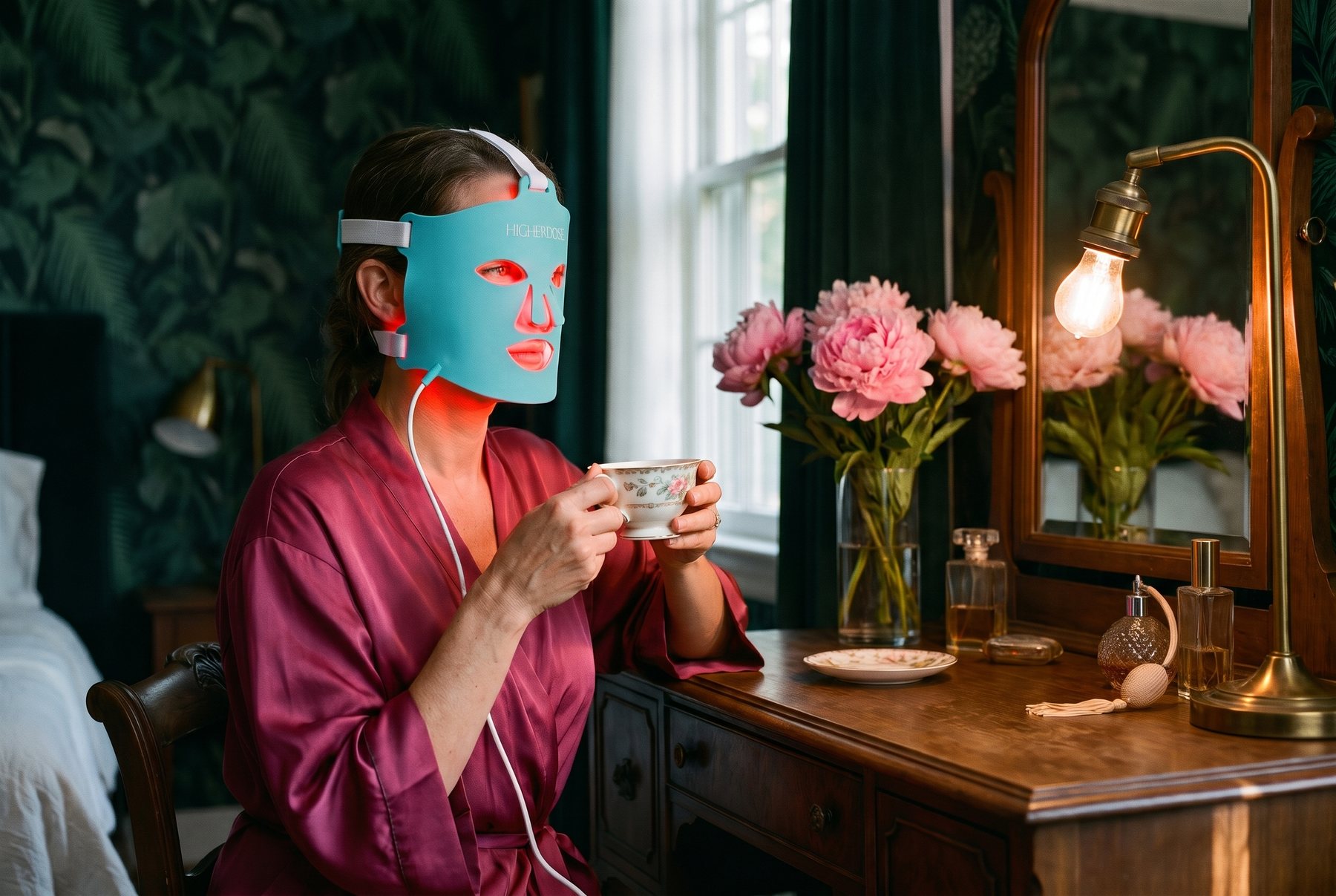
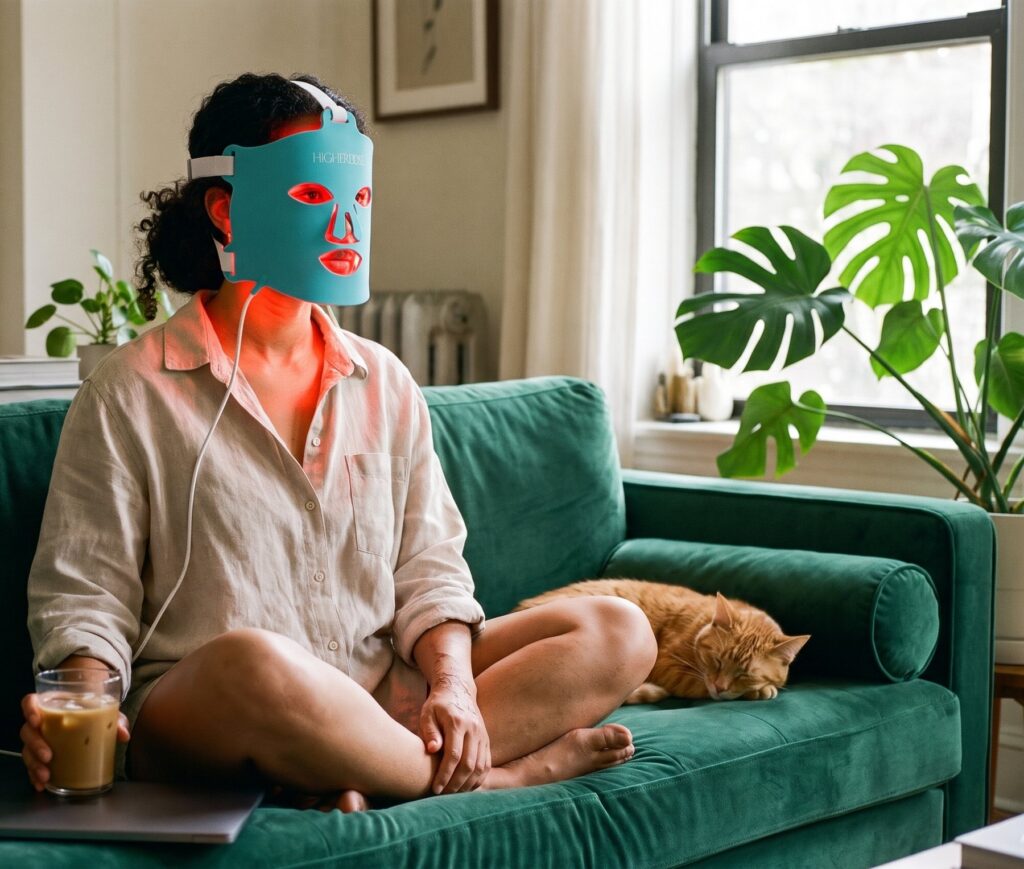
Quick answer: Pick the HigherDOSE Red Light Face Mask if your goal is fine lines and firmness and you want a simple mask you can wear while you move around. It runs the two most studied skin wavelengths (red and near-infrared), offers a 10 or 20 minute session, and costs less. Pick the CurrentBody Series 3 if you also want blue light for breakouts, yellow for redness and green for tone, a third, deeper near-infrared wavelength, and an app that lets you control where each light goes. The HigherDOSE is the focused anti-aging mask; the CurrentBody is the do-everything mask.
6: red 633nm, near-infrared 830nm and 1072nm, plus blue 415nm, green 532nm and yellow 590nm
LEDs
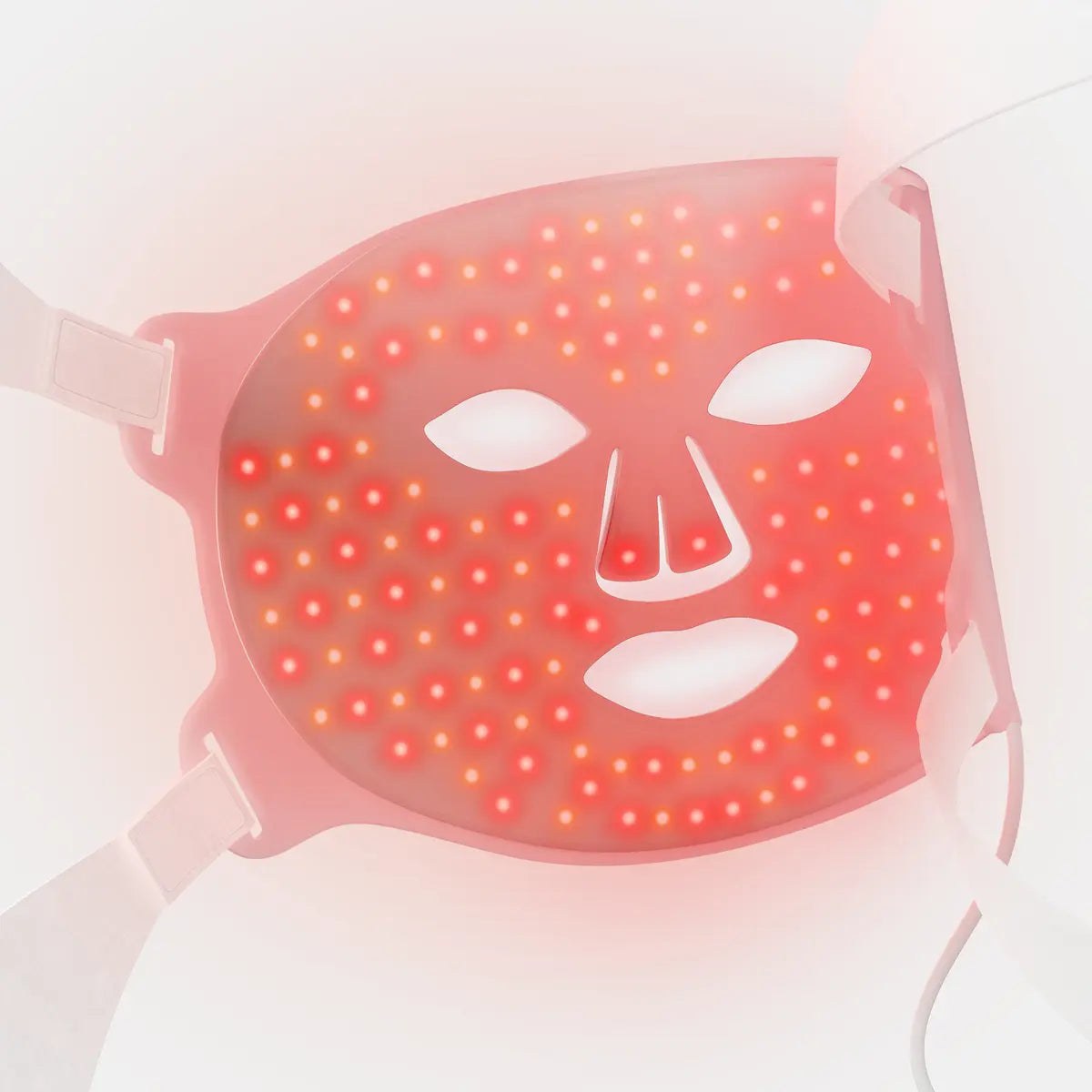
66 dual-core LEDs (132 diodes)
750
Stated output
50 mW/cm2 total (26 red, 24 near-infrared)
Up to 40 mW/cm2
Session
10 or 20 minutes, 3 to 5 times a week
10 minutes, 3 to 5 times a week
App
None
CurrentBody app with MyDose and full-face presets
Fit
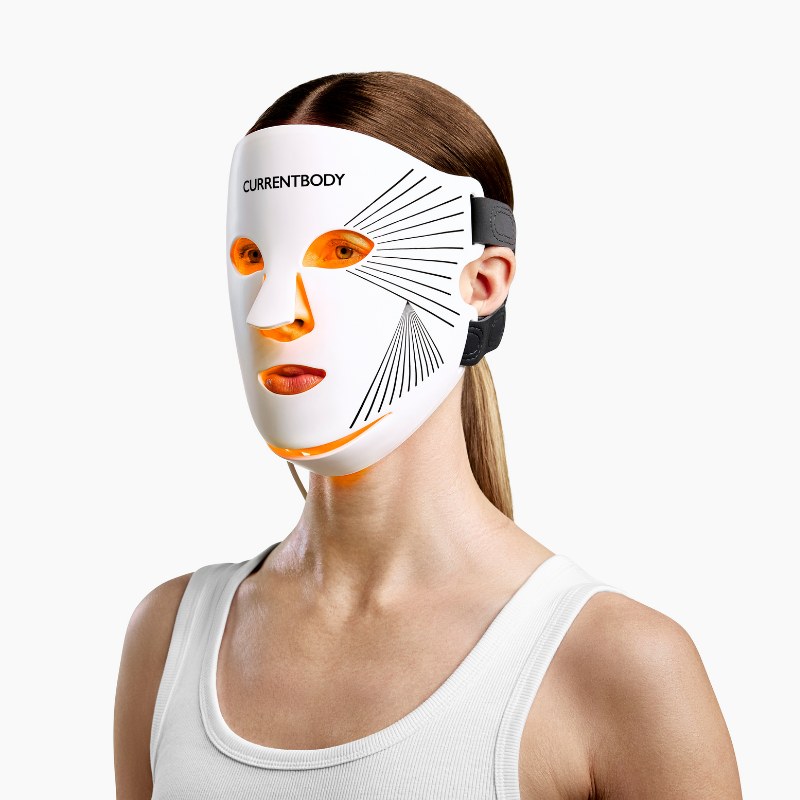
Flexible silicone with face and head straps
Flexible silicone with a chin strap
Controller
Rechargeable, USB-C, about 80 to 100 minutes per charge
Rechargeable, USB-C
In the box
Mask, controller, power adapter, head straps, goggles, storage bag
Mask, controller, USB-C cable, eye inserts, storage bag
FDA status
Described by HigherDOSE as FDA cleared
Described by CurrentBody as FDA cleared
Best for
Lines, firmness and glow, kept simple
Aging plus breakouts, redness or uneven tone
Specs come from each brand’s own product page. Output figures are the brands’ numbers, measured their own way, not independent tests, so a higher number on paper is not proof of a stronger mask.
The real difference: two lights or six
Both masks share the core of an anti-aging LED routine: red light around 630nm and near-infrared at 830nm. Those are the wavelengths with the most research behind them for fine lines, texture and firmness.
The CurrentBody Series 3 adds four more. A deeper near-infrared at 1072nm sits alongside the other two, and blue, green and yellow cover other concerns:
Blue (415nm) is the best studied of the extras and is used for breakout-prone skin. If you still get blemishes along with lines, this is the strongest reason to pay for the Series 3.
Yellow (590nm) is used for redness. The research is smaller and more mixed.
Green (532nm) is marketed for uneven tone. It has the thinnest evidence of the six.
If your skin goals are lines and firmness only, the extra colors add little for you, and the HigherDOSE covers the part that matters. The full breakdown of what those extra lights do is in CurrentBody Series 3 vs Series 2.
LED count and output: what the numbers mean
The CurrentBody lists 750 LEDs against the HigherDOSE’s 66 dual-core LEDs, and HigherDOSE lists a higher total output (50 against up to 40 mW/cm2). Those two facts pull in opposite directions, which is the point: neither number settles which mask delivers more light to your skin. LED count partly reflects how many colors a mask has to fit in, and output figures depend on how and where each brand measures. If tested, published output matters most to you, the INIA vs Omnilux comparison covers what to look for.
Session length and routine
The HigherDOSE gives you a choice of 10 or 20 minutes. HigherDOSE suggests 10 minutes 4 to 5 times a week or 20 minutes 3 to 4 times a week. The CurrentBody runs 10 minute sessions, 3 to 5 times a week. Either way, consistency over weeks is what counts, and more is not better. How often to use red light therapy for wrinkles goes deeper on frequency.
App or no app
The Series 3 pairs with the CurrentBody app. Its MyDose feature lets you run one light on the chin and another across the forehead in the same session, and there are presets for anyone who does not want to build their own. The HigherDOSE has no app: pick a session length on the controller and go. If you like to customize, the app is a real plus. If you want to put a mask on and press one button, the HigherDOSE is simpler.
Fit, comfort and moving around
Both are flexible silicone masks rather than rigid shells. The HigherDOSE uses face and head straps and a rechargeable controller that HigherDOSE designed so you can move around during a session; the brand lists about 80 to 100 minutes of battery per charge. The CurrentBody uses a chin strap and eye inserts, and its controller also charges over USB-C. The HigherDOSE box includes goggles.
Which one to buy
Buy the HigherDOSE if fine lines, firmness and glow are the goal, you want a longer 20 minute option, and you would rather keep the difference in price.
Buy the CurrentBody Series 3 if you are dealing with aging and breakouts or redness at the same time, or you want app control over where each light goes.
Compare a third option if you are also weighing the Solawave mask: Solawave vs CurrentBody covers it.
LED masks are cosmetic devices, not treatments for any medical condition. Check with your doctor before starting either one if you are pregnant or breastfeeding, have a light-sensitive condition such as lupus, take medication that causes light sensitivity, get headaches triggered by light, or have an eye condition. If you have had injectables or an in-office procedure, HigherDOSE suggests waiting 24 to 48 hours before a session.
FAQ
Is the HigherDOSE Red Light Face Mask worth it?
For lines and firmness, it covers the two wavelengths with the most research behind them and costs less than the Series 3. What it lacks is blue, green and yellow light and an app.
What is the difference between HigherDOSE and CurrentBody LED masks?
The HigherDOSE uses red and near-infrared only, with 10 or 20 minute sessions and no app. The CurrentBody Series 3 uses six wavelengths, including a deeper near-infrared and blue light for breakouts, with 10 minute sessions and app control.
Which LED mask is better for acne?
The CurrentBody Series 3, because it includes blue light (415nm), the most studied LED color for breakout-prone skin. The HigherDOSE has no blue light.
Can you use a red light mask every day?
Both brands suggest 3 to 5 sessions a week rather than daily. HigherDOSE notes that going over the recommended use brings diminishing returns.
Should you put skincare on before an LED mask?
Start with clean, dry skin. HigherDOSE advises against sunscreen, heavy moisturizer or mineral makeup under the mask, since they can block light. Apply the rest of your routine after.
How long until you see results?
HigherDOSE says most changes start to show after 3 to 4 weeks of consistent use, and CurrentBody suggests 3 to 5 sessions a week for 8 weeks. Any change builds gradually.
Sources
Sources checked on October 24, 2026. Figures from brands are reported as the brand’s own claims.
Quick answer: If you sleep on your side and the problem is a snoring partner or a noisy house, the Ozlo Sleepbuds 2 are the pick. They are the smaller, flatter bud, they last longer on a charge, and they are built only for sleep. The Soundcore Sleep A30 are the better value and the better fit if you want active noise cancelling, sleep tracking and the option to take a call, as long as a slightly bigger bud is comfortable in your ear.
One note before the details: Ozlo replaced its original Sleepbuds with Sleepbuds 2 in July 2026, so this comparison is the current Ozlo model against the Sleep A30. Soundcore also sells a Sleep A30 Special version with different battery figures, covered below.
Ozlo Sleepbuds 2 vs Soundcore Sleep A30 at a glance
Ozlo Sleepbuds 2
Soundcore Sleep A30
How they handle noise
Passive seal from silicone tips plus adaptive noise-masking sound. No active noise cancelling
Active noise cancelling, passive isolation and adaptive snore masking
Weight per bud
1.6 g
About 3 g
Battery per charge
Up to 14 hours
Up to 9 hours (45 hours with the case)
Case
Holds 2 to 3 extra charges; has noise, light and temperature sensors
Charging case for multiple nights
Sleep tracking
Sleep Patterns and bedroom environment insights in the Ozlo app
Sleep duration, position and snoring in the Soundcore app
Alarm only you hear
Yes, works even in Bluetooth-off mode
Yes
Phone calls
No (no microphone in the buds)
Yes
Streaming
Any Bluetooth audio; fades to masking once you fall asleep
Any Bluetooth audio, plus Calm Sleep Stories and a built-in sound library
Bluetooth
5.3
5.4
Water resistance
IPX4
IPX4
Tips in the box
4 sizes of silicone tips
Silicone tips, foam tips and ear wings in several sizes
Specs from ozlosleep.com and soundcore.com product pages, checked October 24, 2026. Sleep A30 Special lists 8 to 10 hours per charge and about 5 nights with the case.
The real difference: block and mask vs active noise cancelling
This is the choice that matters most, and it comes down to what keeps you up.
Ozlo takes a “block and replace” approach. The silicone tip seals the ear, and a steady masking sound (white noise, ocean, rain and dozens of other options) covers whatever leaks through. Ozlo says its own testing found this works better in a bedroom than active noise cancelling. Snoring is uneven and loud in bursts, and a constant sound layered over it is the classic way to make it fade into the background.
Soundcore stacks three tools. Active noise cancelling handles steady low sounds such as a fan, an air conditioner or road hum. The passive seal handles the rest, and adaptive snore masking adds a covering sound on top. If your noise problem is a constant drone rather than a person, active cancelling is the feature to look for.
Here’s what to look for: snoring partner, go Ozlo. Steady city or appliance noise, the Soundcore has the edge.
Comfort for side sleepers
Both brands design for side sleeping, but the numbers favor Ozlo. Each Sleepbud 2 weighs 1.6 g and stands 11 mm tall, which is small enough to sit mostly inside the ear. Soundcore lists the Sleep A30 at about 3 g per bud with a 3D shape that follows the curve of the ear, and it ships with foam tips and ear wings to help it stay put.
Fit is personal. If you have struggled with earbuds before, the lower profile is the safer bet. If regular earbuds have always felt fine, the A30’s wider range of tips gives you more ways to dial in a seal.
Battery: will they last the whole night?
Ozlo lists up to 14 hours per charge, which covers a long night plus a lazy weekend morning. Soundcore lists up to 9 hours per charge for the Sleep A30, with the case bringing the total to 45 hours.
For most people either one gets through a normal night. The Ozlo margin matters if you sleep long, nap in the afternoon, or wear them on red-eye flights.
Apps, alarms and tracking
Alarms: both have a private in-ear alarm, so a partner does not wake to it. Ozlo’s alarm still works with Bluetooth switched off.
Tracking: Soundcore reports sleep duration, sleeping position and snoring. Ozlo offers Sleep Patterns plus readings from sensors in the case for bedroom noise, light and temperature.
Content: Soundcore includes Calm Sleep Stories and a sound library with white noise and meditation tracks. Ozlo has 60+ built-in sleep sounds and lets you stream anything, then fades to masking when it detects you have fallen asleep.
Calls: only the Soundcore has microphones for calls. Ozlo left them out on purpose; these are sleep-only buds.
If you already use a sunrise alarm or sound machine, the Hatch Restore 3 vs Restore 2 comparison covers how a bedside device and sleep earbuds can split the job: the Hatch for wind-down light and a gentle wake, the buds for noise you cannot control.
Price and value, without the sticker shock
Ozlo is the more expensive of the two by a clear margin. Soundcore also sells a Special edition and runs promotions on its own site from time to time. Both brands list their sleep earbuds as HSA/FSA eligible on their own sites, so check your plan before you buy with pre-tax dollars. Ozlo’s own store also offers a 30-day return window, which is worth using for something as personal as fit.
Who should buy which
Buy the Ozlo Sleepbuds 2 if you share a bed with a snorer, sleep on your side, want the longest battery, and do not need calls or noise cancelling.
Buy the Soundcore Sleep A30 if your noise is a steady hum, you want sleep and snore tracking, you like the idea of taking calls in the same buds, or you want the better value.
Skip both if you have ear pain, frequent ear infections or a perforated eardrum. Ask your doctor before wearing anything in your ears all night.
It depends on the noise. Ozlo’s passive seal plus masking sound is built around snoring and uneven bedroom noise, and the buds are smaller with a longer battery. Soundcore adds active noise cancelling, sleep tracking and calls, which suits steady noise and people who want more features for less.
Is the Soundcore Sleep A30 any good?
On paper it is one of the most complete sleep earbuds available: active noise cancelling, snore masking, sleep and snore tracking, a private alarm and up to 45 hours with the case. The main trade-off is size, at about 3 g per bud.
Do Ozlo Sleepbuds 2 have noise cancelling?
Not active noise cancelling. Ozlo uses a passive seal from the silicone tips plus adaptive noise-masking audio that covers sounds that get through.
Can you take calls with Ozlo Sleepbuds?
No. The Sleepbuds have no microphone. The Soundcore Sleep A30 does support calls.
What is the difference between the Sleep A30 and the Sleep A30 Special?
Soundcore sells both. The Special comes in different colors and lists 8 to 10 hours per charge with about 5 nights from the case, and it switches automatically from Bluetooth to stored audio once you fall asleep.
What are good alternatives to the Soundcore A30 for sleep?
The Ozlo Sleepbuds 2 are the main alternative built only for sleep. If you would rather not wear anything in your ears, a bedside sound machine such as the Hatch Restore 3 covers masking sound from across the room.
Sources
Sources checked on October 24, 2026. Figures from brands are reported as the brand’s own claims.
To price a bouquet, add up what your stems and sundries cost, multiply by 2 to 3 for market sales or 4 to 5 for weddings, then add your labor. Put your own numbers in the calculator below and it does the math for one bouquet. If you want every product priced at once, bouquets, weddings, CSA shares and bloom bars, that is what my Flower Farm Pricing Toolkit does.
Bouquet Pricing Calculator
Enter what is in one bouquet. Stem values are what each stem would sell for wholesale.
Stem tier
Stems
$ per stem
Hero (dahlias, ranunculus, peonies)
Mid-range (zinnias, snaps, cosmos)
Filler (feverfew, statice, grasses)
How the calculator works
It runs the same four steps from my bouquet pricing formula, so it works as a simple floral pricing calculator for any mixed arrangement. First it costs your stems at what they would sell for wholesale, even the ones you grew. Then it adds sundries like wrap and a band. Then it multiplies by your markup: 2 to 3 times for a market or stand, 4 to 5 times for weddings and events. Last, it adds your labor, your minutes times your hourly rate. The full walkthrough is in how to price a bouquet.
Where it sells
Markup on materials
Farmers market or roadside stand
2 to 3 times
Weddings and events
4 to 5 times, plus a design fee
What the research says about bouquet prices
Extension research backs up pricing above "garden money." Shoppers in a Utah State University Extension survey said they spend $9.75 to $151 on each flower purchase, $46 on average (Utah State University Extension, 2025). Virginia Tech's Holly Scoggins suggests keeping one or two bouquet price points with a consistent stem count rather than pricing every bunch differently (Marketing Specialty Cut Flowers, Virginia Tech). Mississippi State University Extension recommends checking your prices against wholesale florist price lists and the USDA Ornamental Wholesale Market Report so you are not far below what other farms charge (Do You Want to Grow and Sell Flowers?, MSU Extension, 2025).
A worked example
The default numbers are a large mixed bouquet: 3 hero stems, 5 mid-range and 4 filler, plus $2 in sundries, which comes to $25 in materials. At 3x that is $75, and 12 minutes at $30 an hour adds $6. Charge about $81, which sits in the premium or large designer range on my cheat sheet. A smaller mixed bouquet with fewer hero stems lands lower, so change the stem counts to match what you actually make.
What the toolkit adds
This page prices one bouquet. The Flower Farm Pricing Toolkit is the spreadsheet I built to price everything you sell: market bunches, CSA shares, weddings and bloom bars, with your labor built into every price. It works in Excel and Google Sheets.
Not sure what your stems cost you? The free Flower Pricing Reality Check works out your cost per stem, then you can bring that number back here.
Bouquet pricing FAQ
How do I price my bouquet?
Add up your stem costs and sundries, multiply by 2 to 3 for market sales or 4 to 5 for weddings, then add your labor. The calculator above does the math for you.
What is the average cost of a bouquet?
From my bouquet pricing cheat sheet: a small single-variety market bunch runs about $12 to $18, a mixed market bouquet about $25 to $45, and a premium or large designer bouquet about $50 to $85. Your local market matters, so check what sells near you.
Should I charge for my labor if I grew the flowers?
Yes. Your time is the most valuable thing in the bouquet. Put your minutes and your hourly rate into the calculator every time, even for flowers from your own beds.
What is the 3:5:8 rule for flowers?
It is a design rule, not a pricing rule. One common version builds a bouquet from 3 focal flowers, 5 stems of foliage and 8 filler stems, working from the center out (Daily Blooms). Other florists use it more loosely, grouping stems in 3s, 5s and 8s (Livingetc). For pricing, count all 16 stems in the calculator above, foliage included, because every one of them cost you something to grow.
To price a flower CSA share, multiply your weekly bouquet price by the number of weeks, then take 5 to 10 percent off as a thank-you for paying upfront. A $25 bouquet over a 10-week season is $250 of flowers, so the share sells for about $230 to $240.
I built this free calculator so you can price your own share in about a minute, and see the cost floor it has to clear. If you want every product priced in one place, bouquets, weddings, CSA shares and market bunches, that is what my Flower Farm Pricing Toolkit does.
Flower CSA Pricing Calculator
The starting numbers are an example. Replace them with yours. Results update as you type.
Quick start
$
weeks
Fine-tune discount, costs and bouquet
Season
%
Your cost floor
$
$
$0.47 a stem is University of Tennessee Extension’s 2025 zinnia budget: $4,316 to grow 9,256 stems on 1,000 sq ft, paid labor and overhead included, before selling costs. Use your own number if you have it.
No bouquet price yet?
$
min
$
Built price = (stems x value + sundries) x markup + your time, rounded up to the next dollar.
Nothing you type here is saved or sent anywhere.
How the CSA share math works
1Bouquet priceyour market bouquetwith your labor in it
2Seasonx weeksfull price for the season
3Thank-youminus 5 to 10%for paying upfront
4Share pricemust clear your floorseason costs / shares
It runs the same math as my CSA guide. Start from a weekly bouquet price you trust. If you do not have one, open “Fine-tune” and the calculator builds it the way my bouquet formula does: your stems at their wholesale value, plus sundries, times your markup, plus your time. Then it multiplies by the weeks and takes off your upfront discount. The full walkthrough is in how to start a flower CSA.
Step 4 is the check most people skip. The University of Kentucky’s Center for Crop Diversification puts it simply: add up your expected costs for the season, divide by the number of shares you are confident you can sell, and charge more than that so there is money to put back into the farm (Cut Flowers for CSA Production, 2021). The calculator’s floor does this per bouquet, from your cost per stem.
What flower CSA shares actually cost
The same University of Kentucky guide lists 2021 share prices from Kentucky cut flower farms. Divide each share by its weeks and the range is $10 to $30 a week. Shorter shares tend to cost more per week, and three 4-week shares ranged from $70 to $120 depending on location, design and delivery.
Kentucky flower CSA shares worked out to $10 to $30 a week
Use these as a sense check, not a target. A low share price that does not clear your floor is not a bargain for you. The same guide suggests valuing your design work at about 20 percent of a bouquet’s price: in a $20 bouquet, $4 is design and $16 is flowers and wrap.
A worked example
Say your market bouquet is $25, priced properly, with your labor in it, and each one holds 10 stems. These are the calculator’s starting numbers.
From $250 of bouquets to $181 left after flower costs
Share: $250 minus 5 percent = $237.50, rounded up to $238
Floor: (10 stems x $0.47 + $1 sundries) x 10 weeks = $57
Left for your arranging time, delivery and profit: $238 minus $57 = $181
25 members pay $5,950 before the season starts. That is revenue, not profit.
Not sure what your own stems cost? The free Flower Pricing Reality Check works out your cost per stem. Put that number in the calculator’s “Fine-tune” section in place of $0.47.
What the toolkit adds
This page prices one CSA share. The toolkit is the spreadsheet I built to price everything else you sell from the same costs, so your CSA, market table and weddings never undercut each other. Just want bouquets and market bunches? The Bouquet and Market Pricing Calculator is $7.
Price your share and everything else
Flower Farm Pricing Toolkit
17 tabs and 11 calculators in one spreadsheet
True cost per stem for 35 varieties, seed to sale
Bouquet, market, CSA and wedding prices with your labor built in
Works in Excel and Google Sheets, instant download
One-time $27 download. It does not promise income; it helps you set prices that cover your costs and your time.
Flower CSA pricing FAQ
How much should I charge for a flower CSA share?
Multiply your normal bouquet price by the number of weeks, then take 5 to 10 percent off as a thank-you for paying upfront. Then check it clears your floor: your season costs divided by the shares you can sell. The calculator above does both.
How much does a flower CSA share cost?
In 2021 Kentucky cut flower farms charged from $40 for a 2-week share to $195 for a 12-week share, according to the University of Kentucky Center for Crop Diversification. Per week, that is $10 to $30. Shorter shares usually cost more per week.
How do I start a cut flower CSA subscription?
Keep the first season simple: 8 to 14 weeks, one wrapped market bouquet a week, on-farm or market pickup, and a member cap you can absolutely deliver. Collect the full share price upfront, before you plant. The step by step is in how to start a flower CSA.
How many members should a first flower CSA have?
Start with 25 to 50 members, and cap your first season at a number your beds can feed every single week. You can grow it once you know your yields.
Should a CSA share cost less than buying bouquets each week?
A little. A 5 to 10 percent discount thanks members for paying upfront. Do not discount so hard that the CSA earns less per stem than your market table.
Quick answer: Buy the Solawave Wrinkle Retreat Pro if your goal is fine lines and firmness and you want the shortest routine: three-minute sessions, four red and near-infrared wavelengths, the higher stated output, and a 60-day money-back guarantee. Buy the CurrentBody Series 3 if you want more than anti-aging: it adds blue, green and yellow light for breakouts, uneven tone and redness, plus an app to build your own treatments. One is the fast, focused mask. The other is the do-everything mask.
Output and LED figures are each brand’s own claims. Brands measure output in different ways, so treat the gap as a direction, not a lab result.
The real difference: focus vs range
Both masks are built around red and near-infrared light, the pairing with the most research behind it for the look of fine lines and firmness. Where they split is everything around that core.
Solawave goes deep on anti-aging. Every one of its four wavelengths sits in the red, deep red, amber and near-infrared range. There is no blue light for breakouts and no app. It is a single-purpose mask.
CurrentBody goes wide. The Series 3 keeps the red, near-infrared and deep near-infrared trio from the Series 2 and adds blue, green and yellow. If breakouts, redness or uneven tone sit on your list next to lines, it covers more ground.
Here’s what to look for: write down your top two skin goals. If both are about lines, firmness and glow, the extra colors on the Series 3 are paying for features you will not use.
Session time: 3 minutes vs 10
This is the biggest day-to-day difference. Solawave’s routine is three minutes, three to five times a week. CurrentBody’s is ten. At five sessions a week that is about 15 minutes against about 50.
Shorter is not automatically better, since total light dose depends on output and time together. But with any LED mask, the routine you keep is the one that works. If ten minutes is the reason a mask ends up in a drawer, the Solawave is the safer bet. More on building a schedule that sticks is in how often to use red light therapy for wrinkles.
Light and output
Solawave Wrinkle Retreat Pro: 320 LEDs, amber 605nm, red 630nm, deep red 660nm and near-infrared 830nm, with a stated output of 65 mW/cm2.
CurrentBody Series 3: 750 LEDs across six wavelengths, including deep near-infrared at 1072nm, with a stated output of up to 40 mW/cm2.
More LEDs on the CurrentBody does not mean more anti-aging light, because many of those bulbs are the blue, green and yellow channels. And a higher number on the Solawave spec sheet is a brand claim, not an independent test. The honest read: both deliver red and near-infrared light in a range designed for at-home use, and neither should be bought on a single number.
Fit, controls and convenience
Solawave: soft, flexible silicone held on with adjustable head straps, a handheld remote with a rechargeable battery that Solawave rates at up to 60 minutes of use (about 20 treatments), automatic shut-off, and protective goggles in the box.
CurrentBody Series 3: flexible silicone with a chin strap, a controller, eye inserts, and the CurrentBody app. The app’s MyDose feature lets you choose which lights run, which is the point of the Series 3 if you want to target more than one concern.
If you want to set it and forget it, Solawave is simpler. If you like tweaking a routine, the CurrentBody app gives you control the Solawave does not have.
Returns and risk
LED masks take weeks of consistent use before you can judge them, so the return window matters. Solawave offers a 60-day money-back guarantee that covers opened and used masks, plus a one-year limited warranty. For the CurrentBody, check the return terms on the product page before you buy, since the window and conditions can change by promotion.
Already deciding between CurrentBody models?
If you are drawn to CurrentBody but only care about lines and firmness, the older Series 2 keeps the same red, near-infrared and deep near-infrared trio without the extra colors. The full breakdown is in CurrentBody Series 3 vs Series 2. Comparing more brands? See INIA vs Omnilux.
Who should skip both, or check first
Solawave lists these cautions for its mask, and they are worth applying to any LED mask: pregnancy, planning a pregnancy or breastfeeding; active cancer; a photosensitivity disorder or medication that makes you sensitive to light; light-triggered headaches; epilepsy or seizures; recent facial surgery; a recent sunburn; or an allergy to silicone or plastics. Solawave also notes a small risk of pigment changes for deeper skin tones (Fitzpatrick V and VI) and suggests a dermatologist visit first. If any of these apply, or you are unsure, check with your doctor before starting. LED masks are cosmetic devices, not a treatment for any skin condition.
Which one to buy
Buy the Solawave Wrinkle Retreat Pro if fine lines, firmness and glow are the whole goal, you want the shortest possible routine, and a 60-day money-back guarantee makes the decision easier.
Buy the CurrentBody Series 3 if you also deal with breakouts, redness or uneven tone, or you want an app that lets you choose which lights run.
Look at the CurrentBody Series 2 if you like CurrentBody’s build but only need anti-aging light.
Is Solawave better than CurrentBody? For anti-aging alone on a short routine, the Solawave Wrinkle Retreat Pro is the more focused pick. For mixed concerns like breakouts or redness, the CurrentBody Series 3 covers more.
How long do you wear the Solawave mask? Three minutes per session, three to five times a week, according to Solawave.
How long is a CurrentBody Series 3 session? Ten minutes, three to five times a week.
Does the Solawave mask have blue light for acne? No. Its wavelengths are amber, red, deep red and near-infrared. The CurrentBody Series 3 includes blue light.
Are both masks FDA cleared? Both brands describe their masks as FDA cleared. Check the model on the product page before you buy.
Does either mask cover the neck? Neither is designed for the neck. Solawave sells a separate Neck and Chest mask.
Quick answer: Buy the CurrentBody Series 2 if your goal is fine lines and firmness. It uses the same red, near-infrared and deep near-infrared wavelengths as the Series 3, it costs less, and CurrentBody still sells it new. Buy the Series 3 if you also want blue light for breakouts, yellow for redness and green for uneven tone, plus an app that lets you build your own treatments. The upgrade is about range and control, not a stronger anti-aging mask.
3: red 633nm, near-infrared 830nm, deep near-infrared 1072nm
6: the same three, plus blue 415nm, green 532nm and yellow 590nm
LED count
236
750
Stated output
30 mW/cm2
Up to 40 mW/cm2
App
None listed
CurrentBody app with MyDose and four full-face presets
Session
10 minutes, 3 to 5 times a week
10 minutes, 3 to 5 times a week
Fit
Flexible silicone with a chin strap
Flexible silicone with a chin strap
In the box
Mask, controller, USB-C cable, eye inserts, storage bag
Mask, controller, USB-C cable, eye inserts, storage bag
FDA status
Described by CurrentBody as FDA cleared
Described by CurrentBody as FDA cleared
Best for
Fine lines, firmness, a simple routine
Mixed concerns: aging plus breakouts, redness or uneven tone
Specs come from CurrentBody’s own product and comparison pages. Output figures are the brand’s numbers, not independent measurements.
What actually changed on the Series 3
Three new colors. The Series 2 is an anti-aging mask: red plus two depths of near-infrared. The Series 3 keeps those three and adds blue, green and yellow, so one mask can cover breakouts, redness and dullness as well as lines.
Far more LEDs. 750 bulbs against 236. Launch coverage of the Series 3 says each LED can emit all six wavelengths, which is how it fits six colors into one face.
Higher stated output. CurrentBody lists the Series 3 at up to 40 mW/cm2 and the Series 2 at 30. Treat that as the brand’s claim until independent testing appears.
An app with dose control. The Series 3 pairs with the CurrentBody app. Its MyDose feature lets you choose which wavelength runs where on the face, and the app calculates the dose. There are also four preset full-face treatments if you would rather not build your own.
What stayed the same
The same red (633nm) and near-infrared (830nm and 1072nm) wavelengths, the ones with the most research behind them for skin.
The same flexible silicone shape with a chin strap, eye inserts and a controller that charges over USB-C.
The same routine: 10-minute sessions, 3 to 5 times a week.
Do the extra colors matter to you?
This is the whole decision. Here is what each new light is generally used for, and how strong the evidence is.
Blue (415nm): the best studied of the three, used for breakout-prone skin. If you still get blemishes alongside fine lines, this is the strongest reason to pick the Series 3.
Yellow (590nm): used for redness and a calmer look. The research is smaller and more mixed.
Green (532nm): marketed for brightness and uneven tone. This one has the thinnest evidence of the six.
If your main goals are lines, texture and firmness, those extra lights do not add much for you, and the Series 2 covers what you need. Dark spots are a similar story: light alone is not the strong move there, as Does Red Light Therapy Help Dark Spots? explains.
Is the MyDose app worth it?
It is worth it for someone who likes to customize. You can run blue on the chin and red across the forehead in the same session, for example, instead of one light over the whole face. If you want to put the mask on and press one button, the Series 2’s single program is simpler, and the Series 3’s presets get you close to that too.
Is a Series 2 still the smart buy?
Yes, for most anti-aging buyers. CurrentBody still sells the Series 2 new, in the mask-only version and in kits, and it sits below the Series 3 in price. You give up the extra colors and the app, not the core red and near-infrared treatment. Two things to check before you order:
Buy from CurrentBody or an authorized retailer. A third-party listing for an older model can mean an older stock unit or no warranty support.
Check the box contents. Both masks come in mask-only and kit versions, so compare the same version when you weigh them up.
There is no urgent reason to upgrade if you use it for lines and firmness. The anti-aging wavelengths are the same. Upgrade only if breakouts or redness have become a bigger concern, or you want the app’s control.
Which one to buy
Buy the Series 2 if fine lines, firmness and a simple routine are the goal and you would rather keep the difference in your pocket.
Buy the Series 3 if you are dealing with aging and breakouts or redness at the same time, or you want to customize where each light goes.
Look at other brands if published, independently tested output matters most to you. INIA vs Omnilux Contour compares two masks on exactly that.
CurrentBody’s own guidance says not to use its masks if you are pregnant, planning a pregnancy or breastfeeding; if you have lupus, photosensitive eczema, albinism or another light-sensitive condition; if you take medication that causes light sensitivity, such as certain antibiotics, chemotherapy drugs or diuretics; if light triggers headaches; or if you have an eye condition such as glaucoma or cataracts. If any of that applies, or you are unsure about a medication, check with your doctor before starting.
FAQ
Is the CurrentBody Series 2 worth it? For lines and firmness, yes. It runs the same red and near-infrared wavelengths as the Series 3 and costs less. What it lacks is blue, green and yellow light and the app.
What is the difference between CurrentBody Series 2 and Series 3? The Series 3 adds three wavelengths (blue, green and yellow), triples the LED count to 750, raises the stated output from 30 to up to 40 mW/cm2, and adds an app with dose control. Session length, fit and routine are the same.
Is CurrentBody better than Omnilux? They suit different buyers. Both CurrentBody masks add a deep near-infrared wavelength (1072nm) on top of red and near-infrared, and the Series 3 adds acne and tone lights. The Omnilux Contour pairs red with one near-infrared wavelength. The INIA vs Omnilux comparison covers what to look for in output and proof.
Can you overdo red light therapy on your face? More is not better. Stick to the brand’s schedule of 10 minutes, 3 to 5 times a week. How Often to Use Red Light Therapy for Wrinkles goes deeper on frequency.
Is the Series 2 discontinued? Not as of October 2026. CurrentBody still lists it for sale in the US alongside the Series 3.
How long until you see results? CurrentBody suggests 3 to 5 sessions a week for 8 weeks. Any change builds gradually and depends on sticking to the routine.
Quick answer: Buy the Hatch Restore 3. Hatch has stopped making the Restore 2, so the real question is whether a leftover Restore 2 on sale is worth it. The Restore 3 adds a press-and-turn dial, a Swap button that changes your wind-down routine without your phone, fuller sound, a brighter and smoother sunrise, and more saved routines. A discounted Restore 2 still makes sense if you only want a basic sunrise alarm and white noise.
Press-and-turn dial on top, plus Swap and Pause buttons
Two flat Rest and Rise buttons, side brightness buttons
Brightness
Set in the app
Physical buttons
Sunrise
Brighter, with smoother color changes
Slightly dimmer
Sound
Redesigned speaker, fuller sound
Thinner sound
Saved wind-down routines
Three, switchable on the device
Two, switched in the app
Screen in the bedroom
No
No
Hatch Restore 3. Product photo: Hatch.
What changed on the Restore 3
Controls you can use half asleep. The big dial on top presses to start and turns to change volume. A Swap button cycles through your saved wind-down routines and a Pause button stops sound, all without picking up your phone.
Better sound. Hatch rebuilt the audio hardware and software. Reviewers describe it as fuller and less tinny, which matters for white noise and sleep sounds you play all night.
A better sunrise. The light gets brighter at full strength and moves through colors more smoothly, so the wake-up feels more like morning light.
More routines. It saves three wind-down routines instead of two.
A phone-free bedtime feature in the app tracks screen-free nights if that is a habit you are building.
What stayed the same
Same Hatch Sleep app for setting alarms, sounds and routines.
No screen, no sleep scores and no wearable. It is a light and sound machine, not a tracker.
Sunrise alarm, white noise and a starter set of sounds work without a subscription on both.
Is the Hatch+ subscription worth it?
You do not need it. Without Hatch+, you get white noise, a handful of soundscapes, basic sunrise alarms and two wind-down routines. Hatch+ adds the full sound library, guided meditations, bedtime stories and more alarm sounds, plus the third routine on the Restore 3. Try the free trial before committing, and cancel if you only use white noise and the sunrise.
Who should buy which
Buy the Restore 3 if you want the easiest nightly routine, the better speaker and a sunrise that feels closer to real morning light. It is the only one Hatch still makes.
Buy a discounted Restore 2 if you find one new at a real markdown and only need a sunrise alarm and white noise.
Look at Hatch’s sleep clock instead if you want sleep tracking and insights, which the Restore line leaves out on purpose.
A note for midlife sleep: a gentle sunrise and a consistent wind-down routine are low-effort habits that support a steadier sleep schedule. If night waking or hot flashes are what keep you up, mention it to your doctor, since a sunrise clock will not fix those on its own.
Is the Hatch Restore 2 discontinued? Yes. Hatch says it no longer makes the Restore 2 and points buyers to the Restore 3.
Is the Restore 3 worth upgrading to from the Restore 2? Only if the Restore 2’s controls or sound bother you. If yours works and you like it, there is no urgent reason to replace it.
Does the Hatch Restore 3 need a subscription? No. The sunrise alarm, white noise and some sounds are free. Hatch+ is optional.
Can you change the brightness on the Restore 3 without the app? No. Brightness moved into the app. The dial on the device controls volume.
Does the Restore 3 track sleep? No. It has no sleep tracking or scores.
Quick answer: These two devices solve different problems. The NuFACE Trinity+ is a dedicated microcurrent toner, FDA cleared, built for lifting and contouring in five-minute sessions with a conductive gel. The Medicube Booster Pro is a multi-tool: one of its modes is microcurrent, but most of its appeal is helping serums absorb and refining the look of pores and texture, with no gel required. Pick NuFACE if lift and contour are the goal. Pick Medicube if glow and texture matter more and you want one gadget that does a bit of everything.
The Trinity+ does one job: microcurrent. Two rounded spheres glide over the face and neck while a low-level current runs through a layer of conductive gel. NuFACE positions it for lifting brows, defining cheekbones and the jaw, and softening the look of lines over time.
Settings: three output modes, plus a Boost button for extra power on stubborn areas.
Routine: five-minute sessions, five days a week for the first two months, then two or three times a week to maintain.
Gel: required. The starter kit includes activator to get started, and you will keep buying it.
Add-ons: attachments for eyes, lips and red light are sold separately and click onto the same handset.
What the Medicube Booster Pro does
The Booster Pro is a K-beauty multi-tool with four main modes, plus LED and vibration running alongside them:
Booster: electroporation to help serums and ampoules absorb. Use it over your skincare.
Air Shot: pulses aimed at the look of pores and texture. Use it on clean, dry skin a few times a week.
MC (microcurrent): for a lifted, plumper look around the eyes, mouth and smile lines.
Derma Shot (EMS): muscle stimulation along the cheekbones and jaw for a firmer look.
No special gel is needed, since it works with the skincare you already own. Medicube suggests starting on the lowest level, keeping thin-skinned areas on level one, and easing in if your routine includes retinol or strong vitamin C, which can make the sensation more intense.
Medicube Booster Pro. Product photo: Medicube.
Lift and contour: NuFACE wins
If your main goal is a more lifted, sculpted look, NuFACE is the specialist. Microcurrent is its whole design, the gel keeps the current moving evenly, and the routine is short enough to stick with. Medicube has a microcurrent mode too, but it is one tool among several rather than the point of the device.
Glow and texture: Medicube wins
If you care more about how your serums perform and how smooth your skin looks, the Booster Pro covers more ground. The Booster and Air Shot modes target absorption and pores, which NuFACE does not address at all. It also skips the ongoing gel cost.
Ease of use
NuFACE: simple. One mode at a time, a five-minute routine, guided by the app. The extra step is applying gel.
Medicube: more to learn. Each mode has its own order, direction and timing, and a full routine across all modes takes longer. The app helps.
Safety notes
Both devices send a gentle current through the skin, so read each brand’s instructions before you start. Medicube says its device is not suitable for people with a pacemaker, metal implants or active skin conditions, and not recommended during pregnancy or breastfeeding. Those same situations are worth raising with your doctor before using any microcurrent device, NuFACE included. Stop if you feel pain or see unusual redness.
Which one to buy
Buy the NuFACE Trinity+ if lifting and contouring are the goal and you want a proven, FDA-cleared microcurrent device with a quick routine.
Buy the Medicube Booster Pro if you want glow, smoother texture and better serum absorption from one gadget, with no gel to restock.
Comparing microcurrent devices only? See how the NuFACE stacks up against the FOREO Bear line before you decide.
Is the Medicube Booster Pro a microcurrent device? Partly. It has a microcurrent mode, but it also does electroporation, pore pulses, EMS, LED and vibration. NuFACE is a dedicated microcurrent device.
Is Medicube better than NuFACE? Not better, different. NuFACE is the stronger pick for lift and contour. Medicube is the stronger pick for glow, texture and getting more from your serums.
Do you need gel with the Medicube Booster Pro? No. Medicube says to use it with your regular skincare. NuFACE does need a conductive activator.
Can you use both? Yes, on different days or in different parts of your routine, if you want both serum boosting and microcurrent lift. Start slowly with each.
How long does a NuFACE session take? About five minutes.
(function(){
function v(id){var n=parseFloat(document.getElementById(id).value);return isNaN(n)||n<0?0:n;}
function m(n){return '$'+n.toFixed(2);}
function calc(){
var stems=v('bq-hn')*v('bq-hp')+v('bq-mn')*v('bq-mp')+v('bq-fn')*v('bq-fp');
var mat=stems+v('bq-sun');
var mk=parseFloat(document.getElementById('bq-mk').value);
var retail=mat*mk;
var labor=v('bq-min')/60*v('bq-rate');
var price=retail+labor;
var note=mk<=2?'<p style="color:#8a2d1c;margin:.5em 0 0">At 2x you barely cover materials once labor is in. Try 3x.</p>':'';
document.getElementById('bq-out').innerHTML='<p style="margin:0">Flowers: '+m(stems)+'<br>Materials with sundries: '+m(mat)+'<br>Times '+mk+': '+m(retail)+'<br>Labor: '+m(labor)+'</p><p style="font-size:1.3em;margin:.5em 0 0"><strong>Charge about '+m(Math.ceil(price))+'</strong></p>'+note;
}
var ids=['bq-hn','bq-hp','bq-mn','bq-mp','bq-fn','bq-fp','bq-sun','bq-mk','bq-min','bq-rate'];
for(var i=0;i<ids.length;i++){var el=document.getElementById(ids[i]);el.addEventListener('input',calc);el.addEventListener('change',calc);}
calc();
})();
(function(){
function $(id){return document.getElementById(id);}
function v(id){var x=parseFloat($(id).value);return isNaN(x)||x<0?0:x;}
function up(x){return Math.ceil(Math.round(x*100)/100);}
function money(x){return (x<0?"-$":"$")+Math.round(Math.abs(x)).toLocaleString("en-US");}
function cents(x){return "$"+x.toFixed(2);}
function run(){
var bp,built="";
if($("cs-src").value==="stems"){var mat=v("cs-st")*v("cs-sv")+v("cs-sun");var mk=parseFloat($("cs-mk").value);var lab=v("cs-min")/60*v("cs-rate");bp=up(mat*mk+lab);built=" Built from your stems: "+cents(mat)+" in materials x "+mk+" + "+cents(lab)+" of your time.";}
else{bp=v("cs-bp");}
var wk=Math.max(1,Math.round(v("cs-wk")));var mem=Math.round(v("cs-mem"));var dc=Math.min(v("cs-dc"),50);
var full=bp*wk;var share=up(full*(1-dc/100));var cash=share*mem;var perB=share/wk;
var fw=v("cs-st")*v("cs-cps")+v("cs-sun");var floor=up(fw*wk);var left=share-floor;var neg=left<0;
var h='<div class="hero'+(neg?' neg':'')+'"><div class="k">Charge about this per share</div><div class="v">'+money(share)+'</div><div class="small">'+wk+' weekly bouquets at '+money(bp)+' is '+money(full)+'. Less '+dc+'% for paying upfront.'+built+'</div></div>';
h+='<div class="tiles"><div class="tile"><div class="k">Cash before the season</div><div class="v">'+money(cash)+'</div><div class="s">'+mem+' members. Revenue, not profit.</div></div><div class="tile"><div class="k">Members pay per bouquet</div><div class="v">'+cents(perB)+'</div><div class="s">Kentucky 2021: $10 to $30 a week</div></div><div class="tile"><div class="k">Your floor</div><div class="v" style="color:#D9622B">'+money(floor)+'</div><div class="s">a share, flowers and sundries</div></div></div>';
if(dc>10){h+='<p class="small" style="margin-top:10px;color:#9a3a14">Over 10 percent off, the CSA can earn less per stem than your market table. Most growers stay at 5 to 10 percent.</p>';}
if(neg){h+='<p class="small" style="margin-top:10px;color:#9a3a14"><strong>This share does not cover your flower costs.</strong> Raise the bouquet price, cut the discount, or use fewer stems.</p>';}
if(share>0){var mx=Math.max(floor,Math.abs(left),1);
h+='<div class="chart-t">'+(neg?'Your flower costs are '+money(-left)+' more than the share':'Your '+money(share)+' share clears your flower costs by '+money(left))+'</div><div class="legend"><span><i style="background:#D9622B"></i>Costs</span><span><i style="background:#1F7FA8"></i>Left for your time and profit</span></div>';
h+='<div class="bars" role="img" aria-label="Bar chart: of a '+money(share)+' share, flower and sundry costs are '+money(floor)+' and '+(neg?'the share falls short by '+money(-left):money(left)+' is left for your time and profit')+'.">';
h+='<div class="b" title="Flower costs: '+money(floor)+'"><span>Flower costs</span><div class="track"><div class="fill" style="width:'+(floor/mx*100).toFixed(1)+'%;background:#D9622B"></div></div><span class="val">'+money(floor)+'</span></div>';
h+='<div class="b" title="'+(neg?'Short':'Left over')+': '+money(left)+'"><span>'+(neg?'Short':'Left over')+'</span><div class="track"><div class="fill" style="width:'+(Math.abs(left)/mx*100).toFixed(1)+'%;background:'+(neg?'#8a8579':'#1F7FA8')+'"></div></div><span class="val">'+money(left)+'</span></div></div>';
h+='<p class="small">Floor: '+v("cs-st")+' stems x '+cents(v("cs-cps"))+' + '+cents(v("cs-sun"))+' sundries = '+cents(fw)+' a bouquet, x '+wk+' weeks. Your arranging and delivery time comes out of what is left.</p>';}
h+='<div class="cta"><p><strong>Your floor is '+money(floor)+' a share ('+cents(fw)+' a bouquet). Now set prices that clear it.</strong> The Flower Farm Pricing Toolkit prices your bouquets, market bunches, CSA shares and weddings from your real costs, with your labor built in.</p><div class="btns"><a class="btn" href="https://annakatherinepage.com/product/flower-farm-pricing-toolkit/">Get the $27 toolkit</a></div></div>';
$("cs-out").innerHTML=h;
}
["cs-bp","cs-wk","cs-mem","cs-dc","cs-st","cs-cps","cs-sun","cs-src","cs-sv","cs-mk","cs-min","cs-rate"].forEach(function(id){$(id).addEventListener("input",run);$(id).addEventListener("change",run);});
run();
})();
(function () {
var c = document.body.className;
c = c.replace(/woocommerce-no-js/, 'woocommerce-js');
document.body.className = c;
})();