Disclosure
This post contains affiliate links, which means I may earn a small commission if you make a purchase through my links, at no extra cost to you.
Quick answer: Buy the CurrentBody Series 2 (the CurrentBody Skin LED Red Light Therapy Face Mask: Series 2) if fine lines and firmness are the goal and you want fuller face coverage: it has 236 LEDs, a deep near-infrared 1072nm channel and a published output of 30 mW/cm². Buy the INIA GLOW (INIA GLOW Wireless Red Light Therapy Mask) if budget and a truly cordless mask matter most, since independent testing measured similar output at each LED for far less money.
236 LEDs: 110 red, 110 near-infrared, 16 deep near-infrared
Stated output
Up to 105 mW/cm² (INIA’s claim)
30 mW/cm² (CurrentBody’s figure)
Independent measurement
About 30 mW/cm² at the LED (Light Therapy Insiders)
None found for this post
Power
Magnetic battery on the mask, two controllers, no cable
Clip-on controller with a cable, charges over USB-C
Session
10 minutes
10 minutes, 3 to 5 times a week for 8 weeks
Brand’s own study
INIA cites its own clinical testing
CurrentBody cites independent studies on the Series 2
FDA status
Described by INIA as FDA cleared
Described by CurrentBody as FDA cleared
Best for
Budget, travel, moving around during a session
Lines and firmness with fuller coverage
In this INIA vs CurrentBody table, specs come from each brand’s own product page unless a row names another source. Output figures from brands are the brands’ own claims.
The INIA vs CurrentBody question comes up because INIA markets the GLOW as a budget alternative to the Series 2. On the core red and near-infrared light, the two are closer than the price gap suggests. On coverage and depth, they are not.
Why the CurrentBody Series 2 is the stronger anti-aging mask
Three things separate the two masks for someone buying for fine lines and firmness.
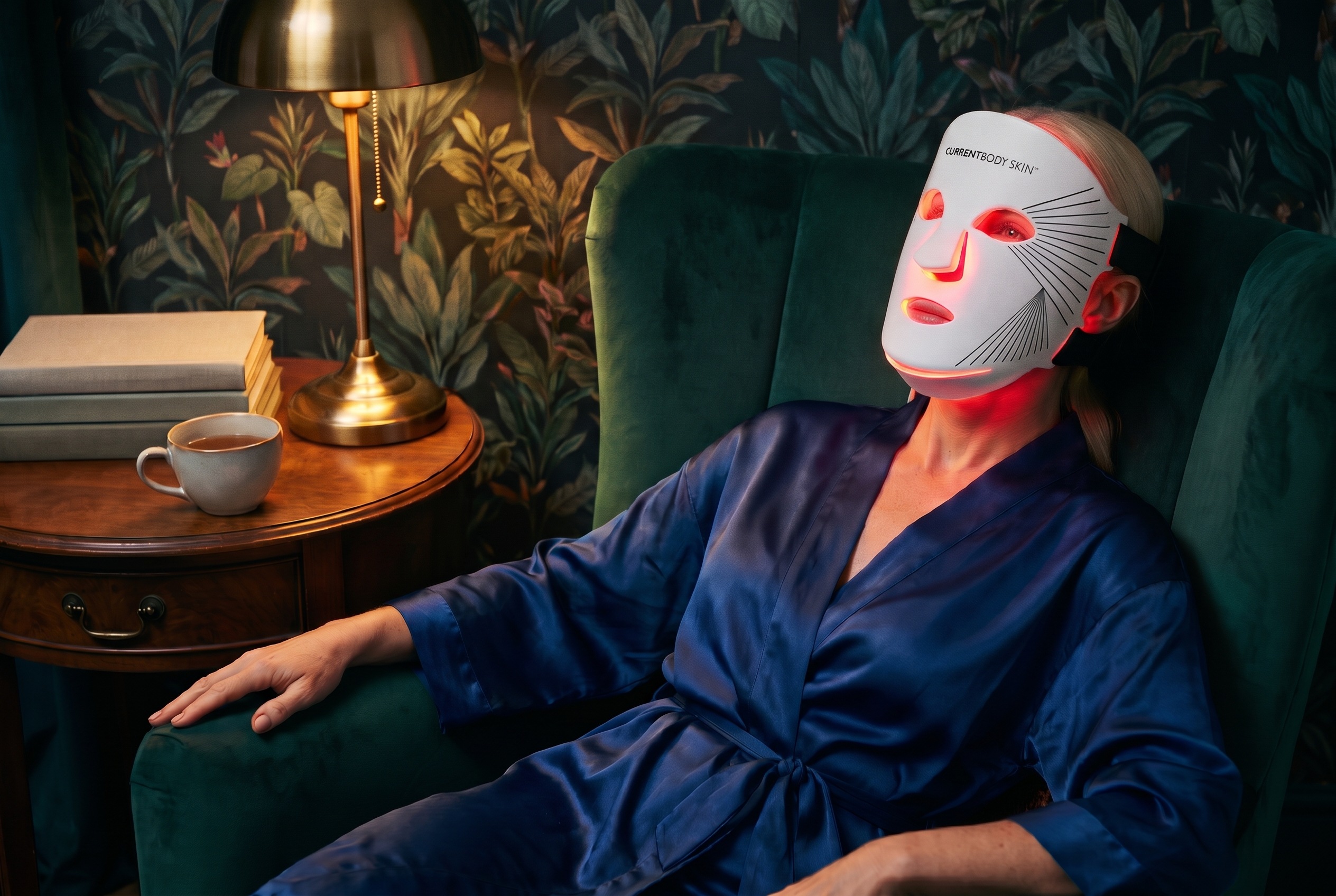
Coverage. CurrentBody lists 236 LEDs on the Series 2, set in a flexible silicone shape with a chin strap for the jawline. INIA’s own page lists 68 light beads on the GLOW. Light Therapy Insiders notes that the INIA GLOW’s LEDs are fairly spread out, so output drops sharply in the gaps between them.
A third wavelength. The Series 2 adds 16 deep near-infrared LEDs at 1072nm, which CurrentBody places under the eyes and around the mouth. The INIA GLOW pairs red with 850nm near-infrared and has no deep near-infrared channel.
Honest numbers. CurrentBody publishes 30 mW/cm² for the Series 2. INIA advertises up to 105 mW/cm² for the GLOW, while Light Therapy Insiders measured roughly 30 at the LED. The same real-world figure is more useful when the brand states it plainly.
For anti-aging, this is where INIA vs CurrentBody tips toward CurrentBody, and the Series 2 is also the simpler of its two masks. CurrentBody Series 3 vs Series 2 explains why the newer model’s extra colors matter mainly for breakouts and redness.
A walkthrough of the INIA GLOW Wireless on the Anna Katherine Page YouTube channel.
No cord at all. INIA’s magnetic controller snaps onto the side of the mask and powers it on. Two controllers come with it, and INIA rates them for up to 90 minutes of cordless runtime, so one can charge while the other is in use.
The right core wavelengths. Light Therapy Insiders measured the main channel at about 630nm red with 850nm near-infrared, which matches what INIA claims.
Cost. The INIA GLOW sells for a small fraction of the Series 2, which is the whole reason it gets compared to masks like it.
Two cautions. The “blue” acne channel measured at about 557 to 560nm in Light Therapy Insiders’ testing, which reads as green, and the amber channel measured at about 607 to 610nm. Treat the extra modes as a bonus, not the reason to buy. The INIA Red Light Therapy Mask review walks through the specs and the FDA paperwork in more detail.
In any INIA vs CurrentBody decision, the deciding question is whether you need the deeper channel and fuller coverage of the Series 2, or whether a lighter, cordless mask is the one you will actually wear three to five times a week.
Buy the CurrentBody Series 2 if fine lines and firmness are the goal, you want light across the whole face including the jawline, and a published, consistent spec sheet matters to you.
Buy the INIA GLOW if you want to try red light therapy without a big spend, you travel, or you know you will only stick with a mask that has no cord.
Look elsewhere if breakouts are the main concern. Neither mask has a measured true blue channel. INIA vs Omnilux Contour compares another mask that publishes its output.
CurrentBody’s own contraindications say not to use its mask if you are pregnant, planning a pregnancy or breastfeeding; if you have lupus, photosensitive eczema, albinism or another light-sensitive condition; if you take medication that can cause light sensitivity, such as certain antibiotics, chemotherapy drugs or diuretics; if light triggers headaches; or if you have an eye condition such as glaucoma or cataracts. The same cautions apply to both sides of INIA vs CurrentBody, and to any LED mask. If any of them apply, or you are unsure about a medication, check with your doctor before starting.
FAQ
Is the INIA GLOW as good as the CurrentBody Series 2?
For red and near-infrared light at the LED, it comes close: Light Therapy Insiders measured the INIA GLOW at roughly 30 mW/cm², the same figure CurrentBody publishes for the Series 2. The Series 2 still wins on coverage, with 236 LEDs against 68 light beads, plus a deep near-infrared 1072nm channel the INIA GLOW does not offer.
Is INIA a good brand?
INIA is a budget brand whose GLOW mask gets the basics right: red at about 630nm and near-infrared at about 850nm, both confirmed by independent spectrometer testing. The weak spot is its marketing. INIA advertises up to 105 mW/cm², while Light Therapy Insiders measured about 30. Buy it for the wireless design and the price, not the headline output number.
Are INIA products FDA approved?
No LED face mask is FDA approved; the right term is FDA cleared. INIA describes the GLOW Wireless as FDA cleared, but the clearance on file is held by the factory that builds it rather than by INIA itself, as the INIA review on this site explains. CurrentBody also describes the Series 2 as FDA cleared.
Is the CurrentBody Series 2 wireless?
Not in the way the INIA GLOW is. The CurrentBody Series 2 runs from a clip-on controller that charges over USB-C, with a cable between the controller and the mask, so you can move around during a session but the controller comes with you. The INIA GLOW snaps a magnetic battery straight onto the mask with no cable at all.
Which mask is better for acne?
Neither is a strong acne pick. The CurrentBody Series 2 has no blue light at all. The INIA GLOW lists a blue acne mode, but Light Therapy Insiders measured that channel at about 557 to 560nm, which is green rather than the 415 to 460nm blue used in acne research. For breakouts, a mask with true blue light is the better move.
How often should you use an LED face mask?
Both brands build their routines around 10 minute sessions. CurrentBody recommends 3 to 5 sessions a week for 8 weeks with the Series 2, and more is not better. Consistency matters far more than frequency, so pick a schedule you can keep, use clean, dry skin, and give it at least several weeks before judging any change in fine lines or firmness.
Sources
Sources checked on October 26, 2026. Figures from brands are reported as the brand’s own claims.
Leave a Reply