The short answer: for peach fuzz and a smoother makeup base, dermaplaning is the better pick. There is no pulling and no sting, it exfoliates while it removes hair, and there is no grow-out phase. Waxing is the better pick for darker, coarser hair on the upper lip or chin, because it pulls hair out at the root and one session lasts about three to four weeks. One rule settles it for a lot of people: if retinol or a prescription retinoid is part of your routine, waxing your face is the method dermatologists warn about.
A small blade glides over the skin and cuts hair at the surface
Wax grips the hair and pulls it out at the root
What comes off
Peach fuzz (vellus hair) and dead surface skin
The whole hair, root included
How long it lasts
Shorter. Hair is cut, not pulled, so regrowth shows sooner
About three to four weeks per session, per Cleveland Clinic
How often
No more than once a week, per a Cleveland Clinic dermatologist
Only once hair has grown back long enough for wax to grip
Hair length needed
None
About one-fourth to three-fourths of an inch, per the American Academy of Dermatology
How it feels
No pulling, so no sting
A quick sting with every pull
Skin bonus
Exfoliation, so skin feels smoother and makeup sits better
Some exfoliation, but that is not the point
Main risks
Nicks, a day or so of irritation, and flare-ups if used over active acne
Redness, ingrown hairs, inflamed follicles, and skin damage on retinoid-treated skin
Best for
Fine, light fuzz across the whole face
Dark or coarse hair in small areas like the upper lip and chin
What dermaplaning does well
Dermaplaning is exfoliation and hair removal in one pass. In Cleveland Clinic’s guide to dermaplaning at home, dermatologist Melissa Piliang, MD, describes it as taking dead skin cells and peach fuzz off the surface of the skin, which is why products may absorb better and makeup may go on more smoothly afterward. Her guidance on frequency is no more than once a week, so skin has time to recover.
The limits are just as clear. The same guidance says to wait out a breakout, because dermaplaning can aggravate existing acne, and to skip it during an eczema flare or any other active skin issue. Skin may feel a little irritated for a day or so, and a nick is a way in for infection, so a guarded tool beats a bare blade.
The dermaplaning tool to look at
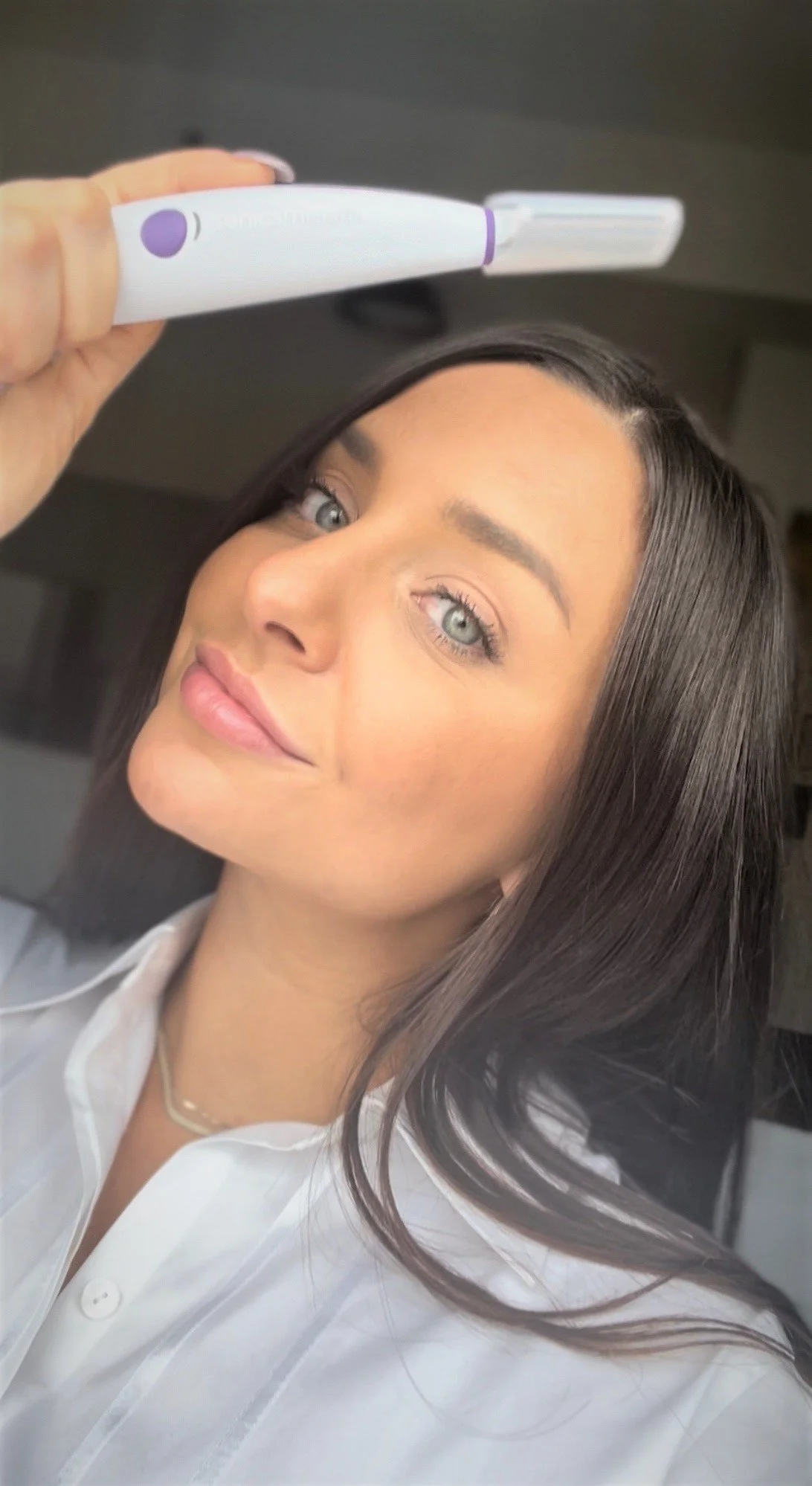
What works here is a sonic tool with a safety guard over the blade. The Michael Todd Sonicsmooth is the pick for most people: the brand lists sonic technology with three speeds and a patented safety guard, and says it removes peach fuzz and sideburns. Shop the Michael Todd Sonicsmooth.
Waxing wins on staying power. Because the hair comes out at the root, one session can last three to four weeks, according to Cleveland Clinic dermatologist Shilpi Khetarpal, MD. That makes it the stronger choice for dark, coarse hairs, the kind that show again quickly when they are only cut at the surface.
The trade-offs are the grow-out and the skin stress. Hair has to be about one-fourth to three-fourths of an inch long before wax can grip it, per the American Academy of Dermatology, so there is always a stretch of visible regrowth between sessions. Cleveland Clinic also lists inflamed follicles, redness, ingrown hairs, and irritation as possible side effects.
The rules dermatologists set for waxing your face
Pause retinol and prescription retinoids first. The American Academy of Dermatology says to avoid them for two to five days before waxing your face. Cleveland Clinic warns that waxing retinol-affected skin can cause abrasions, infection, and even scarring.
No waxing within six months of isotretinoin. That one comes straight from the American Academy of Dermatology.
Skip sunburned or very sensitive skin.
Watch the aftermath. If redness or swelling lasts more than two days, the Academy says to see a dermatologist.
The wax to look at
For a first try at home, the move is no-heat strips made for the face, since there is no hot wax to overheat. Nad’s Facial Wax Strips come as a kit with 20 strips, four calming oil wipes, and a skin protection powder, and the brand lists them for the face, chin, and upper lip. Nad’s also says not to wax the same facial area twice, because repeat passes can irritate delicate skin. See Nad’s Facial Wax Strips on Amazon.
Which one to pick, by situation
Light fuzz across the whole face: dermaplaning. It covers a large area gently, and there is nothing to grow out.
A few dark hairs on the upper lip or chin: waxing, for the weeks between sessions.
Makeup prep before an event: dermaplaning, done a day or two ahead in case skin feels irritated.
Retinol or tretinoin in your routine: waxing is the one with the formal warning and the two to five day pause. For timing actives around a dermaplaning session, see what to use after dermaplaning.
Active breakouts or an eczema flare: wait. Dermaplaning is off the table until skin calms down, and the American Academy of Dermatology says not to wax very sensitive skin.
No. Mayo Clinic states that shaving does not change hair’s thickness, color, or rate of growth. What changes is the tip: a cut hair has a blunt end, so it can feel coarser or look more noticeable while it grows out. Dr. Piliang makes the same point about dermaplaning. With waxing, Cleveland Clinic notes that hair can grow back thinner over time. More myths are covered in dermaplaning mistakes and side effects.
Can you do both?
Yes, on different areas. The split that makes sense is waxing the upper lip and chin and dermaplaning the cheeks, jaw, and forehead. The caution is not to stack them on the same patch of skin in one session, since both take off surface skin. And remember the grow-out: dermaplaning an area resets the clock on the length wax needs.
Want longer between sessions? Where at-home IPL fits
Dermaplaning and waxing are both temporary. For dark facial hair that keeps coming back, at-home IPL is the next step up, and the one to look at is the Nood Flasher Pro. Nood says it can be used anywhere on the face or body, except the eyebrows and the area immediately around the eyes, and lists it for black, brown, and dark blonde hair on fair to olive skin (Fitzpatrick I to IV). Check the Nood Flasher Pro on Amazon.
Two things to know before switching. First, Nood says IPL does not work on light blonde hair, so pale peach fuzz stays in dermaplaning territory. Second, Nood says to shave before each session and not to wax, pluck, thread, or epilate, because IPL needs the hair follicle intact. Waxing and IPL do not mix. The side by side on devices is in Nood Flasher Pro vs other IPL hair removal devices.
The verdict
Pick dermaplaning if the goal is a fuzz-free, smoother face with no grow-out and no sting. Pick waxing if the hair is dark or coarse and three to four weeks between sessions matters more than comfort. Look at IPL if you are tired of repeating either one.
For fine peach fuzz, yes: there is no sting, it exfoliates, and it needs no grow-out. For dark or coarse hair, waxing is better because it removes the root and lasts about three to four weeks.
Which lasts longer, dermaplaning or waxing?
Waxing. One session can last three to four weeks, per Cleveland Clinic. Dermaplaning cuts hair at the surface, so regrowth shows sooner, and it can be repeated as often as once a week.
Is waxing or dermaplaning better for the upper lip?
It depends on the hair. Dark, coarse upper lip hair is a waxing job. Fine, light fuzz is easier and gentler to dermaplane.
Can you dermaplane after waxing?
Not on the same area in the same session. Let waxed skin settle fully first, and keep in mind that wax needs about a quarter inch of growth, so dermaplaning a waxed area pushes back the next wax.
Does hair grow back thicker after dermaplaning or waxing?
No. Mayo Clinic says cutting hair does not change its thickness, color, or rate of growth. A blunt tip can feel coarser for a while, and that is all.
Can you wax your face if you use retinol?
Not without a pause. The American Academy of Dermatology says to stop retinol and prescription retinoids two to five days before waxing your face, and not to wax at all within six months of taking isotretinoin.
Sources: Cleveland Clinic, Is It OK To Try Dermaplaning at Home? (Melissa Piliang, MD) and Shaving vs. Waxing: Benefits, Cons and Results (Shilpi Khetarpal, MD). American Academy of Dermatology, Hair Removal: How to Wax. Mayo Clinic expert answer on shaving and hair regrowth. Michael Todd Beauty, Dermaflash, Nad’s, and Nood product pages, checked October 2026. This post is general information, not medical advice. Talk to a dermatologist about your own skin.
Quick verdict: The Michael Todd Beauty Sonicsmooth Pro+ is the at-home dermaplaning tool to look at for most people. The sonic vibration makes it faster and less nick-prone than a manual dermaplaning razor, it has three speeds, and it comes with a 3-year warranty.
See the full routine start to finish, including technique, speed settings, and results.
What is the Michael Todd Beauty Sonicsmooth?
The Sonicsmooth is a sonic dermaplaning system, a cordless tool that uses a fine, single-use blade vibrating at 15,000 sonic movements per minute (250 plus per second) to exfoliate dead skin and remove peach fuzz. Unlike a plain dermaplaning razor, the sonic motion does the work for you, so you glide instead of scrape. That is what makes it gentler on sensitive skin and easier for beginners.
Dermaplaning at a spa typically runs about $100 per treatment. The Sonicsmooth pays for itself after roughly one visit, and you can do it at home whenever you want smoother skin or a flawless makeup base.
Sonicsmooth specs at a glance
Feature
Detail
Sonic speed
15,000 movements per minute (250 plus per second)
Speed settings
3 adjustable levels
Blades included
16 single-use, medical-grade stainless steel
LED
Built-in light on the safety tip
Power
USB rechargeable, cordless, wireless charging cradle
Warranty
3 years
Also includes
2 microdermabrasion tips
Awards
Allure Readers’ Choice, Best Tool Breakthrough
Sonicsmooth vs Sonicsmooth Pro+: Michael Todd sells two versions. The specs above and the buttons on this page are for the Pro+, the kit with 16 single-use blades and two microdermabrasion tips. The base Sonicsmooth is a separate listing with the same three speeds and 3-year warranty, so check which one is in the cart. For what to do with those two tips, see How to Use the Michael Todd Microdermabrasion Tip.
Genuinely painless. The sonic vibration means no tugging or razor burn, even around the jaw and upper lip.
Smoother makeup, instantly. Foundation sits more smoothly on freshly dermaplaned skin. This is the benefit most people notice first.
Three speed settings. Lower speed on the cheeks, higher for denser peach fuzz. Most competitors have one speed.
Best-in-class warranty. A 3-year warranty on a tool at this price is a sign the brand stands behind it.
Cordless and wireless charging. Charges on the cradle, travels easily, no cords in the bathroom.
Tiny cost per use. One spa dermaplaning visit costs about the same as the whole device.
What to keep in mind
You will rebuy blades. The single-use tips are consumable. Budget for refills a few times a year, still far cheaper than the spa.
Technique matters at first. Your first session has a small learning curve: short, light strokes on clean, dry skin. The step-by-step guide walks you through it.
Not for active acne. Skip dermaplaning over active breakouts or raised blemishes. See the safety guide.
Sonicsmooth vs. Dermaflash Luxe+ (honest comparison)
The Dermaflash Luxe+ is the other big name. Here is the straight comparison so you can choose for yourself:
Sonicsmooth Pro+
Dermaflash Luxe+
Speed settings
3
1
Warranty
3 years
Not stated
Blades in box
16
Fewer
Extras
2 microdermabrasion tips, LED tip
PREFLASH cleanser included
Best for
Control, value, longevity
Simplicity, included cleanser
Bottom line: If you want the included cleanser and the simplest one-button experience, Dermaflash is a fine pick. If you want more control with 3 speeds and a 3-year warranty, the Sonicsmooth Pro+ wins. The full side by side is in Dermaflash vs Michael Todd.
Buy it if you want smoother skin, better makeup application, and painless peach-fuzz removal without paying for repeat spa visits. It is especially good for dermaplaning beginners because the sonic motion is forgiving. Skip it for now if you have active acne or very reactive, broken skin.
How to use it (the short version)
Start with clean, completely dry skin.
Hold skin taut and use short, light, downward strokes at about a 45 degree angle.
Go slow around the jaw and upper lip.
Follow with a hydrating serum and SPF. Freshly dermaplaned skin loves product and needs sun protection.
Also looking at hair removal? Dermaplaning clears peach fuzz for a week or two. For hair that keeps coming back on legs, underarms or the bikini line, at-home IPL is the next step up, and the one to look at is the Nood Flasher Pro, the only at-home IPL device with an energy figure in a public FDA file.
For most people, yes. If you dermaplane even a few times a year it replaces repeat spa visits, and the 3-year warranty makes it low risk.
Does dermaplaning make hair grow back thicker?
No. Dermaplaning cuts fine vellus hair straight across at the surface. It does not change the hair’s thickness or color, and it grows back exactly as before. More in the myths and mistakes post.
How often should I use it?
Most people dermaplane every 1 to 2 weeks to let the skin’s surface renew between sessions.
Does it hurt?
No. The sonic vibration is what keeps it painless, with no razor burn or tugging when you use light strokes on dry skin.
The Sonicsmooth Pro+ comes with a 3-year warranty and 16 blades in the box. It is the at-home dermaplaning tool to look at for salon-smooth skin without repeat salon visits.