(function(){try{var q=window.location.search;var m=q.match(/[?&]akp_notrack=([01])/);if(m){document.cookie='akp_notrack='+m[1]+';path=/;max-age='+(m[1]==='1'?15552000:0)+';SameSite=Lax';}var armed=/(^|; )akp_notrack=1(;|$)/.test(document.cookie)||(m&&m[1]==='1');if(armed&&!window.fbq){var n=function(){};n.queue=[];n.loaded=true;n.version='2.0';n.callMethod=function(){};window.fbq=n;window._fbq=n;}}catch(e){}})();
https://annakatherinepage.com/wp-content/plugins/burst-statistics/assets/js/timeme/timeme.min.js
var breeze_prefetch = {"local_url":"https://annakatherinepage.com","ignore_remote_prefetch":"1","ignore_list":["/?wc-api=wc_facebook_get_feed_data&secret=1760aef9e5a5d06e2a1f0f642c457ce5","/cart/","/checkout/","/my-account/","wp-admin","wp-login.php"]};
//# sourceURL=breeze-prefetch-js-extra
https://annakatherinepage.com/wp-content/plugins/breeze/assets/js/js-front-end/breeze-prefetch-links.min.js
https://annakatherinepage.com/wp-includes/js/jquery/jquery.min.js
https://annakatherinepage.com/wp-includes/js/jquery/jquery-migrate.min.js
https://annakatherinepage.com/wp-content/plugins/woocommerce/assets/js/jquery-blockui/jquery.blockUI.min.js
var wc_add_to_cart_params = {"ajax_url":"/wp-admin/admin-ajax.php","wc_ajax_url":"/?wc-ajax=%%endpoint%%","i18n_view_cart":"View cart","cart_url":"https://annakatherinepage.com/checkout/","is_cart":"","cart_redirect_after_add":"no"};
//# sourceURL=wc-add-to-cart-js-extra
https://annakatherinepage.com/wp-content/plugins/woocommerce/assets/js/frontend/add-to-cart.min.js
https://annakatherinepage.com/wp-content/plugins/woocommerce/assets/js/js-cookie/js.cookie.min.js
var woocommerce_params = {"ajax_url":"/wp-admin/admin-ajax.php","wc_ajax_url":"/?wc-ajax=%%endpoint%%","i18n_password_show":"Show password","i18n_password_hide":"Hide password"};
//# sourceURL=woocommerce-js-extra
https://annakatherinepage.com/wp-content/plugins/woocommerce/assets/js/frontend/woocommerce.min.js
window.__wc_fb_page_generated = 1792955423;
!function(f,b,e,v,n,t,s){if(f.fbq)return;n=f.fbq=function(){n.callMethod?
n.callMethod.apply(n,arguments):n.queue.push(arguments)};if(!f._fbq)f._fbq=n;
n.push=n;n.loaded=!0;n.version='2.0';n.queue=[];t=b.createElement(e);t.async=!0;
t.src=v;s=b.getElementsByTagName(e)[0];s.parentNode.insertBefore(t,s)}(window,
document,'script','https://connect.facebook.net/en_US/fbevents.js');
window.FacebookSignals = window.FacebookSignals || {
_held: false,
_releasing: false,
_pixelInitialized: false,
_pixelId: null,
_pixelUserInfo: {},
_pixelOptions: {},
_pendingPixelEvents: [],
_queue: [],
_config: {},
_attribution: {},
_seenEventIds: {},
_fbclid: (function() {
try {
var m = window.location.search.match(/[?&]fbclid=([^&]*)/);
return m ? decodeURIComponent(m[1]) : null;
} catch(e) { return null; }
})(),
init: function(config) {
config = config || {};
this._config = config;
this._attribution = config.attribution || {};
var cookieState = this._getCookie('wc_facebook_signals_state');
this._held = cookieState ? cookieState === 'held' : !!config.held;
this._fbclid = this._fbclid || null;
if (typeof fbq === 'function') {
fbq('consent', this._held ? 'revoke' : 'grant');
}
try {
var raw = window.sessionStorage.getItem('wc_facebook_signals_seen_event_ids');
this._seenEventIds = raw ? JSON.parse(raw) : {};
} catch (e) {
this._seenEventIds = this._seenEventIds || {};
}
},
initPixel: function(pixelId, userInfo, options) {
this._pixelId = pixelId;
this._pixelUserInfo = userInfo && typeof userInfo === 'object' && !Array.isArray(userInfo) ? userInfo : {};
this._pixelOptions = options || {};
if (!this._held) {
this._runPixelInit();
}
},
_runPixelInit: function() {
if (this._pixelInitialized || !this._pixelId || typeof fbq !== 'function') return;
fbq('init', this._pixelId, this._pixelUserInfo, this._pixelOptions);
this._pixelInitialized = true;
this._flushPendingPixelEvents();
},
_flushPendingPixelEvents: function() {
var pending = this._pendingPixelEvents;
this._pendingPixelEvents = [];
for (var i = 0; i < pending.length; i++) {
var ev = pending[i];
this._firePixelEvent(ev.name, ev.params, ev.method, ev.eventId);
}
},
_fireOrQueuePixelEvent: function(name, params, method, eventId) {
if (!this._pixelInitialized) {
this._pendingPixelEvents.push({
name: name, params: params || {}, method: method || 'track', eventId: eventId || null
});
return;
}
this._firePixelEvent(name, params || {}, method || 'track', eventId || null);
},
_firePixelEvent: function(name, params, method, eventId) {
method = method || 'track';
if (eventId) {
fbq(method, name, params || {}, { eventID: eventId });
} else {
fbq(method, name, params || {});
}
},
queueEvent: function(eventData) {
if (!eventData || !eventData.event_name) return;
var originalId = eventData.event_id || null;
if (originalId && this._seenEventIds[originalId]) return;
if (!this._held) {
this._fireOrQueuePixelEvent(eventData.event_name, eventData.custom_data || {}, eventData.method || 'track', originalId);
return;
}
eventData = this._cloneEventData(eventData);
eventData.event_id = this._generateEventId();
eventData.event_time = eventData.event_time || Math.floor(Date.now() / 1000);
this._queue.push(eventData);
var idToMark = originalId || eventData.event_id;
if (idToMark) {
this._seenEventIds[idToMark] = 1;
try {
window.sessionStorage.setItem(
'wc_facebook_signals_seen_event_ids',
JSON.stringify(this._seenEventIds)
);
} catch (e) {}
}
},
trackEvent: function(name, params, userData, method, eventId) {
method = method || 'track';
eventId = eventId || (params && params.eventID) || null;
if (this._held) {
this.queueEvent({
event_name: name,
custom_data: params || {},
event_id: eventId,
event_time: Math.floor(Date.now() / 1000),
method: method
});
} else {
this._fireOrQueuePixelEvent(name, params || {}, method, eventId);
}
},
release: function() {
var self = this;
if (!self._held || self._releasing || !self._config.ajaxUrl) {
return Promise.resolve({ success: true, data: { sent_count: 0 } });
}
self._releasing = true;
var attribution = self._collectAttribution();
var payload = JSON.stringify({
events: self._queue,
attribution: {
fbp: attribution.fbp || null,
fbc: attribution.fbc || null
},
fbclid: self._fbclid || null
});
var url = self._config.ajaxUrl +
(self._config.ajaxUrl.indexOf('?') === -1 ? '?' : '&') +
'action=' + encodeURIComponent(self._config.action);
return new Promise(function(resolve, reject) {
var xhr = new XMLHttpRequest();
xhr.open('POST', url, true);
xhr.setRequestHeader('Content-Type', 'application/json');
xhr.onload = function() {
if (xhr.status >= 200 && xhr.status < 300) {
try {
var resp = JSON.parse(xhr.responseText);
self._handleReleaseResponse(resp.data || {}, attribution);
resolve(resp);
} catch(e) { self._releasing = false; reject(e); }
} else {
self._releasing = false;
reject(new Error('Signal release AJAX failed: ' + xhr.status));
}
};
xhr.onerror = function() { self._releasing = false; reject(new Error('Network error')); };
xhr.send(payload);
});
},
_handleReleaseResponse: function(data, attribution) {
this._syncAttributionCookies(data || {}, attribution);
// Override cached user_info with fresh data from the release response.
if (data.user_info && typeof data.user_info === 'object' && !Array.isArray(data.user_info)) {
this._pixelUserInfo = data.user_info;
}
this._held = false;
this._releasing = false;
fbq('consent', 'grant');
this._runPixelInit();
var queue = this._queue;
for (var i = 0; i < queue.length; i++) {
var ev = queue[i];
this._fireOrQueuePixelEvent(ev.event_name, ev.custom_data || {}, ev.method || 'track', ev.event_id || null);
}
this._queue = [];
},
_collectAttribution: function() {
var clientParams = {};
if (typeof clientParamBuilder !== 'undefined') {
try {
clientParams = clientParamBuilder.processAndCollectParams(this._getAttributionUrl()) || {};
} catch (e) {}
}
var fbp = this._getCookie('_fbp') || clientParams._fbp || (typeof clientParamBuilder !== 'undefined' ? clientParamBuilder.getFbp() : null);
var fbc = this._getCookie('_fbc') || clientParams._fbc || (typeof clientParamBuilder !== 'undefined' ? clientParamBuilder.getFbc() : null);
if (!fbc && this._fbclid) {
fbc = 'fb.1.' + Date.now() + '.' + this._fbclid;
}
return { fbp: fbp || null, fbc: fbc || null };
},
_syncAttributionCookies: function(data, attribution) {
var fbp = data.fbp || (attribution && attribution.fbp) || null;
var fbc = data.fbc || (attribution && attribution.fbc) || null;
if (fbp) {
this._setAttributionCookie('_fbp', fbp, data.fbp_domain || null);
}
if (fbc) {
this._setAttributionCookie('_fbc', fbc, data.fbc_domain || null);
}
},
_setAttributionCookie: function(name, value, domain) {
if (!value) return;
var domainAttr = domain ? ';domain=' + domain : '';
document.cookie = name + '=' + encodeURIComponent(value) + ';path=/;max-age=7776000' + domainAttr + ';SameSite=Lax';
},
_getCookie: function(name) {
var match = document.cookie.match(new RegExp('(?:^|;\\s*)' + name.replace(/[.*+?^${}()|[\]\\]/g, '\\$&') + '=([^;]*)'));
if (!match) return null;
try { return decodeURIComponent(match[1]); } catch(e) { return null; }
},
_cloneEventData: function(eventData) {
var clone = {};
for (var key in eventData) {
if (Object.prototype.hasOwnProperty.call(eventData, key)) {
clone[key] = eventData[key];
}
}
return clone;
},
_generateEventId: function() {
if (window.crypto && typeof window.crypto.randomUUID === 'function') {
return window.crypto.randomUUID();
}
return 'xxxxxxxx-xxxx-4xxx-yxxx-xxxxxxxxxxxx'.replace(/[xy]/g, function(c) {
var r = Math.random() * 16 | 0;
return (c === 'x' ? r : (r & 0x3 | 0x8)).toString(16);
});
},
_getAttributionUrl: function() {
if (!this._fbclid) return window.location.href;
try {
var url = new URL(window.location.href);
if (!url.searchParams.get('fbclid')) {
url.searchParams.set('fbclid', this._fbclid);
}
return url.toString();
} catch (e) {
return window.location.href;
}
}
};
FacebookSignals.init({
held: false,
ajaxUrl: "https:\/\/annakatherinepage.com\/wp-admin\/admin-ajax.php",
action: 'facebook_release_signals',
pixelId: "5552345558112956",
attribution: {}
});
FacebookSignals.initPixel(
"5552345558112956",
{},
{"agent":"woocommerce_0-11.2.1-3.7.8"} );
document.addEventListener( 'DOMContentLoaded', function() {
document.body.insertAdjacentHTML( 'beforeend', '<div class=\"wc-facebook-pixel-event-placeholder\"></div>' );
}, false );
Skip to content
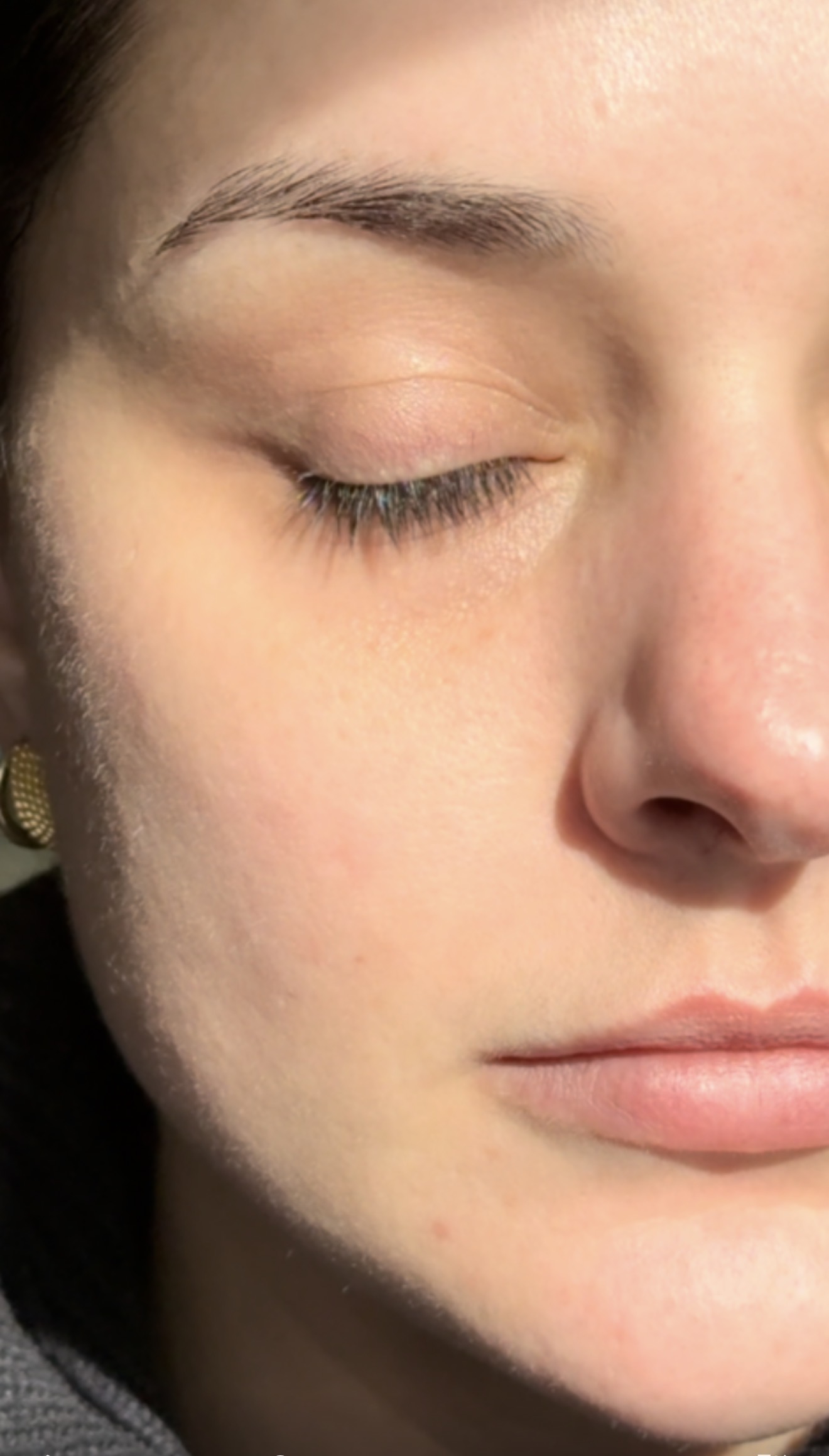
Is At-Home Dermaplaning Safe? What Dermatologists Actually Say
Disclosure
This post contains affiliate links, which means I may earn a small commission if you make a purchase through my links, at no extra cost to you.
The short answer Yes. At-home dermaplaning is generally safe for most skin types when done on dry, clean skin with the right tool and a gentle 45-degree angle. The main risks are nicks, over-exfoliation, and bacteria from reusing a dull blade. Avoid it if you have active acne, eczema, rosacea, or a raised mole in the area.
Some links in this post are affiliate links. If you buy through them I earn a small commission at no extra cost to you. I only recommend things I have actually used.
Dermaplaning simply removes vellus hair, the fine peach fuzz, and dead surface skin with a fine blade. Done properly it is low-risk, but technique matters more than with almost any other at-home treatment. Here is what determines whether it is safe for you.
Who should not dermaplane at home
Active or cystic acne, where the blade can spread bacteria and irritate breakouts.
Eczema, rosacea, or psoriasis flare-ups.
Very sensitive or compromised skin barriers.
Over raised moles, skin tags, or open blemishes.
How to keep it safe
Always start with dry, clean skin, use short downward strokes at a 45-degree angle, and never reuse a single-use blade. A tool with a built-in guard reduces nick risk for beginners, so see the best at-home dermaplaning tools for 2026 . Full technique in how to dermaplane at home .
At-home or professional?
At-home tools only skim the surface, which is exactly why they are safer for DIY than a professional scalpel dermaplane, which goes deeper and should be left to a licensed pro. For everyday smoothness and peach-fuzz removal, at-home is worth it and low-risk.
Frequently asked
Is dermaplaning bad for your skin? No, not when done correctly. It exfoliates the surface; problems come from bad technique, dull blades, or using it on skin that should not be dermaplaned.
Can you dermaplane over active acne? No. Avoid any area with active breakouts to prevent spreading bacteria and irritation.
How often is it safe to dermaplane? Oily skin every three to four weeks, dry every four to six weeks, sensitive every six to eight weeks, and dermatologists cap it at once a week maximum.
Your cart
(items: 0)
Products in cart
Available on backorder
Previous price:
Discounted price:
Your shopping cart is empty
(function () {
var c = document.body.className;
c = c.replace(/woocommerce-no-js/, 'woocommerce-js');
document.body.className = c;
})();
https://annakatherinepage.com/wp-includes/js/comment-reply.min.js
https://annakatherinepage.com/wp-includes/js/dist/hooks.min.js
https://annakatherinepage.com/wp-includes/js/dist/i18n.min.js
wp.i18n.setLocaleData( { 'text direction\u0004ltr': [ 'ltr' ] } );
//# sourceURL=wp-i18n-js-after
https://annakatherinepage.com/wp-includes/js/dist/private-apis.min.js
https://annakatherinepage.com/wp-includes/js/dist/url.min.js
https://annakatherinepage.com/wp-includes/js/dist/api-fetch.min.js
wp.apiFetch.use( wp.apiFetch.createRootURLMiddleware( "https://annakatherinepage.com/wp-json/" ) );
wp.apiFetch.nonceMiddleware = wp.apiFetch.createNonceMiddleware( "0d85342746" );
wp.apiFetch.use( wp.apiFetch.nonceMiddleware );
wp.apiFetch.use( wp.apiFetch.mediaUploadMiddleware );
wp.apiFetch.nonceEndpoint = "https://annakatherinepage.com/wp-admin/admin-ajax.php?action=rest-nonce";
//# sourceURL=wp-api-fetch-js-after
https://annakatherinepage.com/wp-content/uploads/burst/js/burst.min.js
var wc_facebook_signals_params = {"ajax_url":"https://annakatherinepage.com/wp-admin/admin-ajax.php","nonce":"10c47ff36d","action":"wc_facebook_update_signals_state"};
//# sourceURL=wc-facebook-signals-js-extra
https://annakatherinepage.com/wp-content/plugins/facebook-for-woocommerce/assets/js/facebook-for-woocommerce-signals.js
https://annakatherinepage.com/wp-content/plugins/woocommerce/assets/js/sourcebuster/sourcebuster.min.js
var wc_order_attribution = {"params":{"lifetime":1.0e-5,"session":30,"base64":false,"ajaxurl":"https://annakatherinepage.com/wp-admin/admin-ajax.php","prefix":"wc_order_attribution_","allowTracking":true},"fields":{"source_type":"current.typ","referrer":"current_add.rf","utm_campaign":"current.cmp","utm_source":"current.src","utm_medium":"current.mdm","utm_content":"current.cnt","utm_id":"current.id","utm_term":"current.trm","utm_source_platform":"current.plt","utm_creative_format":"current.fmt","utm_marketing_tactic":"current.tct","session_entry":"current_add.ep","session_start_time":"current_add.fd","session_pages":"session.pgs","session_count":"udata.vst","user_agent":"udata.uag"}};
//# sourceURL=wc-order-attribution-js-extra
https://annakatherinepage.com/wp-content/plugins/woocommerce/assets/js/frontend/order-attribution.min.js
https://annakatherinepage.com/wp-content/plugins/facebook-for-woocommerce/assets/js/frontend/pixel-events.js
(function() {
var processParams = function() {
if (typeof clientParamBuilder !== "undefined" && !/(?:^|;\s*)wc_facebook_signals_state=held(?:;|$)/.test(document.cookie)) {
clientParamBuilder.processAndCollectAllParams(window.location.href);
}
};
if (typeof clientParamBuilder !== "undefined") {
processParams();
return;
}
var fallbackScript = document.createElement("script");
fallbackScript.src = "https:\/\/unpkg.com\/meta-capi-param-builder-clientjs@1.3.2\/dist\/clientParamBuilder.bundle.js";
fallbackScript.onload = processParams;
document.head.appendChild(fallbackScript);
}());
//# sourceURL=facebook-capi-param-builder-js-after
/* WooCommerce Facebook Integration Event Tracking */
fbq('set', 'agent', (function(){var a='woocommerce_0-11.2.1-3.7.8';if(window.__wc_fb_page_generated&&(Math.floor(Date.now()/1000)-window.__wc_fb_page_generated)>1800){a=a.replace(/(\d+\.\d+\.\d+)/,'$1_c');}return a;})(), '5552345558112956');
window.wcFacebookPixelFiredEvents = window.wcFacebookPixelFiredEvents || {};
if (!window.wcFacebookPixelFiredEvents["e8cea749-76b1-4d2a-b9e9-2ebd65798f52"]) {
window.wcFacebookPixelFiredEvents["e8cea749-76b1-4d2a-b9e9-2ebd65798f52"] = true;
var isStale = window.__wc_fb_page_generated && (Math.floor(Date.now()/1000) - window.__wc_fb_page_generated) > 1800;
if (window.FacebookSignals && typeof window.FacebookSignals.trackEvent === 'function') {
window.FacebookSignals.trackEvent('PageView', {
"source": "woocommerce_0",
"version": "11.2.1",
"pluginVersion": "3.7.8"
}, null, 'track', isStale ? null : "e8cea749-76b1-4d2a-b9e9-2ebd65798f52");
} else if (isStale) {
fbq('track', 'PageView', {
"source": "woocommerce_0",
"version": "11.2.1",
"pluginVersion": "3.7.8"
});
} else {
fbq('track', 'PageView', {
"source": "woocommerce_0",
"version": "11.2.1",
"pluginVersion": "3.7.8"
}, {
"eventID": "e8cea749-76b1-4d2a-b9e9-2ebd65798f52"
});
}
}
//# sourceURL=facebook-for-woocommerce-inline-js-after
(function(){
function rgb(c){var m=(c||"").match(/[0-9.]+/g);return m?m.map(Number):null;}
function lum(a){return (0.299*a[0]+0.587*a[1]+0.114*a[2])/255;}
function effbg(el){var n=el;while(n){var c=rgb(getComputedStyle(n).backgroundColor);if(c&&(c.length<4||c[3]>0.5))return c;n=n.parentElement;}return null;}
var sel="main h1,main h2,main h3,main h4,main p,main li,main span,#frc h1,#frc h2,#frc h3,#frc p,#frc span,#frc li";
document.querySelectorAll(sel).forEach(function(t){
var bg=effbg(t);
if(!bg) return;
if(lum(bg)<0.30){
var fc=rgb(getComputedStyle(t).color);
if(fc && lum(fc)<0.5){ t.style.setProperty("color","#f7f1e6","important"); }
}
});
})();
Leave a Reply