Disclosure
This post contains affiliate links, which means I may earn a small commission if you make a purchase through my links, at no extra cost to you.
Nood vs Michael Todd Lumos IPL: for most shoppers, the Nood Flasher Pro is the pick. It is the only one of the two that publishes its energy output on the product page, and it ships with a second lens for skin in the same box. The Michael Todd Lumos IPL is the pick if you only want hair removal and care most about a built-in skin sensor, nine power levels, protective glasses in the box, and the 3-year limited warranty on its Amazon listing. Here’s what to look for before you choose.
Pick the Nood Flasher Pro if you want a published energy figure, a hair lens and a skin lens in one kit, and a session every few days instead of several a week.
Pick the Michael Todd Lumos IPL if you want hair removal only, more power steps to fine tune, a skin sensor the brand lists by name, and a longer warranty on paper.
Skip both if your skin is deep brown to black or your hair is very light blonde, red, white, or gray. Both brands say IPL needs contrast between dark hair and lighter skin.
Same on both: a glide mode for large areas, built-in cooling, a skin safety test before the first session, and maintenance sessions after the first round.
Nood vs Michael Todd Lumos, side by side
This table compares the Nood Flasher Pro with the Michael Todd Lumos IPL, using what each brand’s own pages and Amazon listings say. Prices move with sales, so check today’s price on the listing.
Nood Flasher Pro
Michael Todd Lumos IPL
Energy figure on the product page
7 J/cm²
None listed
Treatment window
3 cm²
None listed
Power levels
5
9
Modes
Continuous Glide Mode and a Large Treatment Mode
Quick Glide Mode (a flash every 0.7 seconds) and Precision Mode
Cooling
CryoSoothe cooling
CoolMax, described as a 50°F contact temperature
Skin sensor
Not listed on the Flasher Pro page
Built-in skin sensor
Flash count
Lifetime flash guarantee, no count on the page
999,999 flashes
Second lens for skin
Yes, the Ageless lens is included
None listed
Glasses in the box
Not listed
Protective glasses included
Brand schedule
Every 3 days for up to 12 weeks, then monthly
Two versions: 3 times a week for the first month on the product page, once a week for 12 weeks in the brand’s FAQ
Face
Yes, except the eyebrows and the area around the eyes
The lower face, per the brand’s FAQ. Never the eyes
Skin tones ruled out
Brown to dark brown or black (Fitzpatrick V to VI)
Very deep skin tones
Money-back window
90 days on purchases from Nood’s own sites, minus a restocking fee
30 days on the brand’s site
Warranty
Nood’s warranty page covers one year and is written for the Flasher 2.0
3-year limited warranty, per the Amazon listing
FDA wording on the page
No FDA claim on the product page
Says FDA-cleared Class II medical device, no clearance number given
Michael Todd Beauty is the same brand behind the Sonicsmooth dermaplaning tool covered in the Michael Todd Sonicsmooth Pro+ Review and Buyer Guide. The Lumos is its IPL hair removal device, sold on Amazon by the Michael Todd Official Store.
The biggest difference: what each brand publishes
At-home IPL handsets look alike in photos. The published numbers are what let you compare them, and this is where the two brands split.
Nood’s product page lists 7 J/cm² of energy, a 3 cm² treatment window, a 510 to 1200 nm range for the Hairless lens, and a 560 to 1100 nm range for the Ageless lens. The Lumos page lists nine power levels, 999,999 flashes, and a 50°F cooling claim, with no energy figure and no window size.
A published number is not proof of results. It does give you something to hold the brand to, and something to line up against other devices. How Nood’s figures compare with the rest of the category is in Nood Flasher Pro vs Other IPL Devices, and another matchup with an unlisted energy figure is in Nood Flasher Pro vs Ulike Air 10.
Where the Lumos wins
More power steps. Nine levels against Nood’s five. The brand pitches the range as a way to go gentle on delicate facial hair and stronger on coarse body hair.
A named skin sensor. The Lumos page and listing both call out a built-in skin sensor. The Flasher Pro page does not mention one.
Glasses in the box. Protective glasses ship with the Lumos, along with a razor and a storage pouch. Nood’s box list is the handset, two lenses, a power adapter, and a manual.
A longer warranty on paper. The Amazon listing says the Lumos carries a 3-year limited warranty. Keep the order confirmation in case you need it.
A printed flash count. 999,999 flashes. Nood promises a lifetime flash guarantee and gives no count on the product page.
The energy figure is public. Energy, wavelength, and window size are all on the product page. The Lumos page gives none of the three.
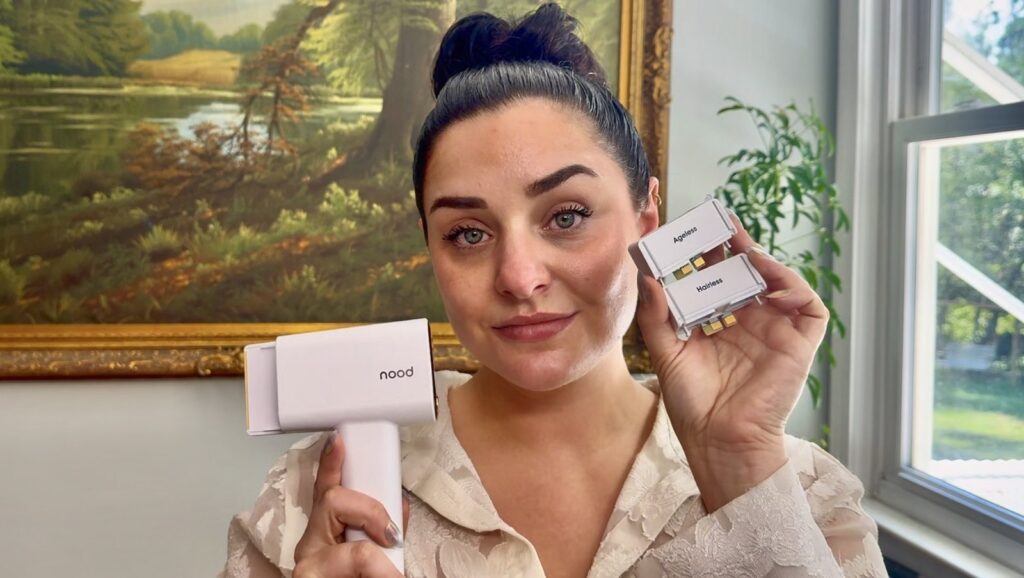
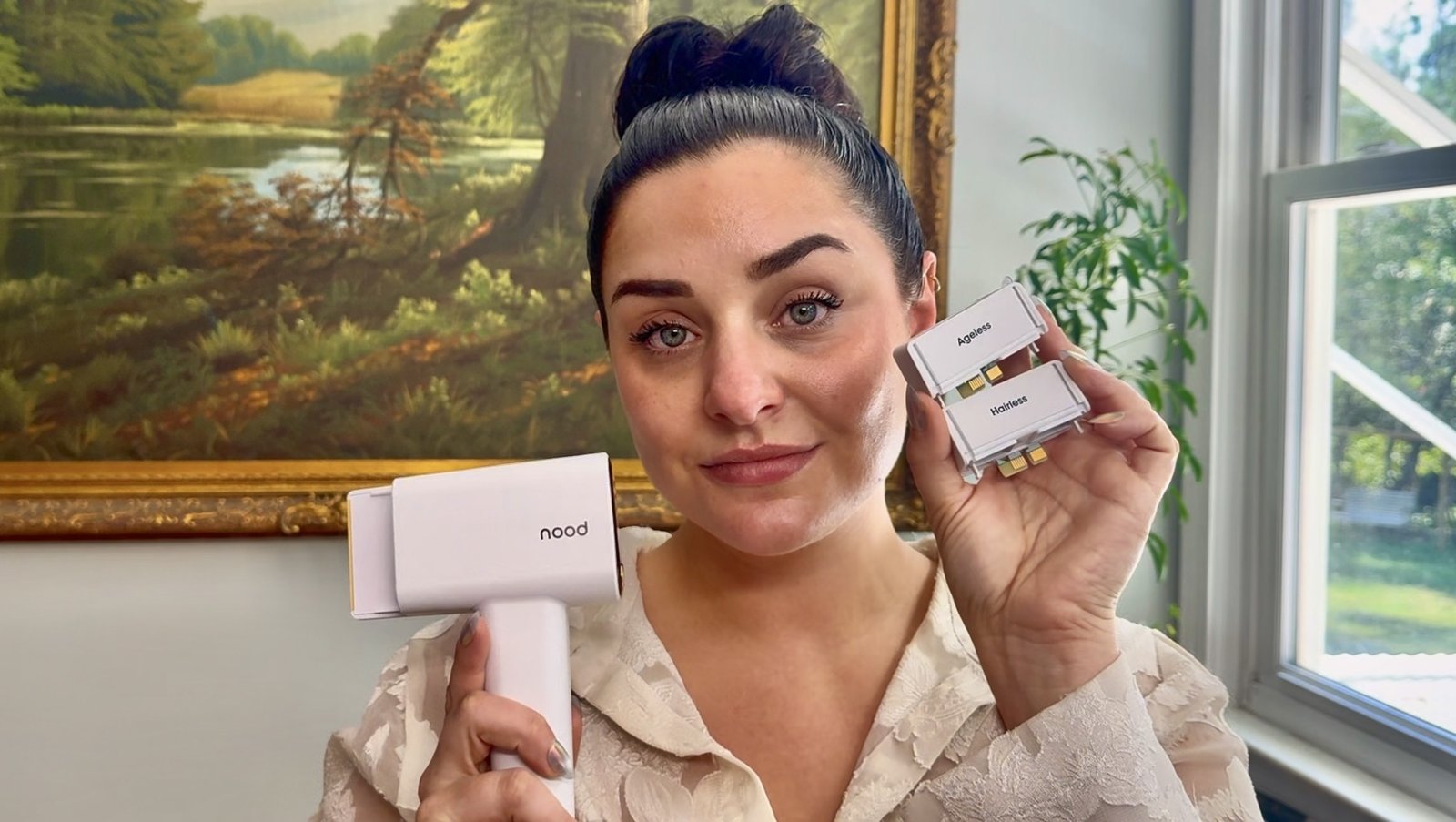
Two lenses in one kit. The Flasher Pro ships with the Hairless lens for hair and the Ageless lens for skin. The Lumos is a hair removal device only. The difference between Nood’s two lenses is in Nood Hairless vs Ageless Lens, and the skin lens has its own review with a video walkthrough.
A clear schedule. Nood’s page gives one plan: a session every 3 days for up to 12 weeks, then monthly. Michael Todd’s product page and FAQ give two different starting schedules, so you have to pick one.
A longer money-back window. Nood’s 90-day guarantee beats the 30 days on the Lumos page. The catch: Nood’s applies only to purchases on its own sites and takes off a restocking fee. Amazon buyers should check the return window on the listing.
The Flasher Pro handset with both lens cartridges. The Lumos is sold as a hair removal device only.
The Lumos listing leads with “permanent hair removal in 4 weeks”, and the product page says up to a 90% reduction in hair count by week 4, with results that vary. Nood’s page claims up to a 95% reduction in regrowth.
Both brands also call for maintenance sessions once the first round is done: monthly for Nood, every few weeks to every couple of months for the Lumos. That tells you regrowth is expected. The move is to plan on a device you will keep using, not a one-time fix. How at-home IPL stacks up against a clinic course is in Nood vs Laser Hair Removal.
Hair and skin fit
IPL works by targeting pigment in the hair, so both devices need dark hair on lighter skin.
Nood: a fit for black, brown, and dark blonde hair on very fair to olive or light brown skin. Not recommended for light blonde, red, or gray hair, or for brown to dark brown or black skin.
Lumos: Michael Todd’s FAQ says it works best on fair to medium skin with dark hair, and may not suit very deep skin tones or very light hair, including blonde, white, and gray.
Both: run the skin safety test each brand describes before the first full session.
Nood Flasher Pro: the pick for anyone who wants published specs before buying, anyone who wants the skin lens in the same kit, and anyone who prefers one simple schedule.
Michael Todd Lumos IPL: the pick for anyone who wants hair removal only, likes having nine levels to work with, and values the skin sensor, the glasses in the box, and the 3-year limited warranty.
Neither: deep brown to black skin, or very light blonde, red, white, or gray hair. A clinic consult is the better first step.
For most shoppers the Nood Flasher Pro is the stronger buy, because it publishes its energy figure and ships with a second lens for skin. The Michael Todd Lumos IPL makes sense for hair removal only, with nine power levels, a built-in skin sensor, and a 3-year limited warranty on its Amazon listing.
Is the Michael Todd Lumos IPL permanent?
The brand calls it permanent hair removal and claims up to a 90% reduction in hair count by week 4, with results that vary. Its own schedule still calls for maintenance sessions every few weeks to every couple of months, so plan on ongoing use.
Can you use Nood or Lumos on your face?
Both brands list the face. Nood says the Flasher Pro is not suitable for the eyebrows or the area right around the eyes. Michael Todd’s FAQ lists the lower face and says the Lumos should never be used on the eyes, tattoos, or dark spots and moles.
How often do you use the Lumos IPL?
Michael Todd gives two schedules. The product page says three times a week for the first month, then every two weeks or monthly. The brand’s FAQ says once a week for the first 12 weeks, then every one to two months as needed.
Is the Michael Todd Lumos FDA cleared?
The Lumos product page describes it as an FDA-cleared Class II medical device. The page does not give a clearance number, so ask the brand for it if that matters to you. Nood’s Flasher Pro product page makes no FDA claim.
Do Nood and Lumos work on dark skin or light hair?
No. Both brands say IPL depends on contrast between dark hair and lighter skin. Nood rules out brown to black skin and light blonde, red, or gray hair. Michael Todd says the Lumos may not suit very deep skin tones or blonde, white, or gray hair. If your hair or skin falls outside those ranges, neither device is a good fit, and a dermatologist can advise on other hair removal options.
Sources
Sources checked on November 6, 2026. Figures from brands are reported as the brand’s own claims.
Leave a Reply