Disclosure
This post contains affiliate links, which means I may earn a small commission if you make a purchase through my links, at no extra cost to you.
The short answer: Dermaflash vs dermaplaning is not an either/or. Dermaplaning is the technique: a blade skims dead surface skin and peach fuzz off the face. Dermaflash is a brand, and its Luxe+ is a sonic device for doing that technique at home. So the real choice is between three ways to dermaplane: a guarded sonic device like the Dermaflash Luxe+, a manual blade or razor, or a professional appointment. For a weekly at-home routine with the smallest learning curve, the sonic device is the pick. A manual tool is the pick for a tight budget or a steady hand. A professional is the pick when skin is reactive or you would rather not hold the blade yourself.
Pick the Dermaflash Luxe+ if you want the most guided way to dermaplane at home: a caged single-use edge, two speeds, and a prep cleanser in the box.
Pick the Michael Todd Sonicsmooth Pro+ if you want a sonic device that ships with more supplies: 16 single-use blades, three speeds, and two exfoliation tips.
Pick a manual tool if you want the lowest-commitment way to try dermaplaning, or you prefer direct control of the blade.
Book a professional if you have a skin condition, want trained hands on the blade, or only want it done now and then.
Wait on all of them if you have an active breakout or an eczema flare. Dermatologists say to let skin calm down first.
Dermaflash vs dermaplaning at a glance
This table uses what each brand’s own pages say, plus Cleveland Clinic and Healthline for the professional column. Prices move with sales, so check today’s price at the retailer.
Dermaflash Luxe+
Manual tool or razor
Professional dermaplaning
What it is
A rechargeable sonic dermaplaning device
A hand-held blade: a refillable tool or a disposable face razor
An in-office treatment
The blade
A single-use MicroFine Edge inside a patented Safety Cage
A replaceable precision blade, or a disposable razor with micro-guards
A scalpel or a tool called a dermatome, per Cleveland Clinic
Who holds it
You
You
A plastic surgeon, dermatologist, or cosmetologist, per Cleveland Clinic
Power
14,000 sonic vibrations per minute and two speeds, per the brand
None
An electronic or manual tool, per Healthline
How often
Once a week, per Dermaflash
One to four times a month for most people, per StackedSkincare
Results fade in about three weeks to a month, per Healthline
What you rebuy
A fresh Edge for every session
A new blade about once a month, or new disposables
Each appointment
Best for
A weekly routine with built-in guard rails
Budget, travel, or direct blade control
Reactive skin, special occasions, hands-off care
What Dermaflash is, and what it adds to dermaplaning
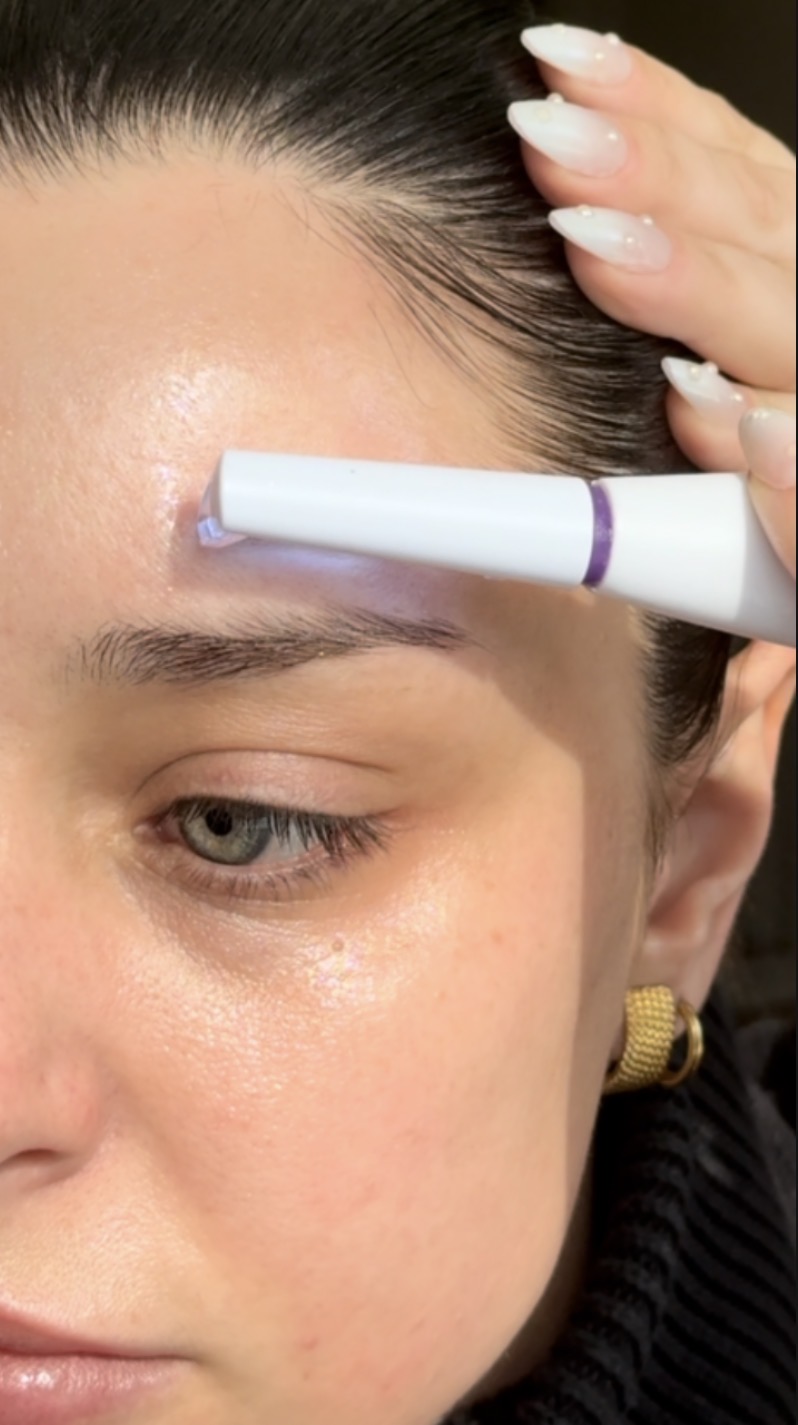
The Luxe+ is the dermaplaning device on Dermaflash’s site today. The brand describes it as a sonic dermaplaning device that removes peach fuzz and exfoliates dead skin cells. The set includes the device, four single-use MicroFine Edges, a PREFLASH cleanser, and a USB charging cable and base.
What it adds over a bare blade comes down to three things, all from the brand’s own pages. First, a patented Safety Cage around the edge, which Dermaflash says protects skin from nicks and cuts. Second, sonic vibration, listed at 14,000 vibrations per minute, which the brand says gives a closer result and an easier glide. Third, two speeds: a gentle one the brand calls ideal for beginners and sensitive skin, and an invigorating one for deeper exfoliation.
The upkeep is part of the decision. Dermaflash says to use the Luxe+ once a week and never to reuse an Edge, because used Edges can harbor bacteria. That makes refills a standing purchase, and the brand sells them as a four-week replenishment kit.
One note on the numbers on the box. The clinical results Dermaflash quotes come from consumer panel surveys and one four-week instrument study, all reported by the brand. Read them as brand claims until you can see the full studies. Shop the Dermaflash Luxe+.
Dermaflash vs a manual dermaplaning tool or razor
The manual lane has two tiers. The first is a refillable tool. The StackedSkincare Dermaplaning Tool has a reusable aluminum handle and a replaceable stainless steel blade, and the brand says it was developed by aesthetician Kerry Benjamin. StackedSkincare says to replace the blade about once a month and that most people dermaplane one to four times a month. The second tier is a disposable face razor. The Schick Hydro Silk Touch-Up comes as a pack of three, with fine micro-guards that Schick says help protect delicate skin from nicks and irritation.
The two camps argue opposite sides. Dermaflash says its safety features protect skin in a way disposable razors do not. StackedSkincare says a sonic device is not needed, that professional dermaplaning is performed manually, and that results come from precision, control, and technique, not vibration. Both are selling something, so here’s what to look for instead.
If nicks are the worry, look at the guard before the motor. The Dermaflash cage and the Schick micro-guards both put something between the blade and your skin. The StackedSkincare blade makes direct contact, which the brand pitches as more precise and which leaves the angle and pressure to you.
The dermatologist rules are the same for every tool. In Cleveland Clinic’s guide to dermaplaning at home, dermatologist Melissa Piliang, MD, says not to do it more than once a week. The same guide says to work slowly to avoid nicks and to clean the razor before and after each use.
Check the metal. StackedSkincare notes that its blade contains 5% nickel, which matters for anyone with a nickel allergy.
In an office or med spa, the blade is in trained hands. Cleveland Clinic says a plastic surgeon, dermatologist, or cosmetologist might perform dermaplaning, using a scalpel or a tool called a dermatome. Healthline’s medically reviewed guide puts a typical session at 20 to 30 minutes with no downtime, notes that redness can linger for two or three days, and says results fade in about three weeks to a month.
One caution about the word itself. Cleveland Clinic and the American Society of Plastic Surgeons also describe a deeper, surgical form of dermaplaning used on acne scars, with a recovery measured in weeks. That is a different procedure from a light pass over the surface, and from anything an at-home device does. If acne scars are the goal, that is a conversation for a dermatologist or plastic surgeon, not a device purchase.
Where the device wins is convenience: a weekly session at home with no appointment. Where the professional wins is judgment. Cleveland Clinic’s at-home guide says to skip DIY dermaplaning during an eczema flare or with any other active skin issue, and to ask a dermatologist about options. Healthline adds that at-home results may not match a professional treatment.
Looking for a Dermaflash alternative? The Michael Todd Sonicsmooth Pro+
The Sonicsmooth Pro+ is the other sonic device to look at. Its Amazon listing shows three speeds, a 16-week supply of single-use blades, two Microsmooth exfoliation tips, an LED light, and a 3-year warranty. Dermaflash’s set lists four Edges and a prep cleanser, so the two kits start from different places. See the Michael Todd Sonicsmooth Pro+ at Michael Todd Beauty.
First time and nervous about nicks: a guarded sonic device. The Dermaflash Luxe+ has the gentle speed the brand recommends for beginners.
A weekly routine: a sonic device with refills you can keep stocked. Compare what comes in each box before you choose.
Trying dermaplaning once before committing: a guarded disposable razor.
Blade control like a treatment room: a refillable manual tool.
Eczema or any active skin condition: a dermatologist first.
Acne scars: an office visit, not a device.
An event this weekend: any at-home option, done a day or two ahead. Cleveland Clinic notes skin can feel irritated for about a day afterward.
Before any kind of dermaplaning
Skip active breakouts. Dermaflash says not to use the Luxe+ over active breakouts, inflamed pimples, or blemishes that are healing, and Dr. Piliang says dermaplaning can agitate existing acne.
Use a fresh or clean blade every time. Single-use edges are single-use for a reason.
Go easy afterward. Dermaflash says to avoid strong exfoliating ingredients and direct sun for 48 to 72 hours after a session. Cleveland Clinic says to moisturize well and keep wearing sunscreen. The routine is in what to use after dermaplaning.
Do not worry about regrowth. Dr. Piliang says hair does not grow back thicker or darker. A blunt cut tip can feel coarse at first, then it softens.
Want longer between sessions? Where at-home IPL fits
Every form of dermaplaning is temporary, because hair is cut at the surface. For dark hair on the chin or neck that keeps coming back, at-home IPL is the next step up, and the one to look at is the Nood Flasher Pro. Nood lists black, brown, and dark blonde hair as a good fit and says its hair lens may not be suitable for very light blonde, red, or gray hair, so pale peach fuzz stays in dermaplaning territory. Nood also says IPL is not safe or suitable for brown or dark brown to black skin tones. Check the Nood Flasher Pro on Amazon, or read how the Nood Flasher Pro compares with other IPL devices first.
The verdict
Dermaflash is one way to dermaplane, not a rival to it. Pick the sonic device if you want a weekly routine with a guard doing some of the work. Pick a manual tool if you want to spend less or control the blade yourself. Book a professional if your skin needs a trained eye.
Dermaflash is a brand, not a different treatment. Its Luxe+ is a sonic device for dermaplaning at home, so using one is dermaplaning. The same technique can also be done with a manual blade, such as a refillable tool or a single-use razor, or by a trained professional in an office or med spa. The Dermaflash vs dermaplaning choice is really about which tool you use.
Is Dermaflash as good as professional dermaplaning?
They are different levels of the same idea. A professional works with a scalpel or dermatome and trained technique, and Healthline says at-home results may not match. Dermaflash is built for weekly upkeep at home, with a caged edge to limit nicks.
Is Dermaflash better than a dermaplaning razor?
It adds a safety cage, sonic vibration, and two speeds, and it is a bigger purchase with refills to rebuy. A guarded disposable razor covers the basics. The dermatologist rules are the same for both: a clean blade, a light touch, and no more than once a week.
Does sonic dermaplaning work?
In any kind of dermaplaning, the blade removes the peach fuzz and dead surface skin. Dermaflash says sonic vibration gives a closer result and an easier glide. StackedSkincare, which sells a manual tool, says vibration is not needed. Both are brand claims, so choose on guard design, comfort, and upkeep.
Is there a Dermaflash dupe?
The closest alternative is the Michael Todd Sonicsmooth Pro+, a sonic dermaplaning device that lists three speeds and 16 single-use blades in the box. It does the same job as the Dermaflash Luxe+, guiding a blade with sonic vibration. The two devices are compared side by side, including upkeep, in Dermaflash Luxe+ vs Michael Todd Sonicsmooth.
Which Dermaflash is best for beginners with sensitive skin?
The Luxe+ is the dermaplaning device Dermaflash sells today. The brand says it is safe for sensitive skin types and calls its gentle speed ideal for beginners and sensitive skin. Do not use it over active breakouts, and check with a dermatologist first if your skin is reactive.
How often should you use Dermaflash?
Dermaflash says to use it once a week, with a fresh Edge each time. Cleveland Clinic dermatologist Melissa Piliang, MD, sets the same ceiling for at-home dermaplaning in general: no more than once a week. That limit applies whether you use a sonic device like the Dermaflash Luxe+, a manual dermaplaning tool or a single-use razor.
Sources
Sources checked on November 6, 2026. Figures from brands are reported as the brand’s own claims.
Leave a Reply