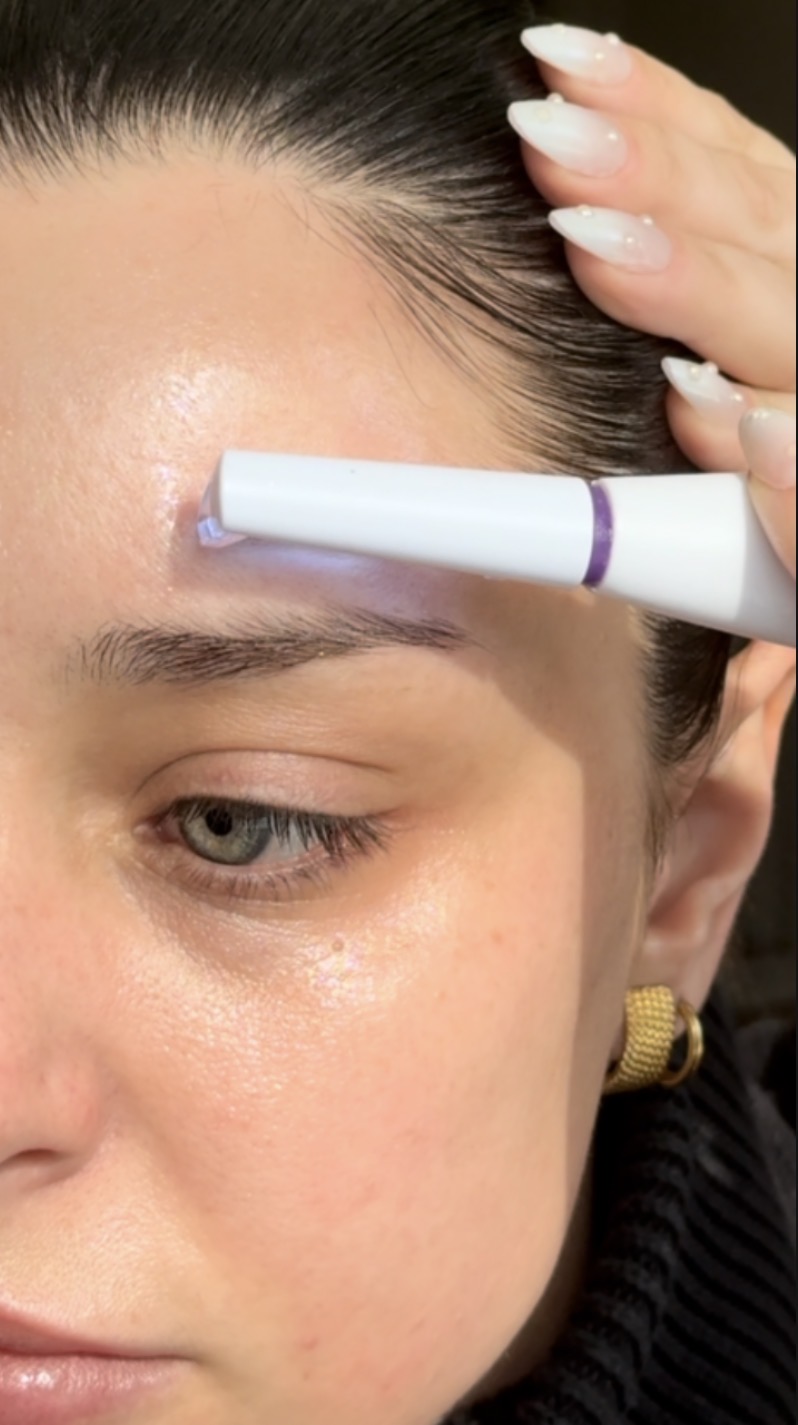
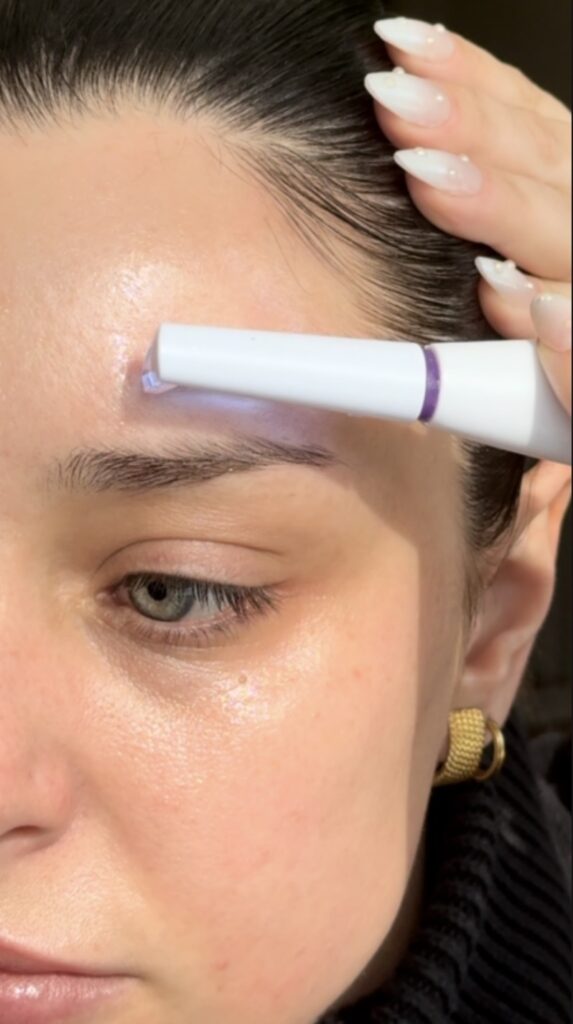
The short answer: Dermaflash vs dermaplaning is not an either/or. Dermaplaning is the technique: a blade skims dead surface skin and peach fuzz off the face. Dermaflash is a brand, and its Luxe+ is a sonic device for doing that technique at home. So the real choice is between three ways to dermaplane: a guarded sonic device like the Dermaflash Luxe+, a manual blade or razor, or a professional appointment. For a weekly at-home routine with the smallest learning curve, the sonic device is the pick. A manual tool is the pick for a tight budget or a steady hand. A professional is the pick when skin is reactive or you would rather not hold the blade yourself.
Pick the Dermaflash Luxe+ if you want the most guided way to dermaplane at home: a caged single-use edge, two speeds, and a prep cleanser in the box.
Pick the Michael Todd Sonicsmooth Pro+ if you want a sonic device that ships with more supplies: 16 single-use blades, three speeds, and two exfoliation tips.
Pick a manual tool if you want the lowest-commitment way to try dermaplaning, or you prefer direct control of the blade.
Book a professional if you have a skin condition, want trained hands on the blade, or only want it done now and then.
Wait on all of them if you have an active breakout or an eczema flare. Dermatologists say to let skin calm down first.
Dermaflash vs dermaplaning at a glance
This table uses what each brand’s own pages say, plus Cleveland Clinic and Healthline for the professional column. Prices move with sales, so check today’s price at the retailer.
Dermaflash Luxe+
Manual tool or razor
Professional dermaplaning
What it is
A rechargeable sonic dermaplaning device
A hand-held blade: a refillable tool or a disposable face razor
An in-office treatment
The blade
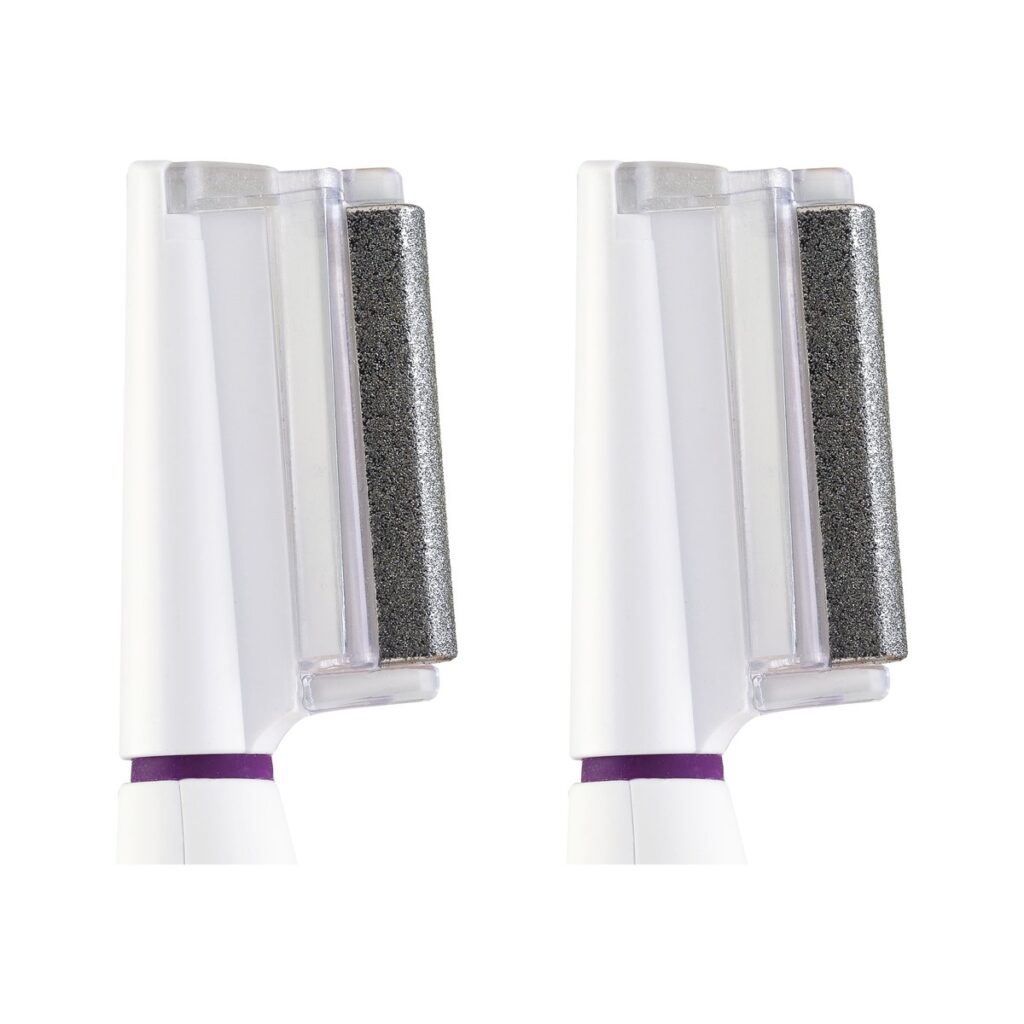
A single-use MicroFine Edge inside a patented Safety Cage
A replaceable precision blade, or a disposable razor with micro-guards
A scalpel or a tool called a dermatome, per Cleveland Clinic
Who holds it
You
You
A plastic surgeon, dermatologist, or cosmetologist, per Cleveland Clinic
Power
14,000 sonic vibrations per minute and two speeds, per the brand
None
An electronic or manual tool, per Healthline
How often
Once a week, per Dermaflash
One to four times a month for most people, per StackedSkincare
Results fade in about three weeks to a month, per Healthline
What you rebuy
A fresh Edge for every session
A new blade about once a month, or new disposables
Each appointment
Best for
A weekly routine with built-in guard rails
Budget, travel, or direct blade control
Reactive skin, special occasions, hands-off care
What Dermaflash is, and what it adds to dermaplaning
The Luxe+ is the dermaplaning device on Dermaflash’s site today. The brand describes it as a sonic dermaplaning device that removes peach fuzz and exfoliates dead skin cells. The set includes the device, four single-use MicroFine Edges, a PREFLASH cleanser, and a USB charging cable and base.
What it adds over a bare blade comes down to three things, all from the brand’s own pages. First, a patented Safety Cage around the edge, which Dermaflash says protects skin from nicks and cuts. Second, sonic vibration, listed at 14,000 vibrations per minute, which the brand says gives a closer result and an easier glide. Third, two speeds: a gentle one the brand calls ideal for beginners and sensitive skin, and an invigorating one for deeper exfoliation.
The upkeep is part of the decision. Dermaflash says to use the Luxe+ once a week and never to reuse an Edge, because used Edges can harbor bacteria. That makes refills a standing purchase, and the brand sells them as a four-week replenishment kit.
One note on the numbers on the box. The clinical results Dermaflash quotes come from consumer panel surveys and one four-week instrument study, all reported by the brand. Read them as brand claims until you can see the full studies. Shop the Dermaflash Luxe+.
Dermaflash vs a manual dermaplaning tool or razor
The manual lane has two tiers. The first is a refillable tool. The StackedSkincare Dermaplaning Tool has a reusable aluminum handle and a replaceable stainless steel blade, and the brand says it was developed by aesthetician Kerry Benjamin. StackedSkincare says to replace the blade about once a month and that most people dermaplane one to four times a month. The second tier is a disposable face razor. The Schick Hydro Silk Touch-Up comes as a pack of three, with fine micro-guards that Schick says help protect delicate skin from nicks and irritation.
The two camps argue opposite sides. Dermaflash says its safety features protect skin in a way disposable razors do not. StackedSkincare says a sonic device is not needed, that professional dermaplaning is performed manually, and that results come from precision, control, and technique, not vibration. Both are selling something, so here’s what to look for instead.
If nicks are the worry, look at the guard before the motor. The Dermaflash cage and the Schick micro-guards both put something between the blade and your skin. The StackedSkincare blade makes direct contact, which the brand pitches as more precise and which leaves the angle and pressure to you.
The dermatologist rules are the same for every tool. In Cleveland Clinic’s guide to dermaplaning at home, dermatologist Melissa Piliang, MD, says not to do it more than once a week. The same guide says to work slowly to avoid nicks and to clean the razor before and after each use.
Check the metal. StackedSkincare notes that its blade contains 5% nickel, which matters for anyone with a nickel allergy.
In an office or med spa, the blade is in trained hands. Cleveland Clinic says a plastic surgeon, dermatologist, or cosmetologist might perform dermaplaning, using a scalpel or a tool called a dermatome. Healthline’s medically reviewed guide puts a typical session at 20 to 30 minutes with no downtime, notes that redness can linger for two or three days, and says results fade in about three weeks to a month.
One caution about the word itself. Cleveland Clinic and the American Society of Plastic Surgeons also describe a deeper, surgical form of dermaplaning used on acne scars, with a recovery measured in weeks. That is a different procedure from a light pass over the surface, and from anything an at-home device does. If acne scars are the goal, that is a conversation for a dermatologist or plastic surgeon, not a device purchase.
Where the device wins is convenience: a weekly session at home with no appointment. Where the professional wins is judgment. Cleveland Clinic’s at-home guide says to skip DIY dermaplaning during an eczema flare or with any other active skin issue, and to ask a dermatologist about options. Healthline adds that at-home results may not match a professional treatment.
Looking for a Dermaflash alternative? The Michael Todd Sonicsmooth Pro+
The Sonicsmooth Pro+ is the other sonic device to look at. Its Amazon listing shows three speeds, a 16-week supply of single-use blades, two Microsmooth exfoliation tips, an LED light, and a 3-year warranty. Dermaflash’s set lists four Edges and a prep cleanser, so the two kits start from different places. See the Michael Todd Sonicsmooth Pro+ at Michael Todd Beauty.
First time and nervous about nicks: a guarded sonic device. The Dermaflash Luxe+ has the gentle speed the brand recommends for beginners.
A weekly routine: a sonic device with refills you can keep stocked. Compare what comes in each box before you choose.
Trying dermaplaning once before committing: a guarded disposable razor.
Blade control like a treatment room: a refillable manual tool.
Eczema or any active skin condition: a dermatologist first.
Acne scars: an office visit, not a device.
An event this weekend: any at-home option, done a day or two ahead. Cleveland Clinic notes skin can feel irritated for about a day afterward.
Before any kind of dermaplaning
Skip active breakouts. Dermaflash says not to use the Luxe+ over active breakouts, inflamed pimples, or blemishes that are healing, and Dr. Piliang says dermaplaning can agitate existing acne.
Use a fresh or clean blade every time. Single-use edges are single-use for a reason.
Go easy afterward. Dermaflash says to avoid strong exfoliating ingredients and direct sun for 48 to 72 hours after a session. Cleveland Clinic says to moisturize well and keep wearing sunscreen. The routine is in what to use after dermaplaning.
Do not worry about regrowth. Dr. Piliang says hair does not grow back thicker or darker. A blunt cut tip can feel coarse at first, then it softens.
Want longer between sessions? Where at-home IPL fits
Every form of dermaplaning is temporary, because hair is cut at the surface. For dark hair on the chin or neck that keeps coming back, at-home IPL is the next step up, and the one to look at is the Nood Flasher Pro. Nood lists black, brown, and dark blonde hair as a good fit and says its hair lens may not be suitable for very light blonde, red, or gray hair, so pale peach fuzz stays in dermaplaning territory. Nood also says IPL is not safe or suitable for brown or dark brown to black skin tones. Check the Nood Flasher Pro on Amazon, or read how the Nood Flasher Pro compares with other IPL devices first.
The verdict
Dermaflash is one way to dermaplane, not a rival to it. Pick the sonic device if you want a weekly routine with a guard doing some of the work. Pick a manual tool if you want to spend less or control the blade yourself. Book a professional if your skin needs a trained eye.
Dermaflash is a brand, not a different treatment. Its Luxe+ is a sonic device for dermaplaning at home, so using one is dermaplaning. The same technique can also be done with a manual blade, such as a refillable tool or a single-use razor, or by a trained professional in an office or med spa. The Dermaflash vs dermaplaning choice is really about which tool you use.
Is Dermaflash as good as professional dermaplaning?
They are different levels of the same idea. A professional works with a scalpel or dermatome and trained technique, and Healthline says at-home results may not match. Dermaflash is built for weekly upkeep at home, with a caged edge to limit nicks.
Is Dermaflash better than a dermaplaning razor?
It adds a safety cage, sonic vibration, and two speeds, and it is a bigger purchase with refills to rebuy. A guarded disposable razor covers the basics. The dermatologist rules are the same for both: a clean blade, a light touch, and no more than once a week.
Does sonic dermaplaning work?
In any kind of dermaplaning, the blade removes the peach fuzz and dead surface skin. Dermaflash says sonic vibration gives a closer result and an easier glide. StackedSkincare, which sells a manual tool, says vibration is not needed. Both are brand claims, so choose on guard design, comfort, and upkeep.
Is there a Dermaflash dupe?
The closest alternative is the Michael Todd Sonicsmooth Pro+, a sonic dermaplaning device that lists three speeds and 16 single-use blades in the box. It does the same job as the Dermaflash Luxe+, guiding a blade with sonic vibration. The two devices are compared side by side, including upkeep, in Dermaflash Luxe+ vs Michael Todd Sonicsmooth.
Which Dermaflash is best for beginners with sensitive skin?
The Luxe+ is the dermaplaning device Dermaflash sells today. The brand says it is safe for sensitive skin types and calls its gentle speed ideal for beginners and sensitive skin. Do not use it over active breakouts, and check with a dermatologist first if your skin is reactive.
How often should you use Dermaflash?
Dermaflash says to use it once a week, with a fresh Edge each time. Cleveland Clinic dermatologist Melissa Piliang, MD, sets the same ceiling for at-home dermaplaning in general: no more than once a week. That limit applies whether you use a sonic device like the Dermaflash Luxe+, a manual dermaplaning tool or a single-use razor.
Sources
Sources checked on November 6, 2026. Figures from brands are reported as the brand’s own claims.
Here is how to use the Michael Todd microdermabrasion tip: swap the dermaplaning blade on your Sonicsmooth for a Microsmooth diamond tip, cleanse and dry your face, pick a speed, hold the tip at a 45 degree angle starting near the hairline, and make short strokes that follow the contours of your face, one to three passes per area. Michael Todd Beauty recommends it once a week, as an in-between step a few days after your weekly dermaplaning session, not on the same day. If you want microdermabrasion with suction and pore extraction instead of a tip on your dermaplaning tool, that is a different device, the Sonic Refresher, covered further down.
The Sonicsmooth Pro+ comes with 2 Microsmooth tips. On sale at Michael Todd Beauty, 40% off (checked November 13, 2026).
The short version
What it is: Microsmooth is a diamond microdermabrasion tip that attaches to the Sonicsmooth in place of the blade. It buffs away dead skin with fine diamond particles and uses sonic vibration rather than suction.
Where to get it: two Microsmooth tips come in the box with the Sonicsmooth Pro+, and replacement two-packs are sold separately.
How often: once a week, as the brand puts it, an intermediate treatment between weekly Sonicsmooth sessions.
How: clean, dry skin, 45 degree angle, short strokes along the contours, one to three passes per area, then serum or moisturizer.
Not the same as the Sonic Refresher: that is Michael Todd’s standalone wet/dry microdermabrasion system with suction pore extraction and a mist. Different device, different steps.
Which Michael Todd microdermabrasion do you have?
Searches for “Michael Todd microdermabrasion” can mean either of two products, and the instructions are not interchangeable. Check this first.
Microsmooth tip
Sonic Refresher
What it is
A diamond microdermabrasion tip for the Sonicsmooth dermaplaning device
A standalone wet/dry sonic microdermabrasion and pore extraction system
How it exfoliates
Laser-cut diamond bits with sonic vibration, no suction
Diamond heads plus vacuum suction
Heads
One tip that swaps in for the blade, sold in two-packs
Coarse, fine and small fine diamond heads, plus three pore extraction heads
Extras
None, it rides on the Sonicsmooth
Nano mist for water or toner, 40 disposable filters, charging cradle
Speeds
The Sonicsmooth’s 3 speeds
Multiple speeds shown on an LCD
Brand’s frequency
Once a week, between weekly dermaplaning sessions
Once a week
Where it sells
In the Sonicsmooth Pro+ box, and as a two-pack on Amazon
Michael Todd Beauty’s own site
Best for
Anyone who already dermaplanes with a Sonicsmooth
Anyone who wants pore extraction and does not dermaplane
If you already own a Sonicsmooth Pro+, look in the box before you buy anything. The two Microsmooth tips are the small diamond-coated heads packed alongside the 16 dermaplaning blades.
The Microsmooth tips: diamond-coated heads that go on the Sonicsmooth in place of the blade. Image: Michael Todd Beauty.
How to use the Microsmooth microdermabrasion tip, step by step
Swap the blade for the tip. Remove the dermaplaning blade from the Sonicsmooth and attach a Microsmooth tip in its place. Make sure it is firmly seated before you turn the device on.
Cleanse with an oil-free cleanser. Rinse well and pat your face completely dry. The tip works on bare, dry skin, so skip oils and serums until the end.
Pick a speed. The Sonicsmooth has three. Start on the lowest setting the first few times and move up only if your skin is comfortable.
Hold the tip at a 45 degree angle. Start near the hairline and work down the face in sections.
Use short strokes that follow your contours. Forehead, cheeks, along the jaw and chin. Keep the tip moving and let it glide rather than pressing it in.
One to three passes per area. That is the brand’s range. One pass is plenty for a first session.
Follow with serum or moisturizer. Freshly exfoliated skin is the point where your skincare goes on most evenly. The Pro+ listing also advises holding off on makeup right after using the device.
Clean the tip. Take it off the device, rinse it under warm water, and let it air dry before you put it away.
The blade and the diamond tip do different jobs. The blade shaves off peach fuzz and the top layer of dead skin. The Microsmooth tip only buffs. Michael Todd Beauty positions Microsmooth as the step in between weekly Sonicsmooth sessions, and its how-to page suggests using the Microsmooth tips two to three days after you dermaplane. Its support article puts the Microsmooth frequency at once a week.
A simple rhythm that follows the brand’s guidance:
Do not stack both on the same day. Two exfoliating steps back to back is the fastest way to end up red and tight. If your skin still feels sensitive from dermaplaning, skip the Microsmooth that week.
The video below walks through the Sonicsmooth Pro+ dermaplaning routine that the Microsmooth step builds on.
At Home Dermaplane Tutorial Using Michael Todd Beauty Sonicsmooth Pro+
Who should go slow or skip it
Sensitive skin: the brand says Microsmooth suits all skin types, including sensitive skin, and that the speed setting lets you adjust the intensity. The move is the lowest speed and a single pass.
Irritated, broken or sunburned skin, or an active breakout: work around those areas or wait until they settle.
A skin condition or prescription skincare: check with a dermatologist before adding any exfoliating tool. Michael Todd’s own Sonic Refresher guide says the same for anyone under a doctor’s care for a skin condition or with very sensitive skin.
How to use the Michael Todd Sonic Refresher instead
If the device in your hands has a mist reservoir and suction heads, it is the Sonic Refresher. The quick start guide lays out a five-step routine, each step using the same glide technique.
Prep: charge it fully before the first use, test on a small area, cleanse and pat dry, and put a new disposable filter under the head.
Renew, coarse tip: short upward and outward strokes on the face. Keep it away from the thin skin around the eyes and lips.
Reset, small tip: the tight spots, around the nose, mouth lines, crow’s feet, between the brows and the forehead.
Refine, fine tip: a final polish before skincare or makeup.
Remove, pore extraction tip: suction lifts out congestion. Keep it moving the whole time.
Rehydrate: fill the reservoir with water or toner and mist. No oil-based products in the mister.
Technique for every step: work in one to two inch sections, hold the skin taut with your free hand, start on low speed, and begin with two to four passes, moving up to four to six once your skin is used to it. Never hold it still on one spot. The brand’s support article puts the Sonic Refresher at once a week. The guide also notes the device contains magnets, so keep it away from pacemakers and other implanted devices.
The Sonic Refresher does not show up on Amazon. It sells on Michael Todd Beauty’s site, with a 30-day money-back guarantee and a 3-year warranty listed on the page.
How do you use the Michael Todd microdermabrasion tip?
Swap the blade on your Sonicsmooth for a Microsmooth tip, cleanse with an oil-free cleanser and pat dry, choose a speed, then hold the tip at a 45 degree angle starting near the hairline and make short strokes along the contours of your face, one to three passes per area. Finish with serum or moisturizer.
How often can you use Michael Todd microdermabrasion?
Michael Todd Beauty recommends once a week for both the Microsmooth tip and the Sonic Refresher. For Microsmooth, the brand places it between weekly dermaplaning sessions, a few days after you use the blade.
Can you dermaplane and use the Microsmooth tip on the same day?
The brand frames Microsmooth as an in-between treatment, and its how-to page suggests the tips two to three days after dermaplaning. Spacing them out keeps you from exfoliating twice in one session.
Does the Sonicsmooth Pro+ come with microdermabrasion tips?
Yes. The Pro+ listing includes 16 dermaplaning blades and 2 Microsmooth exfoliation tips. Replacement Microsmooth tips are sold in two-packs.
Is Michael Todd microdermabrasion safe for sensitive skin?
The brand says both Microsmooth and the Sonic Refresher suit all skin types, including sensitive skin, with speed settings to adjust intensity. Start on the lowest speed with a single pass. If you have a skin condition or very sensitive skin, check with a dermatologist first.
How do you clean the Microsmooth tip?
Remove it from the device, rinse it under warm water after every use, and let it air dry.
The short answer: for peach fuzz and a smoother makeup base, dermaplaning is the better pick. There is no pulling and no sting, it exfoliates while it removes hair, and there is no grow-out phase. Waxing is the better pick for darker, coarser hair on the upper lip or chin, because it pulls hair out at the root and one session lasts about three to four weeks. One rule settles it for a lot of people: if retinol or a prescription retinoid is part of your routine, waxing your face is the method dermatologists warn about.
A small blade glides over the skin and cuts hair at the surface
Wax grips the hair and pulls it out at the root
What comes off
Peach fuzz (vellus hair) and dead surface skin
The whole hair, root included
How long it lasts
Shorter. Hair is cut, not pulled, so regrowth shows sooner
About three to four weeks per session, per Cleveland Clinic
How often
No more than once a week, per a Cleveland Clinic dermatologist
Only once hair has grown back long enough for wax to grip
Hair length needed
None
About one-fourth to three-fourths of an inch, per the American Academy of Dermatology
How it feels
No pulling, so no sting
A quick sting with every pull
Skin bonus
Exfoliation, so skin feels smoother and makeup sits better
Some exfoliation, but that is not the point
Main risks
Nicks, a day or so of irritation, and flare-ups if used over active acne
Redness, ingrown hairs, inflamed follicles, and skin damage on retinoid-treated skin
Best for
Fine, light fuzz across the whole face
Dark or coarse hair in small areas like the upper lip and chin
What dermaplaning does well
Dermaplaning is exfoliation and hair removal in one pass. In Cleveland Clinic’s guide to dermaplaning at home, dermatologist Melissa Piliang, MD, describes it as taking dead skin cells and peach fuzz off the surface of the skin, which is why products may absorb better and makeup may go on more smoothly afterward. Her guidance on frequency is no more than once a week, so skin has time to recover.
The limits are just as clear. The same guidance says to wait out a breakout, because dermaplaning can aggravate existing acne, and to skip it during an eczema flare or any other active skin issue. Skin may feel a little irritated for a day or so, and a nick is a way in for infection, so a guarded tool beats a bare blade.
The dermaplaning tool to look at
What works here is a sonic tool with a safety guard over the blade. The Michael Todd Sonicsmooth is the pick for most people: the brand lists sonic technology with three speeds and a patented safety guard, and says it removes peach fuzz and sideburns. Shop the Michael Todd Sonicsmooth.
Waxing wins on staying power. Because the hair comes out at the root, one session can last three to four weeks, according to Cleveland Clinic dermatologist Shilpi Khetarpal, MD. That makes it the stronger choice for dark, coarse hairs, the kind that show again quickly when they are only cut at the surface.
The trade-offs are the grow-out and the skin stress. Hair has to be about one-fourth to three-fourths of an inch long before wax can grip it, per the American Academy of Dermatology, so there is always a stretch of visible regrowth between sessions. Cleveland Clinic also lists inflamed follicles, redness, ingrown hairs, and irritation as possible side effects.
The rules dermatologists set for waxing your face
Pause retinol and prescription retinoids first. The American Academy of Dermatology says to avoid them for two to five days before waxing your face. Cleveland Clinic warns that waxing retinol-affected skin can cause abrasions, infection, and even scarring.
No waxing within six months of isotretinoin. That one comes straight from the American Academy of Dermatology.
Skip sunburned or very sensitive skin.
Watch the aftermath. If redness or swelling lasts more than two days, the Academy says to see a dermatologist.
The wax to look at
For a first try at home, the move is no-heat strips made for the face, since there is no hot wax to overheat. Nad’s Facial Wax Strips come as a kit with 20 strips, four calming oil wipes, and a skin protection powder, and the brand lists them for the face, chin, and upper lip. Nad’s also says not to wax the same facial area twice, because repeat passes can irritate delicate skin. See Nad’s Facial Wax Strips on Amazon.
Which one to pick, by situation
Light fuzz across the whole face: dermaplaning. It covers a large area gently, and there is nothing to grow out.
A few dark hairs on the upper lip or chin: waxing, for the weeks between sessions.
Makeup prep before an event: dermaplaning, done a day or two ahead in case skin feels irritated.
Retinol or tretinoin in your routine: waxing is the one with the formal warning and the two to five day pause. For timing actives around a dermaplaning session, see what to use after dermaplaning.
Active breakouts or an eczema flare: wait. Dermaplaning is off the table until skin calms down, and the American Academy of Dermatology says not to wax very sensitive skin.
No. Mayo Clinic states that shaving does not change hair’s thickness, color, or rate of growth. What changes is the tip: a cut hair has a blunt end, so it can feel coarser or look more noticeable while it grows out. Dr. Piliang makes the same point about dermaplaning. With waxing, Cleveland Clinic notes that hair can grow back thinner over time. More myths are covered in dermaplaning mistakes and side effects.
Can you do both?
Yes, on different areas. The split that makes sense is waxing the upper lip and chin and dermaplaning the cheeks, jaw, and forehead. The caution is not to stack them on the same patch of skin in one session, since both take off surface skin. And remember the grow-out: dermaplaning an area resets the clock on the length wax needs.
Want longer between sessions? Where at-home IPL fits
Dermaplaning and waxing are both temporary. For dark facial hair that keeps coming back, at-home IPL is the next step up, and the one to look at is the Nood Flasher Pro. Nood says it can be used anywhere on the face or body, except the eyebrows and the area immediately around the eyes, and lists it for black, brown, and dark blonde hair on fair to olive skin (Fitzpatrick I to IV). Check the Nood Flasher Pro on Amazon.
Two things to know before switching. First, Nood says IPL does not work on light blonde hair, so pale peach fuzz stays in dermaplaning territory. Second, Nood says to shave before each session and not to wax, pluck, thread, or epilate, because IPL needs the hair follicle intact. Waxing and IPL do not mix. The side by side on devices is in Nood Flasher Pro vs other IPL hair removal devices.
The verdict
Pick dermaplaning if the goal is a fuzz-free, smoother face with no grow-out and no sting. Pick waxing if the hair is dark or coarse and three to four weeks between sessions matters more than comfort. Look at IPL if you are tired of repeating either one.
For fine peach fuzz, yes: there is no sting, it exfoliates, and it needs no grow-out. For dark or coarse hair, waxing is better because it removes the root and lasts about three to four weeks.
Which lasts longer, dermaplaning or waxing?
Waxing. One session can last three to four weeks, per Cleveland Clinic. Dermaplaning cuts hair at the surface, so regrowth shows sooner, and it can be repeated as often as once a week.
Is waxing or dermaplaning better for the upper lip?
It depends on the hair. Dark, coarse upper lip hair is a waxing job. Fine, light fuzz is easier and gentler to dermaplane.
Can you dermaplane after waxing?
Not on the same area in the same session. Let waxed skin settle fully first, and keep in mind that wax needs about a quarter inch of growth, so dermaplaning a waxed area pushes back the next wax.
Does hair grow back thicker after dermaplaning or waxing?
No. Mayo Clinic says cutting hair does not change its thickness, color, or rate of growth. A blunt tip can feel coarser for a while, and that is all.
Can you wax your face if you use retinol?
Not without a pause. The American Academy of Dermatology says to stop retinol and prescription retinoids two to five days before waxing your face, and not to wax at all within six months of taking isotretinoin.
Sources: Cleveland Clinic, Is It OK To Try Dermaplaning at Home? (Melissa Piliang, MD) and Shaving vs. Waxing: Benefits, Cons and Results (Shilpi Khetarpal, MD). American Academy of Dermatology, Hair Removal: How to Wax. Mayo Clinic expert answer on shaving and hair regrowth. Michael Todd Beauty, Dermaflash, Nad’s, and Nood product pages, checked October 2026. This post is general information, not medical advice. Talk to a dermatologist about your own skin.