Disclosure
This post contains affiliate links, which means I may earn a small commission if you make a purchase through my links, at no extra cost to you.
Clinic laser hair removal is stronger than the Nood Flasher Pro, and anyone who tells you otherwise is selling something. It is also priced per area, per session, in a way that adds up fast. Which one wins depends on how many areas you want treated, what your skin tone is, and whether you would rather pay in money or in evenings. Here’s what to look for.
The short version
Go to the clinic if you want one or two small areas done with the fewest sessions, or your skin tone is brown or darker. Clinic lasers put five to eight times the energy into the follicle, and an Nd:YAG laser can treat skin tones that no at-home IPL device can.
Buy the Nood Flasher Pro if you want three or more areas, your skin is fair to olive, your hair is dark blonde or darker, and you are fine with a longer course done at home. The device is one price for every area; the clinic is not. Check today’s Nood Flasher Pro price on Amazon.
Power: this is where the clinic wins
Professional diode lasers are cleared in the range of roughly 5 to 40 J/cm². The Flasher Pro’s FDA 510(k) clearance (K241106) states 1.84 to 5.23 J/cm². That is not a marketing gap. More energy into the follicle means more follicles that stop producing hair, and fewer sessions to get there.
The best head-to-head evidence is a 2023 randomized trial in PLOS ONE that ran a professional diode laser against a home IPL device over six sessions. Underarm hair reduction was 85 to 88 percent for the clinic laser and 46 to 52 percent for the home device. Two honest caveats: only 15 of 30 participants finished, and the home device tested was a Silk’n, not a Nood. The direction of the result is not in doubt; the exact numbers are softer than they look.
Within the at-home category, the Flasher Pro is the device with the highest cleared energy in a public FDA file, which is the whole argument of the full IPL comparison. But no home device closes the gap to a clinic laser. They are different tools.
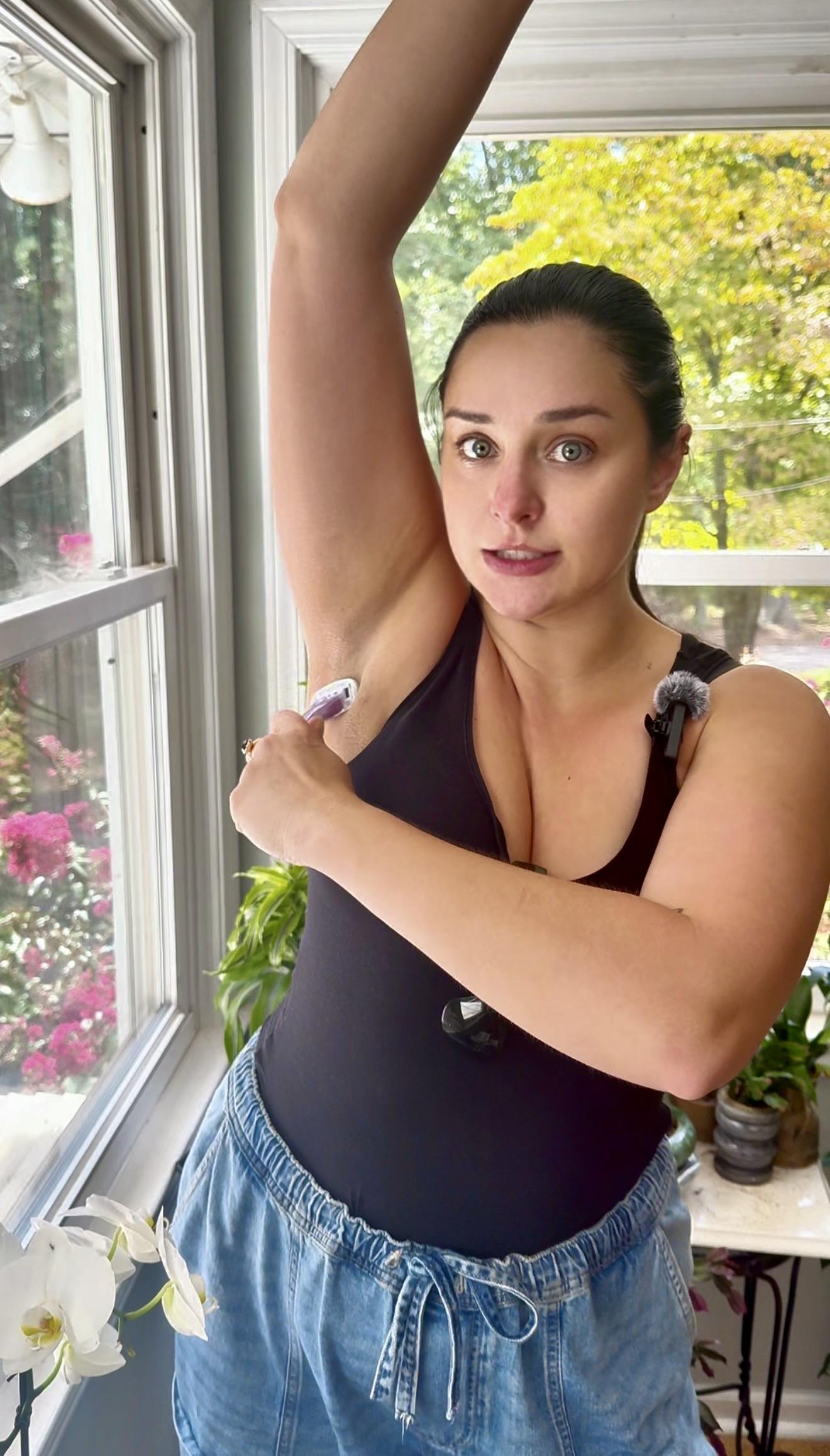
Underarms respond fastest on either method. At home that means more sessions at lower energy; at the clinic, fewer sessions at higher energy.
Cost: this is where Nood wins
Clinic pricing is per area and per session, and it varies enormously by city. These are published six-session course prices from three US clinics.
Read the last row against the others. Underarms alone at the cheapest clinic in the table cost about the same as the device. Add a second area and the clinic is already behind. Add full legs and it is not close. The marginal cost of one more area is $270 to $1,920 at a clinic and zero on a device.
The clinic’s counter-argument is real: a course there is more likely to be the last one you buy for that area, and a home device needs maintenance sessions indefinitely. But maintenance on a device you already own is free. Maintenance at a clinic is another appointment.
Time: it depends what you count
A clinic course is six to eight visits over six months to a year, each one a few minutes on the table plus travel. Nood’s schedule for the Flasher Pro is every three days for up to twelve weeks, then monthly, with each session ten to twenty minutes depending on area. More sessions, more of your own time, no appointments and nobody else in the room.
Skin tone: the one deal-breaker
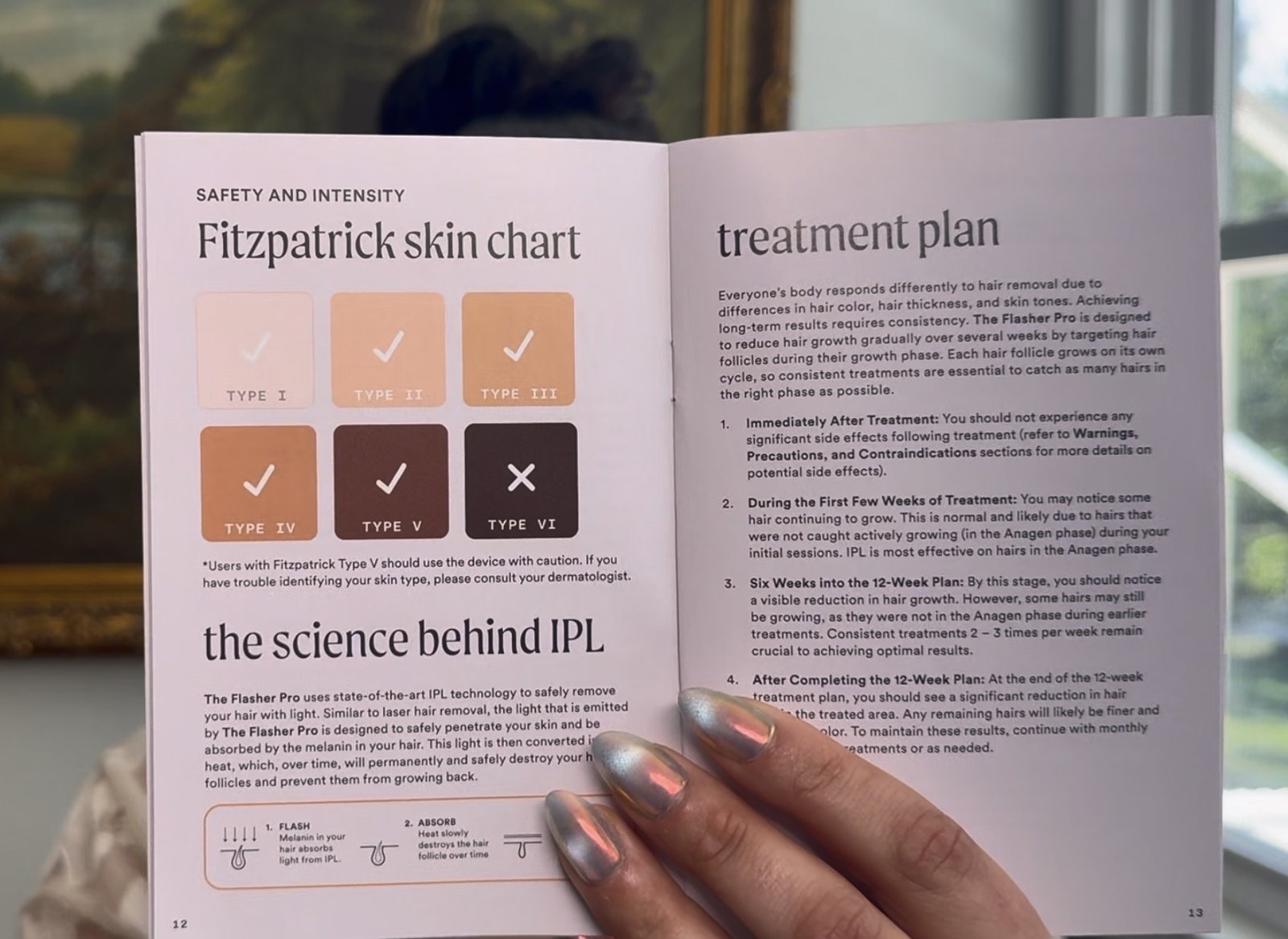
This decides it for some readers before price does. At-home IPL is broad-spectrum light, and on deeper skin tones the skin absorbs it before the hair does. Nood lists brown and dark brown to black skin as not recommended, and its FAQ goes further: IPL is not safe or suitable for those tones. That is not conservative wording. It is the physics.
Clinics have an answer that home devices do not: the Nd:YAG laser at 1064 nm, which passes through the surface pigment and is the standard choice for Fitzpatrick V and VI. If that is your skin tone, the clinic is the only option on this page.
Nood’s skin type chart. Types V and VI are where a clinic Nd:YAG laser is the answer and home IPL is not.
Hair color: neither one gets around it
Both methods target melanin in the hair. Light blonde, red, grey and white hair do not respond to clinic lasers either, whatever a clinic’s website implies. Electrolysis is the method for those; the detail is in does Nood work on blonde hair.
Who should choose which
Clinic laser: one or two small areas, deeper skin tone, fewest possible sessions, or a budget that can absorb per-area pricing.
Nood Flasher Pro: three or more areas, fair to olive skin, dark blonde or darker hair, and a preference for spending evenings over spending appointments. Which Nood handset, and how it stacks up against Ulike, Braun and Philips, is covered in the Pro vs 2.0 and Nood vs Ulike posts.
Both: plenty of people do clinic sessions on the face and bikini line, where precision and speed matter most, and use a home device for legs and arms, where the clinic price is highest. Check with the clinic before overlapping areas.
Is Nood as good as laser hair removal?
No, per session. Professional diode lasers are cleared at roughly 5 to 40 J/cm² and the Flasher Pro’s cleared ceiling is 5.23. A 2023 randomized trial reported 85 to 88 percent underarm reduction for a clinic diode against 46 to 52 percent for a home IPL device after six sessions. Nood wins on cost, not on power.
Is at-home IPL cheaper than laser hair removal?
Almost always, and the gap widens with every area. A clinic charges per area per session. A six-session underarm course alone runs $294 in Houston, $600 in Pasadena and $2,094 in Seattle. The Flasher Pro is one price for every area. Check today’s price on Amazon.
How many sessions does each one take?
Clinics typically book six to eight sessions spaced four to eight weeks apart, so six months to a year. Nood’s schedule for the Flasher Pro is a session every three days for up to twelve weeks, then monthly maintenance. More sessions, but each one is at home.
Does laser work on dark skin when IPL does not?
Some clinic lasers do. An Nd:YAG at 1064 nm is the standard choice for Fitzpatrick V and VI. At-home IPL is not: Nood lists brown and dark brown to black skin tones as not recommended, and its FAQ says IPL is not safe for them. For deeper skin tones the clinic is the only option.
Can I use Nood between laser sessions?
Ask the clinic first. Most advise against treating the same area with another light device during a course, because the follicles are already cycling and the skin needs the gap. Using Nood on areas the clinic is not treating is the usual compromise.
Sources: FDA 510(k) K241106 (Nood); published rate cards from clinics in Houston, Pasadena and Seattle, checked August 2026; randomized diode versus home IPL comparison, PLOS ONE, 2023; Nood Flasher Pro product page and FAQ, checked September 2026. Prices change often.
Leave a Reply