This post contains affiliate links, which means I may earn a small commission if you make a purchase through my links, at no extra cost to you.
The Ageless lens is the skin filter that ships with the Nood Flasher Pro, cutting light off at 560nm instead of the hair lens’s 510nm. That 560 cutoff is the same photorejuvenation standard professional IPL platforms have used for 25 years. It sits outside the device’s FDA clearance, and it is a pigment and redness tool, not a wrinkle treatment.
I bought this device with my own money. I am not a doctor and nothing here is medical advice.
Key takeaways
- The two lenses use the same lamp. The only physical difference is the filter: 510nm cutoff for hair, 560nm for skin.
- 560nm is not a marketing number. It is the standard photorejuvenation cutoff professional IPL platforms have used for about 25 years.
- IPL is genuinely good at pigment and redness. Published reviews of clinic IPL report roughly 20 to 60 percent redness reduction and 51 to 78 percent clearance of facial telangiectasia.
- IPL is not a wrinkle treatment and never was. A biopsy study after six clinic sessions found no significant change in collagen I, III or VII, elastin or tropoelastin, and no measurable wrinkle reduction in any volunteer.
- The device’s FDA clearance, K241106, covers hair removal only. The Ageless lens is not in it, and there are no published clinical trials on at-home IPL for skin.
- You do not shave before using the skin lens. You do shave before using the hair lens. This trips almost everyone up.
- Fitzpatrick I to IV only, fair through olive. On deeper skin tones this is a safety issue, not a weak result.
Check today’s Nood Flasher Pro price on Amazon
What is the Nood Ageless lens?
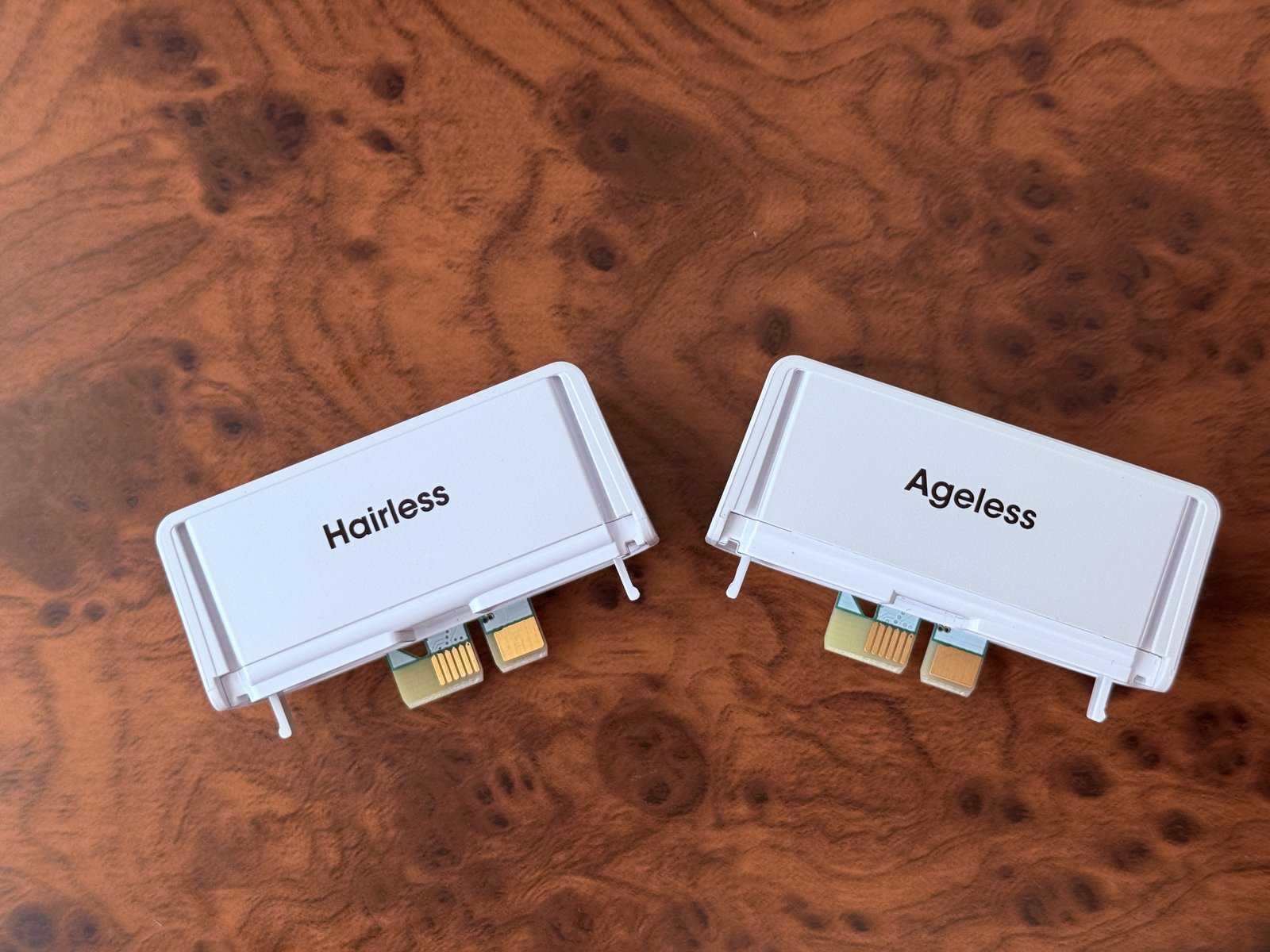
The Nood Flasher Pro ships with two interchangeable cartridges. The Hairless lens is the one the device is built and cleared for. The Ageless lens is the skin one, and it is the reason I bought this particular device rather than a cheaper IPL handset.
Here is the problem that made me film this. There are almost no instructions and almost no honest reviews of the Ageless filter anywhere on the internet. There is a review sitting on the Amazon listing right now where a buyer asks four straightforward questions about how to use it, and nobody has answered her. This post and the video below are the thing I wanted to exist when I bought it.
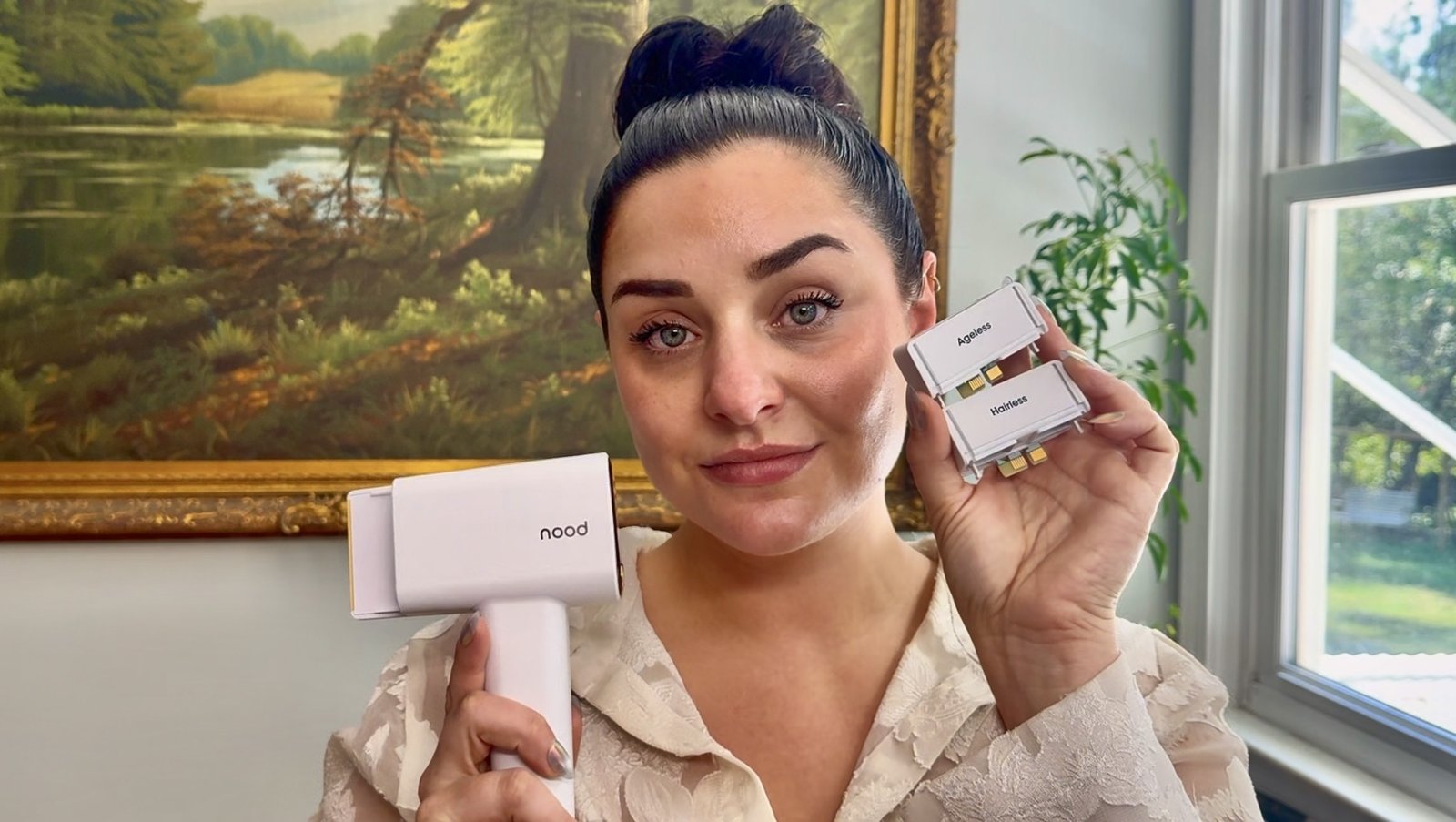
If you want to look at the device itself, it is on Amazon here, and the Ageless lens ships in the box with it. The full device comparison is in Nood Flasher Pro vs Other IPL Devices.
How do you use the Ageless lens?
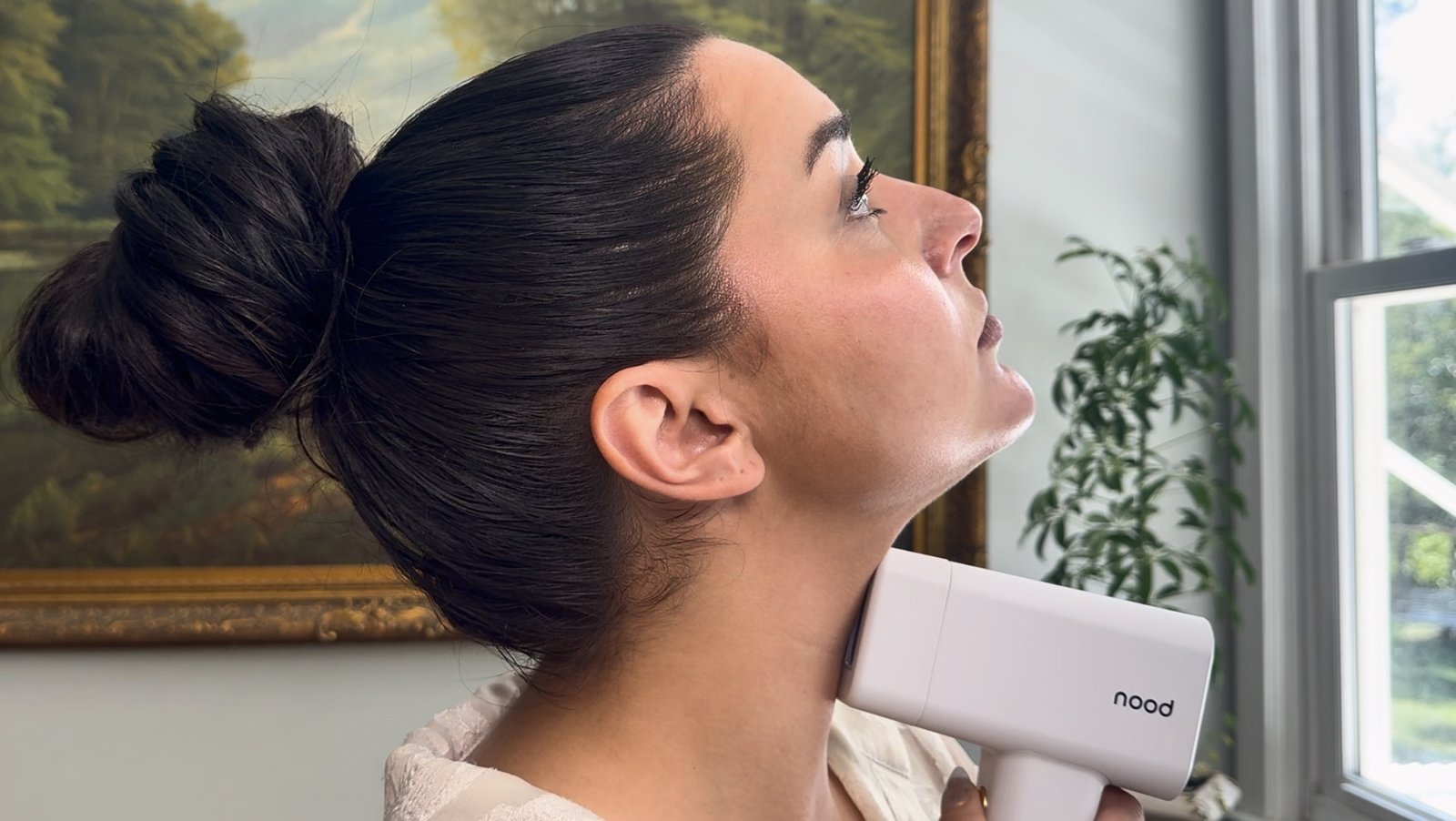
The full walkthrough is in the video, including the device sound and what a real pass looks like. Here is the written version.
Turn it on and set the level. I run mine at three, which is mid range. The button cycles up to five and then loops back to one. There is no evidence a higher setting produces a better outcome here, and this is a technology with a biphasic dose response, meaning past a point more works against you rather than for you.
Keep the plate completely flat against your skin. This matters more than people realise and it is the thing I would correct if I were watching over your shoulder. Tilt it and you lose contact with the cooling plate, which is the best part of the whole device and the only reason the higher levels are tolerable. You are also delivering the light at an angle, so less of it lands where you wanted it.
Work in overlapping passes. Cheeks, jaw, forehead. Stay off the eyebrows and the eye area entirely. Do not get near it.
Ten minutes, two to three times a week. That is the whole protocol.
What is the difference between the Hairless and Ageless lenses?
The filter. That is genuinely it.
The lamp inside the device produces a broad spread of light. A filter’s job is to decide which wavelengths get out and which do not. The hair lens cuts off at 510nm. The skin lens cuts off at 560nm. That fifty nanometre difference is the entire physical distinction between the two cartridges.
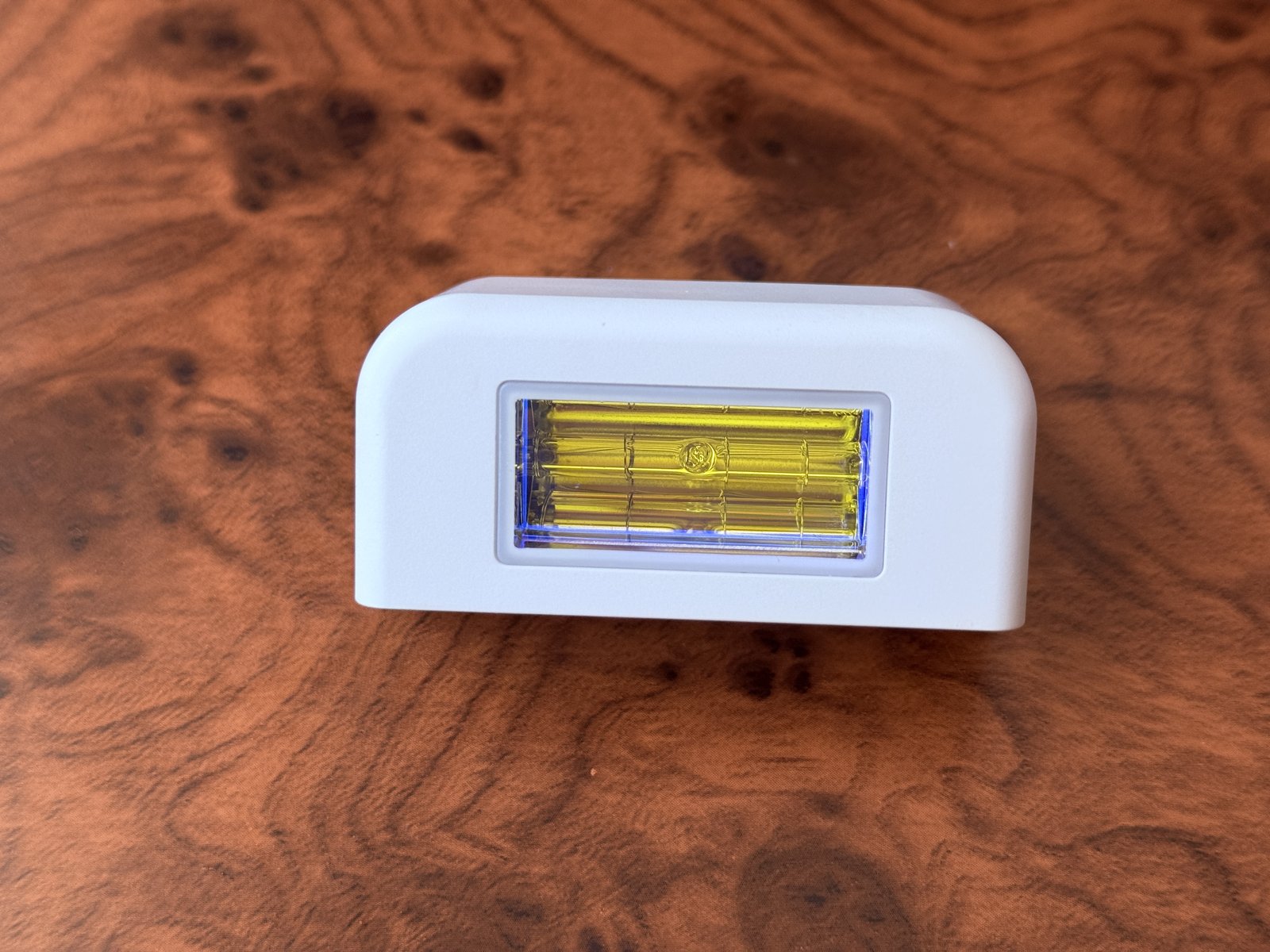
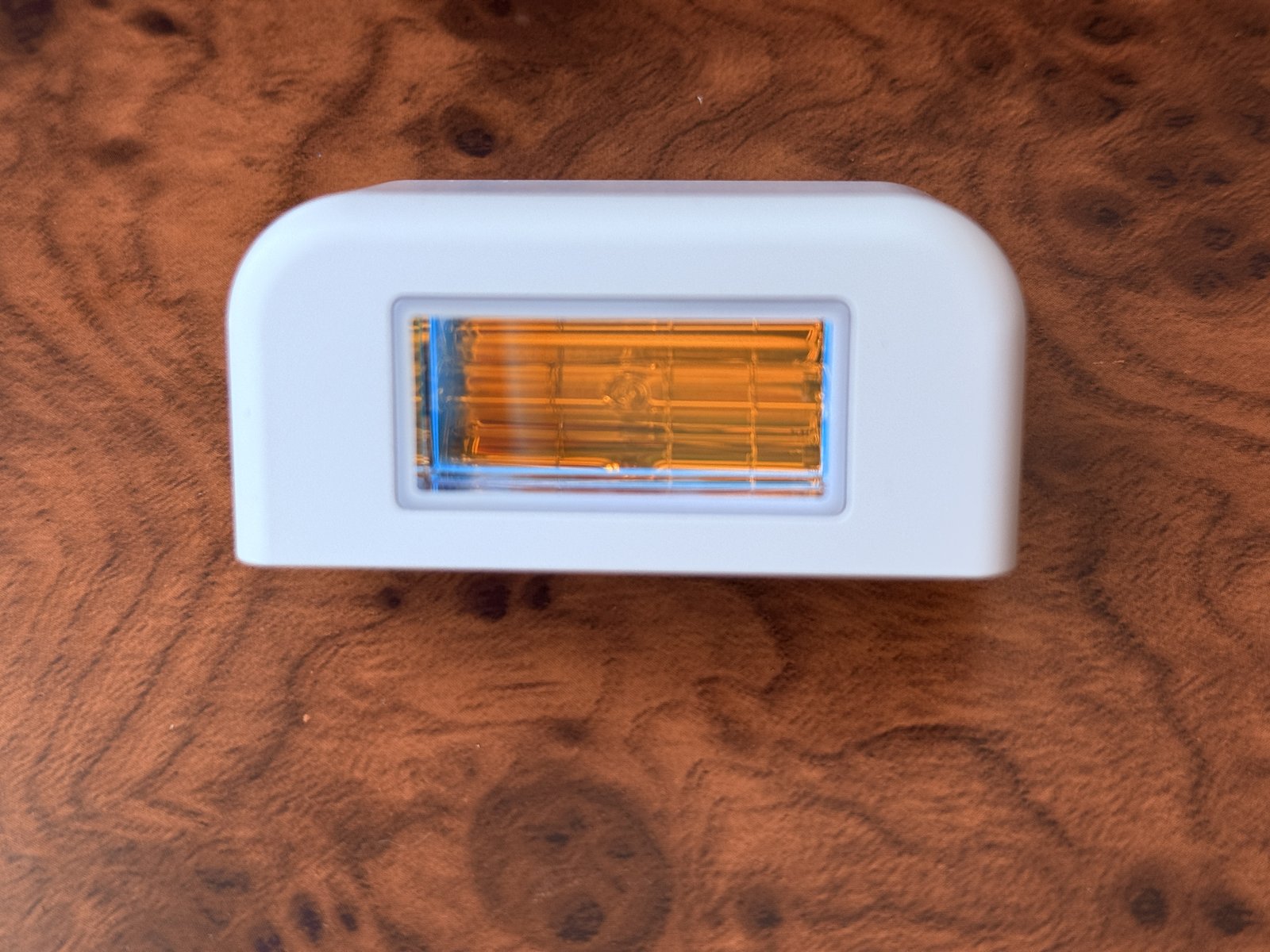
So why is that worth being a separate product? Because 560nm is not a number somebody in marketing came up with because it sounded good on a sales page. It is the standard photorejuvenation cutoff, and professional IPL platforms have been running it for about 25 years. If you walk into a med spa for a photofacial, there is a very good chance the machine they use is operating behind a 560 filter.
The logic underneath it: when you cut off everything below 560, you push the output away from the wavelengths hair pigment absorbs best, and toward the ones absorbed by two other things. Melanin sitting in your skin, and haemoglobin in the very small blood vessels near the surface. One lens is biased toward hair. The other is biased toward pigment and vessels. Same light, different window.
Both cartridges come in the same box, so the 560nm filter costs nothing extra on top of the device. Current price is on the Amazon listing.
I am going to be hard on this product in a minute, so I want to be fair here first. That is a legitimate engineering decision. Somebody looked at what clinics actually do and put the same filter on a home device. The concept is sound, and it is the strongest true thing about this lens.
| Spec | Hairless lens | Ageless lens |
|---|---|---|
| Filter cutoff | 510nm | 560nm |
| Biased toward | Hair pigment | Skin pigment and surface vessels |
| Covered by FDA clearance K241106 | Yes, hair removal and permanent hair reduction | No |
| Shave first | Yes, always | No, never |
| Power levels | 5 | 5, start at 3 |
| Session length | Varies by area | About 10 minutes |
| Frequency | Twice a week, then maintenance | Two to three times a week |
| Eligibility | Dark hair, fair to olive skin | Fitzpatrick I to IV |
Check today’s Nood Flasher Pro price on Amazon
Which lens you need, and the replacement lens answer, is in Nood Hairless vs Ageless Lens.
Holiday Beauty Gift Guide 2026
Shopping for gifts this season? Start here.
What is IPL actually good at?
At clinic strength, two things, and they are not small things.
Pigment. Brown spots, sun spots, discoloration, acne scars, the freckly uneven patches that show up on the cheekbones after a couple of decades of sun, the dark spots that start appearing on the backs of your hands. Clearing superficial pigmented lesions is IPL’s bread and butter and clinics have been doing it for a long time.
Redness and small vessels. This is the one people underestimate. Telangiectasia, those tiny broken capillaries around the nose and on the cheeks and sometimes the chin, plus general facial flushing. Published reviews of clinic IPL report redness reductions of roughly 20 to 60 percent, and clearance of facial telangiectasia between about 51 and 78 percent. Those are real figures from real reviews of clinic devices, and they are what make IPL a legitimate technology rather than a trend. How a clinic session compares with this lens is in Nood Ageless Lens vs an In-Office IPL Photofacial.
There is a third benefit that is about the product rather than the physics, and I think it is the most honest reason to be pleased this lens exists. You are already buying this device. If you are buying it, you are buying it for hair removal, where it has an actual clearance and actual published evidence. The second lens is not a second purchase. It comes in the box. Even at a modest effect, a bonus that costs nothing extra and takes ten minutes twice a week is a reasonable thing to have.
Does the Ageless lens work on wrinkles?
No, and this is the part every IPL device gets marketed on that the technology has never actually done.
IPL is not a wrinkle treatment. It never was. That is not my opinion. Researchers took actual biopsies from volunteers after six clinic IPL sessions and measured collagen types I, III and VII plus elastin and tropoelastin, using immunostaining and computerised morphometry. The result was no statistically significant change in any of them, and not one volunteer showed measurable wrinkle reduction or skin tightening.
There is also a three way comparison on the eye area: fractional laser versus radiofrequency versus IPL. Fractional laser won overall. IPL came last for wrinkles. Where IPL did best in that study was discoloration, which is exactly what we just said it is for.
If your actual problem is fine lines, this filter is not going to help you, and I would rather tell you that now than have you disappointed by a tool failing at a job it was never doing. The highest evidence option available is a retinoid. I wrote about the one I use in my PRMR Youth Radiance Vitatinol serum review.
Is the Nood Ageless lens FDA cleared?
No. The device is, for one thing, and the skin lens is not that thing.
The Nood Flasher Pro holds FDA 510(k) clearance K241106. The indication is hair removal and permanent hair reduction. That is the whole file. There is no skin, pigment, wrinkle or collagen indication anywhere in it, and the facial permission inside it stops at the chin line.
So the entire skin side of this product sits outside what it is cleared for. That does not make it dangerous. It means nobody has reviewed evidence that it works for skin, because none was ever submitted. And when I went looking, there are no published clinical trials on at-home IPL for skin at all. Not weak evidence. None.
Worth saying plainly too: FDA clearance is a finding of substantial equivalence to an existing device. It is not a finding that a device works, and it is never “FDA approved.”
Do you shave before using the Ageless lens?
No. And this one trips everyone up, because for the Hairless cartridge you absolutely do shave first, and it is the single most important prep step there is.
Different lens, different job. The hair lens needs the light to reach the follicle under your skin, and hair sitting on top of your skin just soaks the energy up. The skin lens is not targeting hair at all, so there is nothing to shave.
How do you prep your skin?
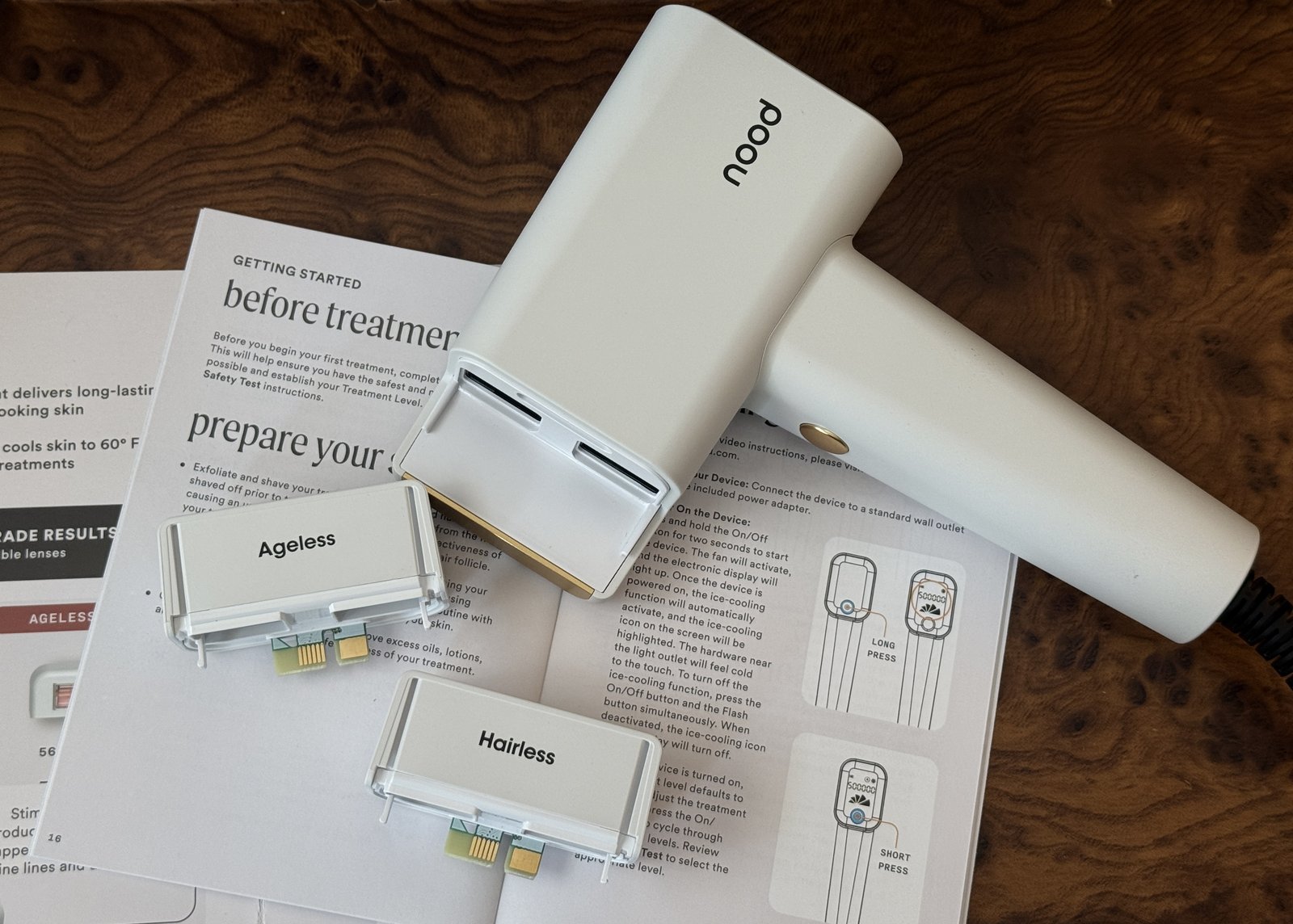
Clean, dry, completely bare skin. No serums, no lotions, no oils, no SPF, no makeup. Anything sitting on your face is sitting between the light and your skin.
Do not exfoliate the same day, before or after. I cannot say that strongly enough. Exfoliating leaves skin more light sensitive, and light is exactly what you are about to put into it.
And do not use it on skin that is freshly sunburnt or freshly tanned. Wait it out.
Can you use both lenses in the same session?
Yes, but on different areas. Legs with the Hairless lens and face with the Ageless lens the same evening is fine. What you do not do is run the skin lens over a patch you have just treated with the hair lens. Keep them separate.
When do you moisturise?
A couple of minutes after, once any warmth has faded, with something gentle and plain and not heavily fragranced. Not a retinol that night. Not an acid that night. Give your skin the evening off from anything active.
And sunscreen the next day, properly, and for several days after. That is the rule with any light treatment and it is the step people skip, which reverses the whole reason you did it in the first place.
Why I wanted an at-home option
My own experience, in the video above
I flinch when I press the button. That is a real reaction to a real thing that happened to me in a clinic, and it is a large part of why an at-home device that I control the settings on appealed to me in the first place.
I want to be careful about what that does and does not mean, because it would be easy to turn my bad experience into a sales pitch. It is one person’s experience with one technician. It is not evidence that clinics are unsafe or that home devices are safer, and I am not going to claim either. Professional treatment is more powerful, and more powerful cuts both ways. What my experience genuinely does tell you is that light treatments are not nothing, that operator skill matters, and that “pain free” is a phrase I will never use about any of this.
Who should skip the Ageless lens?
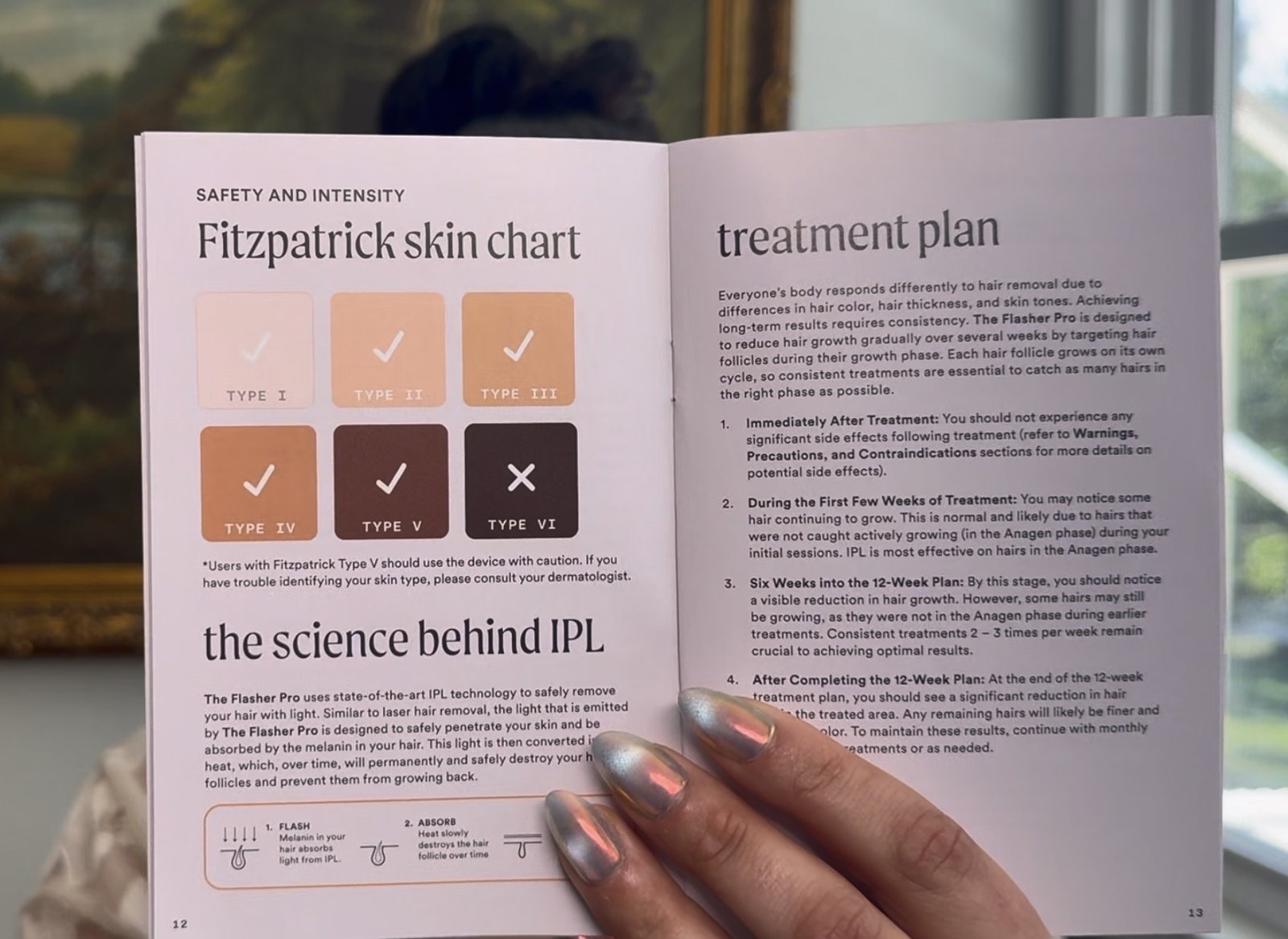
Anyone with a deeper skin tone. Nood lists the skin lens as Fitzpatrick I to IV, fair through olive. This is physics rather than a slight: more melanin in your skin means your skin absorbs the light that is meant to be finding something else. That is a safety issue, not just a weak result. Check the chart before you buy, not after.
Anyone buying it for lines. Covered above. This is not the tool and nothing at this price point is.
Anyone buying this device for their face alone. This is the clearest thing I can tell you. Buy it for the hair removal, where the clearance and the evidence actually are. Then the skin lens is a bonus that came free in the box. If skin is your only goal, your money goes further on sessions with an actual aesthetician, or on a retinoid and sunscreen.
Anyone who will not be consistent. Ten minutes, two to three times a week, for weeks. Like anything else, it needs a routine.
My results so far
I am at week one. I am running it two to three times a week and keeping a written schedule of exactly how many sessions, how many passes, and which areas, plus before and after photos in the same room with the same lighting at the same distance every time, because if the lighting changes between shots the photos are worthless.
I will update this post at week eight with the unretouched comparison. I am genuinely curious myself. Treat the skin lens as a bonus with no expectations attached, be consistent, and we will both find out together.
Nood The Flasher Pro
IPL handset with two cartridges. The Ageless skin lens ships in the box. FDA cleared under K241106 for hair removal and permanent hair reduction.
If you want the device, it is on Amazon here. Buy it for the hair removal, where the clearance and the evidence actually are, and treat the second lens as the free bonus that it is.
Frequently asked questions
Is the Nood Ageless lens FDA cleared?
No. The Nood Flasher Pro holds clearance K241106 for hair removal and permanent hair reduction, and the Ageless skin lens is not covered by it. There is no skin, pigment or collagen indication anywhere in that file, and no published clinical trials exist on at-home IPL for skin. Clearance is also a finding of substantial equivalence, not proof a device works.
Do you shave before using the Ageless lens?
No. You shave before the Hairless lens, never before the Ageless lens. The hair lens needs the light to reach the follicle, so surface hair wastes the energy. The skin lens is not targeting hair, so there is nothing to shave.
What is the difference between the Hairless and Ageless lenses?
The filter, and only the filter. Same lamp, same flash. The hair lens cuts off at 510nm and the skin lens at 560nm. That pushes the output away from what hair pigment absorbs and toward melanin in the skin and haemoglobin in surface vessels.
Does the Ageless lens get rid of wrinkles?
No. A biopsy study after six clinic IPL sessions found no statistically significant change in collagen I, III or VII, elastin or tropoelastin, and no volunteer showed measurable wrinkle reduction. In a three way periorbital comparison, fractional laser won overall and IPL came last for wrinkles. A retinoid is the higher evidence option for lines.
Can you use both Nood lenses in one session?
Yes, on different areas. Legs with the hair lens and face with the skin lens the same evening is fine. Do not run the skin lens over a patch you just treated with the hair lens.
What level should you use on the Ageless lens?
Three, which is mid range on a five level device. There is no evidence a higher setting produces a better outcome, and this technology has a biphasic dose response, meaning past a point more energy works against you. Keep the plate flat, work in overlapping passes, and stay entirely off the eye area and eyebrows.
Does the Ageless lens work on dark skin?
No. Nood lists the skin lens as Fitzpatrick I to IV, fair through olive. On deeper skin tones the epidermis absorbs the light instead of the intended target, which is a burn risk rather than just a weaker result. Check the chart before you buy.
How long does an Ageless lens session take?
About ten minutes, two to three times a week. Clean dry bare skin first, no exfoliating the same day, moisturise a couple of minutes afterwards with something plain, no retinol or acids that night, and sunscreen the next day.
Related comparisons: Nood Flasher Pro vs Braun Silk-expert Pro 5 · Nood Flasher Pro vs Ulike Air 10 · Nood Flasher Pro vs Philips Lumea 9000 · Nood Flasher Pro vs Flasher 2.0 · Does Nood Work on Blonde Hair? · Nood vs Laser Hair Removal · Hairless vs Ageless Lens
Related reading
- Nood Ageless Lens vs an In-Office IPL Photofacial, the published research on what clinic IPL does, what it has never done, and how the energy actually compares.
- PRMR Youth Radiance Vitatinol Serum Review, the retinoid I actually use, and what I would point you to instead of this lens if lines are your goal.
- Nood Hairless vs Ageless Lens, which lens does what and the replacement lens answer.
- Nood Flasher Pro vs Other IPL Devices, how the device compares on the specs each brand publishes.
Sources. FDA 510(k) K241106, applicant Shenzhen Mlay Intelligent Technology Co., Ltd. Intense Pulsed Light Photorejuvenation, A Histological and Immunohistochemical Evaluation, J Drugs Dermatol 2011. Periorbital three way comparison of fractional laser, radiofrequency and IPL, Lasers in Medical Science 2021. IPL for rosacea, systematic review, IJDVL. Tretinoin for wrinkles, meta-analysis of 8 RCTs and 1,361 patients, Dermatology Practical & Conceptual. Huang, Sharma, Carroll and Hamblin, Biphasic Dose Response in Low Level Light Therapy, Dose-Response 2011. Nood product page, FAQ and anti-aging page, checked August 2026.
Leave a Reply