Disclosure
This post contains affiliate links, which means I may earn a small commission if you make a purchase through my links, at no extra cost to you.
To price cut flowers, find your cost per stem first (that is your floor), then charge what the stem is worth on the market, not what it cost you to grow. For a benchmark, the USDA’s Boston wholesale report for September 30, 2025 listed zinnias at $15 to $18 for a 10-stem bunch and large dahlias at $20 for 5 stems, which works out to about $1.50 to $1.80 and $4.00 per stem (USDA AMS, Ornamental Wholesale Market Report, Boston).
From there, the price depends on where the stems are going: a florist, a market bunch, a designed bouquet, or a wedding. I’m a year-one flower farmer gardening in Seneca, South Carolina (Zone 7b), and I built the Flower Farm Pricing Toolkit ($27) to run this math for every channel at once. Below is the same method written out so you can do it by hand.
The formula in four steps
Floor: cost per stem = total cost to grow the crop ÷ (plants × sellable stems per plant). Never sell below this.
Stem value: what the stem sells for wholesale. Use your local wholesale house, florist price lists, or the USDA Boston report.
Channel: sell to florists near wholesale, sell straight bunches at about stem value, and multiply stem value for designed work (2 to 3 times for market bouquets, 4 to 5 times plus a design fee for weddings).
Labor: add your time for arranging, wrapping and selling on top of the stems.
Price per stem: a quick reference
These are the stem tiers I use in my bouquet pricing formula, next to what the USDA’s Boston wholesale report showed for the same kind of flower. Your local market will differ, so treat these as a starting point.
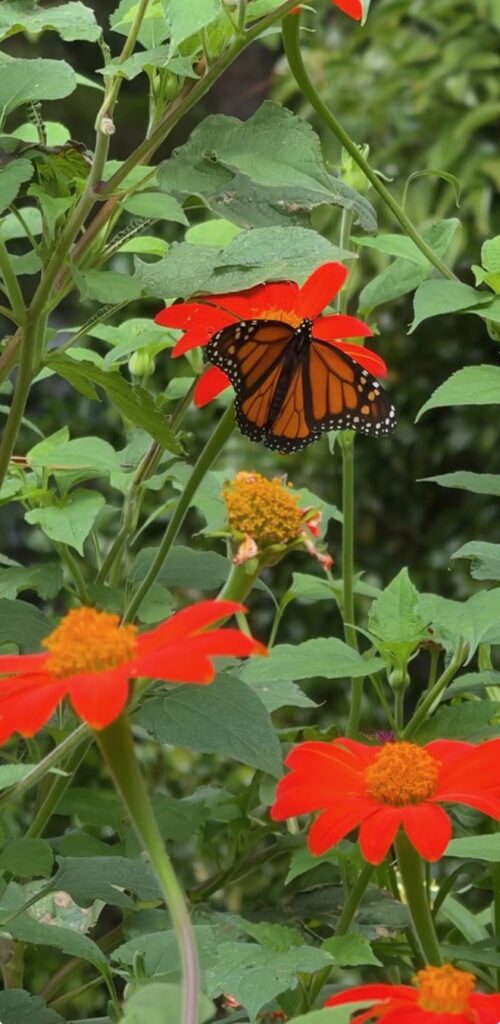
Mexican sunflowers in bloom. Price each stem by what it sells for, not what it cost to grow.
Step 1: find your floor (cost per stem)
Add up everything the crop cost you: seed or tubers, soil amendments, netting, water, and your share of tools and supplies. Divide by the number of stems you can actually sell. That number is your floor. It is not your price.
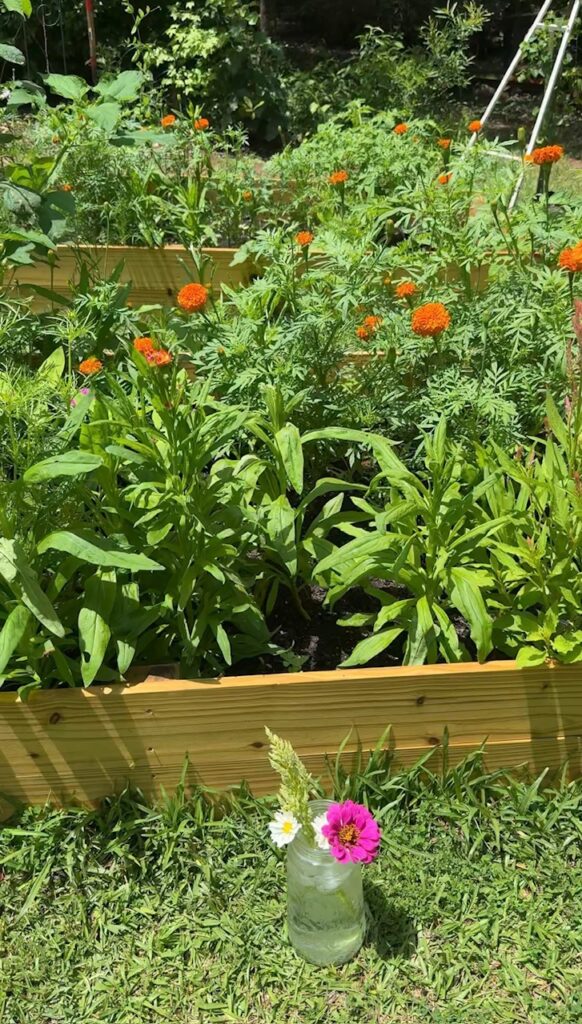
Raised cut flower beds with zinnias in bloom.
If you want to check your own numbers, my free Flower Pricing Reality Check has a cost-per-stem calculator built in, plus a five-sign self-check for underpricing.
Why cost alone underprices you
Say a zinnia bed cost $120 to grow, with 100 plants giving 25 sellable stems each. That is 2,500 stems at about $0.05 each. A 10-stem bunch cost you about $0.50 to grow, while the Boston wholesale report had a 10-stem zinnia bunch at $15 to $18. If you price from cost, you leave almost all of that on the table.
When the floor is high
Some crops cost real money per stem. Utah State University Extension’s peony budget for one high tunnel totals $1,770.64 in costs for 640 harvested stems, which is about $2.77 per stem, and it assumes a sale price of $5.00 per marketable stem (USU Extension, Peony Cut Flower Production Budget, 2021). For crops like this, the floor matters, and selling a hero stem at a mid-range price loses money.
Step 2: price per bunch
Most cut flowers are sold in 10-stem bunches. Mississippi State University Extension notes that sunflowers usually go in 5-stem bundles, dahlias by the single stem, and zinnias in bunches of 10 or 25 (MSU Extension, Do You Want to Grow and Sell Flowers?, 2025).
Bunch price = stems in the bunch × stem value. A straight bunch takes little design time, so it sits close to stem value. A single-variety market bunch sits in the $12 to $18 range in the cheat sheet in my bouquet pricing post; use your own local market to place yourself inside or above that.
Step 3: price by sales channel
Channel
How to set the price
Florists and wholesale
At or a little above the average wholesale price for that stem
Market straight bunches
Stems × stem value
Market mixed bouquets
(Stem value × 2 to 3) + labor
Weddings and events
(Stem value × 4 to 5) + labor + design fee
For florists, grower Gretel Adams wrote in Growing for Market that her farm started from what florists pay wholesale and tried to price “a little above” the average wholesaler (Growing for Market, Guidelines for setting flower prices).
Doing this by hand for every variety and every channel gets slow. The Flower Farm Pricing Toolkit is one spreadsheet with a true cost-per-stem calculator, a bouquet builder, wedding quotes, a bloom bar calculator, and a 35-variety cost and yield reference, so you enter your numbers once.
Step 4: add your labor
Harvesting, conditioning, arranging, wrapping and selling all take time. Pick an hourly rate, time yourself on one bouquet, and add that cost on top of the stems. If you grew the flowers yourself, still count it; otherwise your price only covers the plants.
Worked example: a 10-stem zinnia bunch
Floor: 10 stems × $0.05 = $0.50 (from the zinnia bed above).
Stem value: Boston wholesale had 10 zinnias at $15 to $18.
To a florist: about $15 to $18, at or a little above your local wholesale price.
At market as a straight bunch: inside the $12 to $18 range, set by what your local market will bear.
The cost check tells you that you are safe. The market check tells you what to charge. If you are curious what these prices add up to over a season, see How Much Can You Make Selling Flowers?
Frequently asked questions
How do florists price their flowers?
Florists usually start from what they pay wholesale. Mississippi State University Extension suggests growers compare wholesale florists’ price lists and check the USDA Ornamental Wholesale Market Report for Boston. If you sell to florists, price at or a little above the average wholesale price for that stem.
How much should I charge for a bouquet of flowers?
The cheat sheet in my bouquet pricing post puts a mixed market bouquet at $25 to $45 and a premium designer bouquet at $50 to $85. Build yours with (stem value × 3) + labor, then check it against what sells at your local market.
How many stems are in a $20 bouquet?
There is no standard count. Work backwards: subtract your labor and wrap, divide by your markup, and fill what is left with stems at their value. Hero stems use up the budget fastest, so a $20 bouquet leans on mid-range flowers and filler.
What is the 3-5-8 rule for florists?
It is an arranging guideline, not a pricing rule. Florists quoted by Livingetc describe grouping stems in odd numbers of 3, 5 or 8 for a more natural look. To price an arrangement built that way, count the stems in each tier and use the formula above.
Should I price cut flowers per stem or per bunch?
Both. Know your price per stem, then sell in the units your buyers expect. Mississippi State University Extension notes that most flowers sell in 10-stem bunches, sunflowers in 5-stem bundles, and dahlias by the stem.
Want every price worked out for you? The Flower Farm Pricing Toolkit is a one-time $27 download that works in Excel and Google Sheets. Enter your costs once and it gives you a price for bunches, bouquets, weddings and bloom bars. It does not promise income; it helps you set prices that cover your costs and your time.
Leave a Reply