Disclosure
This post contains affiliate links, which means I may earn a small commission if you make a purchase through my links, at no extra cost to you.
Last updated June 5, 2026 by Anna Katherine Page
This post contains affiliate links. If you buy through them I may earn a small commission, at no extra cost to you. I only recommend products I actually use.
Quick answer: The simplest 7-day cut flower garden spray plan for a beginner is: Day 1 remove damaged leaves; Day 1 evening spray a 3-in-1 neem-based product after sunset; Day 2 to 3 water at soil level only; Day 4 to 5 inspect undersides and repeat the white paper test; Day 6 to 7 check for healthy new growth; repeat in 5 to 7 days if needed. Never spray oils above 85°F or in direct sun. Recovery is judged by new growth, not damaged leaves.
When you first start seeing pest or disease problems in your cut flower garden, it is easy to panic-buy every garden spray on the shelf. Neem oil. Horticultural oil. Insecticidal soap. Spinosad. Copper fungicide. Bt. Suddenly you have a cabinet full of products and still are not sure what to use.
For a beginner cut flower garden in Zone 7b with a mix of minor insect chewing, curled new growth, and fungal leaf spot, I would start much simpler. Here is the one-product-first approach I would use, plus the exact 7-day plan that pairs with it.
First: don’t spray before you inspect
Before treating the whole bed, spend a few minutes figuring out what you may be dealing with. Look for:
Holes in leaves
Brown or black spots
Curled new growth
Aphids on stems
Tiny insects under leaves
Webbing
Distorted buds
Yellowing or stunting
Then use the white paper test. Hold white paper under the affected plant and tap the stem. Tiny insects may fall onto the paper, making them easier to see. For a full walkthrough of diagnostic patterns, read my beginner pest and disease guide.
The one-product cut flower garden spray plan
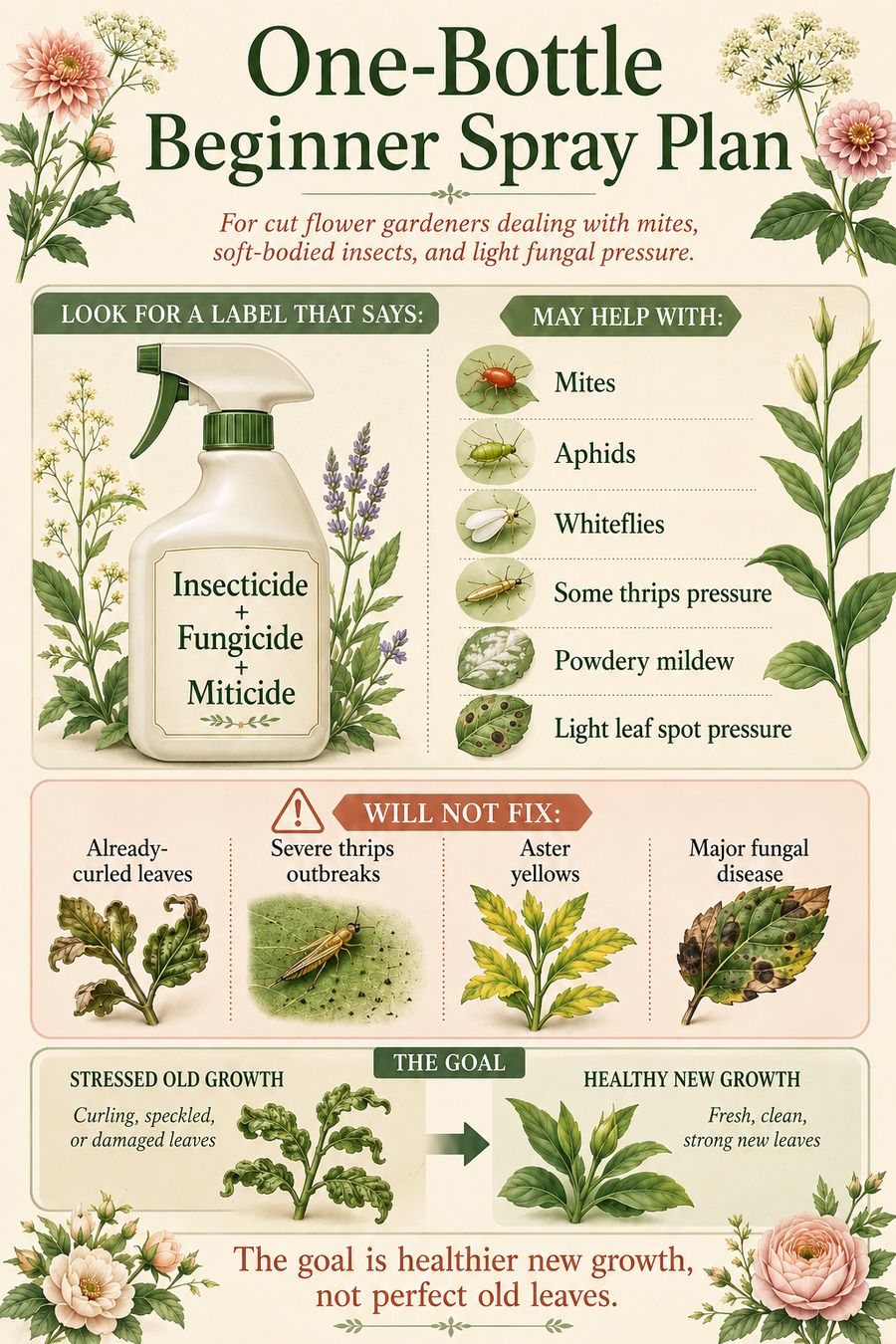
What a 3-in-1 product can and cannot do. Pin this for the next time you stand in the garden aisle.
If you want one product that covers the widest range of beginner issues, look for a spray labeled as Insecticide + Fungicide + Miticide. My go-to is Bonide Captain Jack’s Neem Max. It is a neem-based 3-in-1 that handles the bulk of beginner cut flower issues in one bottle.
It may help with:
Mites
Aphids
Whiteflies
Some thrips pressure
Powdery mildew
Some fungal leaf issues
A neem-based multi-purpose product is a reasonable first step for a beginner gardener because it covers several categories without requiring a complicated spray rotation. You will spray it with a Chapin 2-gallon pump sprayer, which gives you the pressure and reach to coat undersides and growing tips properly.
What one product cannot do
A multi-purpose neem or oil-based spray is useful, not magic. It will not fully control:
Damage that has already happened (already-curled leaves will not uncurl)
The goal is healthier new growth, not perfect old leaves.
Cut flower garden spray plan: hot weather safety rules
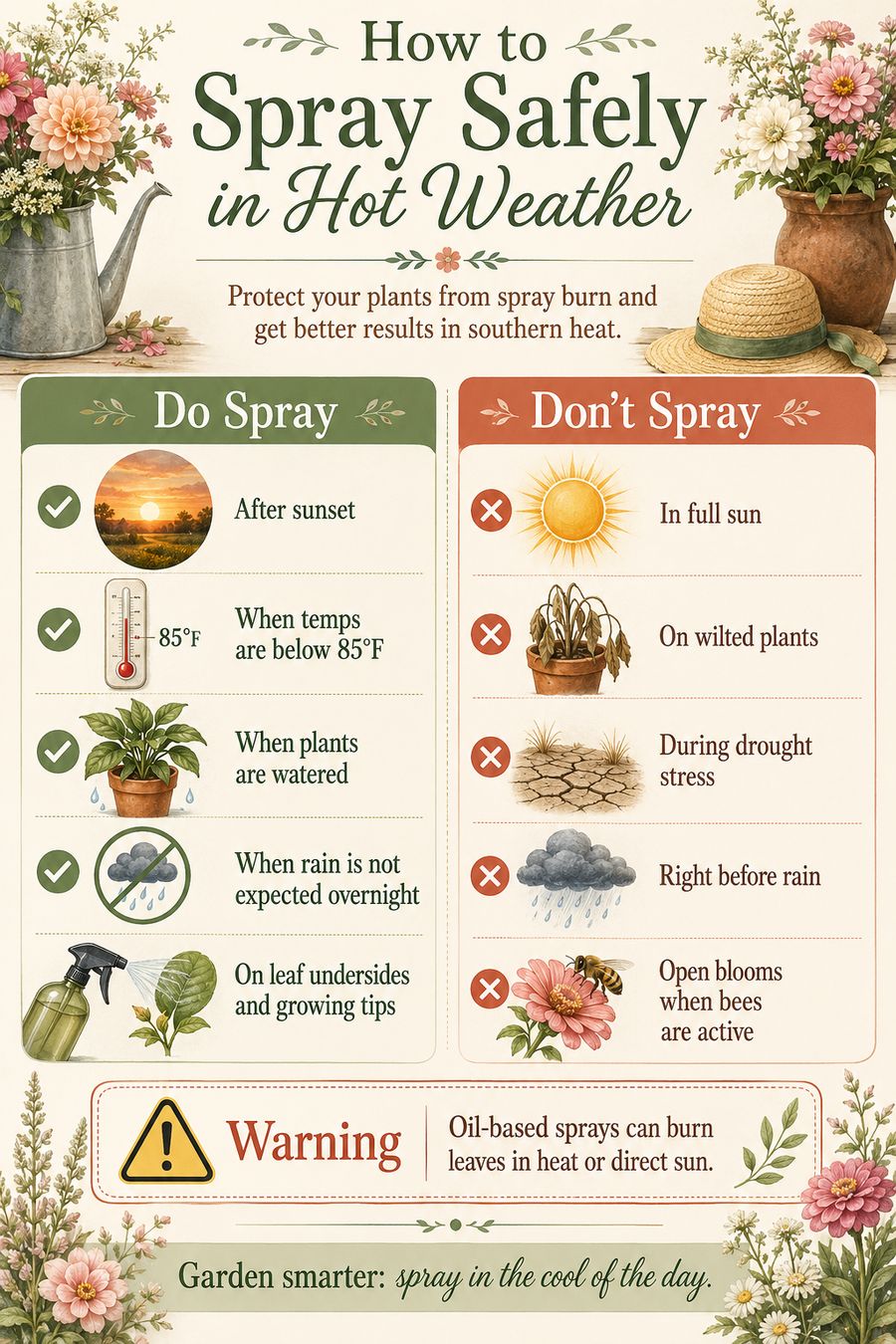
This matters most in the Upstate. Oil-based sprays — including neem and horticultural oils — can burn leaves in heat or full sun. This is the single biggest beginner mistake in Zone 7b.
Memorize the Do / Don’t list. Following this prevents 90 percent of spray-damage issues.
Only spray when:
After sunset
Temperatures are below 85°F
Plants are well-watered
Rain is not expected for several hours
Do not spray stressed, wilted, or drought-dry plants. Keep a garden thermometer in a shaded spot near your beds so you can verify temperature before you spray. A rechargeable headlamp keeps both hands free for evening spraying and is worth the $20.
Cut flower garden spray plan: where to spray
For pests like mites, thrips, and aphids, spraying the top of leaves is not enough. Focus on:
Undersides of leaves
Curled growing tips
New shoots
Stems
Flower buds
Lower leaves near the soil
Many pests hide where sprays do not easily reach. A pump sprayer with a thin wand lets you angle up under leaves where mites and thrips actually live.
Cut flower garden spray plan: how often to spray
For an active issue, I would typically spray every 5 to 7 days for 2 to 3 rounds, always following the product label. Then reassess. Do not spray endlessly just because you are nervous. Watch the new growth. If new leaves come out normal, the plant is recovering.
Cut flower garden spray plan: what to do alongside spraying
Sprays work better when paired with good garden habits:
Remove damaged foliage. Clip off heavily diseased or distorted leaves and trash them.
Mulch the bed. Mulch reduces soil splash and slows fungal disease.
Stop fertilizing temporarily. If pests appeared after fertilizing, pause for 3 to 4 weeks.
Improve airflow. Thin crowded plants where needed.
Water at the base. Avoid wetting leaves, especially in Zone 7b humidity.
Cut flower garden spray plan: when you might need a second product
A one-product approach is a good start, but sometimes you need something more targeted.
You may need a thrip-specific product if: you confirm thrips with the white paper test, buds are distorted, new growth continues to curl after treatment, or you see tiny sliver-shaped insects. Captain Jack’s Deadbug Brew (spinosad) is the standard escalation.
You may need a stronger fungicide strategy if: leaf spots spread rapidly, lower leaves are collapsing, zinnias are defoliating, or weather stays wet and humid for several days. Bonide Copper Fungicide is the standard escalation.
You may need a horticultural oil if: mites are confirmed via white paper test and loupe inspection. Bonide All-Seasons horticultural oil suffocates mite eggs and adults in one application.
For aphids-only pressure (large clusters of soft-bodied insects), Garden Safe insecticidal soap is the simpler answer than escalating to a 3-in-1.
You may need to remove plants if: aster yellows is suspected, flowers are severely deformed, the plant is stunted and worsening, or only one or two plants are affected and you want to protect the rest.
Key takeaways
One bottle to start: a 3-in-1 insecticide/fungicide/miticide (Captain Jack’s Neem Max).
Always inspect before you spray. The white paper test confirms thrips and mites in 60 seconds.
Never spray oil above 85°F or in direct sun. Wait until after sunset.
Focus on undersides, growing tips, and lower leaves — that’s where pests live.
Repeat every 5 to 7 days for 2 to 3 rounds. Then reassess.
Escalate to Captain Jack’s Deadbug Brew (spinosad) for confirmed thrips.
Escalate to Bonide Copper Fungicide for spreading leaf spot.
Recovery is judged by new growth, not damaged leaves.
Frequently asked questions
What is the best all-purpose spray for a beginner cut flower garden?
A neem-based 3-in-1 insecticide + fungicide + miticide like Bonide Captain Jack’s Neem Max. It handles the most common beginner problems (mites, aphids, whiteflies, light fungal pressure) in one bottle without requiring a complicated rotation.
Can you spray neem oil in hot weather?
Only with strict timing. Spray neem and other oil-based products after sunset when temperatures drop below 85°F. Spraying in direct sun or hot temperatures causes leaf burn (phytotoxicity) on tender cut flowers. This rule matters most in Zone 7b summers.
How often should you spray cut flowers for pests?
Every 5 to 7 days for 2 to 3 rounds during an active issue, then reassess. Continued spraying without reassessment wastes product and stresses plants. Watch the new growth; if it emerges normal, the plant is recovering and treatment can stop.
What kills thrips on flowers?
Spinosad-based products (Captain Jack’s Deadbug Brew) are the most effective home garden thrips control. Two to three applications 5 to 7 days apart usually clear an infestation. Spray in the evening, focusing on growing tips and flower buds where thrips hide.
Why didn’t my neem oil work?
Three usual reasons: timing (sprayed in direct sun, oil broke down), coverage (didn’t reach undersides where pests live), or wrong pest (neem suppresses mites and soft-bodied insects but is weak on heavy thrips and severe fungal disease). Escalate to spinosad for thrips or copper fungicide for serious leaf spot.
Should I rotate sprays?
For most beginners with low-to-moderate pressure, one rotation between a 3-in-1 (neem-based) and a targeted product (spinosad or copper) is plenty. Heavy rotation matters mostly for commercial growers managing chemical resistance over multiple seasons.
About Anna Katherine
I am Anna Katherine Page. I share garden, home, beauty, and resale tips from my home in Seneca, South Carolina (USDA Zone 7b). Follow along on TikTok and YouTube.
Leave a Reply