Disclosure
This post contains affiliate links, which means I may earn a small commission if you make a purchase through my links, at no extra cost to you.
Last updated June 5, 2026 by Anna Katherine Page
This post contains affiliate links. If you buy through them I may earn a small commission, at no extra cost to you. I only recommend products I actually use.
Quick answer: The most common cut flower garden pests in Zone 7b are chewing insects (flea beetles, Japanese beetles, caterpillars, slugs), fungal leaf spot on zinnias, and sap-sucking pests (thrips, broad mites, aphids) that cause curled new growth. Start with observation, remove damaged foliage, water at soil level, mulch to prevent soil splash, and only treat when you have confirmed the cause.
If you are new to growing cut flowers, there is a moment every gardener has: you walk outside excited to check on your flowers and suddenly notice holes in the leaves, brown spots, curled tips, or shriveling growth. It can feel like the whole garden is failing.
The good news? Most early summer cut flower garden problems are manageable, especially if you catch them early. In my own backyard cut flower garden in Upstate South Carolina (USDA Zone 7b), I started noticing a mix of leaf chewing, brown spotting, and curled new growth on zinnias, amaranth, and asters around late spring. Here is how to start identifying what is happening and what to do next.
Cut flower garden pests: Zone 7b timeline
Zone 7b in Upstate South Carolina has a long, humid growing season that creates ideal conditions for the full pest rotation. Here is what to expect month by month:
April to May: Aphids appear on tender new growth. Flea beetles arrive as soils warm.
May to July: Peak thrips and broad mite pressure. Japanese beetles emerge mid-June and feed for 4 to 6 weeks.
June to August: Fungal leaf spot peaks on zinnias as humidity rises. Slug pressure rebounds after rain.
August to October: Powdery mildew on zinnias and asters. Aster leafhoppers spread aster yellows.
Knowing the timeline lets you scout for the right problem at the right time instead of guessing.
1. Holes in leaves: usually insect feeding
If you see small to medium holes in leaves on plants that otherwise look healthy, it is usually insect chewing damage. The common culprits in Zone 7b are:
Flea beetles (small round shotgun holes)
Caterpillars (irregular larger holes, often near leaf edges)
Japanese beetles (lacy skeletonized damage on zinnias and roses)
Grasshoppers (jagged larger holes)
Earwigs (overnight damage, especially in mulch)
Slugs and snails (slimy trails, ragged holes near the soil)
In my garden, the amaranth had leaf holes but the plant itself looked strong, green, and was actively blooming. That kind of damage is usually more cosmetic than catastrophic.
What to do
Start by inspecting plants in the evening or early morning. Some pests feed at night and hide during the day.
Handpick beetles and caterpillars directly off the plant in early morning when they are sluggish. Drop them in soapy water.
For caterpillar pressure,Bonide Thuricide (Bt) is the clean, target-specific solution. Bacillus thuringiensis only affects caterpillars and is safe for bees, birds, and beneficial insects.
For slugs, sprinkle Sluggo iron phosphate bait around the base of plants. It is pet-safe and breaks down into iron and phosphate (a soil amendment).
For Japanese beetles, install a Japanese beetle trap at least 30 feet from your cut flower beds (traps attract more than they catch when placed too close).
Hang yellow sticky traps near beds to monitor population pressure of small flying pests.
Avoid over-fertilizing, which encourages soft, pest-attracting growth.
For light chewing damage, do not panic or immediately spray everything. A few holes does not mean the plant is ruined.
2. Brown or black spots on zinnia leaves: likely fungal leaf spot
Zinnias are one of the most rewarding cut flowers to grow, but in the hot, humid Upstate they are also extremely prone to leaf spot. By early July in Zone 7b, expect to see brown, black, or purplish spots on lower leaves, especially after rain or overhead watering.
Common Zone 7b zinnia leaf issues include:
Alternaria leaf spot (dark brown spots with concentric rings)
Cercospora leaf spot (small dark spots with purple halos)
Bacterial leaf spot (water-soaked spots that turn dark)
Powdery mildew (white powdery coating, usually late summer)
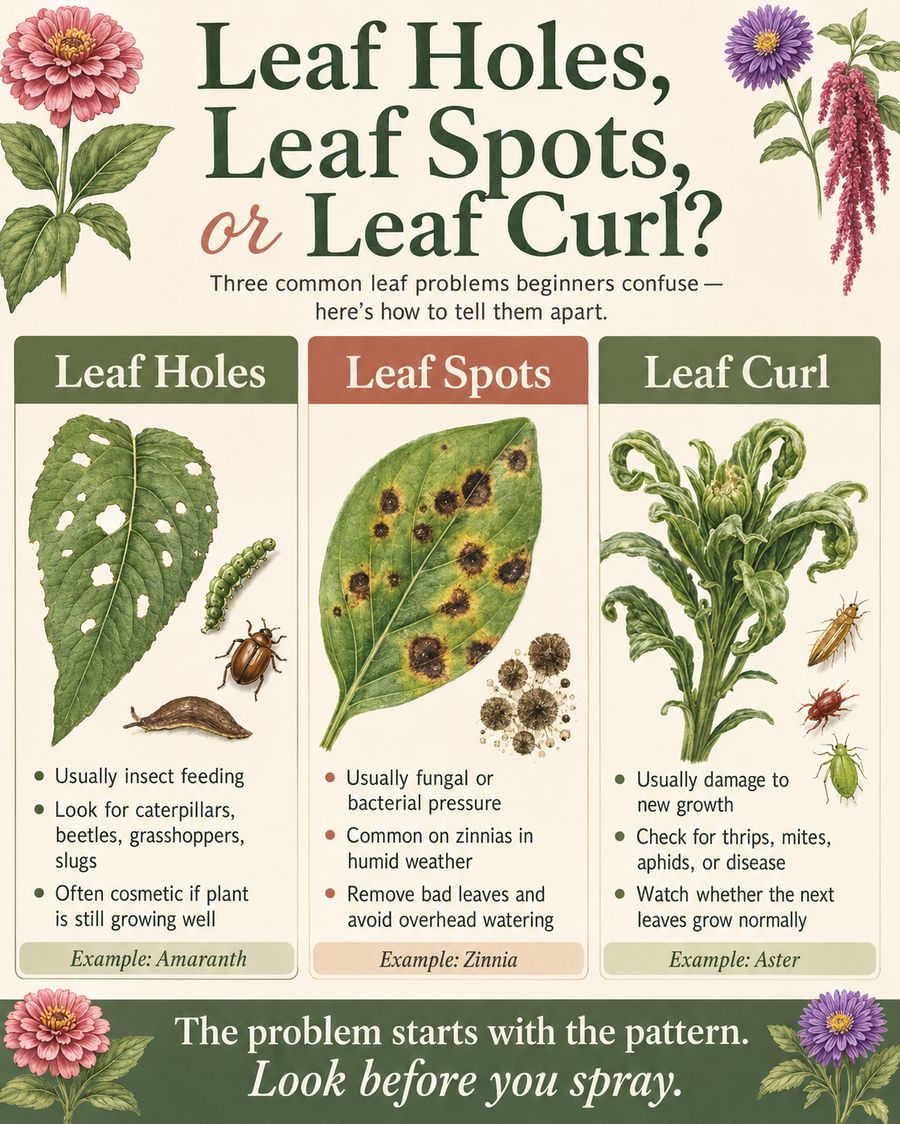
Pattern matters. The three most common visual problems and how to tell them apart.
What to do
The best first step is sanitation. Remove leaves that are heavily spotted, yellowing, touching the soil, or more than 25 percent damaged. Do not compost diseased foliage; home compost piles rarely hit the temperatures needed to kill fungal spores. Bag and trash.
Then add mulch around the plants. Mulch is your biggest disease-prevention tool. It blocks fungal spores from splashing up from the soil onto lower leaves during rain. Good options for Zone 7b include:
Also, avoid overhead watering. Water at the base of plants using a soaker hose, drip irrigation, or a gentle stream at soil level. According to the Clemson HGIC zinnia disease fact sheet, drip-style watering reduces leaf-wetness duration, which is the primary driver of fungal pressure in our humidity.
3. Curling, twisted, or shriveled new leaves: sap-sucking pests
Curled new growth is different from basic insect holes. If the newest leaves are twisted, puckered, thickened, or dying back, the issue is happening at the growing tip of the plant. Possible causes include:
Thrips
Broad mites
Aphids
Cyclamen mites
Herbicide drift
Aster yellows disease
In my case, I had not sprayed herbicide and the plants were seed-started that year. The damage appeared shortly after fertilizing, which made pests like thrips and mites more likely than a systemic disease.
What to do
Inspect the curled growth closely. A simple test: hold a sheet of white paper under the affected plant tip, tap the stem or flower bud sharply, and look for tiny insects falling onto the paper. Thrips look like tiny tan, brown, or black slivers. Mites look like tiny moving dots and are hard to see without magnification.
Fertilizer is not bad, but too much nitrogen creates soft, lush growth that pests love. If you notice distorted growth about a week after fertilizing, pests may have moved in to feed on that tender new growth. The fertilizer did not cause the problem directly — it made the plants more attractive to insects and mites.
What to do
Pause fertilizing for 3 to 4 weeks while you treat the issue. Let the plants harden off a bit and focus on consistent watering, better airflow, removing damaged foliage, and monitoring new growth.
The best way to manage cut flower garden pests and disease is to make the garden less inviting in the first place.
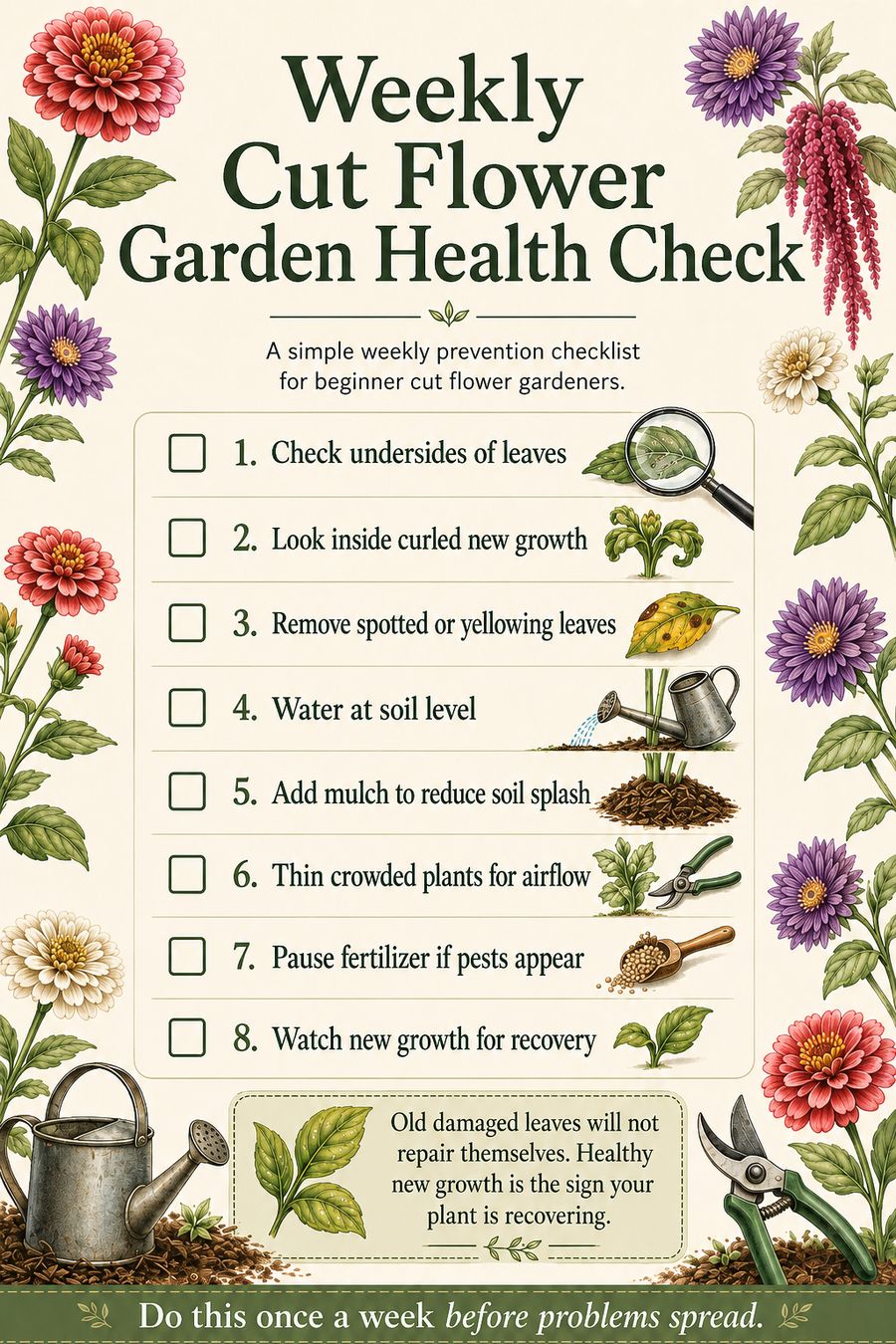
Print this and tape it inside a garden shed. Eight checks every week and most problems never escalate.
Water at the soil level. Wet leaves invite fungal disease. Use drip irrigation or a soaker hose.
Mulch your beds. Mulch reduces soil splash, retains moisture, and keeps lower leaves cleaner.
Space plants properly. It is tempting to cram in as many flowers as possible, but crowded plants trap humidity. Zinnias, asters, cosmos, and dahlias all benefit from better airflow.
Remove damaged leaves quickly. Walk the garden every few days and clip off problem foliage before it spreads.
Avoid over-fertilizing. More fertilizer does not mean more flowers. Too much nitrogen leads to lush leaves and more pest pressure.
Watch the new growth. Old damaged leaves will not repair themselves. The real test is whether the next leaves emerge healthy.
Key takeaways
Holes usually point to chewing insects (handpick, Bt for caterpillars, Sluggo for slugs).
Brown spots on zinnias usually point to fungal leaf spot (sanitation + mulch + soaker hose).
Twisted new growth usually points to thrips, mites, herbicide drift, or aster yellows.
Pest problems after fertilizing usually mean pests are feeding on soft new growth.
Zone 7b pest pressure peaks May through August. Scout weekly during these months.
Treat only after you have identified the cause. Mulch, airflow, and soil-level watering prevent more problems than spraying ever cures.
Frequently asked questions
What are the most common cut flower garden pests in Zone 7b?
The most common Zone 7b cut flower garden pests are flea beetles, Japanese beetles, caterpillars, slugs, thrips, broad mites, and aphids. Fungal leaf spot on zinnias and aster yellows on asters are the dominant diseases. Pest pressure peaks May through August.
How do I know if my zinnia leaves have fungal leaf spot?
Fungal leaf spot on zinnias shows up as brown, black, or purplish spots on the lower leaves, often with yellow halos or concentric rings. It usually starts in mid summer in humid climates like Upstate South Carolina. Remove affected leaves, add mulch to block soil splash, and switch to soaker-hose watering.
What is the safest way to treat caterpillars on cut flowers?
Bacillus thuringiensis (Bt) products like Bonide Thuricide are the cleanest caterpillar solution. Bt only affects caterpillars and is safe for bees, beneficial insects, birds, pets, and people. Spray every 7 to 10 days while caterpillars are actively feeding.
Are Japanese beetle traps a good idea near my cut flowers?
Japanese beetle traps work, but only if placed at least 30 feet away from the flower bed you want to protect. The pheromone lure attracts more beetles than the trap catches, so a trap placed inside the bed makes the problem worse. Place traps at the property edge, downwind of beds.
How often should I scout my cut flower garden?
Every 3 to 5 days during peak Zone 7b pest season (May to August). A quick weekly walk with the checklist above catches most problems before they spread. Bring bypass pruners and a small bucket so you can remove damaged foliage and handpick visible pests on the same walk.
Will fertilizer fix my pest problem?
No, and it usually makes pest problems worse. Excess nitrogen creates soft, tender new growth that thrips, aphids, and mites prefer. Pause fertilizing for 3 to 4 weeks while you treat the issue and let the plant harden off.
About Anna Katherine
I am Anna Katherine Page. I share garden, home, beauty, and resale tips from my home in Seneca, South Carolina (USDA Zone 7b). I grow a backyard cut flower garden every year and document the wins and the pest battles on TikTok and YouTube.
Leave a Reply