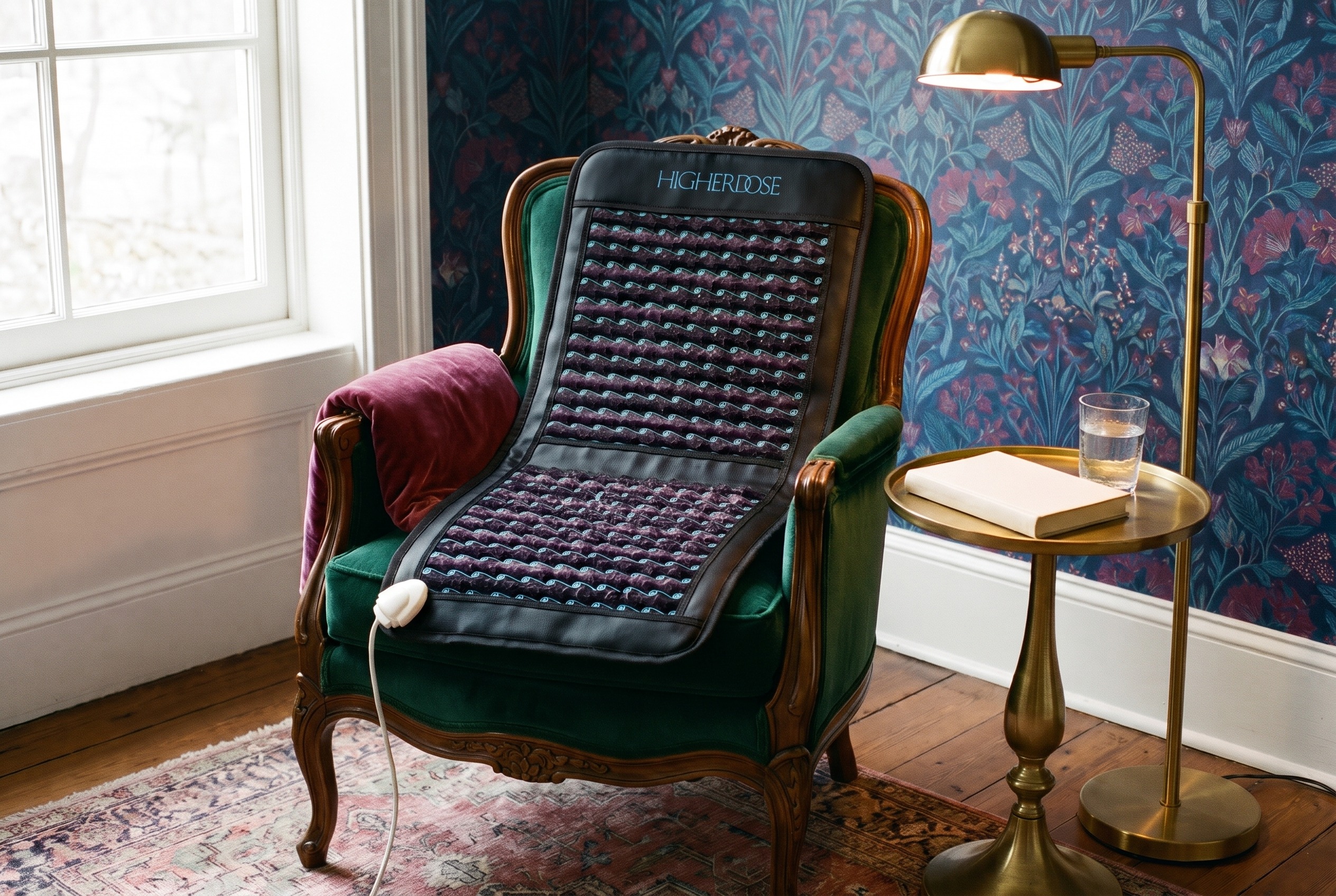
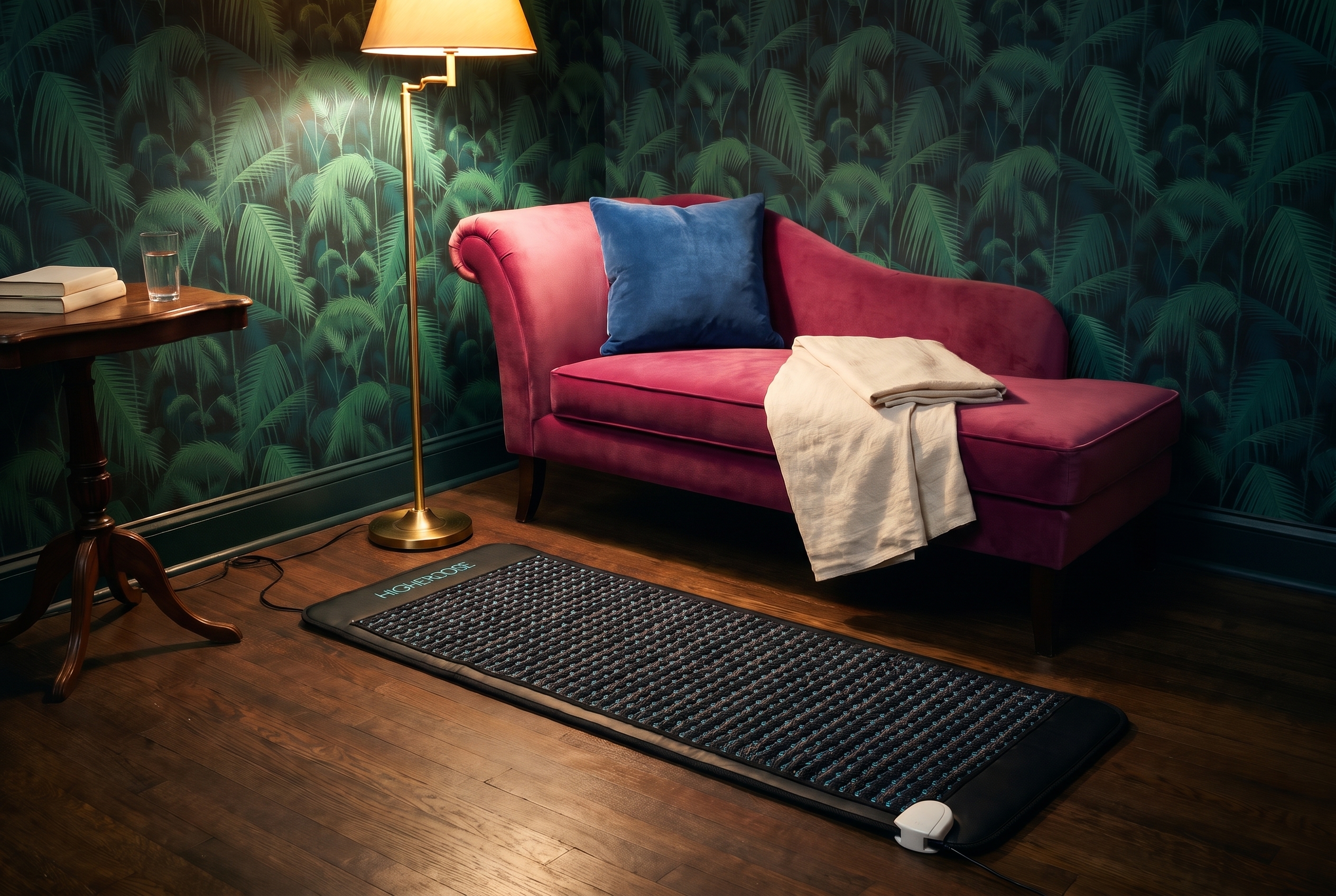
Quick answer: Buy the HigherDOSE Infrared PEMF Go Mat first if you want warmth you can use every day with no setup or cleanup, sitting in a chair or lying on the floor. Buy the HigherDOSE Infrared Sauna Blanket first if what you want is a full sweat session and you have about an hour, a heat-safe surface and time to wipe it down afterward. For most people choosing one, the Go Mat is the easier first buy because it fits into a normal evening.
Last updated: November 4, 2026
This HigherDOSE PEMF mat vs sauna blanket guide is for the buyer who wants one HigherDOSE heat product and is stuck between the two. Everything below comes from HigherDOSE’s own product pages and FAQ, checked on November 4, 2026. Benefits are reported as HigherDOSE’s claims, not as results.
Table of Contents
HigherDOSE PEMF mat vs sauna blanket at a glance
Feature
HigherDOSE Infrared PEMF Go Mat
HigherDOSE Infrared Sauna Blanket
What it is
A half-size infrared mat with PEMF
A zip-up infrared sauna you lie inside
How you use it
Sit on it in a heat-resistant chair or lie on it on the floor
Lie inside it on a flat, heat-safe surface, zipped in
Size
19.5 x 39 in (50 x 100 cm)
Not listed by HigherDOSE
Weight
11 lbs (5.2 kg)
Not listed by HigherDOSE
Heat
Far infrared, set on the controller
Far infrared, up to 175°F, levels 1 to 9
PEMF
2 cores, 4 levels (3 Hz to 23 Hz)
None
Layers
6: PEMF, far infrared heat, charcoal, clay, magnetic, amethyst and obsidian crystals
5: far infrared heating, charcoal, clay, magnetic strip, amethyst and obsidian crystals
Session
20-minute PEMF cycles, repeat as you like; auto-shutoff after up to 8 hours
1-hour timer; start with 30 to 40 minutes
Setup
Plug in and turn on
Preheat 10 to 15 minutes, dress in long sleeves, pants and socks or use an insert
Specs are from the HigherDOSE Go Mat and Sauna Blanket product pages. HigherDOSE lists a 120-day money back guarantee on its own site; when you buy from a retailer, check that retailer’s return policy before you order.
The real difference: warm and still, or a full sweat
HigherDOSE’s own comparison page puts it simply: the sauna blanket is for sweat sessions, and the PEMF mat is for relaxing with no setup or cleanup and no sweat. That one line decides it for most buyers. The two products share far infrared heat, a charcoal layer, a clay layer, a magnetic layer and a crystal layer, so the choice is really about the session you want, not the materials.
The Go Mat is something you sit or lie on while you read, meditate, stretch or wind down. You can step on and off. HigherDOSE says each PEMF cycle runs 20 minutes and can be restarted as many times as you like.
The Sauna Blanket is something you get inside. It is a planned session: preheat, dress for it, zip in, then cool down and wipe it clean.
You want to sweat. HigherDOSE positions the blanket for full sweat sessions; the mat is not built for that.
You can set aside about an hour, counting the 10 to 15 minute preheat, a 30 to 40 minute session and cooldown.
You have a flat, heat-safe spot to lay it out, and you are fine wiping it down after it cools.
You are happy with one or two sessions a week to start, which is what HigherDOSE’s FAQ suggests.
HigherDOSE says to wear long sleeves, pants and socks inside the blanket, with 100% cotton working best, or to use its sauna blanket insert, which is sold separately. Plan for that in what you buy.
Setup, cleanup and space
This is where the HigherDOSE PEMF mat vs sauna blanket choice feels most different day to day.
HigherDOSE PEMF Go Mat
HigherDOSE says to place the Go Mat on a heat-resistant chair or surface, or lay it flat on the floor, plug it in, press power, then use the PEMF button to cycle levels and the controller for heat. The mat shuts off after up to 8 hours. HigherDOSE also says not to leave the heat set high unattended.
HigherDOSE Infrared Sauna Blanket
HigherDOSE says to lay the blanket flat on a heat-safe surface, plug it in and preheat for 10 to 15 minutes before zipping in. It runs on a 1-hour timer with heat levels 1 to 9, up to 175°F. After a session, let it cool before wiping it down. HigherDOSE describes the shell as waterproof polyurethane and includes a carrying bag for storage.
What the research says about heat sessions
HigherDOSE lists benefits for both products, including relaxation, recovery, mood and sleep. Those are the brand’s own claims; HigherDOSE’s pages also state that the products are not intended to diagnose, treat, cure or prevent any disease. Neither product is presented here as a treatment for anything.
On infrared saunas in general, Cleveland Clinic says the evidence is limited: some studies suggest sauna use may support heart function, but more research is needed, especially on infrared saunas, and many pain studies are small. Its main safety concern is dehydration. It suggests bringing water, avoiding alcohol and getting out right away if you feel dizzy or nauseated.
Check with your doctor first before using either product if you are pregnant or trying to conceive, are nursing, take medication, or have a heart condition or any condition affected by heat. HigherDOSE says the PEMF Go Mat is not for use during pregnancy or by people with hemophilia, pacemakers or other implanted electrical devices. Cleveland Clinic notes that sauna use, especially early in pregnancy, can be harmful to the fetus.
HigherDOSE PEMF mat vs sauna blanket: which one to buy first
Most people: the HigherDOSE Infrared PEMF Go Mat. Daily use, no cleanup, fits a chair or the floor and stores under the bed.
The sweat-session person: the HigherDOSE Infrared Sauna Blanket. Built for a full sweat, with a planned hour and a quick wipe-down after.
Neither is better for everyone. HigherDOSE positions its Infrared Sauna Blanket for full sweat sessions and its Infrared PEMF Go Mat for calm warmth with no setup or cleanup. If you want something you can use most days in a chair or on the floor, the Go Mat fits better. If you want a planned sweat session once or twice a week, the Sauna Blanket is the one to buy.
How long should you stay in the HigherDOSE sauna blanket?
HigherDOSE says to start with 30 to 40 minutes per session and adjust to your comfort, and its FAQ suggests 30 to 50 minutes once you are used to it. The blanket has a 1-hour timer. Cleveland Clinic suggests easing into heat sessions and getting out right away if you feel dizzy or nauseated. Drink water before and after, and skip alcohol.
Can you use the HigherDOSE PEMF Go Mat every day?
HigherDOSE says you can use the Go Mat as long as you want, with each PEMF cycle running 20 minutes and restarting as often as you like. The mat shuts off after up to 8 hours. HigherDOSE also says not to leave the heat set high unattended and to avoid Level 4, the Focus setting, before bed. Check with your doctor first if you have a health condition.
Do you have to clean the HigherDOSE sauna blanket?
Yes. HigherDOSE says to let the Infrared Sauna Blanket cool and then wipe it down after each session, and it sells a cleaner separately. It also recommends wearing long sleeves, pants and socks inside, ideally 100% cotton, or using its sauna blanket insert, so your skin is not directly on the heated surface. The PEMF Go Mat has no cleanup step listed.
Can you put the HigherDOSE PEMF Go Mat on a bed?
HigherDOSE says to place the Go Mat on a heat-resistant chair or surface, or to lay it flat on the floor for stretching and meditation. It does not list a bed as a place to use it, so treat the floor or a heat-resistant chair as the safe choice. HigherDOSE does say the Go Mat slides under the bed for storage when you are not using it.
Who should not use a sauna blanket or a PEMF mat?
HigherDOSE says its PEMF Go Mat is not for use during pregnancy or by people with hemophilia, pacemakers or other implanted electrical devices. Cleveland Clinic says sauna use, especially early in pregnancy, can be harmful to the fetus, and advises people with existing health conditions to check with a doctor first. Ask your doctor before starting either one if you take medication or have a heart condition.
Sources
Sources checked on November 4, 2026. Figures from brands are reported as the brand’s own claims.
Quick answer: The best menopause gift for most women is the Midi Menopause Survival Kit from Midi Health, a three-supplement daily set made for midlife. If her nights are the hard part, give the Midi Nightly Steady Sleep+ or the Ozlo Sleepbuds 2, and pair either with a small cooling comfort like a quiet bedside fan, which the National Institute on Aging suggests for hot flashes.
Last updated: November 2, 2026
These menopause gifts are grouped by what she is dealing with: everyday support, hot and broken nights, perimenopause, and light sleep. Every pick below was checked on the brand’s or retailer’s own product page, and anything a brand says its product does is reported as that brand’s claim.
A note before you buy a supplement as a gift: supplements are personal. Nothing here treats or diagnoses anything, and she should check with her doctor before starting one, especially if she is pregnant, nursing or takes any medication. The kindest version of these gifts comes with a note that says exactly that.
Table of Contents
Menopause gifts at a glance
Gift
Best for
What it is
Where to buy
Midi Menopause Survival Kit
Everyday support
Three Midi supplements: Daily Cortisol Support, Daily Fiber+ and Daily Brain Boost
Midi Health
Midi Nightly Steady Sleep+
Staying asleep on warm nights
Melatonin-free powder sticks with glycine, magnesium glycinate, myo-inositol and zinc citrate
Midi Health
Ritual Perimenopause Health
Hormone-free daily support in perimenopause
Capsules with Shatavari extract, DIM and evening primrose oil
Ritual
Ozlo Sleepbuds 2
Light sleepers with a snoring partner
Sleep earbuds with built-in noise-masking audio
The Sleep Code
Bedside fan and layered bedding
Hot flashes at night
Low-cost comfort the National Institute on Aging suggests
Any home store
Best overall menopause gift: Midi Menopause Survival Kit
The Midi Menopause Survival Kit is the easiest menopause gift to get right because it covers the day rather than one symptom. Midi Health, a telehealth practice built around women in midlife, bundles three of its own supplements in one box:
Daily Cortisol Support (vegan capsules): ashwagandha KSM-66, L-theanine, magnesium, phosphatidylserine and magnolia bark extract. Midi says it supports calm focus and better sleep.
Daily Fiber+ (gummies): FiberSMART fiber, green banana powder resistant starch and chromium picolinate. Midi says each serving gives 5g of fiber with zero sugar.
Daily Brain Boost: vitamin B12 (methylcobalamin), choline and CoQ10. Midi says it supports mental clarity, memory and steady energy.
Midi’s own routine is simple, which matters in a gift: Brain Boost in the morning, Fiber+ at midday and Cortisol Support after dinner. Midi says the kit is stimulant-free, third-party tested and made in the USA. On the product page you can pick a one-time purchase instead of a subscription, which is the better choice for a gift.
Who it suits: the friend, sister or mom who says she feels scattered, stressed and off her routine, and who already likes the idea of supplements. Who should skip it: anyone whose doctor has her on a careful medication plan, until she has asked about each ingredient.
For hot, broken nights: Midi Nightly Steady Sleep+
For the woman who falls asleep fine and then wakes up warm at 2 am, the Midi Nightly Steady Sleep+ is the more targeted gift. Midi says it is made to help you stay asleep rather than fall asleep, by supporting a cooler body temperature at night and a quieter mind. It comes as Tropical Blend powder sticks you mix with water, and it is melatonin-free.
Glycine: Midi says it supports the body’s natural drop in core temperature at bedtime.
Magnesium glycinate: Midi says it helps quiet a busy mind at night.
Myo-inositol and zinc citrate: Midi says they support the brain signaling involved in mood, relaxation and sleep.
Midi’s FAQ is clear about who should talk with a clinician first: anyone pregnant or breastfeeding, anyone with severe kidney disease, and anyone taking thyroid medication or osteoporosis medication such as bisphosphonates, which Midi says may need to be taken at least two hours apart. Midi also lists mild, temporary digestive upset as a possible side effect. It is a new product, so it has far fewer reviews than the Survival Kit.
For perimenopause, hormone-free: Ritual Perimenopause Health
If she is earlier in the transition, the Ritual Perimenopause Health supplement is the pick among these menopause gifts. Ritual describes it as hormone-free and built around three ingredients:
Shatavari extract: Ritual says it supports mood, hot flashes, night sweats, sleep and daily hormone balance.
DIM: Ritual says it helps the body break down estrogen to support healthy estrogen balance.
Evening primrose oil: Ritual says it is included to help the body absorb DIM.
Those are Ritual’s own claims, each marked with an asterisk on its product page. For balance, the National Institute on Aging says it is not known whether herbs and other natural products are helpful or safe for hot flashes, and it advises talking with a doctor before taking any herb or supplement. On the practical side, Ritual lists a 30-day money-back guarantee and HSA or FSA payment on the product page.
Not all menopause gifts have to be supplements. If her sleep breaks easily and a partner snores, the Ozlo Sleepbuds 2 are a strong non-supplement gift. The Sleep Code’s listing says they were developed by former Bose engineers, are made to be worn all night (including by side sleepers), mask noise with built-in audio, stream her own music or podcasts over Bluetooth and track sleep with built-in sensors.
The National Institute on Aging’s own hot flash tips read like a gift list: a fan by the bed, a portable fan for when a hot flash starts, bedding in layers she can adjust, a lower bedroom temperature, small sips of cold water before bed, and clothing in layers she can take off quickly. Here’s what to look for if you add one of these small menopause gifts to a bigger present:
A quiet bedside fan that runs low and steady without lighting up the room.
A small portable fan that fits in a handbag or desk drawer.
Breathable layers for the bed: a light throw or a top sheet she can kick off without losing the whole duvet.
A carafe and glass for the nightstand, so cold water is within reach.
How to give a supplement without it feeling like a hint
Give it to someone who has already talked about her symptoms with you. A surprise menopause supplement can land as a comment about her age.
Pair it with a comfort piece from the list above, so menopause gifts read as care, not a fix.
Choose the one-time purchase, not a subscription, and include a gift receipt where the brand allows it.
Add the doctor line in your card. It is the most useful sentence in the box.
Menopause gifts FAQ
What is a good gift for a woman going through menopause?
A good gift for a woman going through menopause supports how she feels day to day. The Midi Menopause Survival Kit is the easiest everyday pick, since it bundles three Midi supplements for stress, digestion and focus. If sleep is her main complaint, choose Midi Nightly Steady Sleep+ or the Ozlo Sleepbuds 2. A bedside fan or layered bedding makes a thoughtful low-cost add-on. She should check with her doctor before starting any supplement.
What is the best gift for someone with hot flashes?
The best gift for someone with hot flashes helps her cool down fast, especially at night. The National Institute on Aging suggests a fan by the bed, a portable fan, layered bedding and clothing she can remove quickly. For a bigger gift, Midi Nightly Steady Sleep+ is a melatonin-free sleep supplement that Midi says supports staying cool at night. Those are Midi’s claims, so she should ask her doctor before starting it.
What should be in a menopause care package?
A menopause care package works best when it mixes comfort with one useful item. Start with a quiet bedside fan or portable fan, a light throw for layering and a carafe for cold water by the bed. Add one main gift, such as the Midi Menopause Survival Kit for everyday support or the Ozlo Sleepbuds 2 for a light sleeper. Include a card that suggests checking with her doctor before trying any supplement.
Is it OK to give a menopause supplement as a gift?
It is fine to give a menopause supplement as a gift when she has already talked about her symptoms and is open to supplements. Choose a one-time purchase rather than a subscription, pair it with a comfort item so it reads as care, and suggest she check with her doctor first, especially if she takes medication. The National Institute on Aging notes that the safety and benefit of many herbal products for hot flashes are not known.
What are good Christmas gifts for women going through menopause?
Good Christmas gifts for women going through menopause are practical and a little indulgent. The Midi Menopause Survival Kit covers everyday support, Ritual Perimenopause Health suits someone earlier in the transition who wants a hormone-free option, and the Ozlo Sleepbuds 2 suit a light sleeper with a snoring partner. Wrap any of them with a small comfort piece, like a quiet bedside fan or breathable bedding, for a gift that feels personal.
Quick answer: Pick the HigherDOSE Infrared PEMF Pro Mat if you want to lie down on it head to toe and have floor space for a 6-foot mat. Pick the HigherDOSE Infrared PEMF Go Mat if you will mostly sit on it in a desk or reading chair, or need to slide it under the bed when you are done. HigherDOSE says both use the same six layers and the same four PEMF levels, so the choice comes down to size, weight and where you will use it.
Last updated: October 31, 2026
This HigherDOSE PEMF Go Mat vs Pro Mat comparison covers what each infrared mat is, the specs HigherDOSE lists for both, where each one fits in a home, and who should buy which. Everything below comes from HigherDOSE’s own product pages, checked on the date above. Anyone searching “HigherDOSE PEMF Go Mat vs PEMF mat” is asking the same question: the full-size mat is now sold as the Infrared PEMF Pro Mat.
Table of Contents
HigherDOSE PEMF Go Mat vs Pro Mat at a glance
Feature
HigherDOSE Infrared PEMF Go Mat
HigherDOSE Infrared PEMF Pro Mat
Size
19.5 x 39 in (50 x 100 cm)
29 x 73 in (73.5 x 185 cm)
Weight
11 lbs (5.2 kg)
43 lbs (19 kg)
PEMF cores
2
4
PEMF levels
4 (3 Hz to 23 Hz)
4 (3 Hz to 23 Hz)
Layers
Six: PEMF, far infrared, charcoal, clay, magnetic, amethyst and obsidian crystals
The same six layers
Crystals
Amethyst and obsidian (weight not listed on its page)
20 lbs of amethyst and obsidian, per the Pro Mat page
Negative Ion button
Not listed on the Go Mat page
Yes, listed in the how-to steps
Power (US)
110V, 120 watts
110V, 180 watts
Where HigherDOSE says to use it
A heat-resistant chair or surface, or flat on the floor
A heat-resistant surface; skip beds, couches, memory foam and leather
Storage
Slides under a bed, per HigherDOSE
Large and heavy; plan a spot to leave it out
Best for
Sitting at a desk, a reading chair, small rooms
Lying down head to toe on the floor
HigherDOSE PEMF Go Mat vs Pro Mat specs from HigherDOSE’s own product pages. The 20-pound crystal figure for the Pro Mat also matches The Sleep Code’s listing.
What the two mats have in common
Both are HigherDOSE infrared PEMF mats, which pair two things: far infrared heat you can feel, and PEMF (pulsed electromagnetic field) settings that run at low frequencies. HigherDOSE lists the same four PEMF levels for both mats, each named for a brain wave frequency:
Level 1, Sleep (3 Hz, Delta): for winding down before bed.
Level 2, Grounding (7.8 Hz, Theta): for resetting when you feel overstimulated.
Level 3, Create (10 Hz, Alpha): for meditating or relaxing while awake.
Level 4, Focus (23 Hz, Beta): for energy and focus. HigherDOSE says to avoid it before bed.
The heat is set separately on the controller, and HigherDOSE describes a full PEMF session as one 20-minute cycle that can be repeated. Both product pages carry the same safety note: the mats are not for use during pregnancy or by people with hemophilia, pacemakers or other implanted electrical devices.
What the Pro Mat adds
The HigherDOSE Infrared PEMF Pro Mat is the full-length version: 29 by 73 inches, which is long enough for most adults to lie on with their head and feet on the mat. HigherDOSE lists four PEMF cores in the Pro Mat against two in the Go Mat, plus 20 pounds of amethyst and obsidian crystals and a Negative Ion button in its how-to steps. The cover is listed as non-toxic vegan leather.
The tradeoff is size. At 43 pounds and just over 6 feet long, the Pro Mat is a piece of furniture more than an accessory, and HigherDOSE says it should go on a heat-resistant surface, not a bed, couch, memory foam or leather. In practice that means the floor, ideally a spot where it can stay out. The move here is to measure the floor space next to a bed or in a quiet corner before ordering.
The HigherDOSE Infrared PEMF Go Mat is half the length of the Pro Mat, at 19.5 by 39 inches and 11 pounds. HigherDOSE designed it to drape over a work-from-home chair, lay flat for stretching or meditation, and slide under the bed when it is not in use. It runs the same four PEMF levels through two PEMF cores, with infrared heat set on the same kind of controller.
The Go Mat is the practical pick for anyone whose real routine is sitting: answering email, reading in the evening, or winding down in an armchair. It is not long enough to lie on from head to toe, so anyone who pictures a full-body session on the floor will be happier with the Pro Mat.
A bedroom or living room with open floor: the Pro Mat, laid flat on the floor for full-body sessions before bed.
A home office or reading chair: the Go Mat, draped over the chair seat and back.
A small apartment or shared room: the Go Mat, since it can be stored under the bed.
Stretching or yoga on the floor: either works, but only the Pro Mat fits a full lying position.
A note on the sleep angle in the HigherDOSE PEMF Go Mat vs Pro Mat decision: HigherDOSE names Level 1 its Sleep setting and suggests it before bed. Since neither mat is meant for a mattress, the realistic routine is a session on the floor or in a chair before getting into bed, not sleeping on the mat.
HigherDOSE PEMF Go Mat vs Pro Mat: who should buy which
Buy the HigherDOSE Infrared PEMF Pro Mat if
You want to lie down on it head to toe.
You have floor space where a 6-foot, 43-pound mat can stay out.
You want the four PEMF cores, the larger crystal layer and the Negative Ion button HigherDOSE lists.
Buy the HigherDOSE Infrared PEMF Go Mat if
You mostly want warmth and PEMF while sitting in a desk or reading chair.
You need to store it under a bed or move it between rooms.
You want the same four PEMF levels in a smaller, lighter mat.
Skip both, or ask a doctor first, if
You are pregnant, or have hemophilia, a pacemaker or another implanted electrical device. HigherDOSE says the mats are not for you.
You are nursing, take medication, or have a heart or heat-sensitive condition. Check with your doctor before your first session.
One buying note for either side of the HigherDOSE PEMF Go Mat vs Pro Mat choice: return windows differ by store. HigherDOSE lists a 120-day money back guarantee when you buy from its own site. The Sleep Code’s refund policy gives 30 days from delivery to request a return, for items in the condition they arrived, unused and in the original packaging, and it excludes sale items. Anyone who wants a long at-home trial can buy the Pro Mat from HigherDOSE or the Go Mat from HigherDOSE directly.
For a full-body session lying on the floor, the HigherDOSE Infrared PEMF Pro Mat is the one to buy: it is the only one of the two long enough to lie on, and HigherDOSE gives it four PEMF cores and the larger crystal layer. For warmth and PEMF in a chair, or in a home without floor space to spare, the HigherDOSE Infrared PEMF Go Mat delivers the same four PEMF levels in a mat that weighs 11 pounds and stores under the bed.
HigherDOSE PEMF Go Mat vs Pro Mat FAQ
What is the difference between the HigherDOSE Go Mat and the Pro Mat?
HigherDOSE says the Infrared PEMF Go Mat and the Infrared PEMF Pro Mat share the same six layers and the same four PEMF levels. The difference is size and build. The Pro Mat measures 29 by 73 inches, weighs 43 pounds and has four PEMF cores for lying down head to toe. The Go Mat measures 19.5 by 39 inches, weighs 11 pounds and has two PEMF cores for a chair or a small space.
Does a HigherDOSE mat work?
HigherDOSE says its PEMF mats help with recovery, stress and restful sleep. Those are the brand’s own claims, and neither mat is presented here as a treatment for any condition. What a buyer can count on is the far infrared warmth, which is easy to feel, and the four PEMF levels HigherDOSE lists. Anyone hoping a mat will help with pain or a health issue should ask a doctor first.
Can you put a HigherDOSE PEMF mat on a bed?
HigherDOSE’s instructions for the Infrared PEMF Pro Mat say to use it on a heat-resistant surface and to skip beds, couches, memory foam and leather. For the Go Mat, HigherDOSE says to use any heat-resistant chair or surface, or to lay it flat on the floor, and it suggests sliding the Go Mat under the bed for storage. The floor or a firm chair is the safer setup for either mat.
How long should you lie on a HigherDOSE PEMF mat?
HigherDOSE describes a full PEMF session as one 20-minute cycle, and says the cycle can be restarted as many times as you like. On the Go Mat page, the brand adds that the infrared heat runs for up to 8 hours before it shuts off on its own, and advises against leaving the heat on high unattended. Starting with one cycle at a low heat setting is a sensible first step.
Who should not use a PEMF mat?
HigherDOSE says its PEMF mats are not for use during pregnancy or by people with hemophilia, pacemakers or other implanted electrical devices, and that anyone unsure should check with a healthcare provider first. The same caution makes sense for anyone with a heart condition, a heat-sensitive condition, or who is nursing or taking medication. A quick question to your doctor before the first session costs nothing.
Is the HigherDOSE Pro Mat worth it over the Go Mat?
The HigherDOSE Infrared PEMF Pro Mat is worth it for someone who wants to lie down on it head to toe and has floor space for a 6-foot, 43-pound mat. The Go Mat is the better buy for someone who mostly wants to sit on it at a desk or in a reading chair, or who needs to store it out of sight. Both use the same four PEMF levels, according to HigherDOSE.
Sources
Sources checked on October 31, 2026. Figures from brands are reported as the brand’s own claims.
Last updated: June 5, 2026 · By Anna Katherine Page
This post contains affiliate links. If you buy through them I may earn a small commission, at no extra cost to you. I only recommend products I actually use. Essential oils are concentrated; check the safety notes below and consult a healthcare professional if you have specific concerns.
Quick answer: Frankincense essential oil is one of the most versatile oils to keep on hand. My three daily uses are skincare for a natural glow, scenting the home (it is what visitors compliment most), and dabbing onto pulse points or a diffuser throughout the day. One small bottle covers all three.
If you only buy one essential oil this year, make it frankincense essential oil. It earned a permanent spot in my routine because it works just as well on my skin as it does in my diffuser, and a single bottle stretches for months. Here are the three ways I use it every day.
Frankincense essential oil is steam-distilled from the resin of the Boswellia tree. It has been used in spiritual practice, skincare, and perfumery for thousands of years, which is part of why it shows up in so many traditions. The scent is warm, woody, and slightly sweet, with none of the sharpness that some essential oils carry. That balance is what makes it so easy to use in everyday ways without feeling overpowering. (Find frankincense essential oil on Amazon)
1. Frankincense essential oil in my skincare routine
This is my favorite use. A drop or two of frankincense essential oil mixed into a carrier oil (jojoba, argan, or a basic moisturizer) and smoothed into my face has become a step I look forward to. It is famously associated with helping skin look balanced and bright, and the small ritual of adding it to my routine matters as much as the oil itself. The trick is dilution: essential oils are concentrated, so always blend with a carrier rather than applying directly.
2. Using frankincense essential oil to scent the home
This is the one that gets the most compliments. A few drops of frankincense essential oil in a diffuser, especially in the late afternoon, fills the house with a warm, grounded scent that does not feel like a candle and is not chemical. People walk in and ask what I am burning. The answer is just frankincense and water. It works year round; in winter it feels cozy, in summer it pairs beautifully with citrus.
3. Daily uses beyond skin and home
Once you have a bottle in the house, frankincense essential oil starts showing up everywhere. A drop on pulse points for a personal scent that lasts. A diffuser blend with lavender at bedtime. A drop in unscented lotion. Even in a homemade body oil after the shower. This is the part I describe as putting it everywhere; one ingredient slots into a dozen tiny moments throughout the day.
How to use frankincense essential oil safely
Always dilute. Mix frankincense essential oil with a carrier (jojoba, fractionated coconut, sweet almond) before applying to skin. A 1 to 2 percent dilution is typical for daily face use.
Patch test first. Apply a small diluted amount to your inner arm before using on the face.
Avoid the eye area and any open or broken skin.
Keep out of reach of children and pets. Some essential oils are not safe around animals, especially cats.
Check with a healthcare provider if you are pregnant, nursing, or managing a medical condition before adding any essential oil routine.
Key takeaways
Frankincense essential oil is one of the most versatile oils for daily home use.
Three favorite uses: skincare with a carrier, diffusing for home scent, and small daily touches like pulse points.
Always dilute on skin and patch test first.
The warm, woody scent is the most-complimented thing in my house.
Frequently asked questions
What is frankincense essential oil good for?
Frankincense essential oil is widely used in skincare blends, diffusing for home scent, and personal fragrance. Its warm, woody scent is well-balanced and pairs with many other oils.
How do you dilute frankincense essential oil for skincare?
Mix it with a carrier like jojoba, argan, or fractionated coconut oil. A 1 to 2 percent dilution (a few drops per tablespoon of carrier) is typical for daily face use.
Can you put frankincense essential oil directly on your skin?
No. Essential oils are highly concentrated and should always be diluted in a carrier oil or unscented lotion before applying to skin.
How long does a bottle of frankincense essential oil last?
With a few drops per use, a small 15ml bottle commonly lasts several months for daily users.
Can you use frankincense essential oil in a diffuser every day?
Yes, in a well-ventilated room. Many people diffuse for 30 to 60 minutes at a time and take breaks between sessions.
Is frankincense essential oil safe around pets?
Not all essential oils are pet safe, particularly for cats. If you have pets, research specific safety guidelines and consult your veterinarian before diffusing.
About Anna Katherine
I share the real version of building a home, a small business, and a wellness routine on a budget. Honest picks, no sponsored hype. Follow on TikTok and YouTube.
Last updated: June 5, 2026 · By Anna Katherine Page
This post contains affiliate links. If you buy through them I may earn a small commission, at no extra cost to you. I only recommend products I actually use. This is not medical advice; consult a dermatologist for any skin concerns.
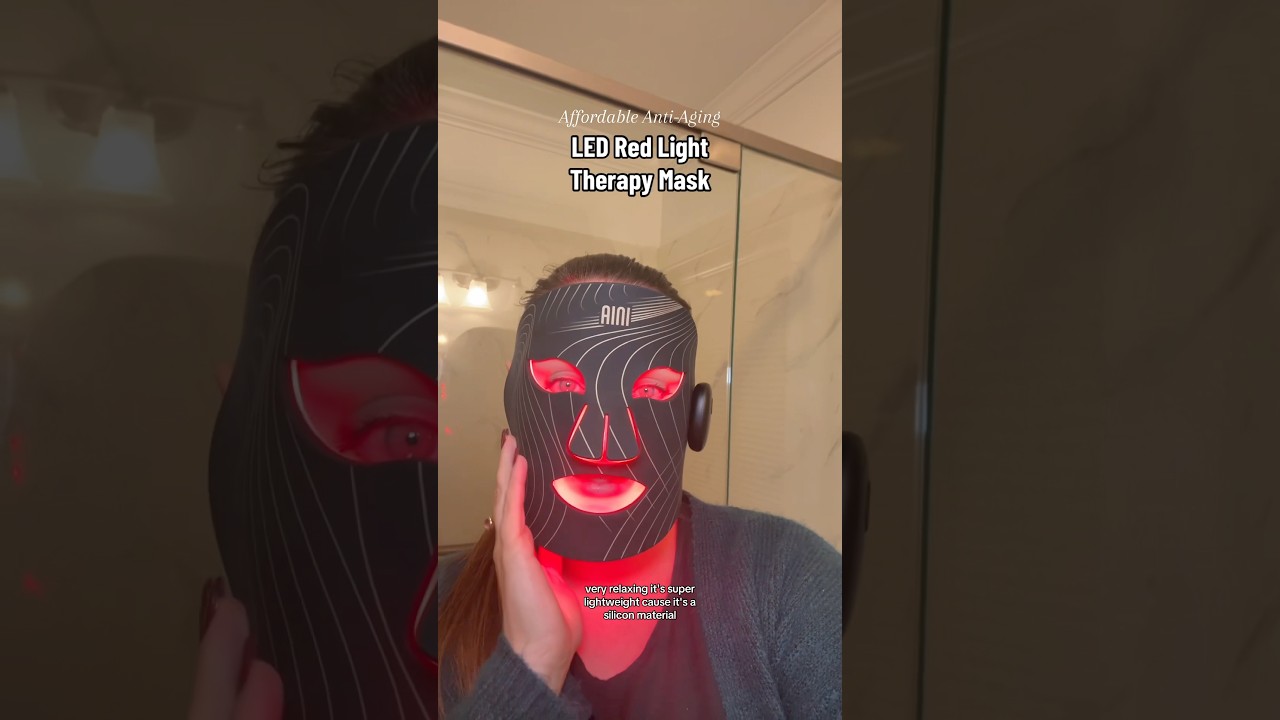
Quick answer: An LED light therapy mask builds collagen at home, which is something Botox does not actually do. I use a wireless silicone mask with red, blue, purple, and yellow light for about 10 minutes before bed. It is peaceful, takes no real effort, and the results show up gradually in the skin.
If you have been looking at every LED light therapy mask on the internet trying to figure out which one is worth the money, here is mine. I picked a wireless silicone option with more LEDs and more color modes than the top-of-the-list competitors, and I use it for ten minutes most nights. This LED light therapy mask review covers why I chose this style, what to look for if you are shopping, and how I actually use it at home.
Why an LED light therapy mask over other anti-aging tools
Here is the thing nobody talks about enough: Botox does not build collagen. It relaxes specific facial muscles to soften wrinkles, but it does nothing to actually strengthen the skin underneath. An LED light therapy mask works in the opposite direction. Red wavelengths of light penetrate the skin and stimulate the cells that produce collagen, the structural protein that keeps skin firm and bouncy. For at-home daily use, that is a real point of difference. You are investing ten minutes a day in something that supports the long game of skin health, not a quarterly appointment that smooths the surface.
What to look for in an LED light therapy mask
If you are shopping right now, these are the features that made me settle on mine instead of the popular ones every dermatologist seems to be paid to mention.
Wireless and rechargeable. No cord to dodge while you are trying to relax.
Silicone construction. It contours to your face comfortably and lets you wear it while lying down without a hard plastic shell pressing in.
Multiple light colors. Different wavelengths target different things. A mask with red, blue, purple, and yellow gives you flexibility from one tool.
More LEDs and better coverage. The number of individual LEDs across the mask matters. More lights means more even exposure, especially around the cheeks and forehead.
Built-in timer. Most quality masks auto-shut off around 10 minutes, which is the standard treatment window.
Adjustable strap. You want it secure enough to wear hands-free.
A good LED light therapy mask gives you several color modes, each one targeting something different. Here is the short version of what each color is generally used for in at-home skincare:
Red light. The collagen builder. The wavelength most associated with anti-aging and firming.
Blue light. Targets the bacteria associated with breakouts, often used by people with acne-prone skin.
Purple light. A blend of red and blue, useful when you want both anti-aging and clearing in one session.
Yellow light. Often used for tone and to soothe the look of redness.
Most nights I run mine on red because building collagen is the main goal for my skin right now. The color flexibility is part of why I wanted a multi-mode mask rather than a single-color version.
How I use my LED light therapy mask
Cleanse first. A clean face lets the light reach the skin without makeup or sunscreen blocking it.
Put the mask on and secure the strap. The silicone shapes to your face.
Choose your color. Mostly red for me.
Set it and lie down. Ten minutes. The mask shuts off automatically when the session is done.
Use the time to wind down. Most evenings I do this right before bed. It is quiet, your eyes are protected, and it doubles as a ritual that signals the day is closing.
Finish with your usual serum and moisturizer. Skincare goes on after, when the skin is warm and receptive.
What to expect from your results
The honest answer: gradual. LED light therapy is not a one-session miracle. Consistency over weeks and months is what produces visible difference. The first thing most people notice is a smoother look to the skin and a gradual brightening. Texture changes follow. None of this replaces a real skincare routine; what it does is amplify the work the rest of your routine is already doing, by giving the cells underneath more of the building blocks they need.
Key takeaways
An LED light therapy mask uses red light to build collagen, which Botox does not do.
Look for wireless, silicone, multi-color, with enough LEDs for even coverage.
Ten minutes a night, often before bed, is the standard session.
Results are gradual; consistency over months is the rule.
Frequently asked questions
Does an LED light therapy mask actually build collagen?
Red wavelengths of LED light are associated with stimulating the cells that produce collagen, the structural protein that keeps skin firm. Effects build over consistent use rather than from a single session.
How often should I use an LED light therapy mask?
Most home users run a session 3 to 5 times a week, with each session around 10 minutes. Some users do it daily. Consistency is the most important variable.
Is an LED light therapy mask safe to use at home?
At-home LED masks are designed to be safe for daily use, with built-in timers and eye coverage. If you have sensitive skin, are pregnant, or are on photosensitizing medications, check with a dermatologist before starting.
Should I use my LED light therapy mask on clean skin or with skincare on?
Clean, dry skin. Makeup, sunscreen, and most serums can block the light from reaching your skin. Apply your products after the session, when skin is warm.
What color of light should I use most?
For most adults focused on anti-aging, red is the default. Blue gets attention from people targeting breakouts. Many masks let you cycle through.
How long until I see results from an LED light therapy mask?
Visible results typically build over weeks to a few months of consistent use. The earliest changes tend to be smoothness and brightness, with texture changes following.
About Anna Katherine
I share the real version of building a home, a small business, and a skincare routine on a budget. Honest reviews, no sponsored hype. Follow on TikTok and YouTube.
(function () {
var LABEL = "Send me the cheat sheet";
var PDF = "https://annakatherinepage.com/wp-content/uploads/2026/11/flower-price-cheat-sheet.pdf";
var CONFIRM = '<p>Your Flower Price Cheat Sheet is ready. <a href="' + PDF + '">Download the two-page PDF</a> now.</p><p>Give the email a minute, and peek in spam the first time so the next one lands in your inbox. The formulas use labeled sample numbers. Type over them with yours.</p>';
function retitle() {
var buttons = document.querySelectorAll(".fluent_form_5 .ff-btn-submit, form.fluent_form_5 .ff-btn-submit, .frm-fluent-form.fluent_form_5 .ff-btn-submit");
for (var i = 0; i < buttons.length; i++) {
var b = buttons[i];
if ((b.textContent || "").indexOf("cheat sheet") === -1) {
b.textContent = LABEL;
b.setAttribute("aria-label", LABEL);
}
b.style.backgroundColor = "#5a6b4e";
b.style.borderColor = "#5a6b4e";
b.style.color = "#ffffff";
}
var styles = document.querySelectorAll(".ff-form-inline-style style");
for (var j = 0; j < styles.length; j++) {
var s = styles[j];
if ((s.textContent || "").indexOf("fluent_form_5") !== -1 && (s.textContent || "").indexOf("#123d2e") !== -1) {
s.textContent = s.textContent.replace(/#123d2e/g, "#5a6b4e");
}
}
}
if (document.readyState === "loading") document.addEventListener("DOMContentLoaded", retitle);
else retitle();
setTimeout(retitle, 400);
function maybeFixSuccess(root) {
if (!root) return;
var success = root.querySelector(".ff-message-success, .ff-el-success, .ff-form-success");
if (!success) return;
var t = (success.textContent || "").toLowerCase();
if (t.indexOf("inbox") !== -1 || t.indexOf("cheat sheet") === -1) {
success.innerHTML = CONFIRM;
}
}
document.addEventListener("fluentform_submission_success", function () {
maybeFixSuccess(document.querySelector(".fluentform_wrapper_5, #fluentform_5, .ff_form_wrapper_5"));
});
if (window.jQuery) {
window.jQuery(document).on("fluentform_submission_success", function () {
maybeFixSuccess(document.querySelector(".fluentform_wrapper_5, #fluentform_5, .ff_form_wrapper_5"));
});
}
})();
(function(){
function rgb(c){var m=(c||"").match(/[0-9.]+/g);return m?m.map(Number):null;}
function lum(a){return (0.299*a[0]+0.587*a[1]+0.114*a[2])/255;}
function effbg(el){var n=el;while(n){var c=rgb(getComputedStyle(n).backgroundColor);if(c&&(c.length<4||c[3]>0.5))return c;n=n.parentElement;}return null;}
var sel="main h1,main h2,main h3,main h4,main p,main li,main span,#frc h1,#frc h2,#frc h3,#frc p,#frc span,#frc li";
document.querySelectorAll(sel).forEach(function(t){
var bg=effbg(t);
if(!bg) return;
if(lum(bg)<0.30){
var fc=rgb(getComputedStyle(t).color);
if(fc && lum(fc)<0.5){ t.style.setProperty("color","#f7f1e6","important"); }
}
});
})();
(function () {
function formIdFrom(ev, data) {
var id = "";
var form = null;
if (data) {
if (data.formId != null) id = String(data.formId);
else if (data.form_id != null) id = String(data.form_id);
form = data.form;
if (form && form.jquery) form = form[0];
}
if (!form && ev && ev.detail) {
form = ev.detail.form;
if (form && form.jquery) form = form[0];
if (!id) {
if (ev.detail.formId != null) id = String(ev.detail.formId);
else if (ev.detail.form_id != null) id = String(ev.detail.form_id);
}
}
if (!form && ev && ev.target && ev.target.nodeType === 1) {
form = ev.target.closest ? (ev.target.closest("form") || ev.target.closest("[id^='fluentform_']") || ev.target.closest("[class*='fluent_form_']")) : ev.target;
}
if (!id && form) {
var src = String((form.id || "") + " " + (form.className || "") + " " + (form.getAttribute && (form.getAttribute("data-form_id") || form.getAttribute("data-id") || "") || ""));
var m = src.match(/fluentform_wrapper_(\d+)/) || src.match(/fluentform_(\d+)/) || src.match(/fluent_form_(\d+)/);
if (m) id = m[1];
}
return id;
}
function newEventId() {
try {
if (window.crypto && typeof crypto.randomUUID === "function") return crypto.randomUUID();
} catch (err) {}
return "ff5lead_" + Date.now() + "_" + Math.random().toString(16).slice(2);
}
var lockUntil = 0;
function fireLead(ev, data) {
if (formIdFrom(ev, data) !== "5") return;
if (typeof window.fbq !== "function") return;
var now = Date.now();
if (now < lockUntil) return;
lockUntil = now + 2000;
var eid = newEventId();
try {
fbq("track", "Lead", { content_name: "Flower Price Cheat Sheet" }, { eventID: eid });
} catch (err) {}
}
document.addEventListener("fluentform_submission_success", function (ev) {
fireLead(ev, ev && ev.detail);
});
if (window.jQuery) {
window.jQuery(document).on("fluentform_submission_success", function (ev, data) {
fireLead(ev, data);
});
window.jQuery(document.body).on("fluentform_submission_success", function (ev, data) {
fireLead(ev, data);
});
}
})();