Disclosure
This post contains affiliate links, which means I may earn a small commission if you make a purchase through my links, at no extra cost to you.
Quick answer: Look up what the same item actually sold for, not what people are asking, then set a price you would still accept after fees, supplies, and your time. Start from sold comps, adjust for condition and your local market, and list. I used that habit when I resold a $15 yard-sale chair for $150 in 45 minutes.
Last updated: November 14, 2026, by Anna Katherine Page
The pricing question I see most in flipping groups is not “is this cute.” It is “what do I type in the box before I hit publish.” Asking prices on eBay and Marketplace are not answers. They are wishes. Sold comps are answers, and even then you have to adjust for your fees, your condition, and whether the buyer is nationwide or in your zip code.
What research should I do before I assign a price?
Do this
Avoid this
Filter eBay to sold or completed listings for the same item, same condition, recent dates
Copying an asking price from a listing that has been up for months
Check local Marketplace sold or comparable listings if it is a pickup item
Pasting a national eBay sold price onto a rural Marketplace post and wondering why it sits
Subtract platform fees, payment fees, fuel, and supplies from your target proceeds
Calling the spread ‘profit’ before fees
Tell the truth about flaws in the listing so the price matches what arrives
Pricing it like a perfect example and hoping they will not notice
Sold comps, local demand, and fees are the inputs. The asking price is the output.
What does this look like on a real item I sold?
I found a vintage Italian-style mid-century modern leather chair at a yard sale, paid $15 cash, did a light leather clean, posted four photos with a one-line description on Facebook Marketplace, and resold it for $150 in 45 minutes. That is a 10 times return on the sourcing cost, and it only worked because the chair was priced like something a local buyer would come get that day, not like a fantasy auction result. The full sequence is in Facebook Marketplace Furniture Flip: 7 Easy Steps ($15 to $150).
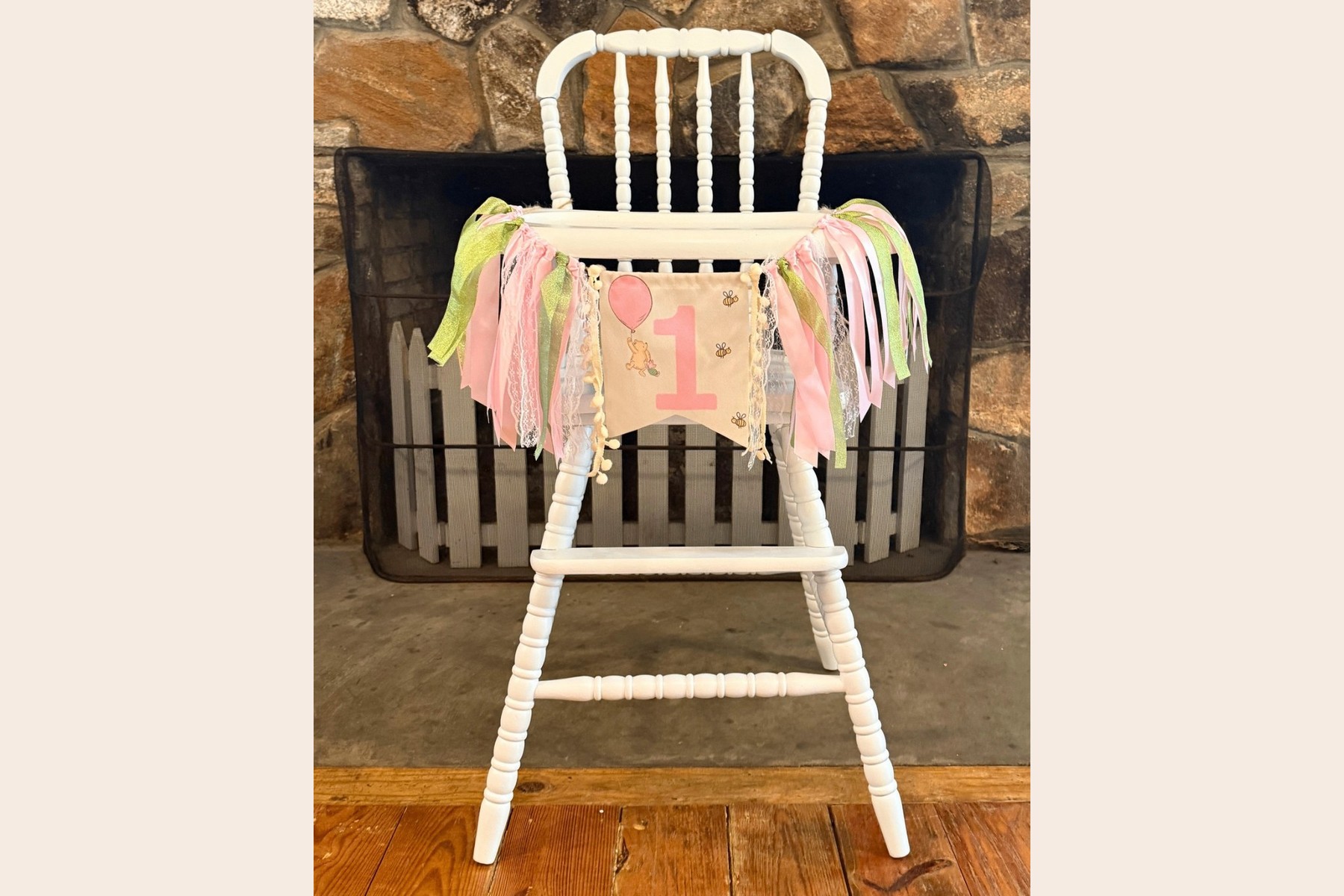
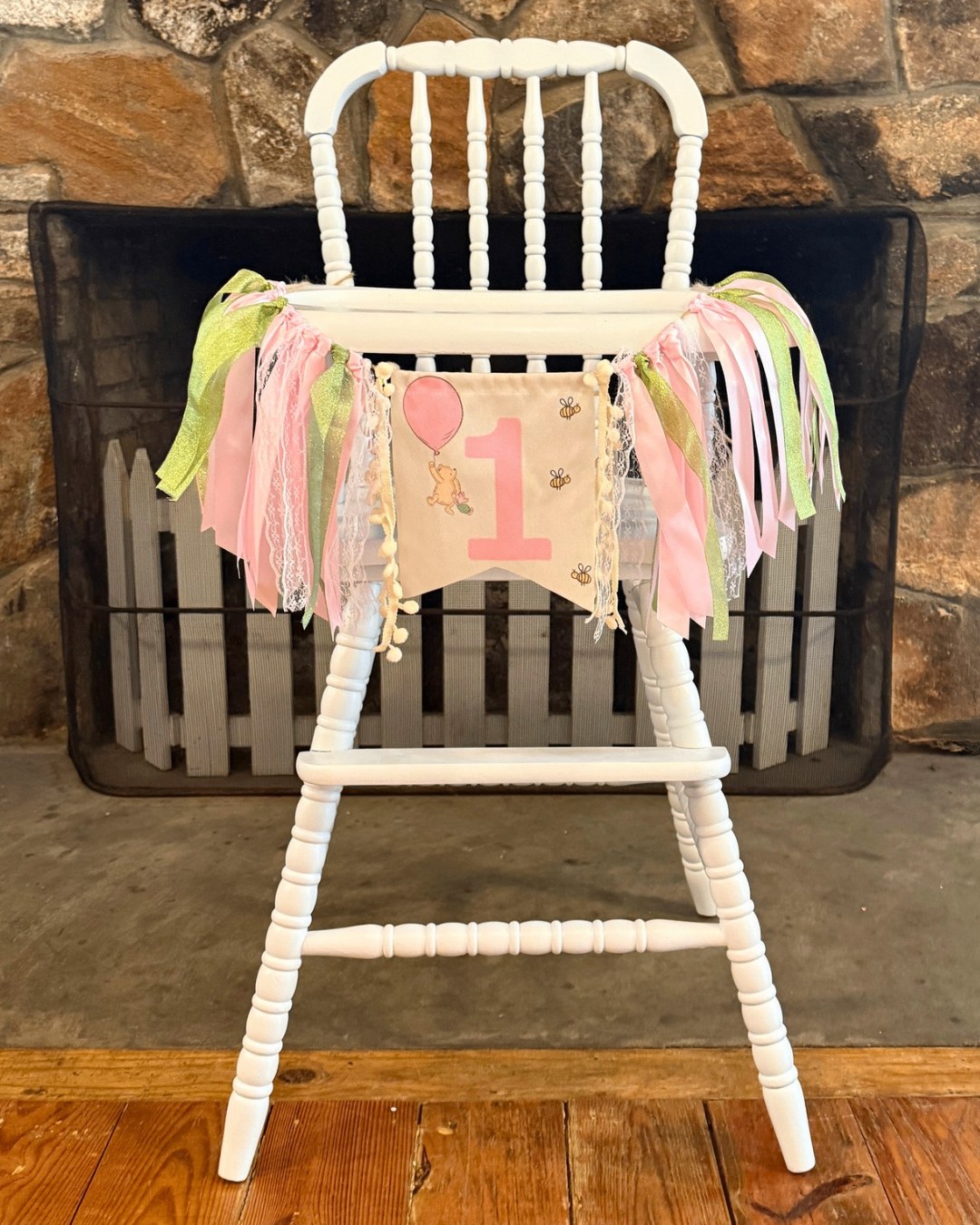
The same sourcing habit can go a different direction. I bought a Jenny Lind high chair at a thrift store for $10, refinished it, and later used it as a Keowee Event Co. rental instead of flipping it the same week. That story is in the makeover post. The pricing question then becomes a rental rate, not a resale price, but you still start from what you paid and what the item actually is.
The Jenny Lind high chair I bought for $10 and later used as a rental. Not every thrift find has to be flipped the same week; the $15-to-$150 chair I did flip is in this post.
How can AI help without inventing a price?
I will use a model to turn my notes into a clean range: here are the sold comps I found, here are the fees, here is the condition, what is a tight asking price and a walk-away number. I will not ask it to “price this photo” and trust the first figure. Sellers are often skeptical of tools that promise to solve comps for you. My eBay shop, annakapa-32, has 100% positive feedback (151 ratings) and 202 items sold, and my Etsy shop, NextPageDesignCo, has 75 sales and a 4.8-star rating from 22 reviews. Those shops are built on listings I was willing to stand behind, not on a generated number I did not check.
The pricing prompt in the AI Shop Assistant Kit is written as a draft to edit, the same way the listing prompts are. If you also consign designer pieces, I have a separate walkthrough for selling on The RealReal, which uses a different pricing path because they set the list price.
FAQ
Should I copy the eBay sold price onto Facebook Marketplace?
Not blindly. eBay sold comps are a solid research starting point, but Marketplace is local, has different fees, and often expects more room to negotiate. Price for the buyers who can actually pick it up.
Can AI just tell me the right price?
It can help you organize comps and fees into a range. It cannot see the tear in the leather from here, and it does not know your city. I treat any AI price as a draft, then I decide.
What is an example from your own selling?
A vintage Italian-style mid-century chair I found at a yard sale for $15, cleaned, and resold on Facebook Marketplace for $150 in 45 minutes. I wrote the steps in this furniture-flip post . I also bought a Jenny Lind high chair for $10 and later used it as a rental, which is a different path for the same sourcing habit.
Do I need software to do this?
No. You can check sold listings on eBay and Marketplace by hand. A prompt or a small workbook just keeps the fee math and the notes in one place so you are not doing it on the back of a receipt.
If you want a set of prompts that stay in draft until you copy them, I made the AI Shop Assistant Kit ($29, one-time). It is a 19-page guide, a workbook, eight draft-only agents, and 37 prompts. Nothing publishes, sends, or changes a listing unless you do it. Digital downloads are final sale. More about me is on my about page.
The Edit by AK
One short email a week with finds I’ve actually vetted, plus a free Black Friday Shortlist when you sign up.
window.fluent_form_ff_form_instance_6_1 = {"id":"6","ajaxUrl":"https:\/\/annakatherinepage.com\/wp-admin\/admin-ajax.php","settings":{"layout":{"labelPlacement":"top","asteriskPlacement":"asterisk-right","helpMessagePlacement":"with_label","errorMessagePlacement":"inline","cssClassName":""},"restrictions":{"denyEmptySubmission":{"enabled":false}}},"form_instance":"ff_form_instance_6_1","form_id_selector":"fluentform_6","rules":{"input_text":{"required":{"value":false,"message":"This field is required","global_message":"This field is required","global":true}},"email":{"required":{"value":true,"message":"This field is required","global_message":"This field is required","global":true},"email":{"value":true,"message":"This field must contain a valid email","global_message":"This field must contain a valid email","global":true}},"checkbox":{"required":{"value":true,"message":"This field is required","global_message":"This field is required","global":true},"max_selection":{"value":"","message":"You have selected more options than allowed","global_message":"You have selected more options than allowed","global":true},"min_selection":{"value":"","message":"Please select at least the minimum number of options","global_message":"Please select at least the minimum number of options","global":true}}},"debounce_time":300,"file_upload_settings":[]};
(function(){
if (!window.matchMedia || !window.matchMedia('(max-width: 781px)').matches) return;
var aff = /go\.shopmy\.us|amzn\.to|amazon\.com\/.*tag=|walmrt\.us|pxf\.io|shareasale|awin1|anrdoezrs|dpbolvw|jdoqocy|tkqlhce|kqzyfj|sjv\.io|linksynergy/i;
var root = document.querySelector('.wp-block-post-content') || document.querySelector('.entry-content');
if (!root) return;
var btns = root.querySelectorAll('a.wp-block-button__link');
var first = null;
for (var i = 0; i < btns.length; i++) { if (aff.test(btns[i].href)) { first = btns[i]; break; } }
if (!first) return;
var name = '';
var p = root.querySelector('p');
if (p) { var l = p.querySelector('a'); if (l && l.href === first.href) name = l.textContent; }
if (!name) name = first.textContent;
var bar = document.createElement('div');
bar.className = 'ak-sticky-buy';
bar.setAttribute('role', 'region');
bar.setAttribute('aria-label', 'Top pick');
var span = document.createElement('span'); span.className = 'ak-sb-name'; span.textContent = 'Top pick: ' + name.trim();
var a = document.createElement('a'); a.href = first.href; a.target = '_blank'; a.rel = 'nofollow sponsored noopener'; a.textContent = 'Shop now';
var x = document.createElement('button'); x.type = 'button'; x.setAttribute('aria-label', 'Close'); x.textContent = '×';
bar.appendChild(span); bar.appendChild(a); bar.appendChild(x);
document.body.appendChild(bar);
var closed = false;
x.addEventListener('click', function(){ closed = true; bar.classList.remove('is-on'); });
function check(){
if (closed) return;
var r = first.getBoundingClientRect();
var footer = document.querySelector('footer');
var nearEnd = footer && footer.getBoundingClientRect().top < window.innerHeight;
if (r.bottom < 0 && !nearEnd) bar.classList.add('is-on'); else bar.classList.remove('is-on');
}
window.addEventListener('scroll', check, { passive: true });
check();
})();
(function () {
var c = document.body.className;
c = c.replace(/woocommerce-no-js/, 'woocommerce-js');
document.body.className = c;
})();
var fluentFormVars = {"ajaxUrl":"https://annakatherinepage.com/wp-admin/admin-ajax.php","forms":[],"step_text":"Step %activeStep% of %totalStep% - %stepTitle%","step_completed_text":"Completed","is_rtl":"","date_i18n":{"previousMonth":"Previous Month","nextMonth":"Next Month","months":{"shorthand":["Jan","Feb","Mar","Apr","May","Jun","Jul","Aug","Sep","Oct","Nov","Dec"],"longhand":["January","February","March","April","May","June","July","August","September","October","November","December"]},"weekdays":{"longhand":["Sunday","Monday","Tuesday","Wednesday","Thursday","Friday","Saturday"],"shorthand":["Sun","Mon","Tue","Wed","Thu","Fri","Sat"]},"daysInMonth":[31,28,31,30,31,30,31,31,30,31,30,31],"rangeSeparator":" to ","weekAbbreviation":"Wk","scrollTitle":"Scroll to increment","toggleTitle":"Click to toggle","amPM":["AM","PM"],"yearAriaLabel":"Year","firstDayOfWeek":1},"pro_version":"","fluentform_version":"6.2.17","force_init":"","stepAnimationDuration":"350","upload_completed_txt":"100% Completed","upload_start_txt":"0% Completed","uploading_txt":"Uploading","choice_js_vars":{"noResultsText":"No results found","loadingText":"Loading...","noChoicesText":"No choices to choose from","itemSelectText":"Press to select","maxItemTextSingular":"Only %%maxItemCount%% option can be added","maxItemTextPlural":"Only %%maxItemCount%% options can be added"},"input_mask_vars":{"clearIfNotMatch":false},"nonce":"288c4d2939","file_delete_nonce":"d1f71bbd77","form_id":"6","step_change_focus":"1","has_cleantalk":"","pro_payment_script_compatible":"","token_nonce":"b9d4116b3d"};
var fluentform_submission_messages_6 = {"file_upload_in_progress":"File upload in progress. Please wait...","javascript_handler_failed":"Javascript handler could not be loaded. Form submission has been failed. Reload the page and try again"};
var fluentform_payment_messages_6 = {"stock_out_message":"This Item is Stock Out","item_label":"Item","price_label":"Price","qty_label":"Qty","line_total_label":"Line Total","sub_total_label":"Sub Total","discount_label":"Discount","total_label":"Total","signup_fee_label":"Signup Fee","trial_label":"Trial","processing_text":"Processing...","confirming_text":"Confirming..."};
var fluentform_save_progress_messages_6 = {"copy_button":"Copy","email_button":"Email","email_placeholder":"Your Email Here","copy_success":"Copied"};
var fluentform_address_messages_6 = {"please_wait":"Please wait ...","location_not_determined":"Could not determine address from location.","address_fetch_failed":"Failed to fetch address from coordinates.","geolocation_failed":"Geolocation failed or was denied.","geolocation_not_supported":"Geolocation is not supported by this browser."};
var fluentform_gateway_messages_6 = {"request_failed":"Request failed. Please try again","payment_failed":"Payment process failed!","no_method_found":"No method found","processing_text":"Processing..."};
var fluentform_submission_messages_global = {"javascript_handler_failed":"Javascript handler could not be loaded. Form submission has been failed. Reload the page and try again"};
var fluentform_address_messages_global = {"please_wait":"Please wait ...","location_not_determined":"Could not determine address from location.","address_fetch_failed":"Failed to fetch address from coordinates.","geolocation_failed":"Geolocation failed or was denied.","geolocation_not_supported":"Geolocation is not supported by this browser."};
//# sourceURL=fluent-form-submission-js-extra
(function(){
var d = document.querySelector('.ak-ux-checked');
var h1 = document.querySelector('h1.wp-block-post-title');
if (d && h1 && !(h1.nextElementSibling && h1.nextElementSibling.classList.contains('ak-ux-checked'))) {
h1.insertAdjacentElement('afterend', d);
}
/* Table typography helpers: short mobile headers, rank badges, brand under the name */
(function(){
var shortMap = {
'listed value': 'Value',
'below value': 'Save',
'price at ulta': 'Price',
'price at sephora': 'Price',
'best gift for someone who wants': 'Best for',
'what is inside': 'Inside',
'what it is': 'What',
'where to buy': 'Shop',
'fiber, as the brand states it': 'Fiber'
};
document.querySelectorAll('figure.ak-quick-picks th').forEach(function(th){
if (th.querySelector('.ak-th-short, .ak-th-full')) return;
var full = (th.textContent || '').replace(/\s+/g, ' ').trim();
if (!full) return;
var key = full.toLowerCase();
var short = shortMap[key];
if (!short && /^listed value/.test(key)) short = 'Value';
if (!short && /^below value/.test(key)) short = 'Save';
if (!short && /^price\b/.test(key) && key !== 'price') short = 'Price';
if (short && short.toLowerCase() !== key) {
th.textContent = '';
var fullEl = document.createElement('span');
fullEl.className = 'ak-th-full';
fullEl.textContent = full;
var shortEl = document.createElement('span');
shortEl.className = 'ak-th-short';
shortEl.textContent = short;
th.appendChild(fullEl);
th.appendChild(shortEl);
}
});
document.querySelectorAll('figure.ak-quick-picks td > span').forEach(function(sp){
var st = sp.getAttribute('style') || '';
if (/border-radius\s*:\s*50%/.test(st)) sp.classList.add('ak-rank-badge');
});
document.querySelectorAll('figure.ak-quick-picks td').forEach(function(td){
var item = td.querySelector(':scope > .ak-qp-item');
if (!item) return;
var text = item.querySelector('.ak-qp-text');
if (!text) return;
Array.prototype.slice.call(td.children).forEach(function(child){
if (child !== item && child.tagName === 'DIV') {
child.classList.add('ak-qp-brand');
text.appendChild(child);
}
});
});
})();
var start = document.getElementById('ak-start-here');
if (!start) return;
if (!window.matchMedia || !window.matchMedia('(max-width: 781px)').matches) return;
if (document.getElementById('ak-ux-sticky')) return;
var shop = start.querySelector('a.ak-shop-btn') || document.querySelector('a.ak-shop-btn');
if (!shop) return;
var nameEl = start.querySelector('h2');
var priceEl = start.querySelector('.ak-start-price');
var label = 'Top pick';
if (nameEl) label += ': ' + nameEl.textContent.trim();
if (priceEl) {
var amt = (priceEl.textContent || '').replace(/\s+/g, ' ').trim().split('checked')[0].trim();
if (amt) label += ' · ' + amt;
}
var bar = document.createElement('div');
bar.id = 'ak-ux-sticky';
bar.setAttribute('role', 'region');
bar.setAttribute('aria-label', 'Top pick');
var span = document.createElement('span'); span.className = 'ak-sb-name'; span.textContent = label;
var a = document.createElement('a');
a.href = shop.href; a.target = '_blank'; a.rel = 'nofollow sponsored noopener'; a.textContent = 'Shop now';
var x = document.createElement('button'); x.type = 'button'; x.setAttribute('aria-label', 'Close'); x.textContent = '×';
bar.appendChild(span); bar.appendChild(a); bar.appendChild(x);
document.body.appendChild(bar);
var closed = false;
x.addEventListener('click', function(){ closed = true; bar.classList.remove('is-on'); });
function check(){
if (closed) return;
if (window.innerWidth >= 782) { bar.classList.remove('is-on'); return; }
var r = start.getBoundingClientRect();
var footer = document.querySelector('footer');
var nearEnd = footer && footer.getBoundingClientRect().top < window.innerHeight;
if (r.bottom < 8 && !nearEnd) bar.classList.add('is-on');
else bar.classList.remove('is-on');
}
window.addEventListener('scroll', check, {passive:true});
window.addEventListener('resize', check);
check();
})();
(function(){
var AJAX="https:\/\/annakatherinepage.com\/wp-admin\/admin-ajax.php",LOAD=Date.now(),freshP=null;
function post(d){return fetch(AJAX+"?t="+Date.now(),{method:"POST",credentials:"same-origin",cache:"no-store",headers:{"Content-Type":"application/x-www-form-urlencoded"},body:new URLSearchParams(d).toString()}).then(function(r){return r.json();});}
function getFresh(){if(freshP){return freshP;}freshP=post({action:"akp_ffc_fresh_nonce"}).then(function(j){if(j&&j.success&&j.data){if(window.fluentFormVars){window.fluentFormVars.token_nonce=j.data.token_nonce;}var ns=document.querySelectorAll('input[name$="_fluentformnonce"]');for(var i=0;i<ns.length;i++){ns[i].value=j.data.form_nonce;}return j.data;}freshP=null;return null;}).catch(function(){freshP=null;return null;});return freshP;}
function fid(f){var m=(f.className||"").match(/fluent_form_(\d+)/);return m?m[1]:(f.getAttribute("data-form_id")||"");}
function fld(f){return f.querySelector(".fluent-form-token-field");}
function stale(f){var t=fld(f);if(!t){return false;}return !t.value||(Date.now()-(f.__akpAt||LOAD))>45*60*1000;}
function mint(f){if(f.__akpP){return f.__akpP;}var t=fld(f);if(!t){return Promise.resolve(true);}
f.__akpP=getFresh().then(function(fr){var n=(fr&&fr.token_nonce)||(window.fluentFormVars&&window.fluentFormVars.token_nonce)||"";return post({action:"fluentform_generate_protection_token",form_id:fid(f),nonce:n});}).then(function(j){f.__akpP=null;if(j&&j.success&&j.data&&j.data.token){t.value=j.data.token;f.classList.add("ff_tokenized");f.classList.remove("ff_tokenizing");f.__akpAt=Date.now();return true;}return false;}).catch(function(){f.__akpP=null;return false;});return f.__akpP;}
function init(){var fs=document.querySelectorAll("form.frm-fluent-form");if(!fs.length){return;}var any=false;for(var i=0;i<fs.length;i++){if(fld(fs[i])){any=true;}}if(!any){return;}getFresh();
if("IntersectionObserver" in window){var io=new IntersectionObserver(function(es){es.forEach(function(e){if(e.isIntersecting&&stale(e.target)){mint(e.target);}});},{rootMargin:"900px 0px"});for(var k=0;k<fs.length;k++){if(fld(fs[k])){io.observe(fs[k]);}}}
document.addEventListener("focusin",function(e){var f=e.target&&e.target.closest&&e.target.closest("form.frm-fluent-form");if(f&&stale(f)){mint(f);}},true);
document.addEventListener("submit",function(e){var f=e.target;if(!f||!f.classList||!f.classList.contains("frm-fluent-form")){return;}if(f.__akpPass){f.__akpPass=false;return;}if(!stale(f)){return;}e.preventDefault();e.stopImmediatePropagation();
mint(f).then(function(){f.__akpPass=true;window.ff_sumitting_form=false;if(f.requestSubmit){var b=f.querySelector("[type=submit]");try{b?f.requestSubmit(b):f.requestSubmit();}catch(x){if(window.jQuery){window.jQuery(f).trigger("submit");}}}else if(window.jQuery){window.jQuery(f).trigger("submit");}});},true);}
var CS_PDF="https://annakatherinepage.com/wp-content/uploads/2026/11/flower-price-cheat-sheet.pdf";
var CS_MSG='<p>Your Flower Price Cheat Sheet is ready. <a href="'+CS_PDF+'">Download the two-page PDF</a> now.</p><p>A copy is on its way to your inbox too. Give it a minute, and peek in spam the first time so the next one lands in your inbox.</p>';
function fixCS(){var ms=document.querySelectorAll(".fluentform_wrapper_5 .ff-message-success");for(var i=0;i<ms.length;i++){if(!ms[i].__akpCS&&(ms[i].textContent||"").indexOf("Download the two-page PDF")===-1){ms[i].__akpCS=1;ms[i].innerHTML=CS_MSG;}}}
function initCS(){if(!document.querySelector("form.fluent_form_5")){return;}try{new MutationObserver(fixCS).observe(document.body,{childList:true,subtree:true});}catch(x){}document.addEventListener("fluentform_submission_success",function(){setTimeout(fixCS,50);setTimeout(fixCS,600);});}
function boot(){init();initCS();}
if(document.readyState==="loading"){document.addEventListener("DOMContentLoaded",boot);}else{boot();}
})();
(function () {
var LABEL = "Send me the cheat sheet";
var PDF = "https://annakatherinepage.com/wp-content/uploads/2026/11/flower-price-cheat-sheet.pdf";
var CONFIRM = '<p>Your Flower Price Cheat Sheet is ready. <a href="' + PDF + '">Download the two-page PDF</a> now.</p><p>Give the email a minute, and peek in spam the first time so the next one lands in your inbox. The formulas use labeled sample numbers. Type over them with yours.</p>';
function retitle() {
var buttons = document.querySelectorAll(".fluent_form_5 .ff-btn-submit, form.fluent_form_5 .ff-btn-submit, .frm-fluent-form.fluent_form_5 .ff-btn-submit");
for (var i = 0; i < buttons.length; i++) {
var b = buttons[i];
if ((b.textContent || "").indexOf("cheat sheet") === -1) {
b.textContent = LABEL;
b.setAttribute("aria-label", LABEL);
}
b.style.backgroundColor = "#5a6b4e";
b.style.borderColor = "#5a6b4e";
b.style.color = "#ffffff";
}
var styles = document.querySelectorAll(".ff-form-inline-style style");
for (var j = 0; j < styles.length; j++) {
var s = styles[j];
if ((s.textContent || "").indexOf("fluent_form_5") !== -1 && (s.textContent || "").indexOf("#123d2e") !== -1) {
s.textContent = s.textContent.replace(/#123d2e/g, "#5a6b4e");
}
}
}
if (document.readyState === "loading") document.addEventListener("DOMContentLoaded", retitle);
else retitle();
setTimeout(retitle, 400);
function maybeFixSuccess(root) {
if (!root) return;
var success = root.querySelector(".ff-message-success, .ff-el-success, .ff-form-success");
if (!success) return;
var t = (success.textContent || "").toLowerCase();
if (t.indexOf("inbox") !== -1 || t.indexOf("cheat sheet") === -1) {
success.innerHTML = CONFIRM;
}
}
document.addEventListener("fluentform_submission_success", function () {
maybeFixSuccess(document.querySelector(".fluentform_wrapper_5, #fluentform_5, .ff_form_wrapper_5"));
});
if (window.jQuery) {
window.jQuery(document).on("fluentform_submission_success", function () {
maybeFixSuccess(document.querySelector(".fluentform_wrapper_5, #fluentform_5, .ff_form_wrapper_5"));
});
}
})();
(function(){
function rgb(c){var m=(c||"").match(/[0-9.]+/g);return m?m.map(Number):null;}
function lum(a){return (0.299*a[0]+0.587*a[1]+0.114*a[2])/255;}
function effbg(el){var n=el;while(n){var c=rgb(getComputedStyle(n).backgroundColor);if(c&&(c.length<4||c[3]>0.5))return c;n=n.parentElement;}return null;}
var sel="main h1,main h2,main h3,main h4,main p,main li,main span,#frc h1,#frc h2,#frc h3,#frc p,#frc span,#frc li";
document.querySelectorAll(sel).forEach(function(t){
var bg=effbg(t);
if(!bg) return;
if(lum(bg)<0.30){
var fc=rgb(getComputedStyle(t).color);
if(fc && lum(fc)<0.5){ t.style.setProperty("color","#f7f1e6","important"); }
}
});
})();
(function () {
function formIdFrom(ev, data) {
var id = "";
var form = null;
if (data) {
if (data.formId != null) id = String(data.formId);
else if (data.form_id != null) id = String(data.form_id);
form = data.form;
if (form && form.jquery) form = form[0];
}
if (!form && ev && ev.detail) {
form = ev.detail.form;
if (form && form.jquery) form = form[0];
if (!id) {
if (ev.detail.formId != null) id = String(ev.detail.formId);
else if (ev.detail.form_id != null) id = String(ev.detail.form_id);
}
}
if (!form && ev && ev.target && ev.target.nodeType === 1) {
form = ev.target.closest ? (ev.target.closest("form") || ev.target.closest("[id^='fluentform_']") || ev.target.closest("[class*='fluent_form_']")) : ev.target;
}
if (!id && form) {
var src = String((form.id || "") + " " + (form.className || "") + " " + (form.getAttribute && (form.getAttribute("data-form_id") || form.getAttribute("data-id") || "") || ""));
var m = src.match(/fluentform_wrapper_(\d+)/) || src.match(/fluentform_(\d+)/) || src.match(/fluent_form_(\d+)/);
if (m) id = m[1];
}
return id;
}
function newEventId() {
try {
if (window.crypto && typeof crypto.randomUUID === "function") return crypto.randomUUID();
} catch (err) {}
return "ff5lead_" + Date.now() + "_" + Math.random().toString(16).slice(2);
}
var lockUntil = 0;
function fireLead(ev, data) {
if (formIdFrom(ev, data) !== "5") return;
if (typeof window.fbq !== "function") return;
var now = Date.now();
if (now < lockUntil) return;
lockUntil = now + 2000;
var eid = newEventId();
try {
fbq("track", "Lead", { content_name: "Flower Price Cheat Sheet" }, { eventID: eid });
} catch (err) {}
}
document.addEventListener("fluentform_submission_success", function (ev) {
fireLead(ev, ev && ev.detail);
});
if (window.jQuery) {
window.jQuery(document).on("fluentform_submission_success", function (ev, data) {
fireLead(ev, data);
});
window.jQuery(document.body).on("fluentform_submission_success", function (ev, data) {
fireLead(ev, data);
});
}
})();