Quick answer: Quote a movie-night or soft-play package as one client number, but build it from the same lines as any other rental quote: every piece in the bundle, delivery, setup, teardown, a damage deposit, and any insurance or waiver costs that apply. I use that structure on real Keowee Event Co. backyard movie nights and toddler soft-play setups.
Last updated: November 14, 2026, by Anna Katherine Page
A package is easier for a client to say yes to than a long list of a la carte lines. It is only easier for you if you still built it from real pieces and real work. I run Keowee Event Co. by myself in the Clemson and Lake Keowee area, and the packages I quote most often are backyard movie nights and soft-play setups for younger birthdays.
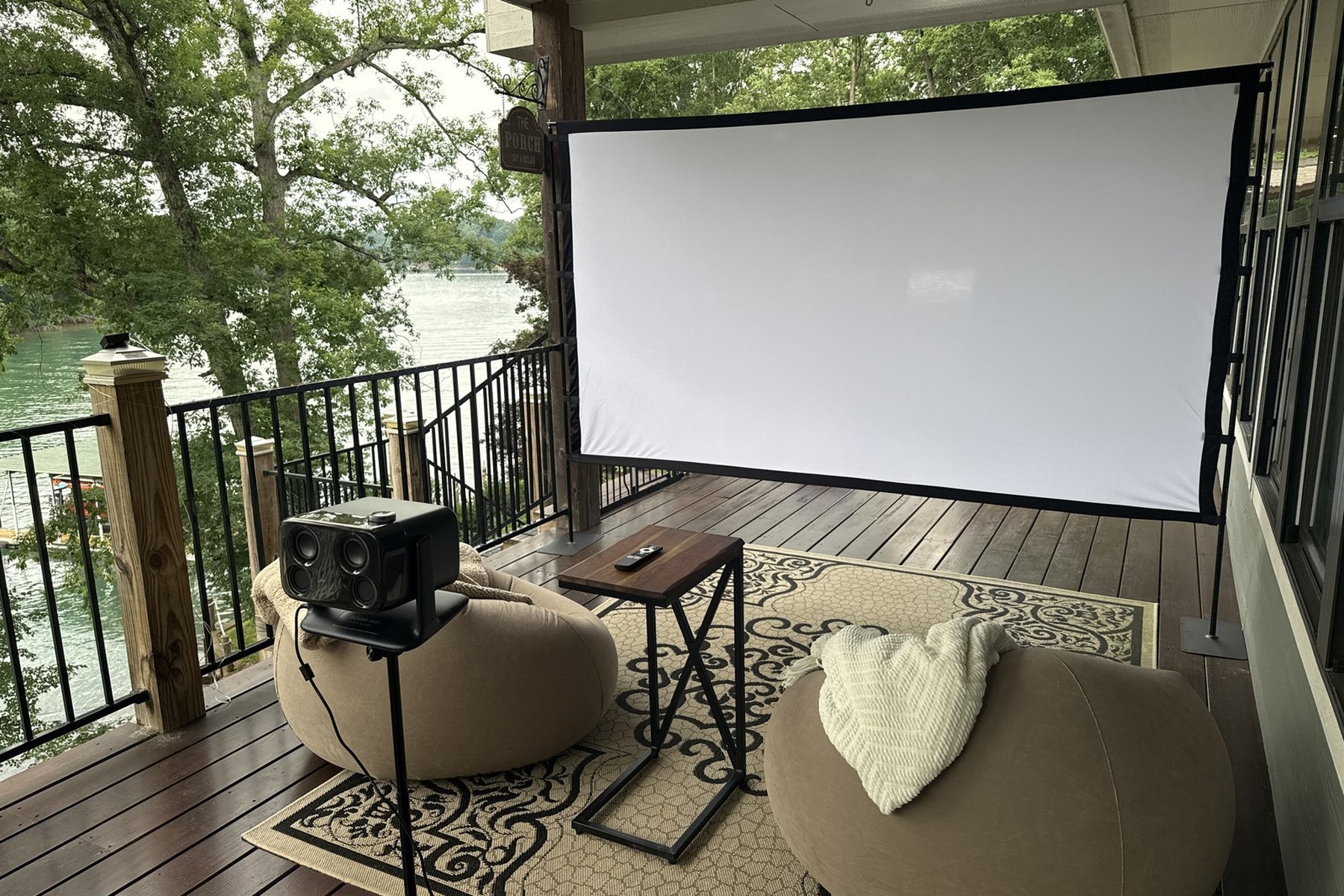
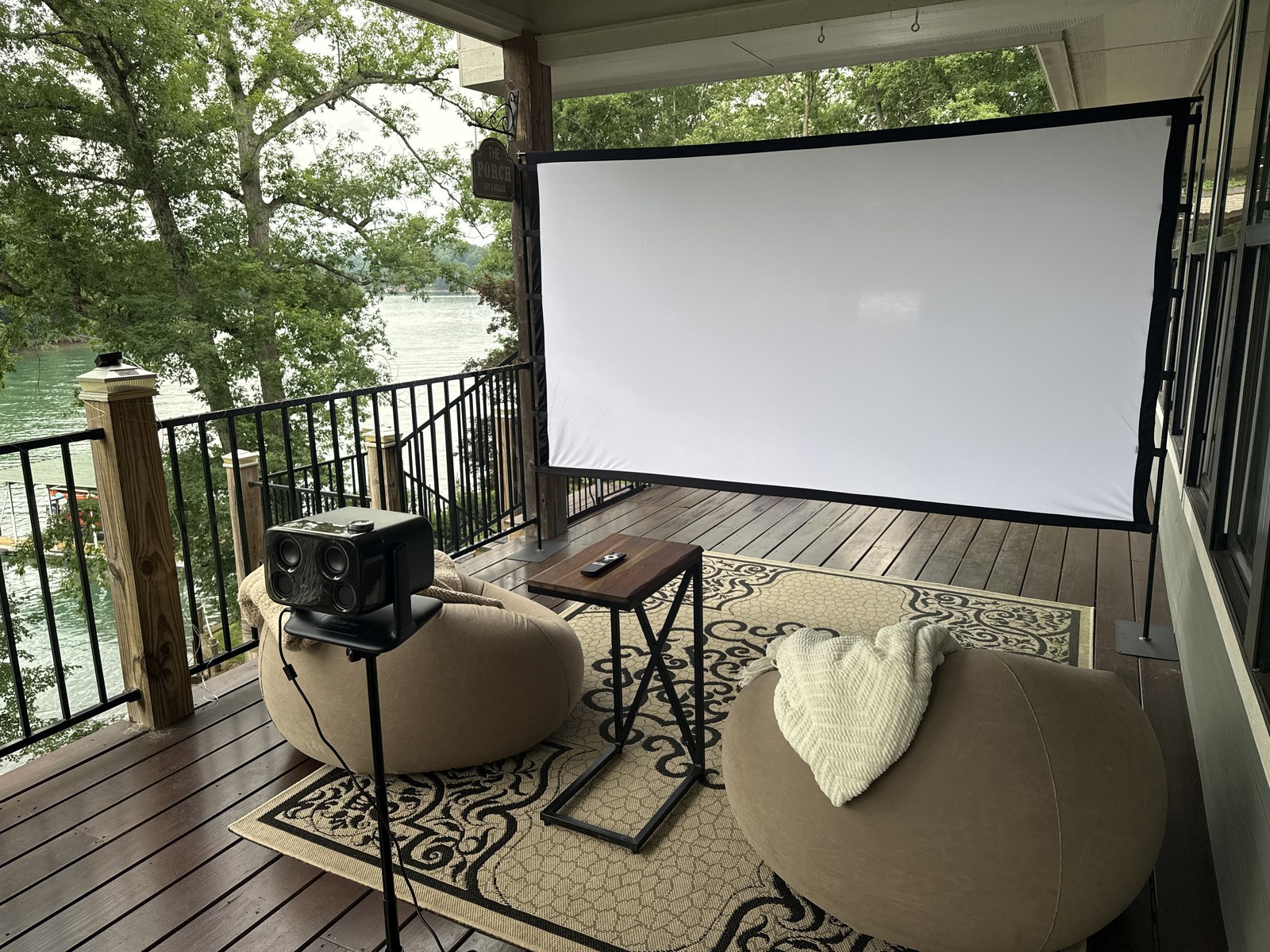
A Keowee Event Co. movie-night rental on a deck overlooking Lake Keowee. The screen is one piece of the package; delivery and setup still belong in the number.
What should be in a movie night or soft play package quote?
Write down every item the client will have on site, then the work of getting it there and back, then the policies that protect the inventory. If a line is not on the quote, you are giving it away.
Line
Movie night package
Soft-play party package
What the client is booking
A backyard or deck movie setup for a set window of time
A contained play area for a younger birthday or playdate
Pieces to list by name
Screen, projector, seating, and any small table or lighting you actually bring
Soft-play castle or climber, mats, and a play yard or fence if you use one
Work lines
Delivery, setup, and teardown or pickup
Delivery, setup, and pickup
Policies
Damage deposit and pickup time
Damage deposit, pickup time, and any waiver you require
Easy way to underprice
Charging for the screen only and donating the drive and the seating
Charging for the castle only and skipping the play yard, mats, or the return trip
Build the bundle from these lines, then send one package price.
How do I turn the pieces into one client number?
I add the item rates for everything in the bundle, then delivery and labor, then fees and tax if they apply, then a deposit. The client can see one package price. I can still see, behind that number, whether the job is worth the afternoon. I will not invent package prices or profit figures for bookings I have not published as invoices. What I can show you is the kind of setup this math is for.
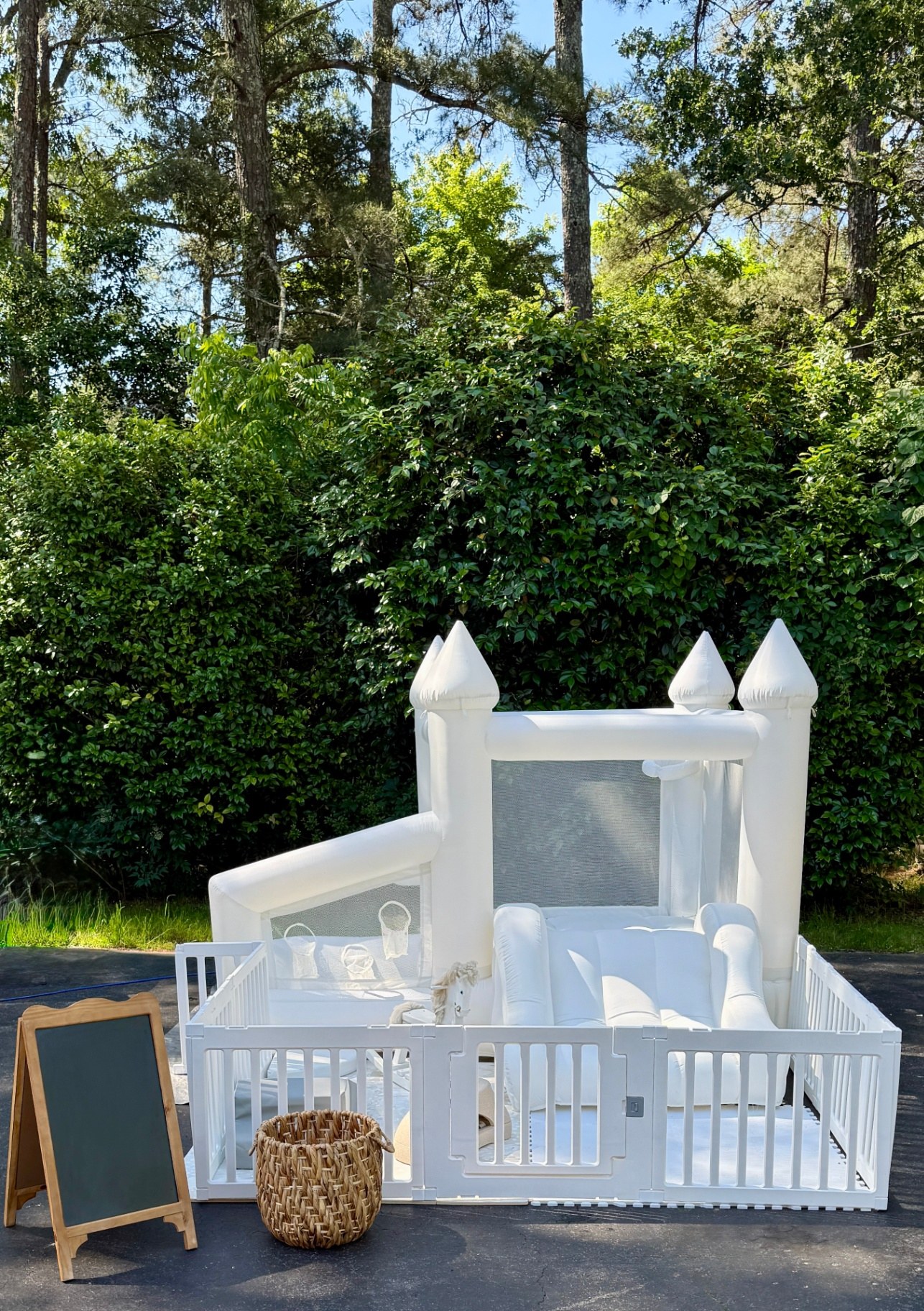
On the Lake Keowee deck, the package is a screen, a projector, seating, and the time to get that setup in place overlooking the water. For a toddler birthday in Seneca, the package is a white soft-play castle with a play yard, set up on site. Those are different inventories and different clients, but the quote structure is the same.
A Keowee Event Co. soft-play castle and play yard at a toddler birthday in Seneca, South Carolina. Name each piece in the package so the client knows what is arriving.
The same idea holds for lawn games. For a wedding at the South Carolina Botanical Garden in Clemson, I set up five games. That booking was a small wedding, under 50 guests, so that set was plenty; a larger guest list would have needed more stations. I wrote up the setup in Wedding lawn games. Whether you send it as a games package or as a line-item quote, delivery and setup still belong in the number.
What about a damage deposit, waivers, and insurance?
A package puts several pieces on a driveway, a deck, or a lawn at once. I would include a damage deposit on the quote, with a short note about what it covers and when it is returned, rather than tacking it on after the client has already said yes.
Insurance and waivers matter even more if you rent inflatables. I did rent a large white bounce house at one time, but I no longer offer it. It was too much work and too much legal and insurance risk. If you price inflatables, include liability insurance, waivers, and those costs in the quote. Soft play and lawn games are a different kind of inventory, but they still need a deposit and a clear pickup time.
Should I offer Good, Better, and Best versions of the same package?
It can help a client choose without making you write three unrelated quotes. Start with a solid base package, then a middle version with an extra piece or a longer window, then a top version. Use the same cost lines each time so you are not guessing at the upgrade. The workbook I use has a Package Pricer tab for that exact job.
FAQ
What should a backyard movie night package include?
List every piece the client is actually getting: the screen, the projector, seating, and any extra lighting or a small table, plus delivery, setup, teardown, and a damage deposit. I have used this kind of setup on a deck overlooking Lake Keowee, and the screen is only part of the work.
What should a soft-play party package include?
Name the soft-play pieces in the bundle (for example a soft-play castle, mats, and a play yard), then add delivery, setup, pickup, and a damage deposit. I have used a soft-play setup at a toddler birthday in Seneca, South Carolina. Keep the list specific so the client knows what is arriving.
Do I have to charge a damage deposit on a package?
I would. A package puts several pieces on someone else’s property at once. A deposit, and a clear note about what it covers and when it is returned, belongs on the quote with the bundle price, not in a later email.
Should insurance and waivers be part of the quote?
If the inventory requires liability insurance or a signed waiver, those costs and that step belong in the quote, not after a booking is already agreed. I did rent a large white bounce house at one time, but I no longer offer it because it was too much work and too much legal and insurance risk. Anyone pricing inflatables needs to include those costs. Soft play and lawn games still need a deposit and clear pickup terms.
Can I offer Good, Better, and Best versions of the same package?
Yes. Build each version from the same lines, then show three bundle prices. A movie-night package might add seating or a second screen in the higher tier. The Event Decor & Rental Quote Calculator has a Package Pricer tab for that, so you can see profit on each version before you send it.
If you want the math in one workbook, I built the Event Decor & Rental Quote Calculator for this ($24, one-time, Excel and Google Sheets). You list each item once, then see delivery, helpers, tax, the deposit, the balance, and your profit before you send the number. Digital downloads are final sale. Rental inquiries for Keowee Event Co. still go to keoweeeventco.com. More about me is on my about page.
Quick answer: Count every cost to own and prepare the item, then divide by a realistic number of paid rentals in a year, not a perfect Saturday every week. The payback number is how many times you have to rent it, after delivery and labor, before the inventory is paid for. A low rental rate with unpaid trips makes that number jump.
Last updated: November 14, 2026, by Anna Katherine Page
New rental owners often ask some version of this: I am looking at a large piece of equipment that costs thousands of dollars and rents for a couple of hundred, and I might need a helper. How many jobs until it is paid off? That is the right question. The wrong way to answer it is to divide the purchase price by the rental rate and stop there.
What costs belong in a payback calculation?
I treat payback as a stack, not a single division problem.
Include
Leave out or be careful with
What you paid for the item, including tax and a trailer hitch or cover if you needed one
A fantasy of renting it every weekend of the year
Prep, cleaning, and the time you spent getting it event-ready
Unpaid delivery and setup, which make each job less profitable than it looks
A plain reserve for repairs, cleaning supplies, and wear
Helper pay you have not put on the quote
A conservative count of paid rentals you can actually book in a season
Comparing only to a competitor’s item rate with no idea what they include
Payback is counted in paid, fully costed rentals, not in hopeful Saturdays.
How do I think about payback on inventory I already own?
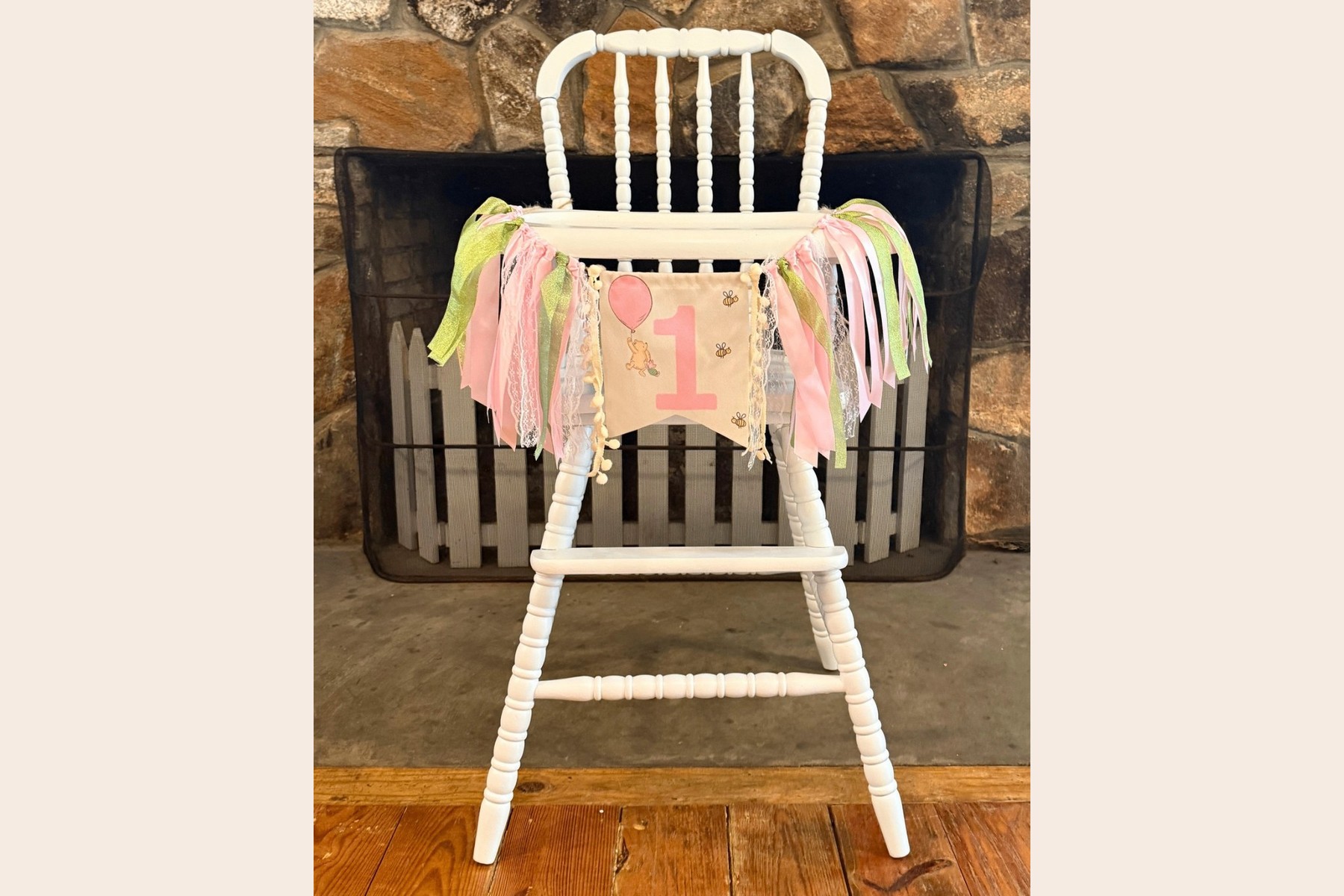
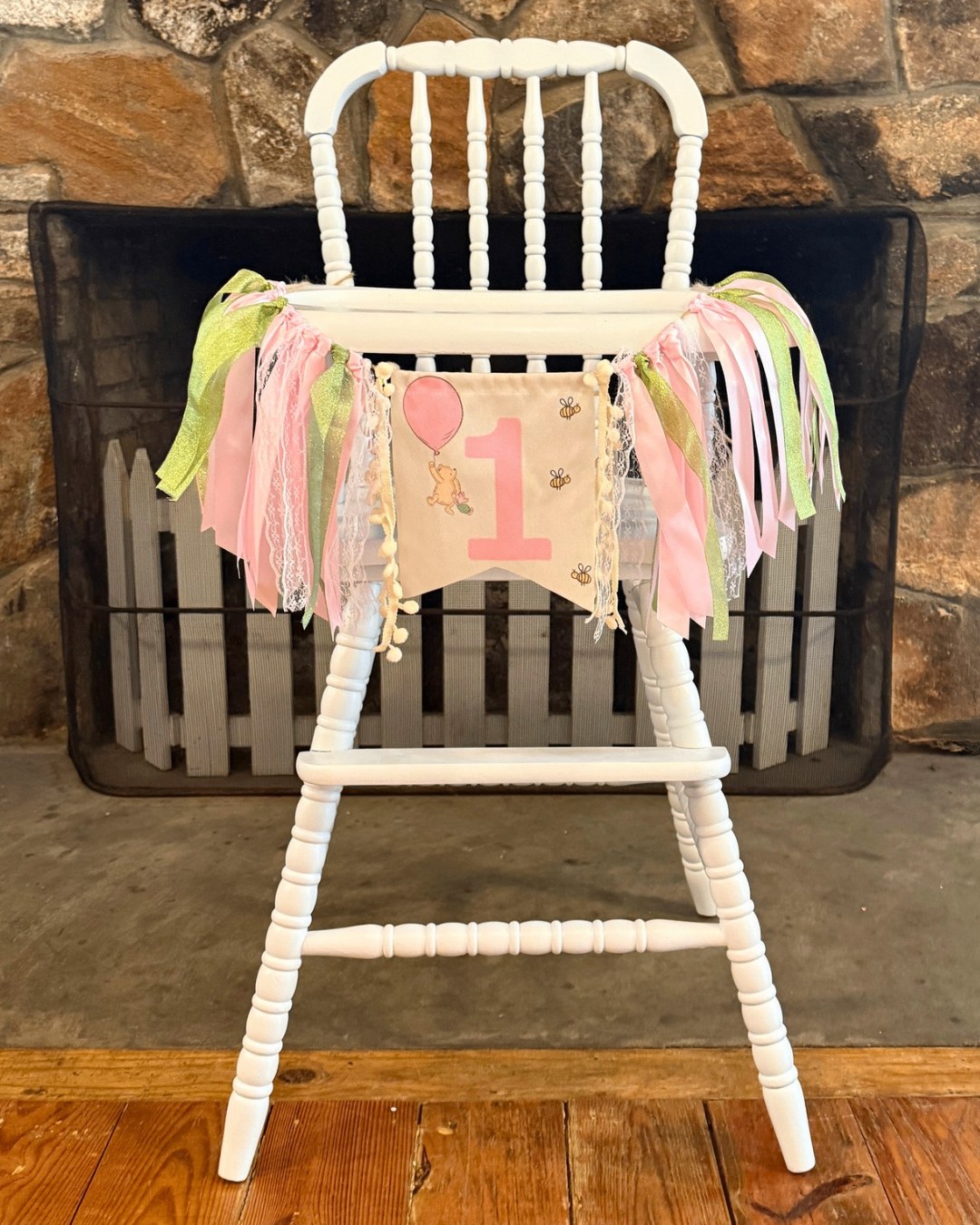
A useful example from my own work is not an inflatable invoice, which I am not going to invent numbers for. It is a thrifted rental. I bought a Jenny Lind high chair at a thrift store for $10, refinished it, and later used it as a Keowee Event Co. rental. The purchase price was tiny. The real cost was the refinishing time. If I had ignored that time, the chair would have looked like an instant payday. The makeover, including what I actually did to it, is in the Jenny Lind high chair makeover.
The Jenny Lind high chair I bought for $10 and later used as a Keowee Event Co. rental. Purchase price is only the first input in a payback calculation.
How should I treat a larger piece, like soft play or a game set?
Larger pieces work the same way, just with more zeros on the purchase line and more need for a helper or a bigger vehicle. I rent soft play and lawn games in the Clemson and Seneca area, and I have used those setups at real events, including backyard movie nights and a wedding games booking at the South Carolina Botanical Garden. What I will not do is publish a made-up “it pays off in X rentals” figure. Your insurance, your trailer, your helper, and your season are not mine. The honest move is to plug in your costs and use a slow season estimate.
I did rent a large white bounce house at one time, but I no longer offer it. It was too much work and too much legal and insurance risk. If you are pricing inflatables, include liability insurance, waivers, and those costs in the payback math, or the item will look cheaper than it really is.
A Keowee Event Co. soft-play setup for a toddler birthday in Seneca, South Carolina. Larger pieces need a payback estimate that includes prep, delivery, and a realistic booking pace.
What does a workbook change about this math?
Once an item is in a catalog with its purchase price, prep, and a rental rate, you can see a cost per use and a payback count without rebuilding the formula every time you add a game. That is why the Event Decor & Rental Quote Calculator has a Rental Payback tab alongside the quote builder. The sample rows already in the file are there so the formulas have something to calculate. They are not my real invoices. Replace them with your own costs.
FAQ
Can you tell me how many rentals a piece of equipment needs?
Not from here, and I will not invent a payback number for inventory I have not published figures for. Enter your purchase price, prep, expected repairs, and a conservative number of paid weekends. Then look at profit after delivery and labor, not just the item rate.
Does a cheap thrifted rental pay back faster?
It can, because the purchase price is lower. I bought a vintage Jenny Lind high chair for $10, refinished it, and later used it as a rental. The makeover is in this post . You still have to count your refinishing time and how you price the rental itself.
Should I assume I will rent it every weekend?
No. Party rental work bunches up on spring and fall weekends. If you plan payback on a full year of saturdays, you will feel behind in February. Use a slower estimate on purpose.
Where does delivery fit in a payback calculation?
A rental that looks profitable on the item line can still be slow to pay off if every job includes a long unpaid drive. Figure payback on profit after delivery and labor, not on the sticker rate.
If you want the math in one workbook, I built the Event Decor & Rental Quote Calculator for this ($24, one-time, Excel and Google Sheets). You list each item once, then see delivery, helpers, tax, the deposit, the balance, and your profit before you send the number. Digital downloads are final sale. Rental inquiries for Keowee Event Co. still go to keoweeeventco.com. More about me is on my about page.
Quick answer: Price the rental item, then add delivery, setup, teardown, and any helper time as their own lines. A quote that only uses a percentage of what you paid for the games or the screen will look cheap and still lose money once you drive, set up, and come back. I use that checklist on real Keowee Event Co. bookings.
Last updated: November 14, 2026, by Anna Katherine Page
I run Keowee Event Co. by myself in Upstate South Carolina. When someone asks for a number, they are usually asking about the cornhole set, a soft-play setup, or a movie-night screen. The work that actually fills the afternoon is the drive, the setup, the wait or the return trip, and sometimes a helper. If those hours are not on the quote, I have given them away.
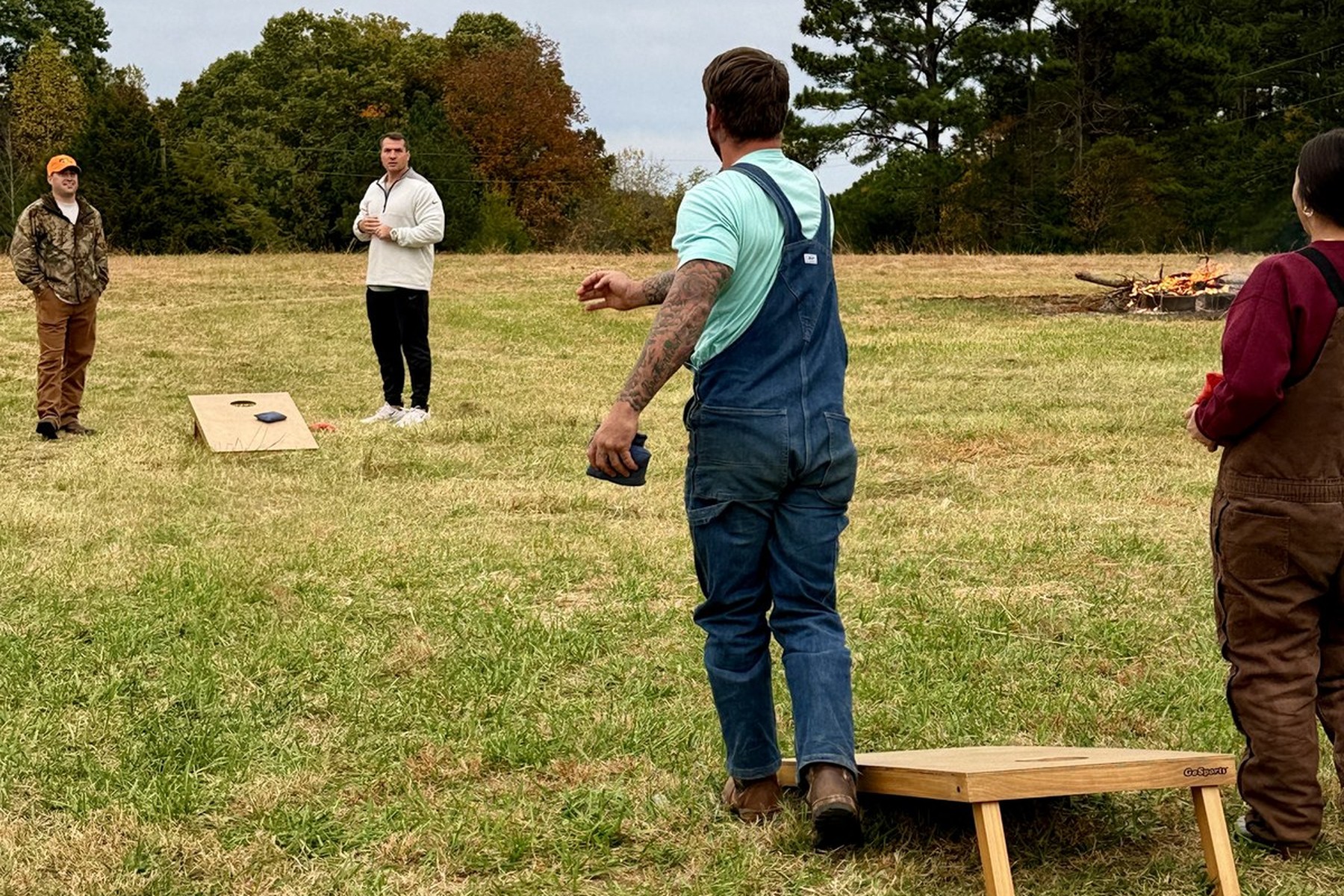
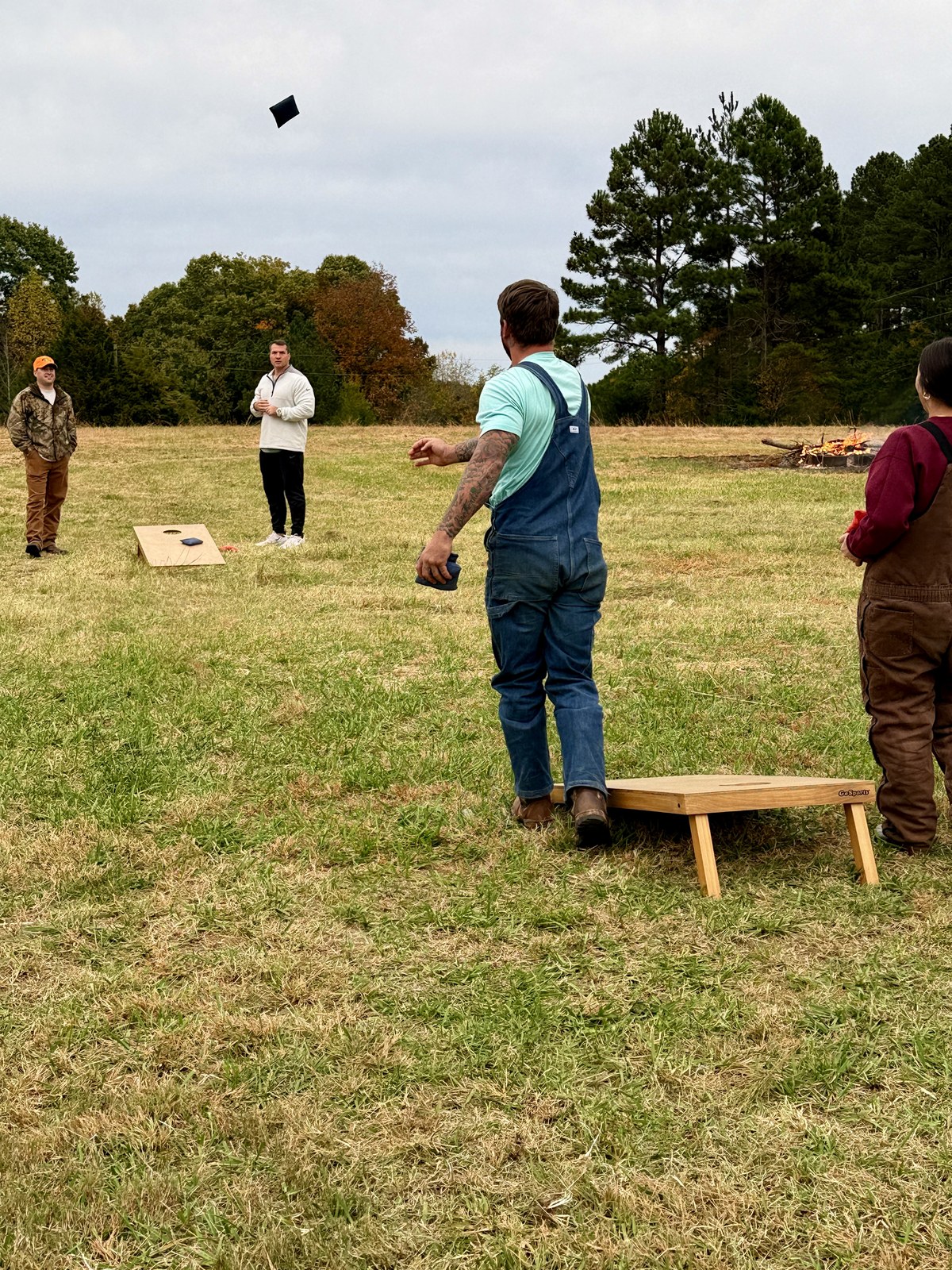
A Keowee Event Co. cornhole set in use at an outdoor fall party in Upstate South Carolina.
What should actually be on a party rental quote?
I put every booking into the same buckets, even when the event looks simple. The item rate is only the first line.
Line on the quote
What it covers
What goes wrong if you skip it
Item or package rate
The games, screen, soft play, or furniture for the rental period
You only recover part of what the inventory cost you
Delivery and mileage
The drive to the site and back, fuel, and vehicle wear
A ‘cheap’ local job becomes two unpaid hours in the car
Setup and teardown labor
Your time on site, including the return trip to pick up
You work the event for free after the rental line is spent
Helper time, if you need it
A second person for heavy or tight setups
You pay a helper out of a quote that never included them
Fees, tax, and deposit
Card or service fees, sales tax if it applies in your state, and a deposit to hold the date
The balance surprises the client, or you eat the fees
A quote that only lists the item is not a full quote.
Why does the ‘percent of what I paid’ shortcut fall short?
New rental owners often ask whether they can take a large piece of equipment that cost thousands of dollars, rent it for a couple of hundred, hire a helper, and still come out ahead. Another common shortcut is to charge about 10 to 11 percent of the purchase price as the rental rate. That can be a reasonable way to start the item line. It is not a complete quote. The people who use that rule usually say, in the same breath, that delivery, setup, takedown, and tax sit on top of it.
If you only send the item percentage, a client in a nearby town and a client 40 minutes away look like the same job. They are not. The farther job uses more fuel and more of the only day you had to book something else.
How do I apply this on a real event, not a made-up invoice?
I will not invent rates or profit numbers for bookings I have not published as invoices. What I can tell you is how I use the checklist. For a wedding lawn-games setup at the South Carolina Botanical Garden in Clemson, the work was not just unloading cornhole and giant Jenga. It was getting the games to a garden venue, setting them so guests could actually play, and packing them out. I wrote up that five-game setup in Wedding lawn games. The same idea applies to backyard movie nights, soft-play setups, and lawn-games rentals in the Clemson and Seneca area: the inventory is one line, and the trip is another.
A note on inflatables: I did rent a large white bounce house at one time, but I no longer offer it. It was too much work and too much legal and insurance risk. If you price inflatables, include liability insurance, waivers, and those costs in the quote, not just the item rate.
A Keowee Event Co. movie-night rental on a deck overlooking Lake Keowee. The screen is only part of the job; delivery and setup still belong on the quote.
How do I show the client the deposit and the balance without confusion?
Once the event total is in place, I want the client to see the deposit that holds the date and the balance due before I arrive. Sales tax depends on your state, so I treat it as a line I can turn on rather than a guess. Card fees belong in the math too, or they come out of profit later. A workbook helps here because those fields stay consistent from one quote to the next. I built mine as the Event Decor & Rental Quote Calculator so I was not redoing this in a blank spreadsheet before every event.
FAQ
Do I have to charge delivery if the client can pick up?
No. If they pick up and return the items, you can drop the delivery line. Keep setup and teardown on the quote if you are still doing that work at their site.
Is a percentage of what I paid for the item enough?
It can be a starting point for the item rate alone. In party-rental forums people often mention about 10 to 11 percent of the purchase cost for the rental line, and they are careful to say that number does not include delivery, setup, takedown, or tax. Those still need their own lines.
Should I offer a half-day price for yard games?
I would be cautious. A half-day still takes a delivery, a setup, and a return trip. Many operators price for the day and only add another day if the client keeps the items overnight into a second event day.
Where can I see the kinds of bookings this math is for?
I have written about a wedding lawn-games setup at the South Carolina Botanical Garden in Clemson in this post , and I use the same kind of quote math for movie-night, soft-play, and games rentals in the Clemson and Seneca area.
If you want the math in one workbook, I built the Event Decor & Rental Quote Calculator for this ($24, one-time, Excel and Google Sheets). You list each item once, then see delivery, helpers, tax, the deposit, the balance, and your profit before you send the number. Digital downloads are final sale. Rental inquiries for Keowee Event Co. still go to keoweeeventco.com. More about me is on my about page.
(function(){
var AJAX="https:\/\/annakatherinepage.com\/wp-admin\/admin-ajax.php",LOAD=Date.now(),freshP=null;
function post(d){return fetch(AJAX+"?t="+Date.now(),{method:"POST",credentials:"same-origin",cache:"no-store",headers:{"Content-Type":"application/x-www-form-urlencoded"},body:new URLSearchParams(d).toString()}).then(function(r){return r.json();});}
function getFresh(){if(freshP){return freshP;}freshP=post({action:"akp_ffc_fresh_nonce"}).then(function(j){if(j&&j.success&&j.data){if(window.fluentFormVars){window.fluentFormVars.token_nonce=j.data.token_nonce;}var ns=document.querySelectorAll('input[name$="_fluentformnonce"]');for(var i=0;i<ns.length;i++){ns[i].value=j.data.form_nonce;}return j.data;}freshP=null;return null;}).catch(function(){freshP=null;return null;});return freshP;}
function fid(f){var m=(f.className||"").match(/fluent_form_(\d+)/);return m?m[1]:(f.getAttribute("data-form_id")||"");}
function fld(f){return f.querySelector(".fluent-form-token-field");}
function stale(f){var t=fld(f);if(!t){return false;}return !t.value||(Date.now()-(f.__akpAt||LOAD))>45*60*1000;}
function mint(f){if(f.__akpP){return f.__akpP;}var t=fld(f);if(!t){return Promise.resolve(true);}
f.__akpP=getFresh().then(function(fr){var n=(fr&&fr.token_nonce)||(window.fluentFormVars&&window.fluentFormVars.token_nonce)||"";return post({action:"fluentform_generate_protection_token",form_id:fid(f),nonce:n});}).then(function(j){f.__akpP=null;if(j&&j.success&&j.data&&j.data.token){t.value=j.data.token;f.classList.add("ff_tokenized");f.classList.remove("ff_tokenizing");f.__akpAt=Date.now();return true;}return false;}).catch(function(){f.__akpP=null;return false;});return f.__akpP;}
function init(){var fs=document.querySelectorAll("form.frm-fluent-form");if(!fs.length){return;}var any=false;for(var i=0;i<fs.length;i++){if(fld(fs[i])){any=true;}}if(!any){return;}getFresh();
if("IntersectionObserver" in window){var io=new IntersectionObserver(function(es){es.forEach(function(e){if(e.isIntersecting&&stale(e.target)){mint(e.target);}});},{rootMargin:"900px 0px"});for(var k=0;k<fs.length;k++){if(fld(fs[k])){io.observe(fs[k]);}}}
document.addEventListener("focusin",function(e){var f=e.target&&e.target.closest&&e.target.closest("form.frm-fluent-form");if(f&&stale(f)){mint(f);}},true);
document.addEventListener("submit",function(e){var f=e.target;if(!f||!f.classList||!f.classList.contains("frm-fluent-form")){return;}if(f.__akpPass){f.__akpPass=false;return;}if(!stale(f)){return;}e.preventDefault();e.stopImmediatePropagation();
mint(f).then(function(){f.__akpPass=true;window.ff_sumitting_form=false;if(f.requestSubmit){var b=f.querySelector("[type=submit]");try{b?f.requestSubmit(b):f.requestSubmit();}catch(x){if(window.jQuery){window.jQuery(f).trigger("submit");}}}else if(window.jQuery){window.jQuery(f).trigger("submit");}});},true);}
var CS_PDF="https://annakatherinepage.com/wp-content/uploads/2026/11/flower-price-cheat-sheet.pdf";
var CS_MSG='<p>Your Flower Price Cheat Sheet is ready. <a href="'+CS_PDF+'">Download the two-page PDF</a> now.</p><p>A copy is on its way to your inbox too. Give it a minute, and peek in spam the first time so the next one lands in your inbox.</p>';
function fixCS(){var ms=document.querySelectorAll(".fluentform_wrapper_5 .ff-message-success");for(var i=0;i<ms.length;i++){if(!ms[i].__akpCS&&(ms[i].textContent||"").indexOf("Download the two-page PDF")===-1){ms[i].__akpCS=1;ms[i].innerHTML=CS_MSG;}}}
function initCS(){if(!document.querySelector("form.fluent_form_5")){return;}try{new MutationObserver(fixCS).observe(document.body,{childList:true,subtree:true});}catch(x){}document.addEventListener("fluentform_submission_success",function(){setTimeout(fixCS,50);setTimeout(fixCS,600);});}
function boot(){init();initCS();}
if(document.readyState==="loading"){document.addEventListener("DOMContentLoaded",boot);}else{boot();}
})();
(function () {
var LABEL = "Send me the cheat sheet";
var PDF = "https://annakatherinepage.com/wp-content/uploads/2026/11/flower-price-cheat-sheet.pdf";
var CONFIRM = '<p>Your Flower Price Cheat Sheet is ready. <a href="' + PDF + '">Download the two-page PDF</a> now.</p><p>Give the email a minute, and peek in spam the first time so the next one lands in your inbox. The formulas use labeled sample numbers. Type over them with yours.</p>';
function retitle() {
var buttons = document.querySelectorAll(".fluent_form_5 .ff-btn-submit, form.fluent_form_5 .ff-btn-submit, .frm-fluent-form.fluent_form_5 .ff-btn-submit");
for (var i = 0; i < buttons.length; i++) {
var b = buttons[i];
if ((b.textContent || "").indexOf("cheat sheet") === -1) {
b.textContent = LABEL;
b.setAttribute("aria-label", LABEL);
}
b.style.backgroundColor = "#5a6b4e";
b.style.borderColor = "#5a6b4e";
b.style.color = "#ffffff";
}
var styles = document.querySelectorAll(".ff-form-inline-style style");
for (var j = 0; j < styles.length; j++) {
var s = styles[j];
if ((s.textContent || "").indexOf("fluent_form_5") !== -1 && (s.textContent || "").indexOf("#123d2e") !== -1) {
s.textContent = s.textContent.replace(/#123d2e/g, "#5a6b4e");
}
}
}
if (document.readyState === "loading") document.addEventListener("DOMContentLoaded", retitle);
else retitle();
setTimeout(retitle, 400);
function maybeFixSuccess(root) {
if (!root) return;
var success = root.querySelector(".ff-message-success, .ff-el-success, .ff-form-success");
if (!success) return;
var t = (success.textContent || "").toLowerCase();
if (t.indexOf("inbox") !== -1 || t.indexOf("cheat sheet") === -1) {
success.innerHTML = CONFIRM;
}
}
document.addEventListener("fluentform_submission_success", function () {
maybeFixSuccess(document.querySelector(".fluentform_wrapper_5, #fluentform_5, .ff_form_wrapper_5"));
});
if (window.jQuery) {
window.jQuery(document).on("fluentform_submission_success", function () {
maybeFixSuccess(document.querySelector(".fluentform_wrapper_5, #fluentform_5, .ff_form_wrapper_5"));
});
}
})();
(function(){
function rgb(c){var m=(c||"").match(/[0-9.]+/g);return m?m.map(Number):null;}
function lum(a){return (0.299*a[0]+0.587*a[1]+0.114*a[2])/255;}
function effbg(el){var n=el;while(n){var c=rgb(getComputedStyle(n).backgroundColor);if(c&&(c.length<4||c[3]>0.5))return c;n=n.parentElement;}return null;}
var sel="main h1,main h2,main h3,main h4,main p,main li,main span,#frc h1,#frc h2,#frc h3,#frc p,#frc span,#frc li";
document.querySelectorAll(sel).forEach(function(t){
var bg=effbg(t);
if(!bg) return;
if(lum(bg)<0.30){
var fc=rgb(getComputedStyle(t).color);
if(fc && lum(fc)<0.5){ t.style.setProperty("color","#f7f1e6","important"); }
}
});
})();
(function () {
function formIdFrom(ev, data) {
var id = "";
var form = null;
if (data) {
if (data.formId != null) id = String(data.formId);
else if (data.form_id != null) id = String(data.form_id);
form = data.form;
if (form && form.jquery) form = form[0];
}
if (!form && ev && ev.detail) {
form = ev.detail.form;
if (form && form.jquery) form = form[0];
if (!id) {
if (ev.detail.formId != null) id = String(ev.detail.formId);
else if (ev.detail.form_id != null) id = String(ev.detail.form_id);
}
}
if (!form && ev && ev.target && ev.target.nodeType === 1) {
form = ev.target.closest ? (ev.target.closest("form") || ev.target.closest("[id^='fluentform_']") || ev.target.closest("[class*='fluent_form_']")) : ev.target;
}
if (!id && form) {
var src = String((form.id || "") + " " + (form.className || "") + " " + (form.getAttribute && (form.getAttribute("data-form_id") || form.getAttribute("data-id") || "") || ""));
var m = src.match(/fluentform_wrapper_(\d+)/) || src.match(/fluentform_(\d+)/) || src.match(/fluent_form_(\d+)/);
if (m) id = m[1];
}
return id;
}
function newEventId() {
try {
if (window.crypto && typeof crypto.randomUUID === "function") return crypto.randomUUID();
} catch (err) {}
return "ff5lead_" + Date.now() + "_" + Math.random().toString(16).slice(2);
}
var lockUntil = 0;
function fireLead(ev, data) {
if (formIdFrom(ev, data) !== "5") return;
if (typeof window.fbq !== "function") return;
var now = Date.now();
if (now < lockUntil) return;
lockUntil = now + 2000;
var eid = newEventId();
try {
fbq("track", "Lead", { content_name: "Flower Price Cheat Sheet" }, { eventID: eid });
} catch (err) {}
}
document.addEventListener("fluentform_submission_success", function (ev) {
fireLead(ev, ev && ev.detail);
});
if (window.jQuery) {
window.jQuery(document).on("fluentform_submission_success", function (ev, data) {
fireLead(ev, data);
});
window.jQuery(document.body).on("fluentform_submission_success", function (ev, data) {
fireLead(ev, data);
});
}
})();